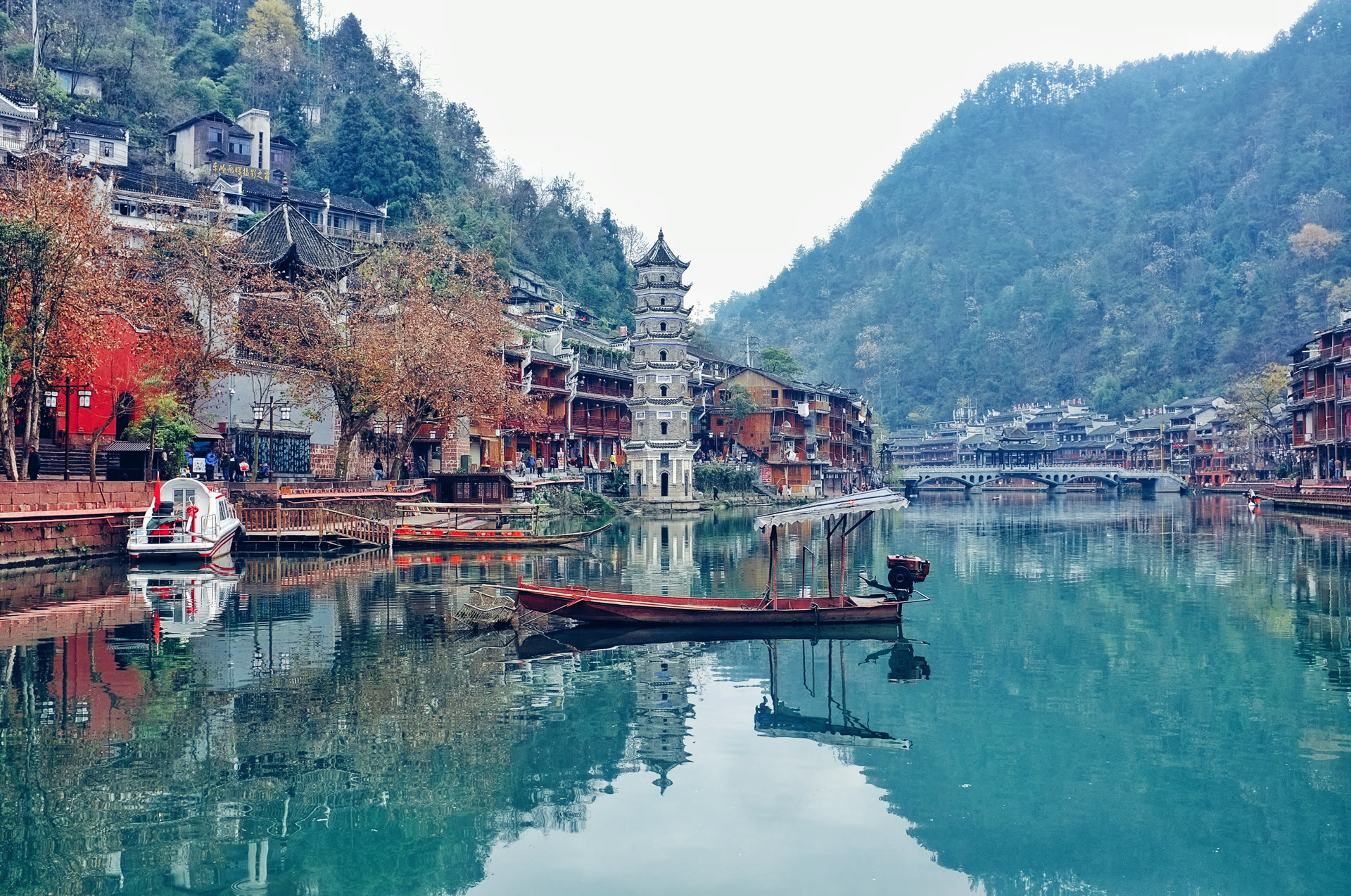
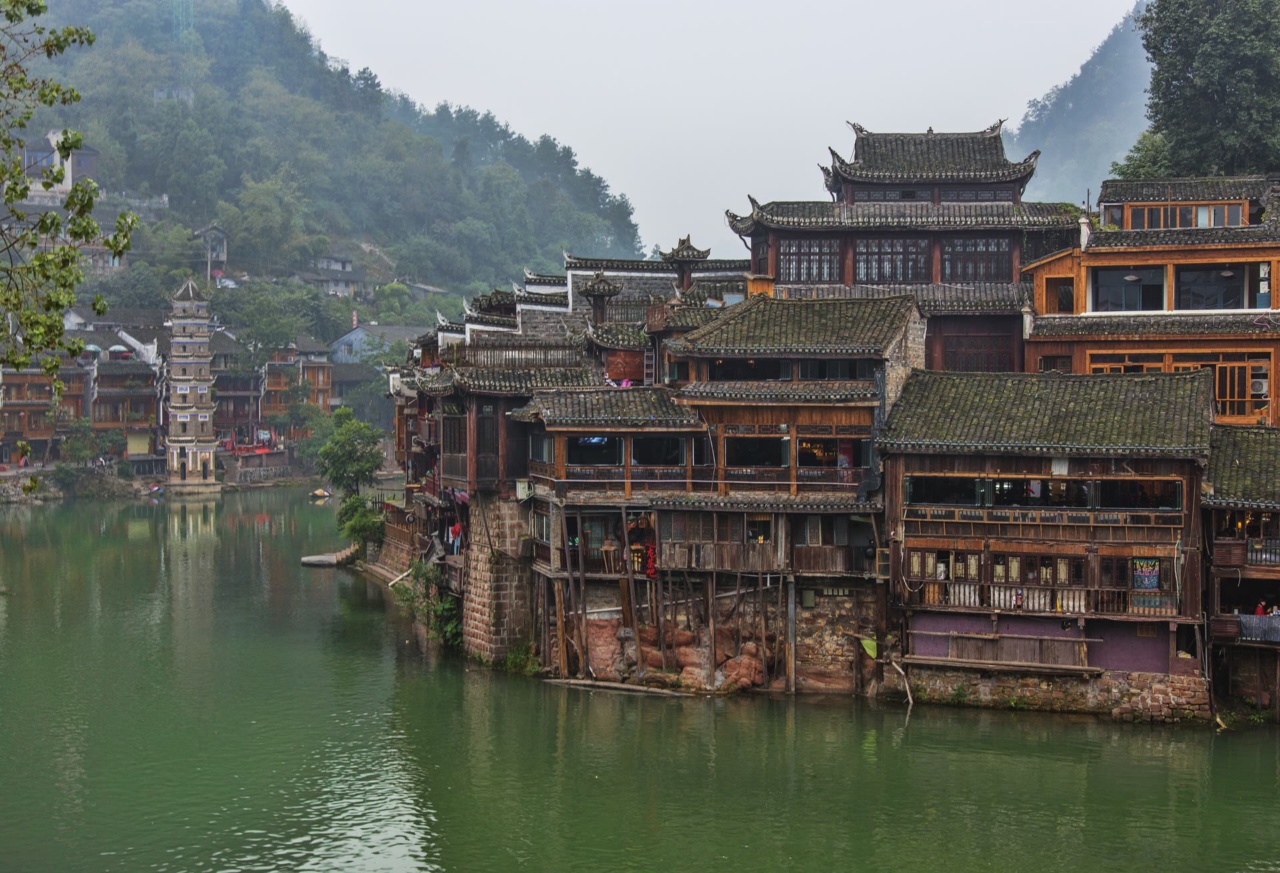
A remarkably preserved water town in Hunan Province, Fenghuang is a living museum of Ming and Qing dynasty architecture. It is best known for its iconic wooden stilt houses along the Tuo River and its vibrant ethnic Miao and Tujia cultures.
Fenghuang Ancient Town, or Phoenix Town, feels like a Chinese ink wash painting brought to life. Nestled in the mountainous western reaches of Hunan Province, the town is anchored by the Tuo River, which reflects the emerald green of the surrounding peaks and the weathered wood of the Diaojiaolou stilt houses. While many Chinese historic towns have been heavily modernized, Fenghuang retains a distinct, rugged charm rooted in its history as a frontier outpost between the Han Chinese and the ethnic Miao and Tujia peoples.
This is a destination for travelers who prioritize atmosphere and aesthetics over high-speed urban efficiency. It appeals to photographers, history buffs, and those looking to see a different side of China away from the coastal megacities. During the day, the town is a maze of narrow flagstone alleys and traditional workshops; at night, it transforms into a neon-lit spectacle where the riverbanks hum with music and light. It is a place of contrasts where ancient customs like riverside laundry-washing coexist with a bustling modern tourism industry.
Visiting Fenghuang requires a bit more effort than visiting Shanghai or Beijing, but the reward is an immersive experience in one of the most beautiful settlements in East Asia. The air smells of woodsmoke and ginger candy, and the sound of wooden mallets beating clothes by the river provides a rhythmic backdrop to the morning fog. Whether you are crossing the narrow stone stepping stones or exploring the silent backstreets away from the main tourist drag, Fenghuang offers a depth of character rarely found elsewhere.
Orientation and Neighborhoods
Fenghuang is relatively compact and centered entirely around the Tuo River. The town is divided into the Ancient Town (Gucheng) and the New Town (Xincheng). Most travelers will spend nearly all their time within the Ancient Town, which is largely pedestrianized and contains the historic architecture and major sights.
Riverside (North and South Banks): This is the heart of the action. The South Bank is dominated by the ancient city walls and major gates, while the North Bank features many of the iconic stilt houses. This area is the best place to stay for views, though it can be noisy at night due to the many bars.
Old Town Backstreets: Moving just one or two blocks away from the river reveals a quieter side of Fenghuang. These winding alleys are filled with small guesthouses, local snack stalls, and traditional courtyards. This is the best area for budget travelers and those seeking a quieter atmosphere.
New Town: Located to the west and south of the historic core, this area looks like a standard Chinese city. It is where you will find the main bus station, larger supermarkets, and modern hotels. It is less atmospheric but often cheaper and more accessible by car.
Things to Do
Offers are only loaded from GetYourGuide after you click. GetYourGuide can then process your IP address and set cookies. Privacy Policy
GetYourGuide partner offers. GoAsia may earn a commission if you book through these offers. Check whether tickets or transfers are included, and follow the attraction's official booking and admission rules.
Best Time to Visit
Fenghuang experiences a humid subtropical climate with four distinct seasons. The most visually stunning times are spring and autumn, though each season has its own appeal.
Month Range
Weather
Crowds
Prices
March to May
Mild and misty; occasional rain
Moderate
Average
June to August
Hot and humid; heavy rain possible
High (School holidays)
High
September to November
Cool, dry, and clear skies
Moderate
Average
December to February
Cold and damp; occasional snow
Low
Low
The best time for photography is during the spring (April and May) when the river is often shrouded in a morning mist. Avoid the first week of October (National Day) and the Chinese New Year period, as the town becomes overwhelmingly crowded and accommodation prices can rise several-fold during Golden Week.[1]
Getting There and Getting Around
Fenghuang does not have its own airport. Most travelers fly into Zhangjiajie Hehua International Airport or Changsha Huanghua International Airport. On the 12306 timetable for 16 October 2026, 19 direct high-speed trains ran from Zhangjiajie West to Fenghuang Gucheng Station in 51 to 66 minutes.[2] From Changsha South, 11 direct trains took between 1 hour 57 minutes and 2 hours 31 minutes.[3] You can find up-to-date train schedules and booking options on GoAsia.cc.
The ancient town runs shuttle buses from Fenghuang Gucheng high-speed railway station to the visitor service center and to the town's gates; the tickets are sold at the tourist information desk in the station hall.[1] Within the Ancient Town, most sights are reached on foot, and in-town shuttle buses serve some areas.[1] The streets are paved with uneven stone, so wear sturdy shoes. For crossing the river, use the various bridges or the famous "Stepping Stones" (Lianzuo), though be careful as they can be slippery.
Top Sights and Experiences
The Diaojiaolou (Stilt Houses)
These wooden houses perched over the Tuo River are the architectural symbol of Fenghuang. Built by the Miao and Tujia people, they were designed to save space and protect against floods. The best way to experience them is to walk along the North Bank or view them from a traditional wooden boat. Tip: Visit at sunrise to see the houses emerging from the river mist before the crowds arrive.
The Ming-era city wall runs along the south bank of the river. You can walk along sections of the wall for an elevated view of the town. The East Gate (Binjiang Gate) is the most impressive entrance, featuring a grand tower that is one of the sights that needs a ticket.[1]
The Stepping Stones (Lianzuo)
This is a series of narrow stone pillars crossing the Tuo River. It is a favorite spot for photos but serves as a functional bridge for locals. Practical Tip: It gets very congested by mid-morning. If you want a photo without dozens of other people in it, you must be there by 7:00 AM.
Overrated: The Nightly Light Show
While the lights are beautiful at first glance, the sheer volume of LED strips and neon can feel a bit like a theme park, stripping away the ancient atmosphere. If you prefer authenticity, head to the outskirts of the town near the Wanming Pagoda at night, where the lighting is more subtle and the crowds are thinner.
Food and Drink
Hunan cuisine is famous for being spicy (Xiang cuisine), and Fenghuang adds its own ethnic Miao twists to this. Sour and spicy flavors dominate the local palate. The ancient town's tourism office lists blood duck and sour fish soup among the local specialties.[1]
Dish
Description
Where to Try
Blood Duck
Duck cooked with its own blood and spices
Any riverside restaurant
Miao Sour Fish
Fermented fish in a spicy, sour broth
Traditional Miao eateries
Ginger Candy
Hand-pulled spicy, sweet candy
Street stalls in the alleys
Rice Tofu
Cold savory jelly made from rice flour
Street vendors
Street food is a major part of the experience: the main streets are full of snack and specialty shops, and there is a barbecue night market at Tuqiaolong.[1] For a mid-range meal, restaurants along the river offer great views but higher prices; for better value and more authentic taste, walk three blocks inland to find where the locals eat.
Where to Stay
Choosing where to stay depends on your tolerance for noise and your desire for a view. Most buildings in the old town are traditional wooden structures, which means soundproofing is often poor. Room prices are fairly stable on weekdays, rise at weekends and can multiply several times during Golden Week, so book ahead.[1]
Riverside Boutique Hotels: These offer the best views of the stilt houses. Note that bars along the river play loud music late into the night, so bring earplugs.
Traditional Courtyards: Located in the inner alleys, these converted homes offer a peaceful atmosphere and a glimpse into local life.
Budget Hostels: There are several high-quality hostels in the hills overlooking the town or in the backstreets, offering budget beds.
Practical Tips
Payment: Cash is rarely used. Alipay and WeChat Pay are the primary payment methods. Ensure your international card is linked to one of these apps before arrival. Some small vendors may not have change for large cash bills.
Language: English is not widely spoken. Download an offline translation app and have the name of your hotel written in Chinese characters.
Tickets: Entering the town itself is free and needs no reservation, but the cultural sights and activities, such as the Tuo River boat ride, the Former Residence of Shen Congwen, the Xiong Xiling residence, the Yang Family Ancestral Hall and the East Gate tower, need tickets, and a combined ticket covers them. Tickets are sold in the "Fenghuang Ancient Town Tourist Area" WeChat mini program, at the sights and at self-service machines in the visitor centers.[1]
Internet: A VPN is necessary to access Google, Facebook, or Instagram. Alternatively, use an international roaming SIM which often bypasses the Great Firewall.
Respect: When visiting nearby Miao villages, always ask before taking photos of elderly residents.
Day Trips
Dehang Miao Village
This village is set in a stunning canyon. It is much more authentic and less commercialized than Fenghuang. You can see the Aizhai Bridge nearby, which opened in 2012 with a main span of 1,176 meters across the Dehang canyon.[4] It is highly recommended for hikers.
Southern Great Wall
The Southern Great Wall, originally called the Miao Frontier Wall, was built in the Ming dynasty and extended in the Qing dynasty to contain Miao uprisings, and the restored section is 4.5 kilometers long.[5] While much smaller than the wall in Beijing, it offers great views of the countryside. A half-day trip is sufficient.
Qianzhou Ancient City
Located in Jishou, this is a quieter, more "lived-in" ancient city compared to Fenghuang. It is a good alternative if you find Fenghuang too touristy.
Sample 3-Day Itinerary
Day 1: The Heart of the Phoenix
Morning: Walk the riverside path from the East Gate to the Rainbow Bridge. Cross the Stepping Stones early to avoid the rush. Afternoon: Visit the Former Residence of Shen Congwen and the Yang Family Ancestral Hall. Evening: Take a sunset boat ride on the Tuo River, then watch the town light up from a balcony bar on the North Bank.
Day 2: Rural Immersion
Morning: Take a bus or private driver to Dehang Miao Village. Hike the trail to the waterfall. Afternoon: Visit the Aizhai Bridge. Evening: Return to Fenghuang and explore the night market in the New Town for authentic local snacks.
Day 3: Walls and Workshops
Morning: Walk the Southern Great Wall. It is a steep climb but the views are worth it. Afternoon: Return to Fenghuang and spend time in the backstreet workshops watching locals make ginger candy and silver jewelry. Evening: Enjoy a final dinner of Miao Sour Fish at a quiet restaurant away from the main river strip.
Frequently Asked Questions
Is Fenghuang worth visiting?
Yes, Fenghuang is one of China's most beautiful ancient towns. Its unique Tuo River setting and well-preserved stilt house architecture offer a visual experience that is significantly different from the water towns near Shanghai.
How many days do you need in Fenghuang?
Two days is enough to see the main sights of the ancient town. A third day is recommended if you want to take a day trip to the Southern Great Wall or a nearby Miao ethnic village.
Is Fenghuang safe for tourists?
Fenghuang is very safe, even at night. The main concerns are minor tourist scams, such as overcharging for photos in traditional costumes or inflated prices in riverside bars. Always confirm prices before ordering.
Can you drink tap water in Fenghuang?
No, tap water in Fenghuang is not safe to drink. Boiled water provided in hotels is usually fine for tea, but most travelers stick to bottled water which is cheap and widely available.
Is Fenghuang very crowded?
It can be extremely crowded during Chinese public holidays and summer weekends. To experience the town's legendary tranquility, you must explore in the early morning before 8:00 AM.
Do I need a ticket to enter Fenghuang?
Entering the town area is free and needs no reservation. However, you must buy tickets for the cultural sights and activities, such as the museums, former residences, the East Gate tower or the official boat ride, and a combined ticket covers them.
How do I get from Zhangjiajie to Fenghuang?
The most efficient way is the high-speed train from Zhangjiajie West to Fenghuang Gucheng, which takes about an hour.
Is English widely spoken in Fenghuang?
English is rarely spoken outside of high-end hotels and a few youth hostels. Using a translation app and having your destination written in Chinese is essential for navigation and dining.
Sources and background
Numbers in the text such as [1] refer to these sources.