Scattered across a surreal boulder-strewn landscape in central Karnataka, the ruins of Hampi are what remains of Vijayanagara, once one of the largest and wealthiest cities in the world. At its peak in the 15th and 16th centuries, the capital of the Vijayanagara Empire rivaled Rome in size and dazzled visiting merchants and diplomats with its grand bazaars, ornate temples, and royal palaces. Then, in a single catastrophic defeat, a coalition of Deccan sultanates sacked the city, and what had been a thriving metropolis of half a million people was systematically demolished over six months and abandoned.
Today, over 1,600 monuments spread across 4,100 hectares of terrain where massive granite boulders, palm groves, and banana plantations create one of the most visually striking archaeological sites anywhere in Asia. Hampi is a UNESCO World Heritage Site, but it feels less like a manicured museum and more like a place where history is still being slowly swallowed by nature. Temples emerge from between boulders, carved pillars stand in rice paddies, and the Tungabhadra River winds past ancient bathing ghats still used by locals today.
Understanding the Layout
Hampi's ruins divide naturally into two main zones. The Sacred Centre clusters around the Virupaksha Temple on the south bank of the Tungabhadra River and contains the major temples and religious structures. The Royal Centre, about two kilometers south, holds the palaces, elephant stables, and administrative buildings of the Vijayanagara kings. A third area, the hilltop Hemakuta complex, sits between the two and offers panoramic views of both zones.
The two centers are connected by a network of ancient pathways and modern roads. Walking between them takes about 30 to 40 minutes, or you can rent a bicycle or hire an auto-rickshaw. A full exploration of both zones, including the outlying monuments, requires at least two full days. Trying to rush Hampi in a single day means missing most of what makes it special.
Things to Do
The Sacred Centre
Virupaksha Temple
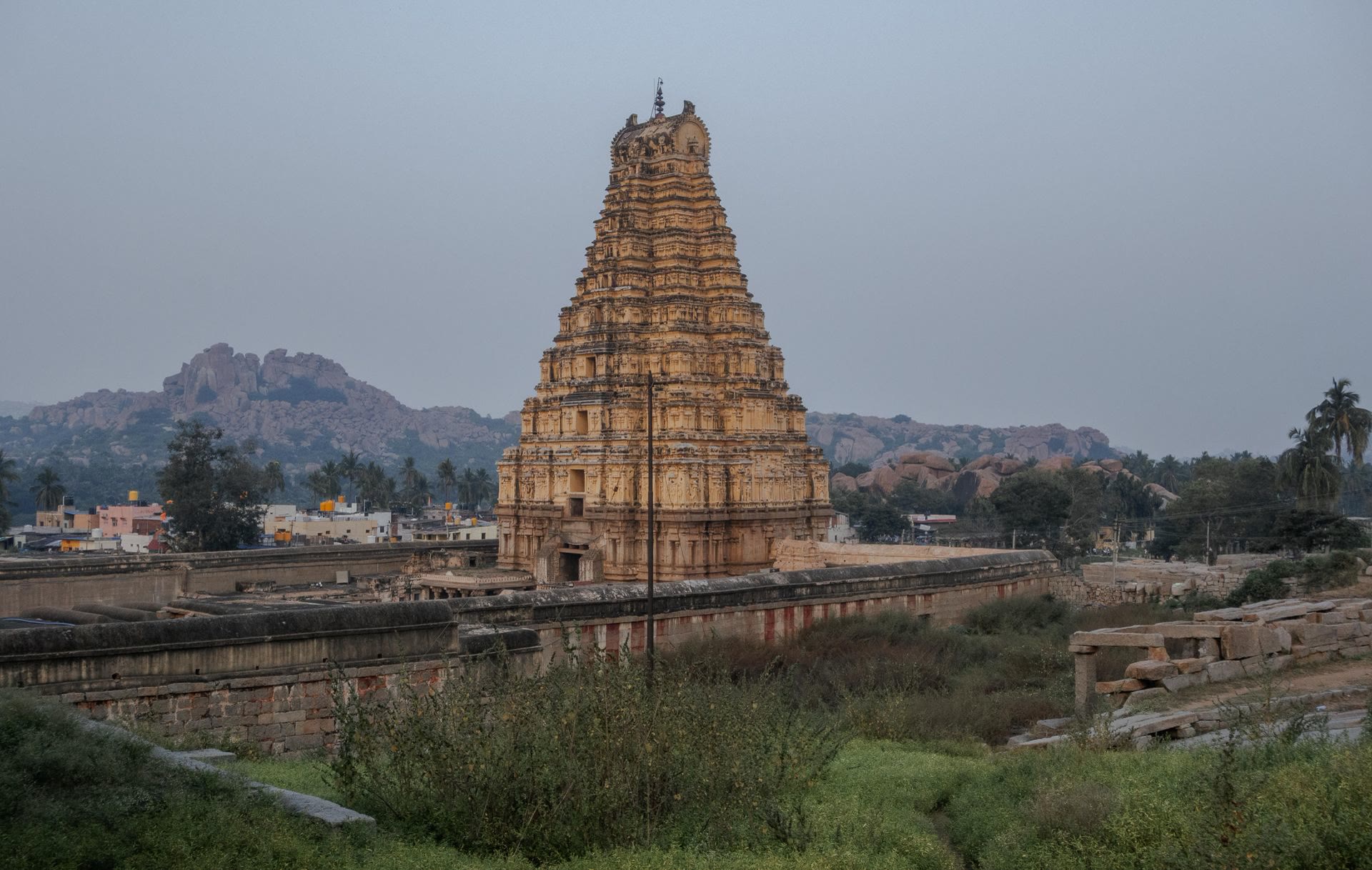
The oldest and most important temple in Hampi has been in continuous worship since the 7th century, making it one of the oldest functioning temples in India. Dedicated to Shiva (as Virupaksha), the temple complex anchors the western end of Hampi Bazaar and features a towering 49-meter gopuram (entrance tower) visible from across the site. Entry is free, though a small donation is customary. The temple elephant, Lakshmi, can often be seen near the entrance. Inside, the main shrine houses a Shiva lingam, and the pillared halls contain carved depictions of scenes from the Ramayana and Mahabharata.
Vittala Temple
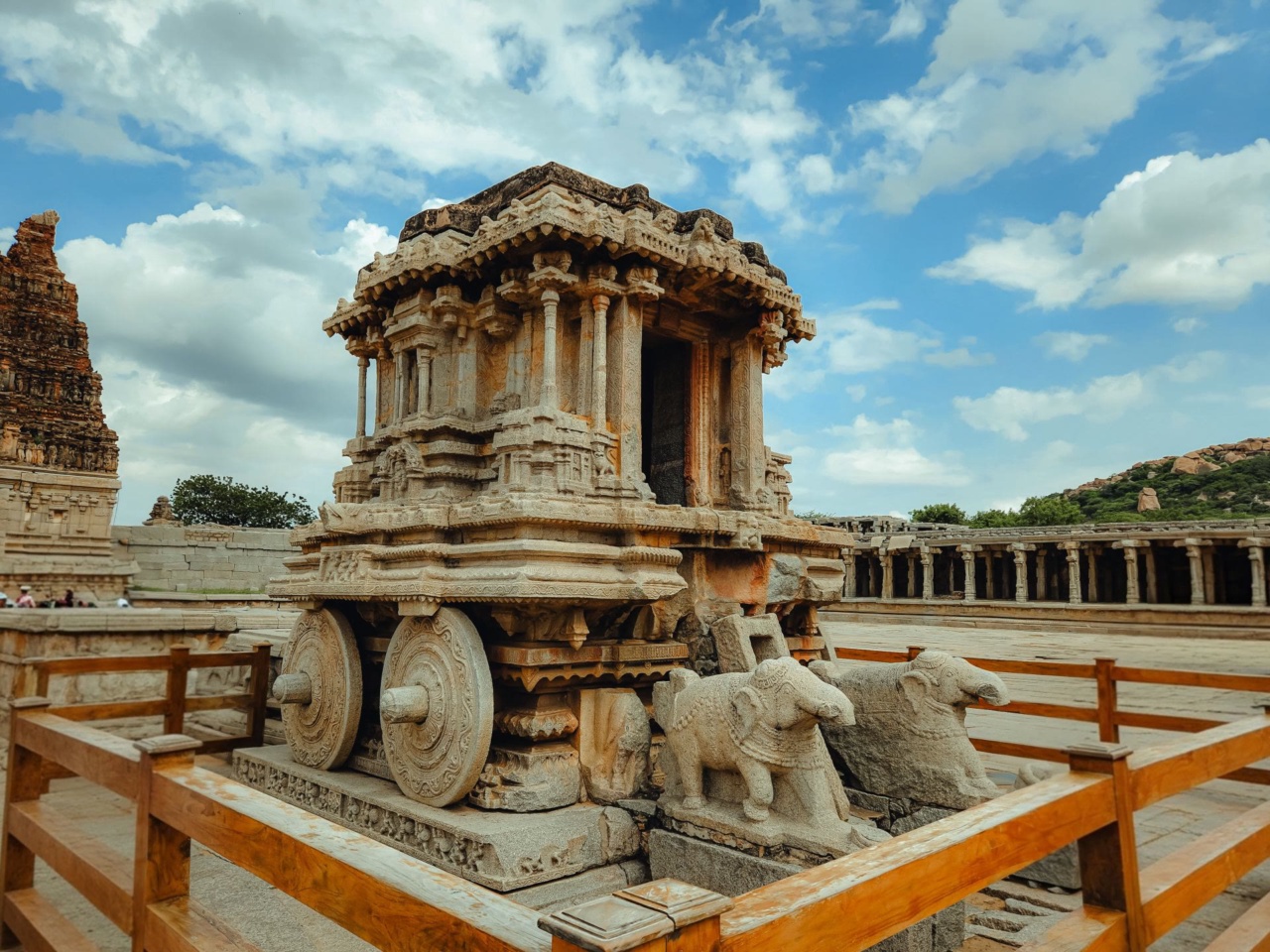
The undisputed architectural masterpiece of Hampi, the Vittala Temple represents the pinnacle of Vijayanagara craftsmanship. Its most famous feature is the stone chariot, a shrine built in the shape of a temple chariot with stone wheels that were originally designed to rotate. The 56 musical pillars in the main hall produce different tones when tapped, though visitors are no longer permitted to test this to prevent damage. Entry costs Rs. 500 for foreign visitors and Rs. 30 for Indians. The temple is about 2.5 kilometers northeast of the Virupaksha Temple, reachable by a pleasant walk along the river.
Hemakuta Hill Temples
The cluster of temples on Hemakuta Hill predates the Vijayanagara Empire, with some structures dating to the 9th and 10th centuries. The hill is the best sunset viewpoint in Hampi, offering a panorama that takes in the Virupaksha Temple gopuram, the boulder landscape, and the Tungabhadra valley. Entry is free, and the climb takes about 10 minutes from Hampi Bazaar.
The Royal Centre
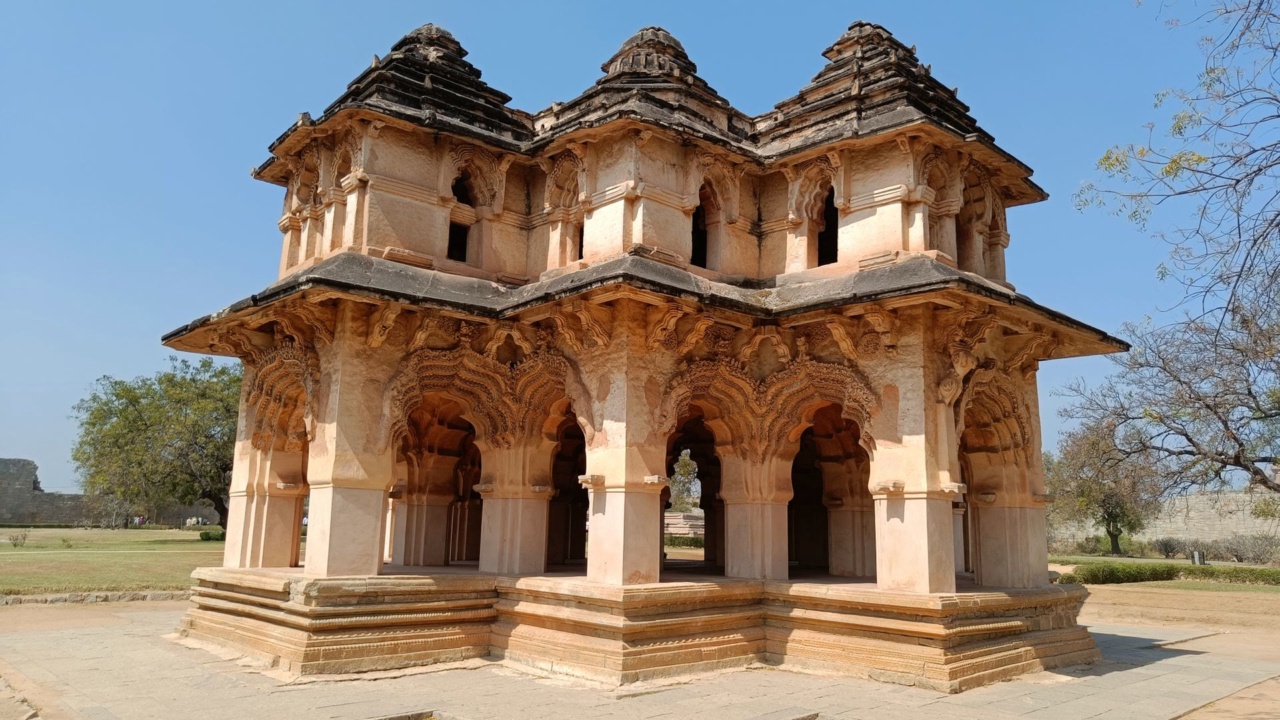
Lotus Mahal
This elegant two-story pavilion is one of the few structures in the Royal Centre that survived the sacking of the city relatively intact. Its name comes from the lotus-bud shaped arches on the upper floor, which blend Hindu and Islamic architectural styles. The building may have served as a recreational palace for the royal women. It sits within the Zenana Enclosure (women's quarters), which has a separate entry fee of Rs. 500 for foreigners.
Elephant Stables
A long row of domed chambers that once housed the royal elephants, this is one of the best-preserved secular buildings in Hampi. The eleven interconnected chambers show a mix of Hindu and Islamic dome styles, and the scale gives a sense of the grandeur of the Vijayanagara court. The stables are adjacent to the Zenana Enclosure and covered by the same ticket.
Queen's Bath
A large enclosed pool that served as the royal bathing complex, the Queen's Bath features ornamental arches, balconies overlooking the pool, and a water channel system that once fed the bath. The exterior is plain, but the interior reveals the luxury that the Vijayanagara elite enjoyed. Entry is included in the Zanana Enclosure ticket.
Mahanavami Dibba
This massive stone platform was the ceremonial stage where the king watched the Mahanavami (Dasara) festival celebrations. Carved panels on the base depict processions of elephants, horses, dancers, and warriors, providing a vivid snapshot of court life. The platform offers excellent views across the Royal Centre and is free to visit.
Beyond the Main Zones
Several important monuments lie outside the two main centers and reward exploration for those with time.
- Matanga Hill: The highest point in Hampi, offering the best sunrise views. The climb takes 20 to 30 minutes and involves scrambling over boulders. Start before dawn to catch the light spreading across the ruins.
- Anegundi: The village across the Tungabhadra from Hampi, reached by coracle (round basket boat) for Rs. 50. The surrounding countryside has additional ruins, cave paintings, and the Durga Temple on Anjanadri Hill, believed to be the birthplace of Hanuman.
- Riverside ruins: Walking east along the Tungabhadra from the Virupaksha Temple toward the Vittala Temple passes numerous smaller shrines, carved boulders, and bathing ghats. This is one of the most atmospheric walks in Hampi.
Practical Information
| Detail | Information |
|---|---|
| Vittala Temple entry | Rs. 500 foreigners / Rs. 30 Indians |
| Zenana Enclosure entry | Rs. 500 foreigners / Rs. 30 Indians |
| Virupaksha Temple | Free (donation appreciated) |
| Other monuments | Free |
| Opening hours | 06:00 to 18:00 (sunrise to sunset) |
| Minimum time needed | 2 full days |
| Best season | October to March |
Getting to Hampi
Hampi is in the Vijayanagara district of Karnataka. The nearest transport hub is Hospet (now officially Hosapete), about 13 kilometers away.
- By train: Hospet Junction receives trains from Bangalore (overnight, 8 to 10 hours), Goa (7 to 8 hours), and Hyderabad (10 hours). From Hospet, auto-rickshaws to Hampi cost Rs. 150 to Rs. 200, and local buses run every 30 minutes for Rs. 20.
- By bus: Overnight sleeper buses connect Hampi and Hospet to Bangalore (7 hours), Goa (8 hours), and Hyderabad (8 hours). Government buses are cheaper but less comfortable than private operators.
- By air: The nearest airports are Hubli (160 km) and Bellary (65 km), both with limited domestic connections. Bangalore airport is the most practical option, with onward travel by overnight bus or train.
Tips for Exploring Hampi
- Rent a bicycle. The flat terrain between the Sacred and Royal Centres is ideal for cycling. Bicycles rent for Rs. 100 to Rs. 200 per day from shops near the Virupaksha Temple. This is faster than walking and more flexible than auto-rickshaws.
- Start early. Hampi is exposed with little shade, and midday temperatures from October onward can reach 35 degrees. Begin at sunrise (Matanga Hill or Hemakuta Hill) and cover the outdoor monuments before 11:00 AM. Save the shaded interiors of the Virupaksha Temple for the hottest part of the day.
- Hire a guide for the first day. The ruins lack comprehensive signage, and a knowledgeable guide brings the site to life with stories of the Vijayanagara court, the significance of specific carvings, and the sequence of historical events. Licensed guides charge Rs. 1,000 to Rs. 2,000 for a half-day tour.
- Stay on the Hampi side. Accommodation in Hampi Bazaar puts you within walking distance of the Virupaksha Temple and sunrise viewpoints. The area across the river (Virupapur Gaddi) has a more laid-back, backpacker atmosphere with riverside guesthouses, but reaching the main ruins requires a coracle crossing each morning.
- Carry water and sunscreen. Facilities between monument clusters are sparse. A refillable water bottle and sun protection are essential for comfortable exploration.
- Combine with Badami and Aihole. These two other Chalukyan-era temple sites are 150 kilometers north and make a natural extension for anyone interested in South Indian temple architecture. More planning resources for India travel are available on GoAsia.cc.
- Respect the site. Climbing on monuments, touching carvings, and removing stones are prohibited. Some areas are roped off for preservation. The musical pillars at Vittala Temple are off-limits to tapping for this reason.
Frequently Asked Questions
Hampi contains the ruins of Vijayanagara, the capital of the last great Hindu empire in South India. At its peak in the 15th and 16th centuries, it was one of the largest cities in the world. The site spans 4,100 hectares with over 1,600 monuments and has been a UNESCO World Heritage Site since the mid-1980s.
Most of Hampi is free to explore, including the Virupaksha Temple and dozens of smaller monuments. The two ticketed areas are the Vittala Temple complex (Rs. 500 for foreigners, Rs. 30 for Indians) and the Zenana Enclosure including Lotus Mahal and Elephant Stables (same prices). A combined ticket covers both for a single fee.
The nearest town is Hospet (Hosapete), 13 kilometers away, connected by overnight trains and buses from Bangalore, Goa, and Hyderabad. From Hospet, auto-rickshaws to Hampi cost Rs. 150 to Rs. 200, and local buses run every 30 minutes. Bangalore is the most practical airport for reaching Hampi.
Two full days is the minimum to cover both the Sacred Centre and Royal Centre without rushing. Three days allows time for Matanga Hill sunrise, the Anegundi area across the river, and relaxed exploration of the riverside ruins. A single day is too short to appreciate the scale of the site.
October to March offers the most comfortable temperatures for exploring the exposed ruins. November and December are ideal. Summer months from April to June bring temperatures above 40 degrees Celsius, making outdoor exploration difficult. The monsoon from July to September brings rain but also the most dramatic landscape.
Hampi Bazaar has guesthouses and small hotels within walking distance of the main temples. The area across the river (Virupapur Gaddi) offers budget riverside accommodation with a more relaxed vibe. Hospet has better mid-range hotels but requires a 13-kilometer commute each way. Staying in Hampi is recommended for convenience.
The stone chariot is a shrine inside the Vittala Temple complex, carved from granite in the shape of a temple chariot with detailed stone wheels. It is dedicated to Garuda, the vehicle of Vishnu. The wheels were originally designed to rotate, and the chariot is one of the most photographed monuments in India.
Hampi is generally very safe and popular with solo travelers, especially backpackers. The village atmosphere is relaxed, locals are friendly, and tourist infrastructure is well-established. Standard precautions apply: avoid isolated areas after dark and keep valuables secure. The backpacker scene across the river is particularly welcoming to solo visitors.