Kaziranga National Park: choose and plan a safari
Photo: Omkar Rane / Unsplash
Contents
Decide before booking
Start with an available jeep departure and its exact gate, then choose a place to stay nearby. Exploring the four main ranges usually takes 2 to 3 days.[1] 2 nights give you time to arrive and still make 2 early outings without squeezing a long transfer in front of a dawn safari. A second outing is another chance to watch the landscape, though never a guaranteed sighting.
Things to Do
Offers are only loaded from GetYourGuide after you click. GetYourGuide can then process your IP address and set cookies. Privacy Policy
GetYourGuide partner offers. GoAsia may earn a commission if you book through these offers. Check whether tickets or transfers are included, and follow the attraction's official booking and admission rules.
Wildlife and landscape
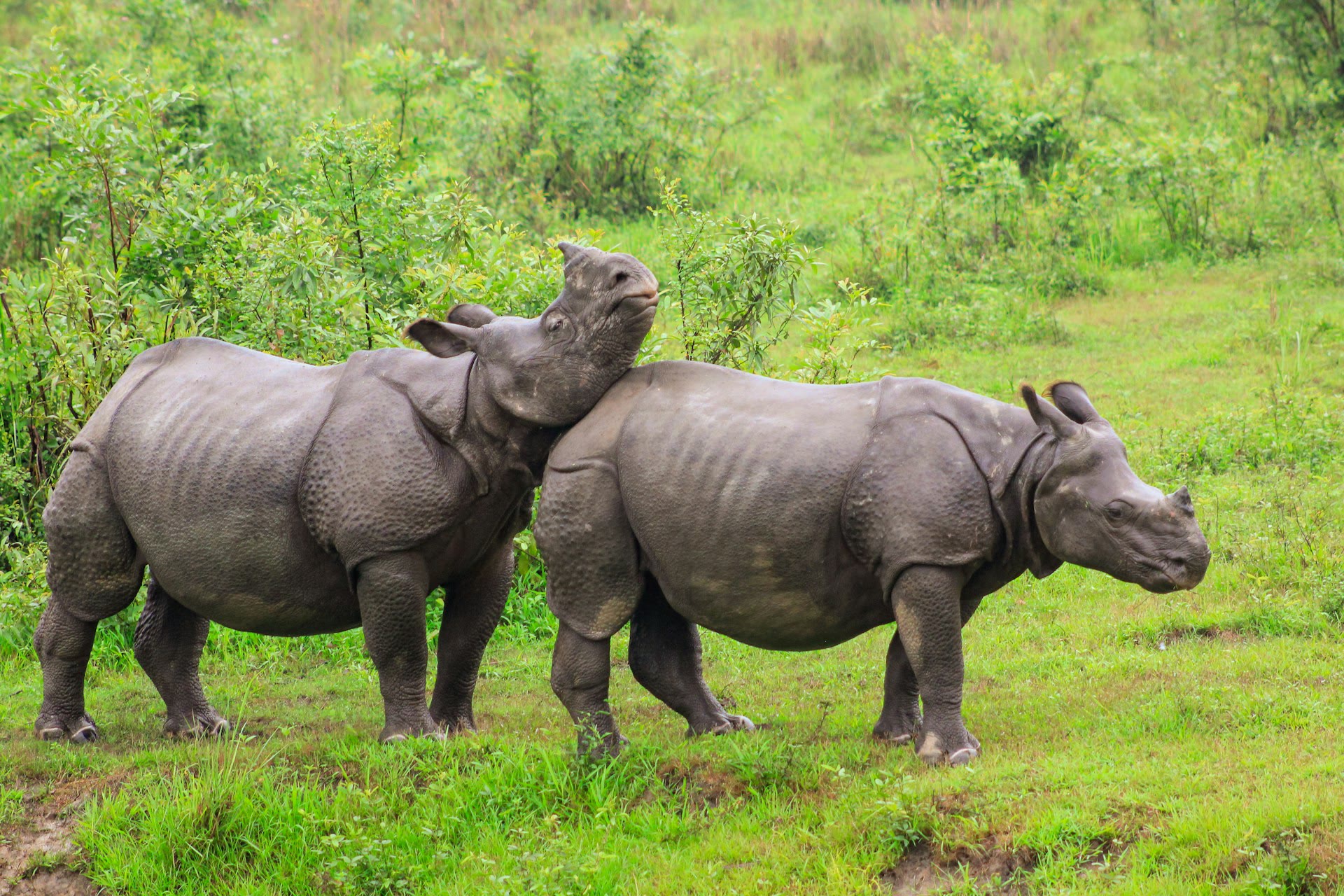
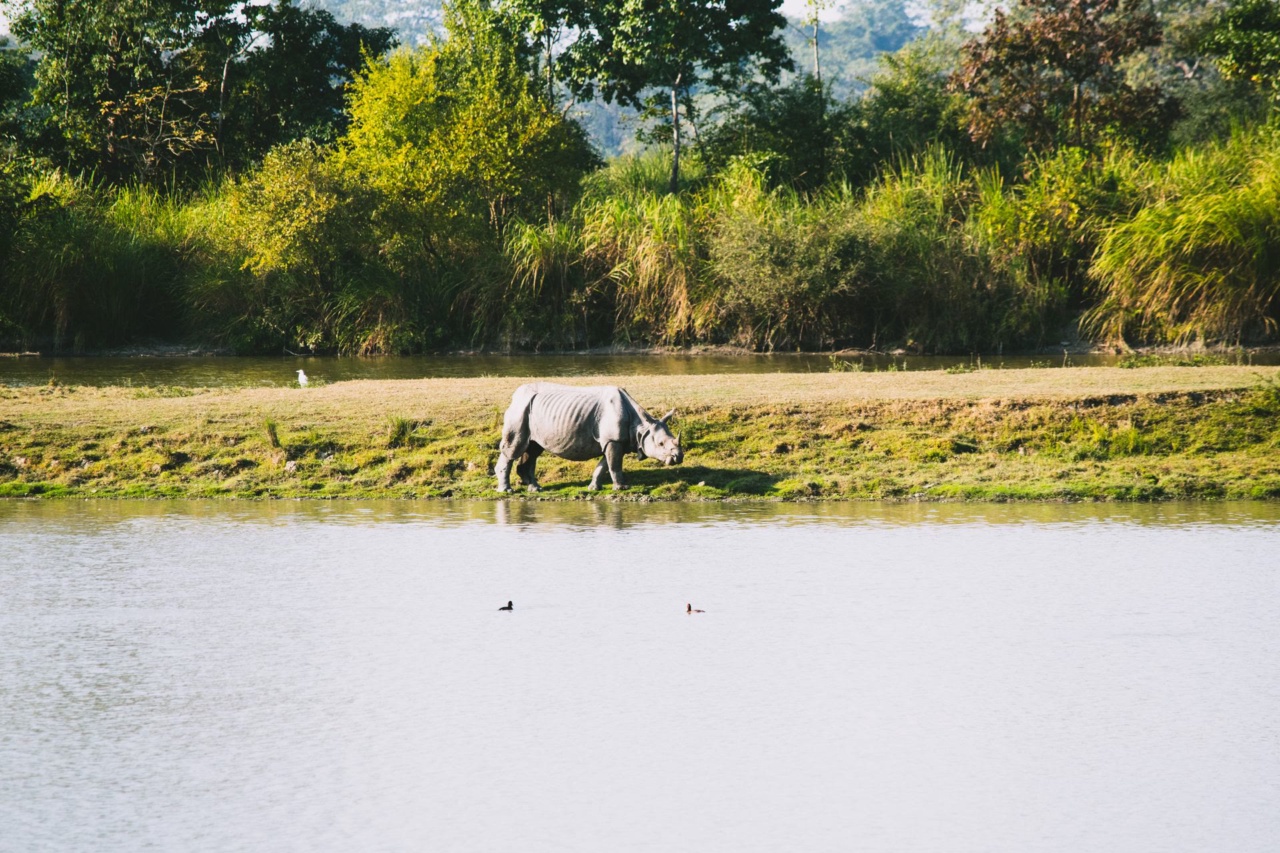
Kaziranga in Assam has been a UNESCO World Heritage Site since 1985.[1] The 42,996-hectare park is the largest undisturbed area of the Brahmaputra Valley floodplain, with wet alluvial tall grassland, broad shallow pools fringed with reeds and patches of woodland. It is home to the largest population of Indian one-horned rhinoceros in the world, plus tigers, Asian elephants, wild water buffalo, eastern swamp deer and the Ganges river dolphin.[2] These are wild animals, and no range or morning departure guarantees a rhino or a tiger.
Ranges and meeting points
The Assam Forest Department lists five ranges: Eastern at Agaratoli (about 4 km north-east of Bokakhat), Central at Kohora (about 20 km west of Bokakhat), Western at Bagori (about 12 km further west), Burapahar at Ghorakati (about 25 km further west of Bagori) and Northern at Biswanath (168 km by road from Bokakhat).[3] Assam Tourism names four main visitor ranges: Central, Western, Eastern and Burapahar, and all four offer jeep safaris.[1] Biswanath is a much longer drive, so it has its own meeting point and transfer.
Choose between the departures operating on your date, and compare the gate and the transfer from your accommodation. Kohora is the main tourist hub for Kaziranga.[3] Do not pick a range on a promise of the most rhinos or the shortest grass. A boat trip is a separate excursion and is not part of a jeep ticket.
Season and safari opening
November to April is the best time to travel, and the best sightseeing starts from late February to early April.[1] The 2026-27 season opened on 3 October 2026. Jeep safaris run with entry from 07:30 to 10:00 and from 13:30 to 15:00, according to the forest division notice reported by the Sentinel on 1 October 2026.[4] Flood conditions can affect access, so confirm your gate and meeting time before you pay.
Booking and total cost
Assam Tourism’s Safari Packages page is the starting point for booking. It links the booking site for jeep and elephant safaris at Kaziranga and names the contacts of the Kaziranga Development and Jeep Safari Association: president Tulsi Bordoloi at +91 9365381453 and secretary Ananda Gogoi at +91 7002198307.[5] Check who is selling, what exactly you get and who receives the payment: a site with “Kaziranga” in its name is not necessarily run by the forest department.
Ask for a written total in Indian rupees, stating whether the jeep is shared or private and whether each amount is per person or per vehicle. Separate vehicle hire, park admission, guide, camera charges, accommodation transfers and taxes. Ask about required documents, cancellation terms and what happens if the gate closes.
Getting to Kohora
The forest department gives these road distances to Kohora: about 250 km and 5 hours from Guwahati airport, 105 km and 2 hours from Jorhat airport, 210 km and 4 hours from Guwahati railway station, and 90 km and 2 hours from Tezpur.[3] Jorhat is the closer airport, and the nearest railhead is Jakhalabandha, 50 km from Kohora.[1] The old NH 37 is now NH 715 at Bokakhat.[3] Confirm your transfer price and return connection with your accommodation.
Where to stay
Assam Tourism runs three lodges at Kohora: Bonani Lodge, Bonoshree Lodge and Kunjaban Lodge.[1] Whatever you choose, pick accommodation for the gate you booked, not just an address described as “near Kaziranga”. Ask about pickup, the ride to the meeting point, breakfast timing and late arrival. Compare a room-only quote with a safari package that has the same inclusions, as packages are not automatically cheaper. A day trip depends on the real outward and return journey plus your booked slot, so do not plan a tight flight connection after a safari.
Elephant rides are a separate choice
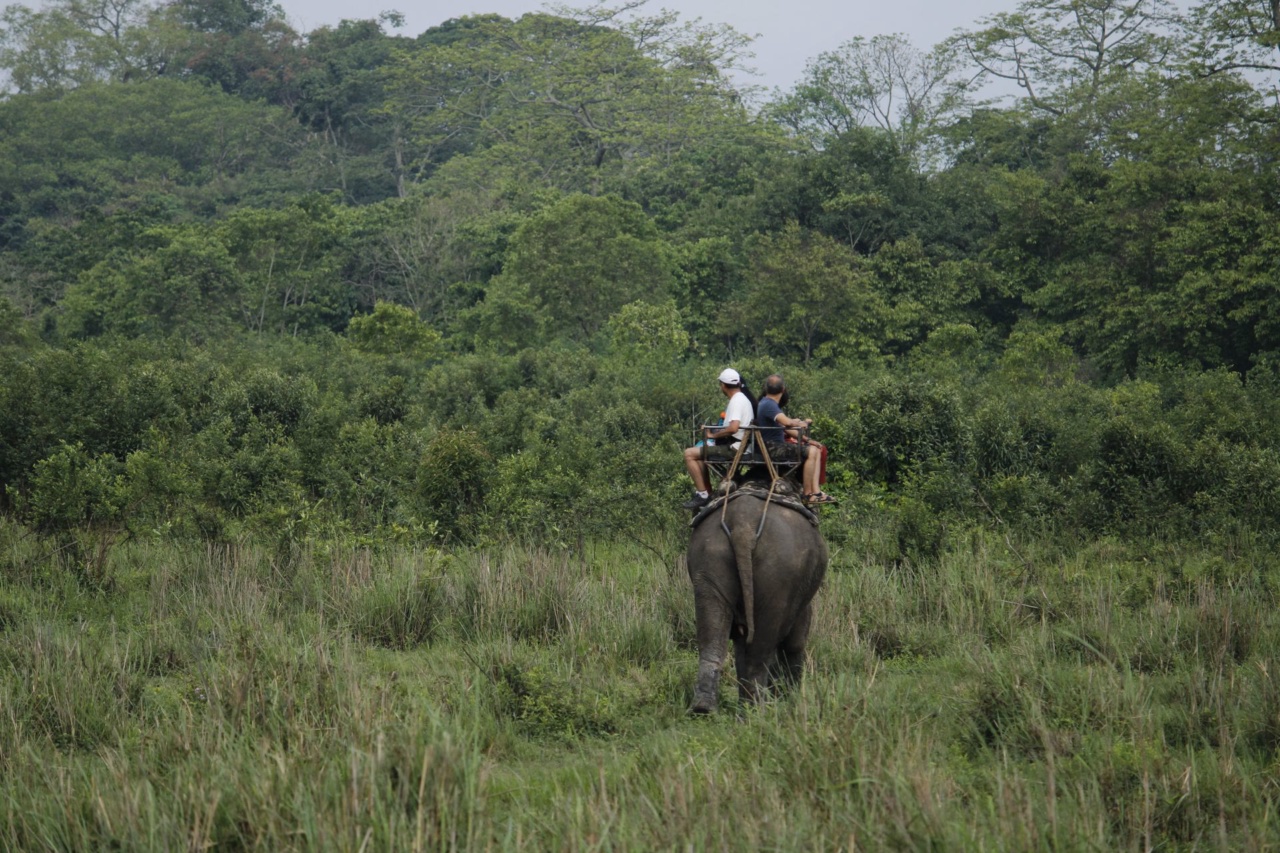
The Central and Western ranges offer elephant safaris. Seats are limited, so Assam Tourism advises booking in advance, while jeep safaris are easy to arrange without a reservation.[1] Consider animal welfare and your own mobility before you choose this separate activity. A jeep outing does not require an elephant ride. Never treat an advertised close approach as permission to touch wildlife.
Preparing for the visit
Follow your guide’s directions and the conditions of your booking. Do not feed wildlife, provoke animals or ask for a closer photograph against instructions. Ask about boarding and seating before you book if steps or vehicle movement are difficult for you.
Bring water, comfortable clothing suited to the forecast and camera equipment you can handle without getting in the way of others. A telephoto lens helps but is not required. Keep your rubbish with you, ask about the current rules on bags and photography fees, and carry a usable booking confirmation and your identity documents.
Sources and background
Numbers in the text such as [1] refer to these sources.
- [1] Assam Tourism Development Corporation: Kaziranga National Park: ranges, best time, how to reach. Retrieved October 21, 2026.
- [2] UNESCO World Heritage Centre: Kaziranga National Park. Retrieved October 21, 2026.
- [3] Assam Forest Department: Reach Kaziranga National Park: ranges and road distances. Retrieved October 21, 2026.
- [4] Sentinel Assam, Staff Reporter: Kaziranga National Park to open for tourists from October 3 (1 October 2026). Retrieved October 21, 2026.
- [5] Assam Tourism Development Corporation: Safari Packages: jeep and elephant safari booking contacts. Retrieved October 21, 2026.
Frequently Asked Questions
No. Kaziranga is home to the largest population of Indian one-horned rhinoceros in the world, but these are wild animals. No range or morning departure guarantees a rhino or a tiger.
Ask for a written total in Indian rupees, stating whether the jeep is shared or private and whether each amount is per person or per vehicle. Separate vehicle hire, park admission, guide, camera charges, accommodation transfers and taxes.
Start with Assam Tourism’s Safari Packages page. It links the booking site for jeep and elephant safaris at Kaziranga and lists the Kaziranga Development and Jeep Safari Association: president Tulsi Bordoloi at +91 9365381453 and secretary Ananda Gogoi at +91 7002198307. Check who is selling and who receives the payment.
November to April is the best time to travel, and the best sightseeing starts from late February to early April. The 2026-27 season opened on 3 October 2026, with jeep safari entry from 07:30 to 10:00 and from 13:30 to 15:00. Flood conditions can affect access.
The forest department lists five ranges: Eastern at Agaratoli, Central at Kohora, Western at Bagori, Burapahar at Ghorakati and Northern at Biswanath. Kohora is the main tourist hub, and the four main visitor ranges all offer jeep safaris. Choose the departure operating on your date and compare the gate and the transfer from your accommodation.
Elephant safaris run in the Central and Western ranges, with limited seats, so Assam Tourism advises booking in advance. Consider animal welfare and your mobility before you choose; a jeep outing does not require an elephant ride.
By road, Kohora is about 250 km and 5 hours from Guwahati airport, 105 km and 2 hours from Jorhat airport, and 210 km and 4 hours from Guwahati railway station. Jorhat is the closer airport.
A day trip depends on the real journey to the gate and back plus your booked slot. 2 nights give you time to arrive and still make 2 early outings. Do not plan a tight flight connection after a safari.