Hongcun village: water channels, Huizhou houses and visit planning
Contents
- 1. Day trip, overnight stay or two villages?
- 2. Follow the water and understand the village
- 3. Houses, carvings and open interiors
- 4. Ticket prices and the questions to settle before paying
- 5. Transport: identify the right starting point
- 6. Photography, weather and respectful walking
- 7. Combine Hongcun with Xidi or the mountain
- 8. Sources and background
- 9. Frequently Asked Questions
Hongcun (宏村) is a historic Huizhou village in Yi County, within Huangshan's wider administrative area in southern Anhui. Its South Lake, Moon Pond and water channels make the relationship between houses and water unusually easy to see. It shares a UNESCO World Heritage listing with Xidi, but it is not the Huangshan mountain scenic area or the centre of Tunxi.
Choose Hongcun for village architecture and a walk around its water system, not as a substitute for a mountain hike. For the village alone, a half day is a useful editorial planning allowance. A compact two-to-three-hour visit can focus on the ponds and selected open buildings; photography, a guide or a meal need more time. Add transport from your actual starting point separately.
Day trip, overnight stay or two villages?
| Plan | Why it fits | Main constraint |
|---|---|---|
| Hongcun day trip | Ponds, channels and a selection of historic interiors without changing accommodation | Confirm the return connection before starting your walk |
| Stay inside or beside Hongcun | More freedom to choose photography times and explore beyond the main stops | Check the exact lodging location, admission, re-entry and luggage access |
| Hongcun and Xidi | Compare two heritage villages and their different street and water layouts | Two admissions or a suitable combined product, plus a separately arranged transfer |
An overnight stay buys flexibility, not guaranteed empty lanes, mist or perfect reflections. Choose it if you want unhurried time or a convenient stop between other journeys. A day trip can be the better decision if your return is reliable and you mainly want the core architecture. Do not book an extra night only on a promise that every visitor disappears after a fixed hour.
Things to Do
Offers are only loaded from GetYourGuide after you click. GetYourGuide can then process your IP address and set cookies. Privacy Policy
GetYourGuide partner offers. GoAsia may earn a commission if you book through these offers. Check whether tickets or transfers are included, and follow the attraction's official booking and admission rules.
Follow the water and understand the village
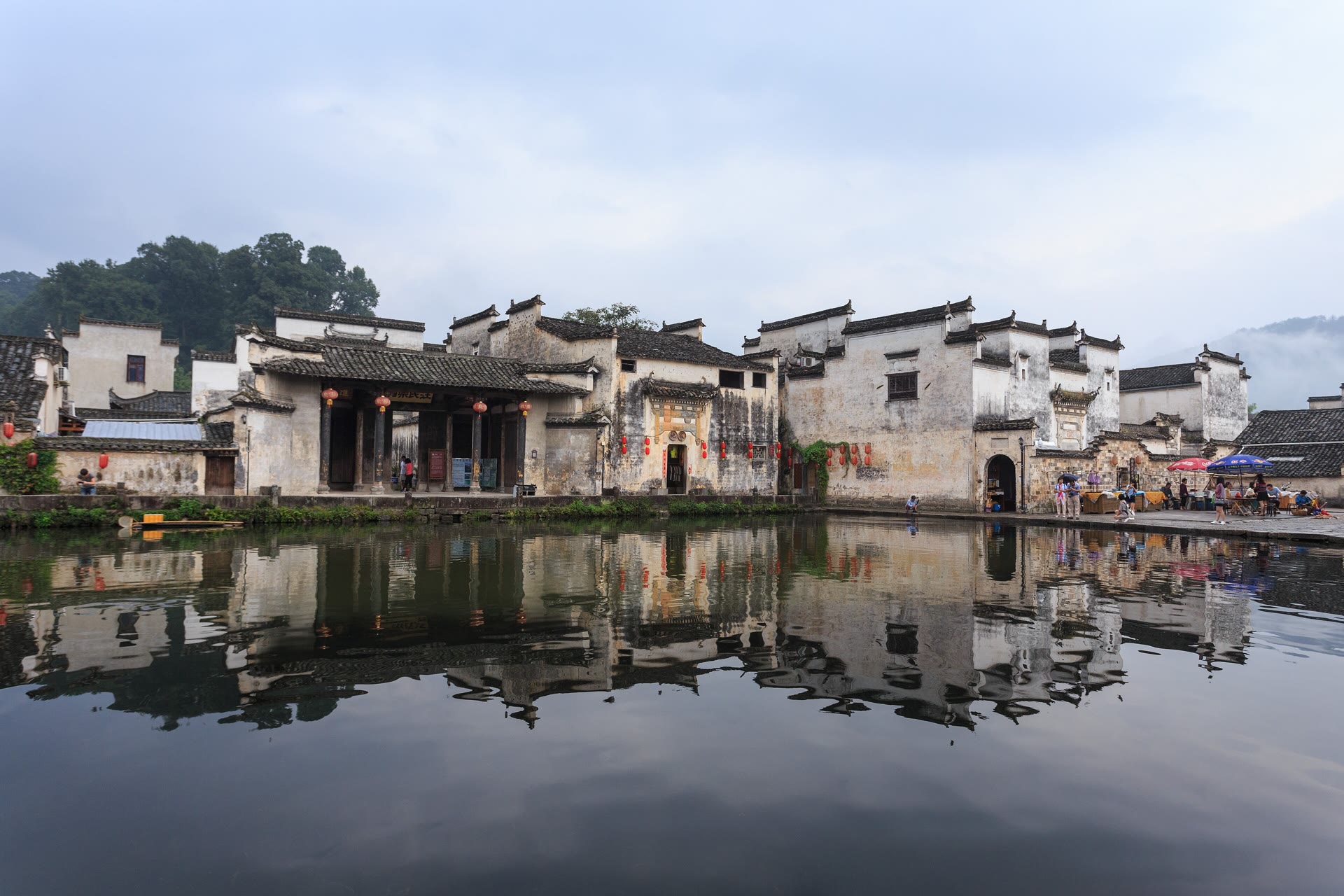
Start with South Lake (Nanhu), then make your way toward Moon Pond (Yuezhao) and the lanes between them, following permitted paths and local signs. Treat this as a flexible walking suggestion, not an official one-way route. Still water can reflect the white walls and dark roofs; wind, people and light determine the photograph you actually get.
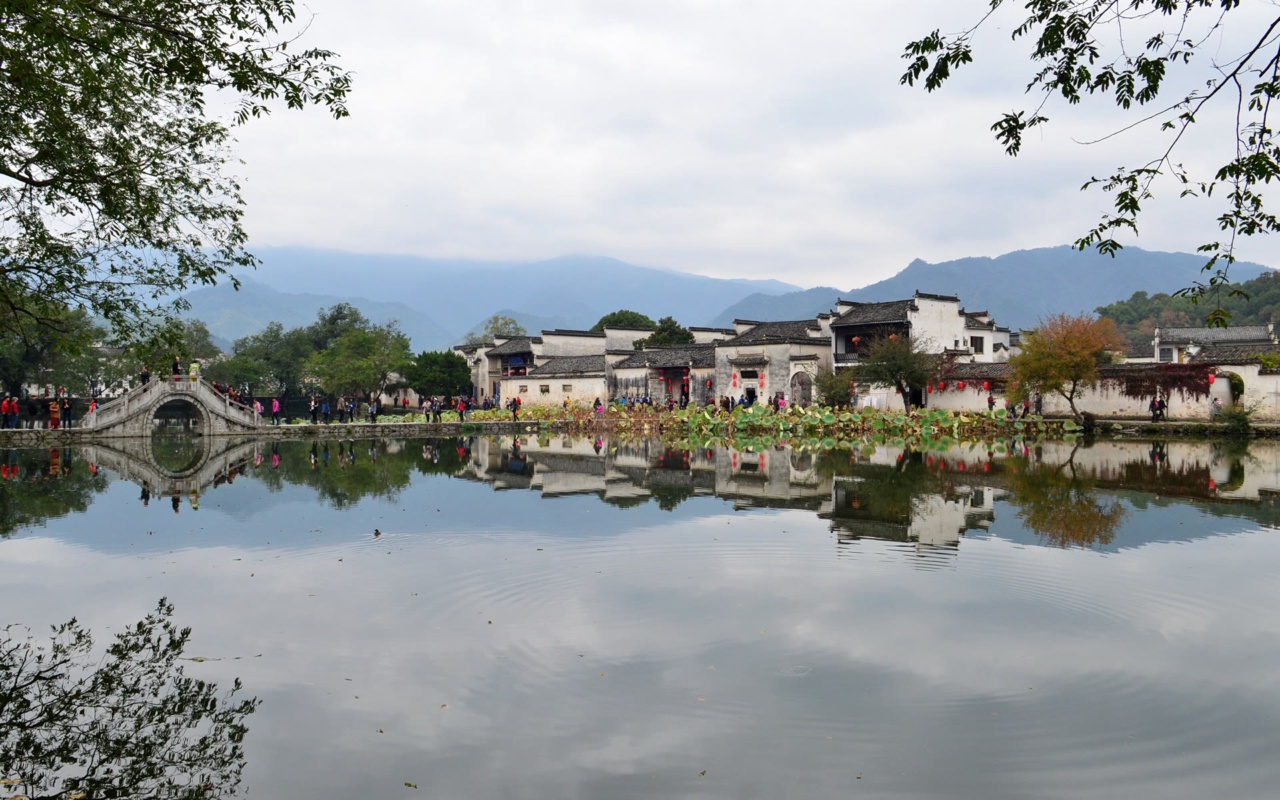
The Yi County visitor description explains the traditional ox-shaped layout: Leigang Hill forms the head, old entrance trees the horns, bridges the feet and houses the body. Channels represent the intestines, Moon Pond the stomach and South Lake the belly. These are parts of a symbolic interpretation, not two interchangeable names for the same pond.
The ICOMOS evaluation from 2000 describes a channel bringing water from the West Stream around 1405, followed roughly two centuries later by the creation of South Lake. This gives the scenery a practical history of water management. Notice how the lanes relate to the channels, rather than treating the village only as a backdrop. Do not step into channels, obstruct residents or assume that water beside a path is drinking water.
UNESCO recognises the street layouts, buildings, decorative arts and integrated water systems of both Hongcun and Xidi. Its description links their development to merchants, officials and clan-based social organisation. The heritage designation does not mean every house is untouched or every room is a public museum; the historic ICOMOS evaluation also discusses changes to individual buildings.
Houses, carvings and open interiors
Look for the contrast between white walls, grey roof tiles, horse-head gables and carved entrance details. ICOMOS describes a basic house layout with rooms organised around a courtyard and more elaborate variations in larger residences. Compare those details as you walk: a grand hall and a smaller dwelling need not have the same age, scale or function.
Chengzhi Hall is highlighted by the county description for its elaborate carving. Compare the wood, brick and stone decoration where accessible, and ask a guide to explain specific figures rather than assigning every motif a guessed meaning. South Lake Academy appears in the historic ICOMOS account as an educational building dating to 1814. Check which spaces are actually open and included in your ticket.
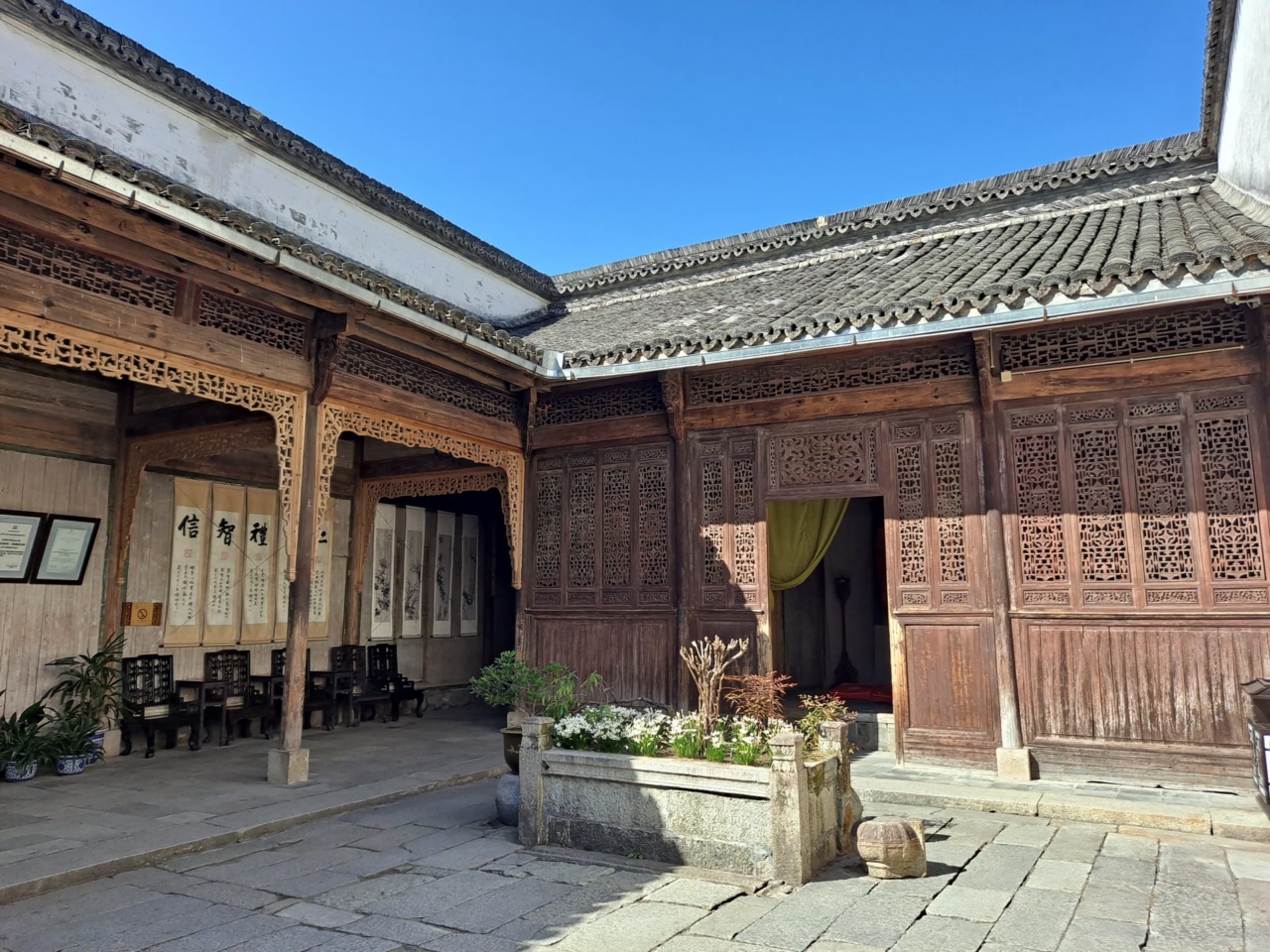
Private dwellings, a paid guided visit and buildings open with admission are different things. The county's visitor rules explicitly say not to enter residents' homes that are not open to visitors. An open door, a guesthouse booking or a heritage listing is not permission to walk through other people's courtyards. Ask before photographing people closely and respect requests not to photograph an interior.
Ticket prices and the questions to settle before paying
| Displayed adult product | Listed price | What it establishes |
|---|---|---|
| Hongcun admission | 94 CNY per adult ticket | A named seller offer, not every visitor category or gate price |
| Hongcun plus Xidi admission | 159 CNY per adult ticket | A combined admission product; transport is not established as included |
These products appeared on Qunar's ticket page, checked on 5 October 2026, with Ctrip domestic supplier information. They are dated listing prices, not a completed booking for your chosen date. The older government entry, published in October 2023, lists 104 CNY; do not confuse that older published tariff with the currently displayed seller offer.
Before buying, confirm date, visitor category, included interiors, admission document and final total. If you use a foreign passport, check that the actual booking and gate procedure accept it. Reduced or free categories depend on documented eligibility; a child or senior product name alone is not proof that it fits every member of your group.
For an overnight stay, obtain the exact validity and exit-and-re-entry conditions before you leave the paid area. A visitor review about a three-day ticket is not the terms of your own purchase. Ask which gate and identity check apply, and whether your lodging is inside the admission boundary. The county rules say guests should buy admission before entering for accommodation or dining; a room booking does not automatically replace it.
The government entry describes village access as 24 hours. That does not establish round-the-clock opening of Chengzhi Hall, the academy, ticket desks or every gate. Check interior hours and your arrival procedure separately. Likewise, a cancellation badge on a seller page is not the complete refund policy. Optional guiding and food should be compared separately from admission.
Transport: identify the right starting point
The main planning mistake is treating Huangshan North railway station, Tunxi city centre and Tangkou at the mountain's south gate as the same place. The municipal transport guide for Spring Festival 2026 lists distinct Hongcun connections from these origins and also from Yixian East railway station. Your arriving train and the next night's lodging determine which connection makes sense.
For Huangshan North departures, that guide names 黄山旅游官方平台, the Huangshan Tourism Official Platform, and its transport-booking section. For Tunxi departures it names 黄山长运出行 or Didi's 站点巴士 station-bus option. For the mountain south-gate interchange it names 黄山风景区汽车站. These Chinese names help find the intended service rather than a similarly named tour.
The guide was published on 13 February 2026 for the Spring Festival; its departure times and special holiday changes are not a verified October timetable. Query your actual date, boarding point, arrival stop and last return. Do not assume every Tunxi bus goes via Tangkou, that Hongcun and Xidi have a frequent direct service, or that a mountain visit automatically leaves time for the last onward bus.
If arranging a car, agree the total per vehicle, passenger and luggage capacity, exact drop-off, waiting and return. Do not rely on an unverified late-night taxi supply or a fixed journey time from all origins. Ask your accommodation for the final walk from a permitted drop-off; narrow lanes and thresholds can matter more with a suitcase or limited mobility.
Photography, weather and respectful walking
Choose early or late light if that suits your photographs, but check access and transport before committing to those hours. Reflections depend on calm water, not a season alone. Spring flowers, autumn colour, dawn mist and winter snow should be possibilities to investigate for your dates, not guaranteed scenery or a promise that winter services always run less often.
Walk carefully around stone surfaces, steps, thresholds and water channels, especially when wet. The county rules specifically draw attention to these hazards. Choose footwear for secure footing; an apparently gentle village walk is not proof of a fully step-free route. Ask about the whole route if accessibility matters.
Keep a tripod or easel out of walkways and follow current photography restrictions. If artists are sketching beside the water, leave their working space clear; their presence does not mean a daily painting class is available. Prepare a payment method the actual seller or lodging accepts and keep a workable backup. Check acceptance before relying on one app or a foreign card.
Combine Hongcun with Xidi or the mountain
Compare Xidi if you want a second village rather than more time at the same ponds. UNESCO describes Xidi along several streams and Hongcun around its two pools. A full day for both is an editorial itinerary option only if admission, transfer and open interiors fit. The combined ticket does not itself provide a bus or prove a saving against every separately available offer.
Keep a Huangshan mountain visit as a separate travel stage, with its own admission, access transport and hiking demands. Avoid scheduling a descent, two villages and a train connection without checking each leg. If arrival is late, settle lodging and its gate procedure first rather than relying on an unconfirmed evening interior visit.
Use the China overview for onward planning. For admission and access questions, the government listing gives 0559-5541158 as the Hongcun scenic-area number. Ask specifically about your ticket, date, passport and intended interiors. The goal is a realistic village visit, not a timetable built from unrelated stations or a guarantee of postcard conditions.
Sources and background
These sources support the topics listed below, not every statement or current price in this article.
- [1] UNESCO World Heritage Centre: Ancient villages in southern Anhui: Xidi and Hongcun, heritage description and Outstanding Universal Value. Retrieved October 5, 2026. History, Culture
- [2] ICOMOS, hosted by UNESCO World Heritage Centre: ICOMOS 2000 evaluation: selected Hongcun water-system history and village architecture. Retrieved October 5, 2026. History, Culture
- [3] Huangshan Municipal People's Government, information from Yi County: Hongcun government visitor listing of 31 October 2023: admission orientation, water layout and visitor conduct. Retrieved October 5, 2026. Admission, Access, Culture, Safety
- [4] Huangshan Municipal Transport Bureau, hosted by Huangshan Municipal People's Government: Spring Festival 2026 transport guide: sections six and seven, route origins and official booking channels. Retrieved October 5, 2026. Transport
- [5] Qunar ticket marketplace, Ctrip domestic supplier offers: Qunar seller listing checked 5 October 2026: adult admission and Hongcun plus Xidi products. Retrieved October 5, 2026. Admission
Frequently Asked Questions
A half day is a useful planning allowance for the village; a compact visit can focus on the ponds and selected open buildings. An overnight stay gives more choice of timing, not guaranteed empty lanes or mist. Check lodging location, ticket validity, re-entry and luggage access before choosing it.
The Qunar listing checked on 5 October 2026 displayed an adult Hongcun ticket at 94 CNY and adult Hongcun plus Xidi admission at 159 CNY. These are named seller offers, not a date-selected purchase or a universal tariff. Confirm category, passport compatibility, included interiors and final price.
Three-day validity and re-entry were not established from current first-party terms for your purchase. Ask the actual seller or gate about validity, allowed exits, entry document and lodging access before leaving. Do not use a visitor review as your own ticket conditions.
No such blanket opening was established. The older government listing describes village access as 24 hours, not every historic interior, gate or ticket desk. Confirm the hours of the buildings you want to visit and the admission procedure for a late arrival.
Huangshan North, Tunxi and the Tangkou mountain south-gate area are distinct origins. The municipal Spring Festival 2026 guide lists separate connections and also Yixian East station. Use its official service names to check your actual date, boarding stop and return, not its February holiday times as an October schedule.
It is a planning option if the transfer, admissions and open interiors fit your day. A Hongcun plus Xidi adult product was displayed at 159 CNY in the checked seller listing, but transport was not established as included. No current frequent direct service or fixed journey time is guaranteed here.
Follow permitted lanes between South Lake, Moon Pond and the water channels. Look at courtyard layouts, horse-head gables and carvings, with Chengzhi Hall and South Lake Academy where open and included. The village has private homes as well as visitor spaces; do not enter homes closed to visitors or photograph residents closely without asking.