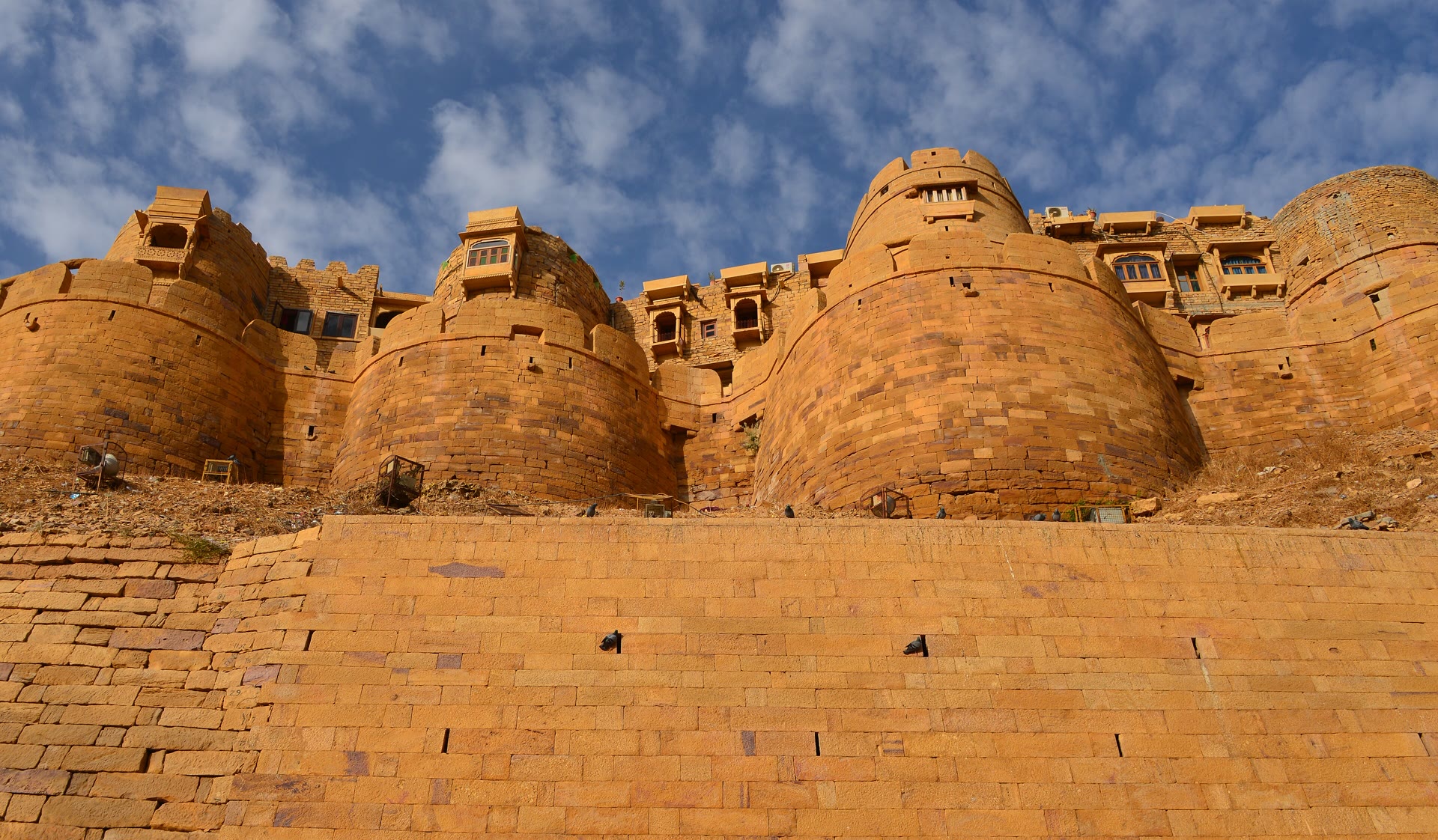
Most forts are museums. Jaisalmer Fort is a neighborhood. Rising from the Thar Desert like a sandcastle made permanent, this massive hilltop citadel in western Rajasthan still houses roughly a quarter of the old city's population within its honey-colored walls. Shopkeepers sell textiles from ground-floor rooms that have been storefronts for centuries. Families cook dinner behind carved sandstone facades. Temples that predate the fort itself welcome worshippers every morning. It is one of the very few "living forts" remaining in the world, and that distinction makes it fundamentally different from every other fortress in India.
Known locally as Sonar Quila (the Golden Fort), Jaisalmer Fort was built in the 12th century by Rajput ruler Rawal Jaisal. The yellow sandstone walls glow amber in the afternoon light and turn golden at sunset, giving the fort its name. UNESCO recognized the entire fort as a World Heritage Site, not just for its architecture but for the continuity of life within it. Visiting Jaisalmer Fort means walking through a living community, not just admiring old stones.
History of the Golden Fort
Rawal Jaisal founded both the city and the fort in the mid-12th century, choosing Trikuta Hill for its strategic position along the trade routes connecting India to Central Asia, Egypt, and the Arabian Peninsula. For centuries, Jaisalmer thrived as a crucial stop on the caravan routes carrying silk, spices, and opium across the desert. The wealth generated by this trade funded the extraordinary carved havelis and temples that still stand today.
The fort withstood multiple sieges throughout its history, including attacks by the Sultans of Delhi. During two particularly devastating sieges, the women of the fort performed jauhar (mass self-immolation) rather than face capture, events that remain deeply significant in Rajput cultural memory. The fort's importance as a military installation declined after the British colonial period shifted trade to sea routes, but its role as a residential center never stopped.
Things to Do
What to See Inside the Fort
The Jain Temples
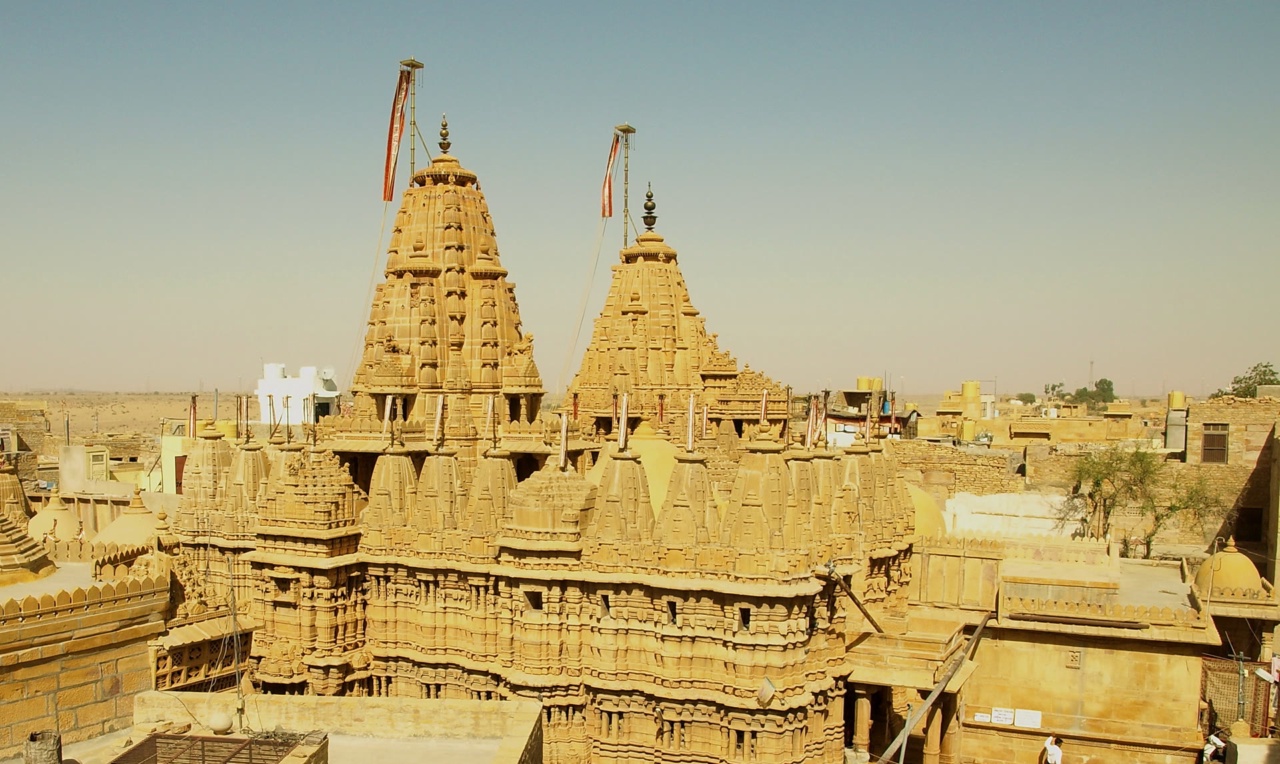
Seven interconnected Jain temples within the fort walls are among the finest examples of Dilwara-style temple architecture in Rajasthan. Built between the 12th and 15th centuries, they feature extraordinarily detailed stone carvings - ceiling medallions, pillars, and doorframes worked to a level of intricacy that seems impossible in sandstone. The temples are dedicated to various Jain Tirthankaras and remain active places of worship. A small entry fee of around Rs. 100 applies, and photography inside is restricted. Remove your shoes before entering and avoid leather items, as per Jain customs.
The Royal Palace
The Raj Mahal (Royal Palace) occupies a prominent position within the fort and has been partially converted into a museum. The palace showcases several floors of royal chambers, including the Maharaja's throne room, ornate balconies with jharokha (overhanging enclosed balcony) windows, and displays of royal artifacts, stamps, and historical photographs. Entry costs Rs. 250 for foreign visitors and Rs. 50 for Indian nationals. An audio guide is available and worth taking, as it provides context that the minimal signage inside does not.
The Havelis
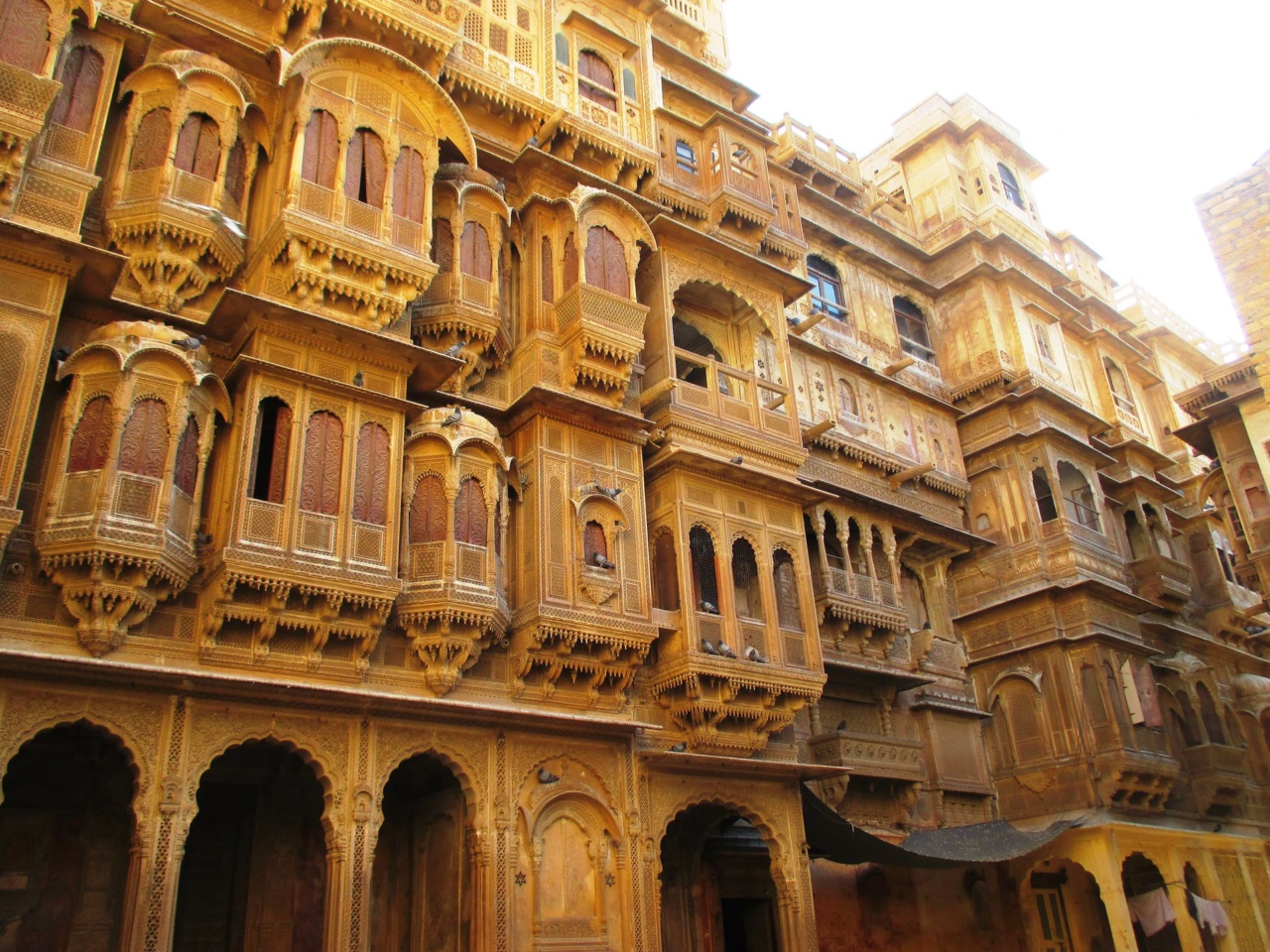
The merchant mansions within and just outside the fort are architectural marvels. Patwon Ki Haveli is the most elaborate, a cluster of five adjoining mansions built by a wealthy Jain merchant family. The facades feature mirror work, paintings, and sandstone carvings so fine they resemble lacework. Salim Singh Ki Haveli has a distinctive peacock-shaped roof bracket, and Nathmal Ki Haveli was carved by two brothers working simultaneously on each half, resulting in slightly asymmetrical facades that reward close inspection.
The Fort Walls and Bastions
The fort has 99 bastions, and walking along sections of the ramparts offers panoramic views of the city below and the desert beyond. The western ramparts are particularly popular at sunset, when the entire fort and surrounding city turn deep gold. Cannon platforms at several bastions provide photogenic vantage points. The walk along the walls is free and unguided, so you can explore at your own pace.
Exploring the Fort Streets
The narrow lanes inside the fort are the real attraction for many visitors. Winding passages open into small squares, textile shops spill colorful fabrics onto stone steps, and cows wander past carved doorways that would be roped off in any other monument. The main market street runs from the fort entrance to the central square (Dashera Chowk), where the royal palace, temples, and several restaurants cluster together.
Getting deliberately lost in the side lanes is half the experience. You will stumble across ancient wells, crumbling balconies that frame desert views, and homes where sandstone screens (jali work) filter light into geometric patterns on interior walls. The residential areas are quieter and less touristic than the main drag, and most residents are friendly if you show basic courtesy and ask before photographing their homes.
Practical Information
| Detail | Information |
|---|---|
| Fort entry | Free (the fort streets are open to all) |
| Royal Palace museum | Rs. 250 foreigners / Rs. 50 Indians |
| Jain Temples | Rs. 100 (camera fees extra) |
| Opening hours | 09:00 to 17:00 daily (palace and temples) |
| Time needed | 3 to 5 hours for a thorough visit |
Getting to Jaisalmer
Jaisalmer sits in the far western corner of Rajasthan, near the Pakistan border. It is well connected but distances from other major cities are significant.
- By train: Jaisalmer railway station receives daily trains from Jodhpur (approximately 5 to 6 hours), Jaipur (12 hours overnight), and Delhi (18 hours). The overnight trains from Jaipur and Delhi are popular with tourists and should be booked well in advance.
- By bus: Government and private buses run from Jodhpur (5 to 6 hours), Jaipur (12 hours), and Udaipur (10 hours). Sleeper buses for overnight journeys are available from Jaipur.
- By air: Jaisalmer has a small airport with limited domestic flights, primarily from Delhi and Jaipur. Jodhpur airport, about 280 kilometers away, has more frequent connections and serves as an alternative entry point.
Where to Stay
Staying inside the fort is one of the unique experiences Jaisalmer offers. Several heritage guesthouses occupy restored havelis within the walls, with rooftop terraces offering sunset views over the desert. However, the fort's drainage infrastructure is under strain from tourism, and conservation groups have raised concerns about water damage to the ancient foundations. Some travelers choose to stay in the town below the fort as a more sustainable option while still visiting the fort on foot during the day.
Budget rooms inside the fort start from around Rs. 500 ($6) per night, mid-range heritage rooms from Rs. 2,000 ($24), and upscale haveli conversions from Rs. 5,000 ($60) and up. Outside the fort, options range from backpacker hostels to luxury desert camps on the outskirts of town.
Tips for Visiting Jaisalmer Fort
- Visit in winter. October to March offers comfortable temperatures between 10 and 25 degrees Celsius. Summer months (April to June) push past 45 degrees, making extended walking in the exposed fort extremely uncomfortable.
- Come for sunset. The fort earns its "Golden" name at sunset when the sandstone walls catch the low light. The western bastions and several rooftop restaurants offer prime viewing spots. Arrive by 16:00 in winter to secure a good position.
- Hire a local guide at the entrance. The fort's history is rich and complex, and the minimal signage inside does not do it justice. Licensed guides charge Rs. 500 to Rs. 1,000 for a two-hour tour and can access areas and stories that solo visitors miss.
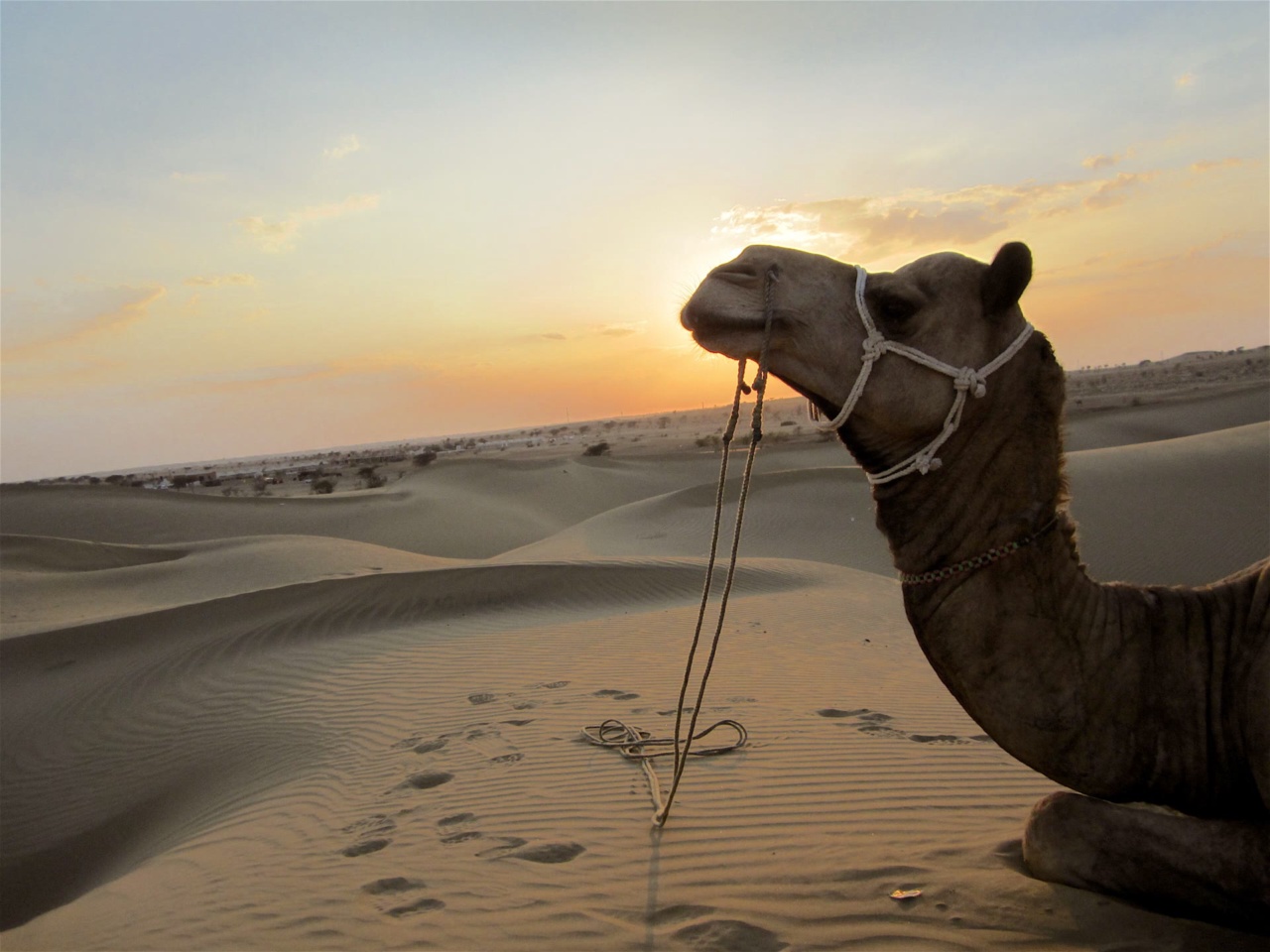
- Combine with a desert excursion. Jaisalmer is the main base for camel safaris and overnight stays in the Sam Sand Dunes, about 40 kilometers west of the city. Most guesthouses can arrange trips. A sunset camel ride costs Rs. 500 to Rs. 1,500 per person, while overnight desert camps range from Rs. 2,000 to Rs. 10,000.
- Respect the residential areas. The fort is someone's home, not just a monument. Avoid photographing residents without permission, keep noise down in the quieter lanes, and do not litter. The conservation challenges facing the fort are real, and respectful tourism helps.
- Watch your step. The stone streets inside the fort are uneven and can be slippery. Cow dung is an occasional hazard. Sturdy shoes are better than flip-flops for the cobbled lanes and bastions.
- Plan for more Rajasthan. Jaisalmer pairs naturally with Jodhpur (the Blue City, 5 hours away) and the desert town of Bikaner. More guides to India's destinations are available on GoAsia.cc.
Frequently Asked Questions
Jaisalmer Fort is one of the few living forts in the world, meaning a significant population still resides within its walls. About a quarter of Jaisalmer's old city inhabitants live inside the fort, running shops, restaurants, and guesthouses in buildings that date back centuries. This makes it fundamentally different from forts that function purely as museums.
Walking through the fort streets is free. The Royal Palace museum costs Rs. 250 ($3) for foreign visitors and Rs. 50 for Indian nationals. The Jain Temples charge around Rs. 100. An audio guide for the palace is available for an additional fee. Budget roughly Rs. 500 ($6) total for all ticketed attractions inside the fort.
The fort sits on a hill in the center of Jaisalmer city and is reached on foot through the main gate (Akhey Pol). From the Jaisalmer railway station, it is about 2 kilometers by auto-rickshaw (Rs. 50 to Rs. 100). To reach Jaisalmer itself, overnight trains run from Jaipur and Delhi, and buses connect from Jodhpur in 5 to 6 hours.
Plan at least 3 to 5 hours for a thorough visit covering the Royal Palace, Jain Temples, havelis, and wandering the streets. Many travelers spend a full day or even stay overnight inside the fort. If you only have half a day, prioritize the Jain Temples and the sunset views from the western bastions.
Staying inside offers a unique experience with haveli guesthouses, rooftop terraces, and the atmosphere of the fort after day-trippers leave. However, conservation groups note that tourism strains the fort's drainage systems. Budget rooms start from Rs. 500 per night, while heritage rooms run Rs. 2,000 and up.
October to March is ideal, with daytime temperatures between 10 and 25 degrees Celsius. Summer months from April to June see temperatures above 45 degrees, making outdoor exploration extremely uncomfortable. The annual Desert Festival in February adds cultural events and camel races to the visit.
Jaisalmer is the main hub for Thar Desert excursions. The Sam Sand Dunes, 40 kilometers west, offer sunset camel rides from Rs. 500 and overnight desert camp stays from Rs. 2,000. Most guesthouses and hotels in Jaisalmer arrange these trips with one day's notice.
The fort streets have no dress code, but the Jain Temples require modest clothing covering shoulders and knees. Leather items including belts and bags should be left outside the temples as per Jain custom. Remove shoes before entering any temple. Photography restrictions apply inside the Jain Temples.