Polonnaruwa Ancient City: Ruins, Tickets and Visit Planning
Photo: Datingjungle / Unsplash
Contents
Choose Polonnaruwa to walk through a medieval capital of palace ruins, Buddhist monuments, Hindu shrines and a great irrigation reservoir. The city was Sri Lanka's second great capital, from the mid-11th century for about two and a half centuries, and it is the most compact of the island's ancient cities.[1] Pick the monument groups that interest you and decide how you will travel between them: a bicycle gives freedom, but it is not the best choice for every visitor or every kind of weather.
| Planning choice | When it suits you | What to agree |
|---|---|---|
| A focused visit | You want a small selection of monuments with time to look closely | Travel between your chosen groups and the museum visit |
| A bicycle visit | You are comfortable cycling and want control over stops | Bike condition, rental period and the return |
| A driver and optional guide | You prefer less cycling or want historical explanation | Whether transport, waiting, guide and tickets are charged separately |
Give Polonnaruwa a full day if you want several monument groups and the museum without a tight onward connection. With less time, shorten your shortlist.
Monuments to put on your shortlist
Polonnaruwa's greatness came from rulers such as Vijayabahu the Great, Parakramabahu the Great and Nissanka Malla, who fostered agriculture, religion and the arts. Brick replaced the stone of Anuradhapura, which allowed many buildings to rise in a short time.[1]
- Royal Palace and Council Chamber: The royal centre's brick walls, reinforced with huge timbers, stand to two storeys. The palace of Parakramabahu the Great had seven storeys and, according to the chronicles, a thousand rooms.[1]
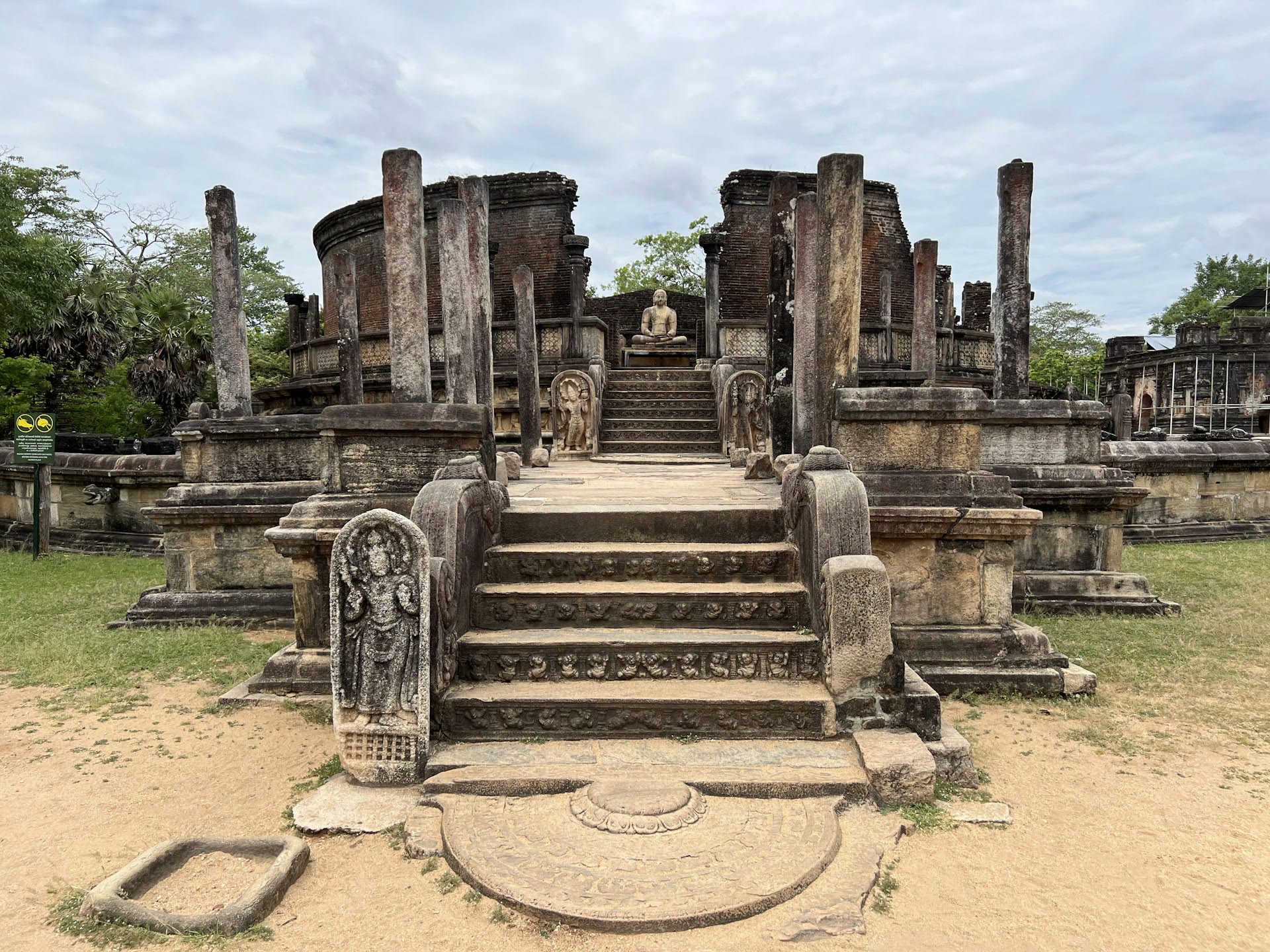
- Sacred Quadrangle: The Tooth Relic of the Buddha was once enshrined here. The circular Vatadage has carved stone plinths and slender pillars, and the small Nissankalata Mandapa has pillars shaped like lotus stems.[1]
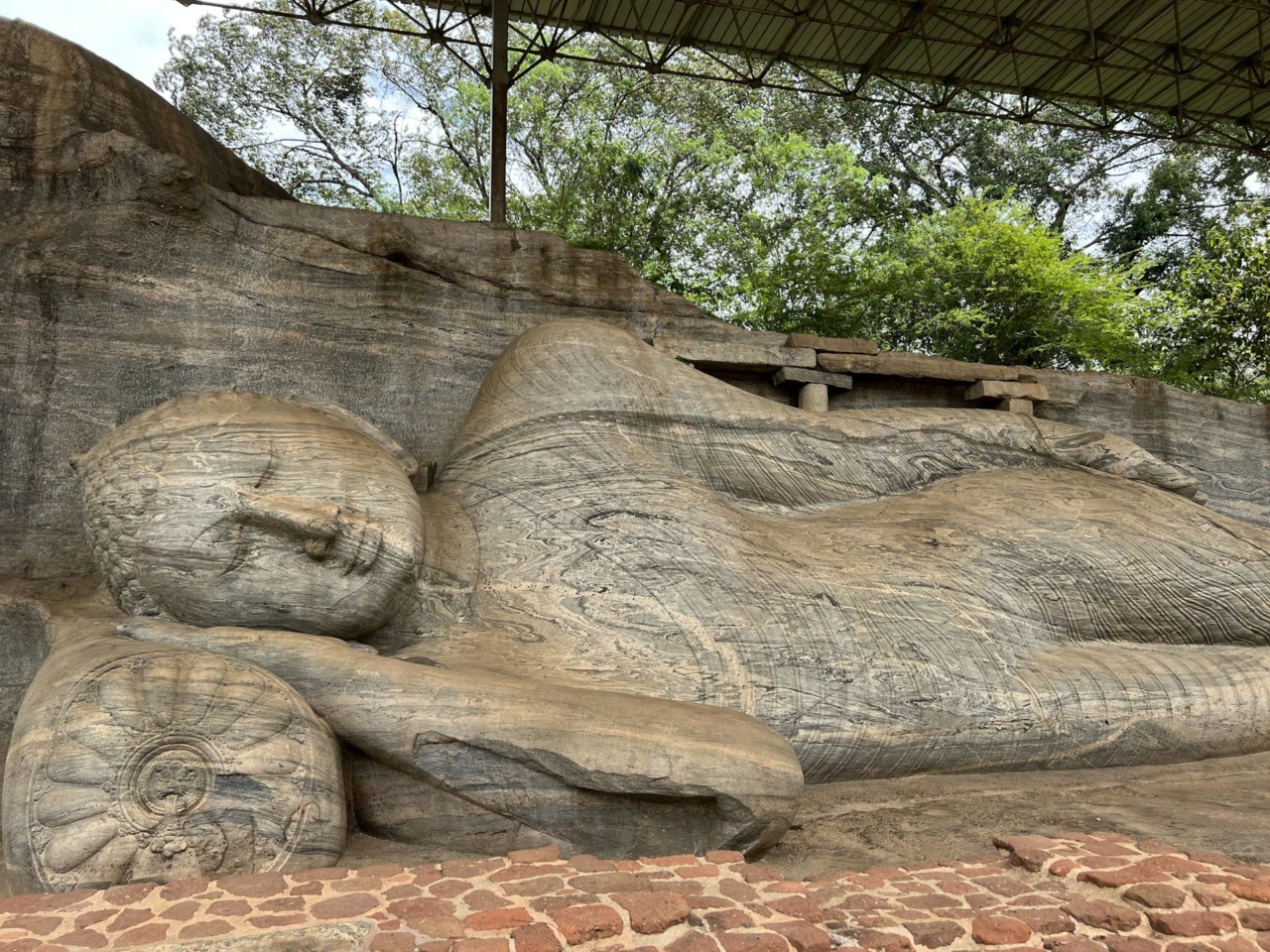
- Gal Vihara: The colossal rock-cut Buddha images are the most celebrated sight in Polonnaruwa. Leave time to study the carving instead of snapping a quick photo.[1]
- Rankot Vehera, Kiri Vehera and Alahana Parivena: Colossal brick stupas and the monastic university. The Alahana Parivena complex includes a monastic hospital with a stone trough where patients were bathed in herbal brews.[1]
- Lankatilake, Thuparama and Tivanka image houses: Massive brick buildings with gigantic Buddha images. Tivanka keeps the best-preserved wall paintings.[1]
- Hindu shrines: The stone Siva Devales Nos. 1 and 2 follow South Indian architectural traditions.[1]
- Parakrama Samudra: The 'Sea of Parakrama' is the massive reservoir that Parakramabahu the Great built, the crowning achievement of an age when Sri Lanka exported rice.[1]
The colossal statue at Potgul Vehera has been interpreted as a king or a sage, so it is not a confirmed portrait of Parakramabahu. The tiered Satmahal Prasada in the Sacred Quadrangle resembles stupas of Southeast Asia, which points to cultural links with that region.[1]
Things to Do
Offers are only loaded from GetYourGuide after you click. GetYourGuide can then process your IP address and set cookies. Privacy Policy
GetYourGuide partner offers. GoAsia may earn a commission if you book through these offers. Check whether tickets or transfers are included, and follow the attraction's official booking and admission rules.
Tickets, published prices and museum hours
The Central Cultural Fund (CCF) lists a full Polonnaruwa ticket at USD 30 or LKR 10,080 and a half ticket at USD 15 or LKR 5,040. Its table was updated on 14 October 2026 and converts at 336 LKR per USD, including 18% VAT.[2] Prices are quoted in USD but payable in LKR at the current rate, and SAARC citizens pay 50% less.[3]
| Item | Information |
|---|---|
| Site ticket counters | Open daily 07:00 to 17:00[3] |
| Polonnaruwa Museum | Included with the Polonnaruwa ticket; open daily, 08:00 to 17:00 on the ticket page and 07:00 to 18:00 on the heritage page[3][1] |
| Single entry | A Polonnaruwa ticket is valid for one entry[3] |
| Cultural Triangle Round Ticket | Covers Sigiriya, Anuradhapura, Polonnaruwa and the archaeological museums; valid 2 months from first use and to be used within 3 months of purchase[3] |
Tickets can be booked online with the CCF eTicketing system, and you show the booking receipt at the site counter to collect your physical tickets. Online orders are valid for 90 days. Tickets include photography, while professional filming and drones need prior written approval from the CCF.[3] Keep your ticket with you for checks, because it covers a single entry.
Choose how to move between monument groups
The monuments are spread out, and the best time to see them is in daylight, when visibility is at its best.[1] Compare walking, cycling and a driver against your shortlist, fitness and the weather. If you cycle, check brakes, tyres and fit before you set off, and plan a sensible return. A driver can take you to the farther groups, and a guide adds historical explanation; agree on language, duration and price separately for each.
For a vehicle, ask whether the quote is for the whole vehicle or per person, and how long the driver waits. An overnight stay in Habarana, Dambulla, Sigiriya or nearby spares you a long approach before a full day of ruins, so compare the return transfer and the location of your hotel.
Visitor rules and practical preparation
Damaging monuments, taking away or writing on archaeological material, and damaging trees and plants are forbidden and carry penalties. So are photographs with your back to a Buddha image and any touching that shows disrespect. Dress respectfully for the shrines and follow local instructions about shoes and permitted areas.[1]
Polythene and plastic containers are not allowed on the site. Put waste in the bins, avoid loudspeakers, radios and alcohol, and eat only in suitable places.[1] Bring sun and rain protection and plan rest stops.
Fit Polonnaruwa into the Cultural Triangle
Polonnaruwa shows a medieval royal and religious landscape, while Anuradhapura offers an older sacred-city history. Give each its own ticket, transfer and rest time instead of trying to cover both in one day. Use Sri Lanka travel information to plan the wider journey. If you combine Polonnaruwa with Sigiriya, Dambulla or a national park, check each attraction's access and schedule separately.
Sources and background
Numbers in the text such as [1] refer to these sources.
- [1] Central Cultural Fund, Sri Lanka: Polonnaruwa: monuments and visitor rules. Retrieved October 22, 2026.
- [2] Central Cultural Fund, Sri Lanka: Ticket Issuance: prices of tickets for archaeological sites and museums. Retrieved October 22, 2026.
- [3] Central Cultural Fund, Sri Lanka: Heritage tickets and museum inclusion. Retrieved October 22, 2026.
Frequently Asked Questions
A full day gives you room for several monument groups, the museum and rest without a tight onward connection. With less time, choose the groups that interest you most, such as Gal Vihara, the Sacred Quadrangle and the Royal Palace.
The CCF lists a full ticket at USD 30 or LKR 10,080 and a half ticket at USD 15 or LKR 5,040, including 18% VAT, in its table updated on 14 October 2026. SAARC citizens pay 50% less. The ticket includes the museum.
The museum is open daily. The CCF ticket page gives 08:00 to 17:00 and its heritage page 07:00 to 18:00, so plan your museum visit between 08:00 and 17:00.
Cycling gives flexibility if you are comfortable riding and the weather suits you, but it is not the best choice for everyone. Walk selected groups or hire a driver if you prefer. Check your bicycle and agree the rental period and return.
The Royal Palace group, the Sacred Quadrangle, Gal Vihara, the brick stupas and the image houses, according to your interests. Add the museum for context and treat the Parakrama Samudra reservoir as a separate stop.
Do not damage, remove or write on monuments, touch Buddha images disrespectfully or pose for photos with your back to them. Professional filming needs permission from the CCF, and polythene and plastic containers are not allowed on the site.
Yes, in several days. The Cultural Triangle Round Ticket covers Polonnaruwa, Sigiriya and Anuradhapura for 2 months from first use, with a single entry per site. Each site needs its own transfer and a good part of a day.