Royal Palace Phnom Penh: plan your visit and Silver Pagoda
Contents
- 1. Choose a visit that fits your day
- 2. Admission and visiting hours
- 3. Read the architecture as a royal landscape
- 4. The Silver Pagoda and two distinct Buddha images
- 5. Dress, photography and choosing a guide
- 6. Getting there and practical access
- 7. Add the National Museum
- 8. Build a manageable Phnom Penh day
- 9. Sources and background
- 10. Frequently Asked Questions
Choose Phnom Penh's Royal Palace if you want to understand Khmer royal architecture and the Buddhist art of the Silver Pagoda. Add the nearby National Museum if you want more time with Khmer sculpture and collections. They are separate visits with separate tickets. The palace is an official royal residence, so you see the public areas, not every building or private area.[1]
Choose a visit that fits your day
| Your priority | A sensible plan | What to check |
|---|---|---|
| Royal architecture and the Silver Pagoda | A focused palace visit in one visiting period | Open areas, admission conditions and time before closing |
| A broader introduction to Khmer art | Palace plus a separate National Museum visit | Two tickets, museum visitor categories and its last ticket time |
| A guided cultural visit | Ask about a licensed guide at the entrance | Language, route, duration and the total fee before agreeing |
| A short stop near the river | Decide whether you have enough time for the paid visit | Arrival time and the gap between the two visiting periods |
Allow roughly one and a half to two hours for the palace. With a guide, about two hours in total is a good starting point. Add travel, ticket queues, breaks and any other attraction separately.
Things to Do
Offers are only loaded from GetYourGuide after you click. GetYourGuide can then process your IP address and set cookies. Privacy Policy
GetYourGuide partner offers. GoAsia may earn a commission if you book through these offers. Check whether tickets or transfers are included, and follow the attraction's official booking and admission rules.
Admission and visiting hours
Admission for international tourists is $10, and the palace opens in two visiting periods: 08:00 to 11:00 and 14:00 to 17:00.[2] The palace is not open continuously from morning to evening, so do not plan a midday arrival. The Cambodia Tourism Board's palace page has the details.
Before you travel, confirm the visiting period, open areas, ticket categories and payment methods. The Cambodia Tourism Board is the government-supported body for tourism in Cambodia.[3]
Ask which visitor areas your ticket covers, including the Silver Pagoda on your day. Budget admission per person, your journey and a guide separately. Agree whether a transport or guide quote is per person, per vehicle, per group or per hour before paying.
Read the architecture as a royal landscape
Construction began in 1866 under King Norodom, and the palace was inaugurated in 1870. It was rebuilt and expanded in the early twentieth century.[2] The present complex therefore brings together several building phases, rather than a single unchanged nineteenth-century structure.
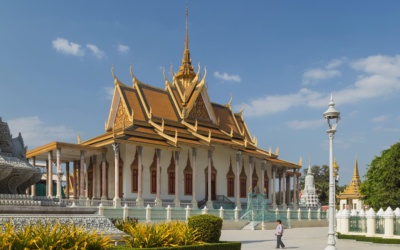
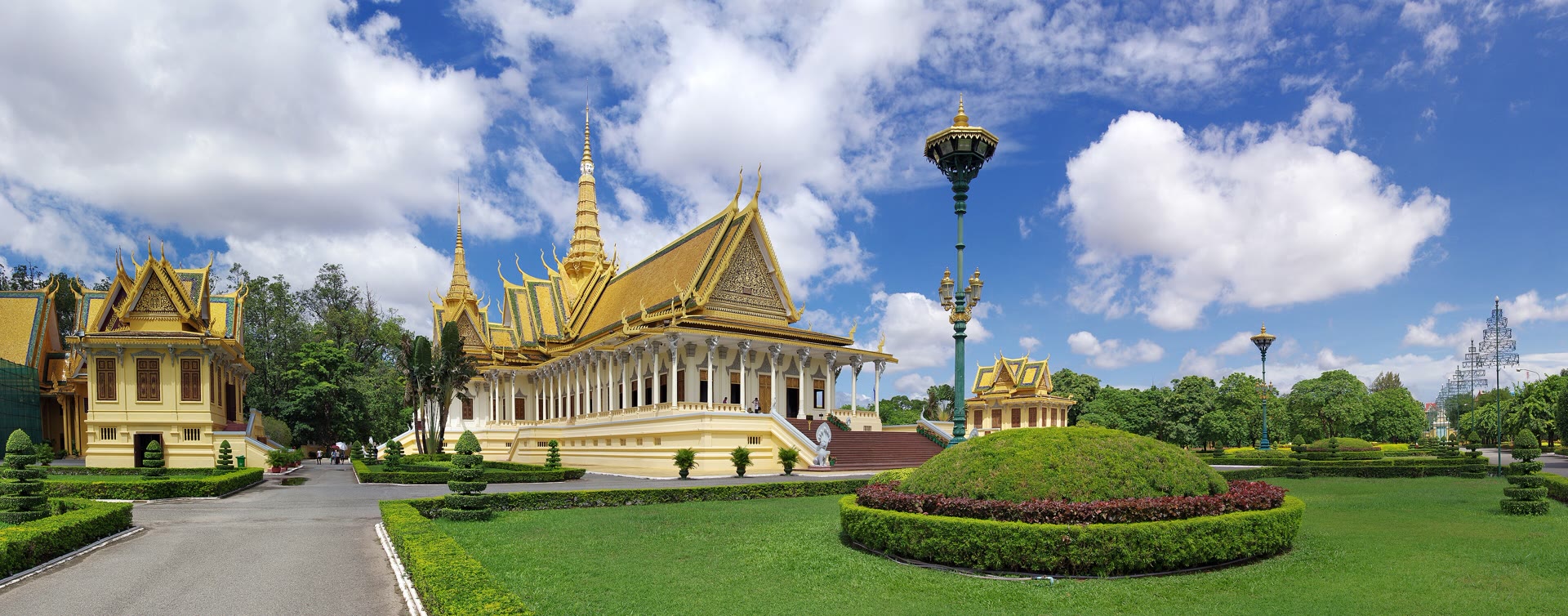
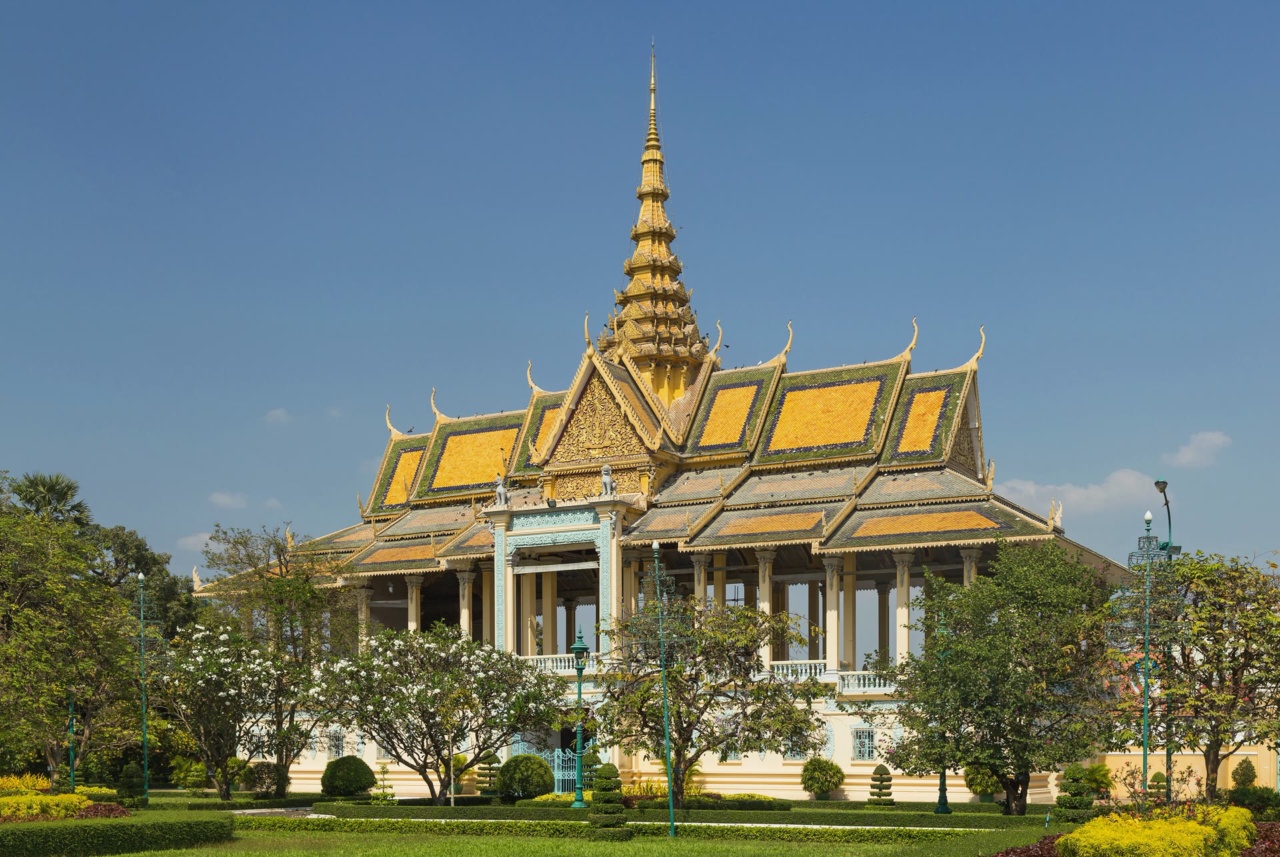
Look at the multi-tiered roofs, pointed spires and naga balustrades. The palace's Khmer name includes Chaktomuk, referring to its symbolic setting near the meeting of the Tonle Sap, Mekong and Bassac. The Throne Hall carries a four-faced Brahma motif.[2] That gives the riverfront location a cultural meaning beyond a photograph of gold roofs.
The Throne Hall, called Preah Tineang Tevea Vinichhay, has a spire 59 metres high. It hosts coronations and the reception of ambassadors.[2] You admire it from the visitor route; ordinary visitors cannot enter the hall or the royal living quarters.
The Chan Chhaya or Moonlight Pavilion is an open-air pavilion near the main gate.[2] Ask a guide to explain how a ceremonial hall differs from an open pavilion and a religious building. The shapes and functions give you more to notice than the gold alone.
The Silver Pagoda and two distinct Buddha images
The Silver Pagoda, Wat Preah Keo Morakot, contains two distinct Buddha images: a crystal Emerald Buddha and a diamond-decorated gold Buddha. The temple name does not label the gold image, and the crystal image's traditional name does not mean it is made of emerald.[2]
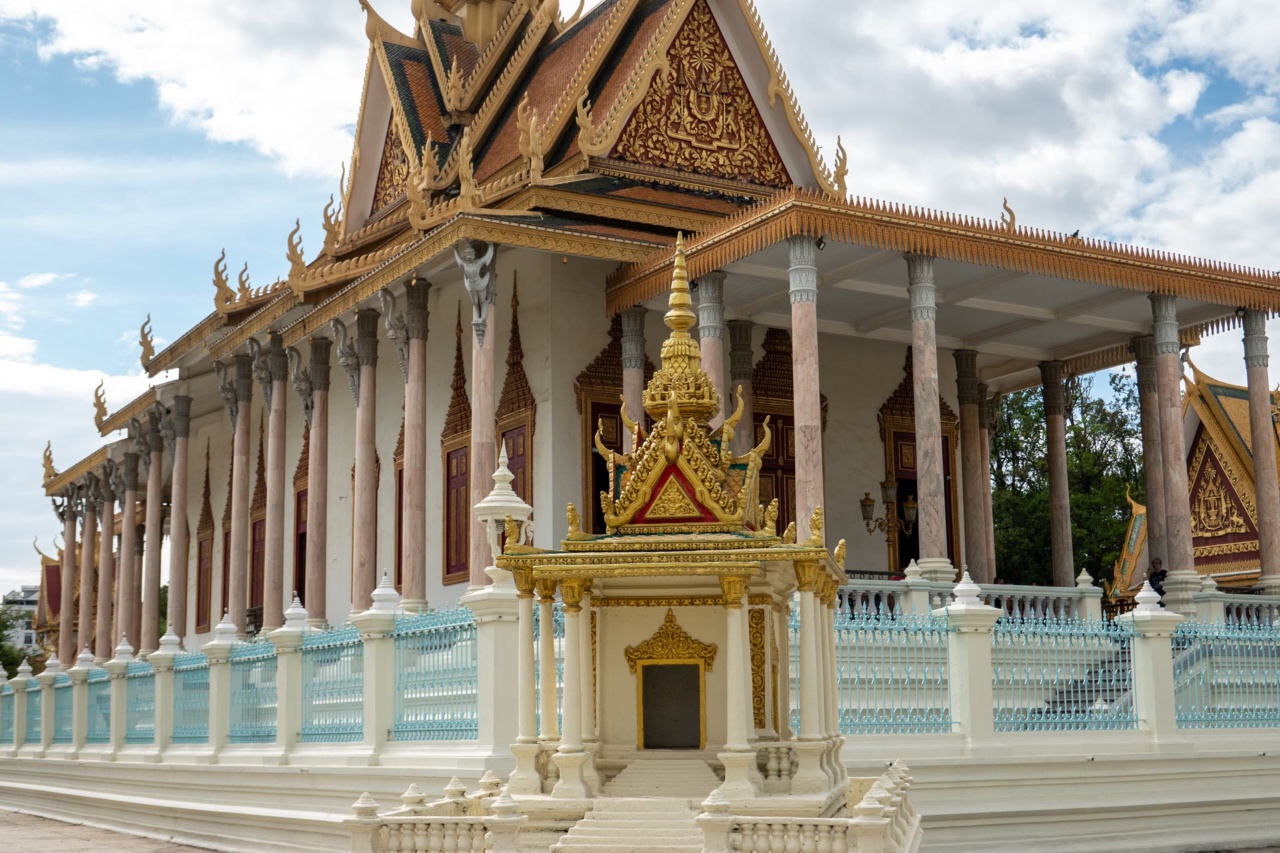
The floor is tiled in silver, and the pagoda holds religious objects and gifts.[1]
Take time to understand the two images and the temple's place within the royal compound. This is a religious setting as well as a collection of art. A good guide can help you tell an object's name, material and role apart.
Murals run around the Silver Pagoda.[1] They show Reamker, the Khmer Ramayana: Rama seeks Sita, who has been captured by Ravana, with support from Hanuman.[4] Knowing those characters gives you a starting point for talking through the gallery with a guide. Follow whichever sections are open on your visit.
Dress, photography and choosing a guide
Dress respectfully.[2] Arrive with shoulders and knees covered, as at any religious site, then follow the entrance and building instructions. Prepare suitable clothing beforehand rather than counting on buying or borrowing something at the gate.
Photography is not permitted inside the Silver Pagoda.[1] Follow signs and staff directions in other areas too, and ask before photographing an interior. Remove footwear wherever the building's instructions require it.
Guides are available near the entrance and ticket counters.[2] A guide is worth considering if you want to understand the buildings, images and murals. Before paying, ask about the guide's licence, language, route, duration and total price.
Getting there and practical access
The palace is in central Phnom Penh near the Tonle Sap riverfront.[2] Tell your driver that you need the visitor entrance and ticket counter, not a ceremonial gate or a riverfront viewpoint, and confirm the drop-off and final walk. If you walk from a nearby hotel, allow for the distance, crossings, heat and your mobility.
Choose the morning or afternoon period around your arrival, leaving time before closing. Expect some walking outdoors and bring water, rest breaks and protection for the weather.
If steps, uneven paths or prolonged standing are a concern, ask the palace about your visitor route and available assistance before you travel.
Add the National Museum
The National Museum stands on Street 13 next to the palace, with the entrance and ticket booth at the corner of Streets 13 and 178.[5] That is the museum's entrance, not the palace ticket counter.
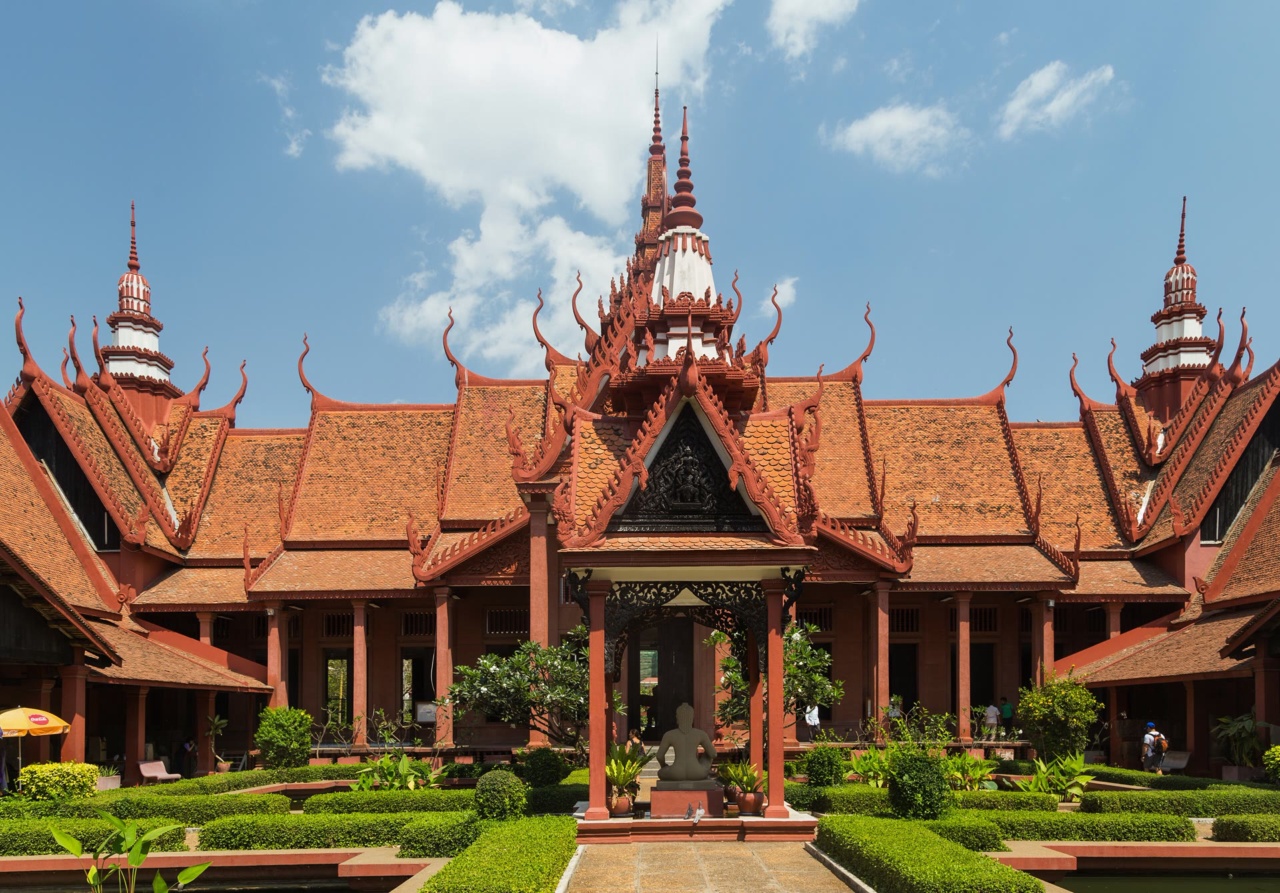
The museum is open 08:00 to 17:00 daily, with last admission tickets at 16:30. Tickets cost $10 for foreign guests aged eighteen and older, $5 for those aged ten to seventeen and 500 riel for Cambodian guests.[5] Ask about any child or group category that is not clear.
For an international visitor aged eighteen or older, the two standard admissions add up to $20 before transport, a guide or purchases.[2][5] There is no combined ticket. The museum can fill part of the palace's midday gap if that suits your arrival.
The museum prohibits photography inside its galleries but allows photographs of its exterior and courtyard. It also offers guided tours in several languages; ask about availability and fees.[5] Give yourself time to look at the collection rather than treating the museum as a waiting room between palace sessions.
Build a manageable Phnom Penh day
A focused palace visit, a separate museum visit and an optional riverfront walk make a coherent cultural day. Decide what matters most before adding further stops. If your schedule is tight, one visit with time to take it in beats two rushed admissions before closing.
Use the Cambodia travel overview for the wider journey.
Sources and background
Numbers in the text such as [1] refer to these sources.
- [1] Ministry of Foreign Affairs and International Cooperation, Economic Diplomacy portal; Culture Trip reprint: A Guide to Phnom Penh's Royal Palace and Silver Pagoda. Retrieved October 19, 2026.
- [2] Cambodia Tourism Board: The Royal Palace: Phnom Penh's Must Visit Attraction. Retrieved October 19, 2026.
- [3] Cambodia Tourism Board: About CTB. Retrieved October 19, 2026.
- [4] National Museum of Cambodia: Khmer art history: glossaries. Retrieved October 19, 2026.
- [5] National Museum of Cambodia: Information for visitors. Retrieved October 19, 2026.
Frequently Asked Questions
It is Cambodia's official royal residence and a place to learn about Khmer royal architecture and Buddhist art. Construction began in 1866 under King Norodom. Visits cover the public areas, not the private royal rooms.
Admission is $10 for international tourists. Budget transport and an optional guide separately.
Ask a driver for the visitor entrance and ticket counter near the palace, not just a ceremonial gate or riverfront viewpoint. Agree the fare and drop-off before setting out, whether you walk or ride from your hotel.
The palace opens from 08:00 to 11:00 and from 14:00 to 17:00. Leave time for the visit before closing and do not plan on continuous midday access.
Wat Preah Keo Morakot is the royal Buddhist temple within the palace compound. It has a silver-tiled floor and holds two different images: a crystal Emerald Buddha and a diamond-decorated gold Buddha.
Arrive with shoulders and knees covered, as at any religious site. The tourism board asks for respectful dress, and the entrance and building instructions on the day may add further requirements.
Allow roughly one and a half to two hours for the palace. With a guide, about two hours in total is a good starting point. Add travel, queues, breaks and a separate National Museum visit.
Photography is not permitted inside the Silver Pagoda. Some other areas have restrictions too, so follow signs and staff directions and ask before photographing an interior.