Wat Xieng Thong: Architecture and Visiting Luang Prabang’s Temple
Contents
- 1. History and Royal Significance
- 2. Architectural Highlights
- 2.1 The Sim (Main Ordination Hall)
- 2.2 The Tree of Life Mosaic
- 2.3 The Chapel of the Reclining Buddha
- 2.4 Ho Pha Marn
- 2.5 The Royal Funeral Chapel (Haw Latsarot)
- 3. Other Structures in the Compound
- 4. Visiting Wat Xieng Thong
- 4.1 Opening Hours and Entrance Fee
- 4.2 Dress Code
- 4.3 Getting There
- 4.4 Best Time to Visit
- 5. Combining Wat Xieng Thong with Other Luang Prabang Temples
- 6. Tips for Visiting Wat Xieng Thong
- 7. Sources and background
- 8. Frequently Asked Questions
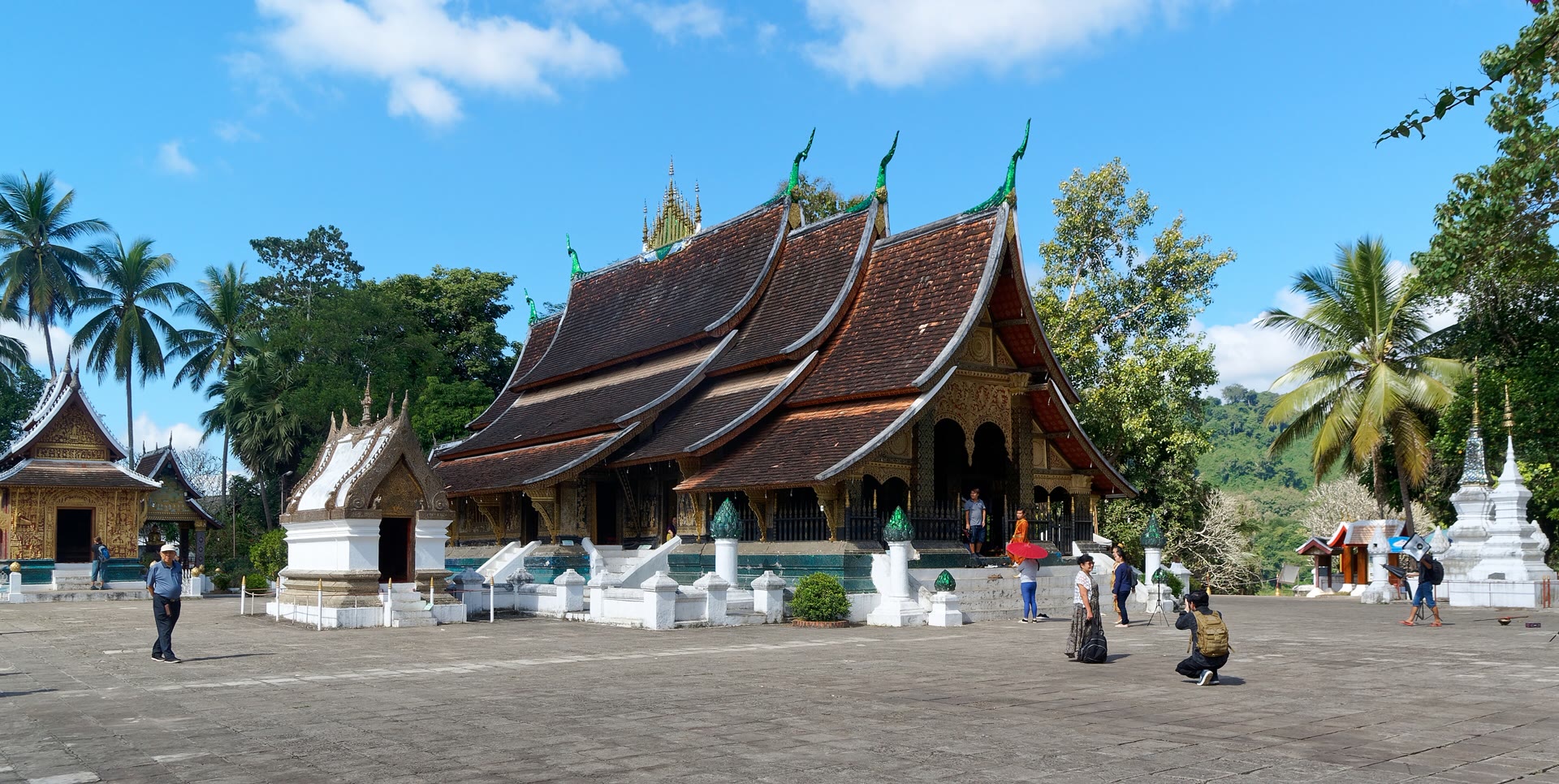
Wat Xieng Thong stands on a bank above the Mekong, near where the Nam Khan joins it, at the northern end of Luang Prabang’s old-town peninsula. King Setthathirath founded it around 1560, and it is a classic example of the Luang Prabang style, with a gracefully sweeping roof and glass mosaics.[1]
Wat Xieng Thong impresses through craftsmanship rather than scale. Every surface tells a story, from the gold-stencilled walls of the main chapel to the glass-mosaic Tree of Life on the rear wall. A visit is a concentrated lesson in Lao art, mythology and royal history, all within a compact riverside compound.
This guide covers the architectural highlights you should not miss, plus opening hours, dress code and the best time of day to go.
History and Royal Significance
According to local tradition, the temple takes its name from a great golden tree that once stood here. Soon after its construction King Setthathirath moved the capital to Vientiane, and the temple went on to enjoy the patronage of Kings Sisavang Vong and Sisavang Vatthana, the last two monarchs of Laos.[1]
UNESCO describes Wat Xieng Thong, which dates from the 16th century, as an ensemble of the most complex structures of all the pagodas of Luang Prabang.[2] Look at it as a living monastery, not a museum.
The temple was restored in 1928, between 1952 and 1960, in 1984 and in 2013.[1] That history is useful context for the decoration you see today.
Things to Do
Offers are only loaded from GetYourGuide after you click. GetYourGuide can then process your IP address and set cookies. Privacy Policy
GetYourGuide partner offers. GoAsia may earn a commission if you book through these offers. Check whether tickets or transfers are included, and follow the attraction's official booking and admission rules.
Architectural Highlights
The Sim (Main Ordination Hall)
The main chapel, or sim, is the first building you meet, and it is not large. Its low, sweeping roof has three tiers and is topped by a seventeen-segment gilded dok so fa, a symbol of royal patronage. A sim built by commoners would carry only a one- to seven-segment dok so fa.[1] The front of the ornament is shaped as a naga head.[1]
Inside, the windows and walls are decorated with gold-leaf lacquer showing Buddhist stories, and the main Buddha image is called Ong Luang. Pillars and beams carry gilded floral stencils.[1] Look from permitted areas and give worshippers space.
The Tree of Life Mosaic
The rear of the sim is adorned with coloured glass cut into the shape of a large Bodhi tree, surrounded by animals from Lao literature. In the afternoon sun it glitters.[1] Look closely at the coloured glass and the smaller scenes around the tree.
The Chapel of the Reclining Buddha
The small Red Chapel beside the sim holds a reclining Buddha lying on its right side with its hand supporting the head. The figure went to Paris for the 1931 exposition, stood in Vientiane for decades and came back to Luang Prabang in 1964.[1] Its outer walls are covered in small pieces of coloured glass forming folktale scenes.[1]
Ho Pha Marn
Ho Pha Marn, behind the sim, is the Chapel of the Standing Buddha. Its Pha Marn image looks much like the sacred Pha Bang, and many people mistake one for the other. The image is washed in a ceremony of worship.[1]
The Royal Funeral Chapel (Haw Latsarot)
The Royal Funerary Chariot Hall houses the gilded wooden carriage of King Sisavang Vong, who died in 1959. Construction of the hall began in 1962.[1] Seven large naga figures decorate the front of the carriage, and the exterior walls of the hall show carved, gilded scenes from Phalak Phalam, the Lao version of the Ramayana.[1]
Other Structures in the Compound
Besides the main chapel and the smaller Buddha chapels, look for these parts of the monastery:
- The Drum Tower (Ho Kong): A pavilion in front of the sim with gold-leaf lacquer stencilling on its pillars.[1]
- The Tripitaka Library (Ho Tai Yai): A hall with four-headed naga finials.[1]
- Monks’ Quarters (Kutis): The monastery includes living quarters for monks and novices. Respect their privacy and do not enter residential areas without permission.[1]
- Small Stupas: Stupas stand in the grounds as in other temples.[1]
The riverside setting also invites a walk along the Mekong afterwards, with views of the slow-moving water and distant hills.
Visiting Wat Xieng Thong
Opening Hours and Entrance Fee
| Detail | Information |
|---|---|
| Opening Hours | Daily 06:00 to 18:00[1] |
| Entrance Fee | LAK 30,000 per foreign visitor, free for Lao visitors[1] |
Dress Code
Cover your shoulders and knees, and take off hats and shoes. Respect the monks and novices: women must not touch them. Do not show affection in public.[1] Bring suitable clothing with you.
Getting There
The temple is on the main street at the end of the peninsula, about 10 minutes’ walk from the Luang Prabang Tourism Information Center, on the left-hand side.[1] If you take a driver, agree on the pickup point, destination and total fare before departure.
Best Time to Visit
Morning is the best time to visit, especially for photography.[1] Come early for soft light and fewer people.
Combining Wat Xieng Thong with Other Luang Prabang Temples
Wat Xieng Thong is a natural stop on a walk through Luang Prabang’s old peninsula. Compare its roofs and ornament with other temples and the surrounding urban architecture, and carry water for the walk in the heat.
The morning alms-giving procession (sai bat) passes in front of Wat Xieng Thong, among other places in town.[3] This is a religious practice, not a photo performance. Watch quietly from a respectful distance, dress modestly, do not block the procession and avoid flash. Make an offering only if it is meaningful to you and you can take part respectfully.
Tips for Visiting Wat Xieng Thong
- Look at the interior decoration from permitted areas. Do not shine a torch or phone light onto artwork or people.
- Do not skip the rear of the sim. Many visitors photograph the front entrance and move on, missing the Tree of Life mosaic on the back wall.
- Visit the funeral chapel. It is easy to walk past, but the royal funeral carriage inside is one of the most extraordinary objects in Luang Prabang.
- Be mindful of active worship. Monks live and practise here daily. Keep your voice low, do not point your feet at Buddha images, and ask permission before photographing monks or people praying.
- Carry small kip notes for the entrance fee and nearby purchases.
- Allow extra time for the mosaics. The glass panels on the outer walls of the chapels reward slow, close-up viewing, with scenes from folktales and daily life.[1]
Sources and background
Numbers in the text such as [1] refer to these sources.
- [1] Tourism Luang Prabang: Wat Xiengthong: history, architecture, opening hours, entrance fee and etiquette. Retrieved October 21, 2026.
- [2] UNESCO World Heritage Centre: Town of Luang Prabang. Retrieved October 21, 2026.
- [3] Tourism Luang Prabang: Morning Alms (Sai Bat). Retrieved October 21, 2026.
Frequently Asked Questions
King Setthathirath founded it around 1560, and it is a classic example of Luang Prabang architecture. Later kings Sisavang Vong and Sisavang Vatthana patronised it, and UNESCO describes it as an ensemble of the most complex structures of all the pagodas of the town.
Entrance costs LAK 30,000 per foreign visitor, and Lao visitors enter free. The temple is open daily from 06:00 to 18:00.
The temple is on the main street at the end of the old-town peninsula, about 10 minutes’ walk from the Luang Prabang Tourism Information Center. If you take a driver, agree on the pickup point, destination and total fare before departure.
Cover your shoulders and knees, and take off hats and shoes. Bring suitable clothing with you.
The rear wall of the main sim carries a glass mosaic in the shape of a large Bodhi tree, surrounded by animals from Lao literature. It glitters in the afternoon sun.
Morning is the best time to visit, especially for photography. Come early for soft light and fewer people.
Check the signs and ask staff before taking photographs inside halls. Ask permission before photographing monks or people praying. Do not use flash or a phone torch, and do not interrupt worship to get a picture.
The compound is compact, but leave extra time for the mosaics and carvings on the chapels, and for the Royal Funerary Chariot Hall. A walk along the Mekong makes a good addition afterwards.