
Contents
- 1. Getting Around Don Khone on Foot
- 1.1 Walking to the Main Sights
- 2. Getting Around Don Khone by Bicycle
- 3. Getting Around Don Khone by Boat
- 3.1 Local Longtail Boats
- 3.2 Boat Connections Between Islands
- 4. Getting Around Don Khone by Motorbike
- 5. Getting Around Don Khone by Kayak
- 6. Comparing Your Options
- 7. Practical Tips for Getting Around Don Khone
- 8. Popular Routes and Destinations
- 8.1 Pakse to Nakasong
- 8.2 Champassak to Nakasong
- 8.3 Don Khone to Veun Kham (Cambodian Border)
- 8.4 Don Det to Veun Kham
- 9. Frequently Asked Questions
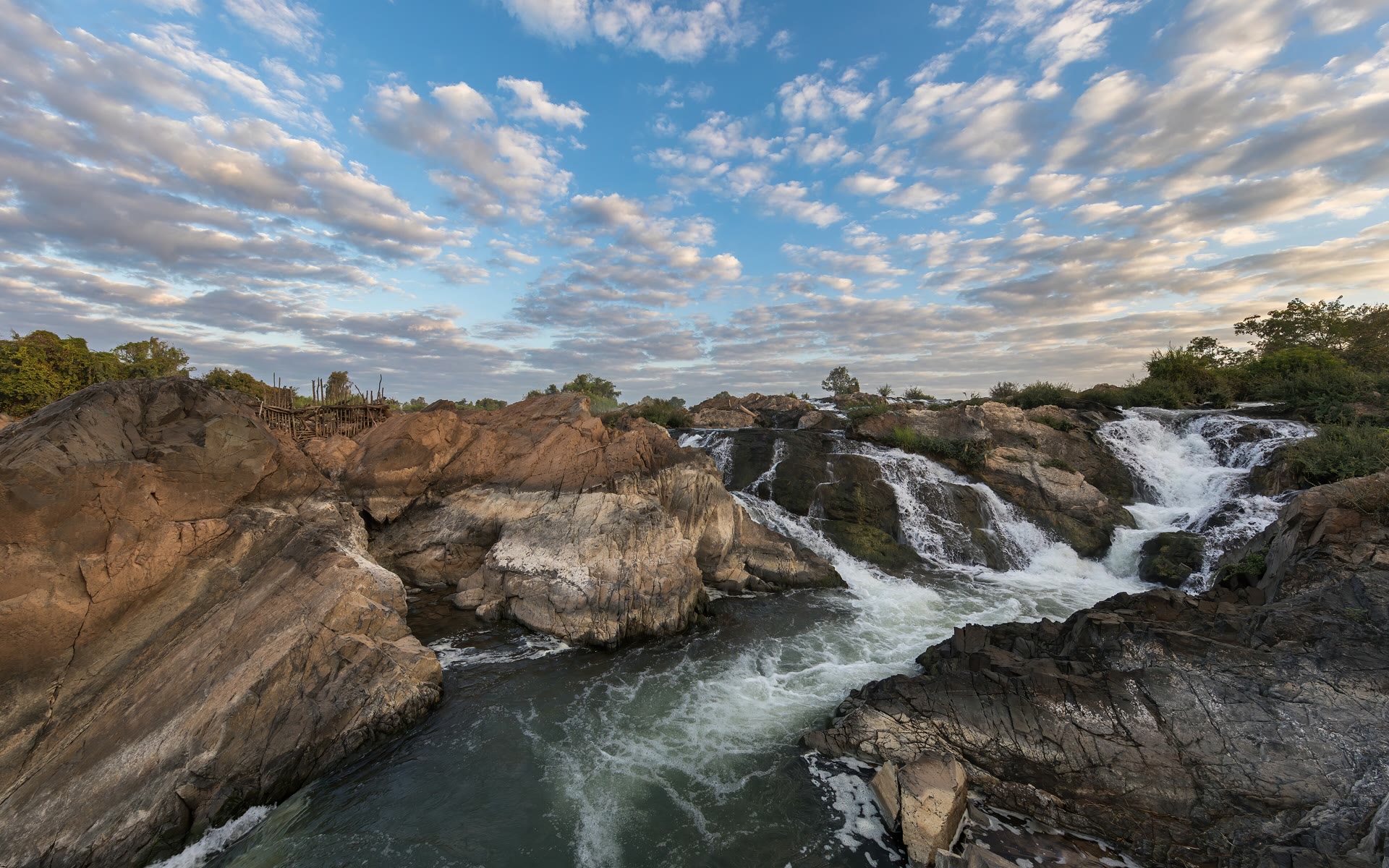
Don Khone is a sliver of land in the Mekong River, part of the Si Phan Don (4000 Islands) archipelago at the southern tip of Laos. There are no cars here. No tuk-tuks. No traffic lights, no honking, and no ride-hailing apps pinging on your phone. The island stretches roughly three kilometers from end to end, connected to neighboring Don Det by a French colonial-era bridge, and the loudest sound you will hear most days is the rush of the Mekong through the nearby waterfalls.
Getting around Don Khone is beautifully simple. You walk, you cycle, or you take a boat. That is essentially it. The island has a handful of dirt paths and one main track that runs its length, passing through small villages, rice paddies, and clusters of guesthouses. If you have spent days navigating the chaos of Southeast Asian cities, arriving on Don Khone feels like someone pressed a reset button on the entire concept of transportation. But simplicity does not mean there is nothing to know. Understanding how the island's modest transport options work, especially the boat connections that link you to the wider world, is essential for making the most of your time here.
The rhythm of Don Khone is slow and deliberate. Mornings are best for exploring before the midday heat settles in. Afternoons are for hammocks. And evenings bring spectacular sunsets over the Mekong that you can reach on foot from almost anywhere on the island in under twenty minutes.
Getting Around Don Khone on Foot
Walking is the most natural way to experience Don Khone, and for many visitors it is the only transport they need. The island is small enough that you can walk from one end to the other in about 40 minutes at a relaxed pace. The main path is a packed-dirt track that runs roughly north to south, connecting the boat landing near the French bridge down to the southern tip where you will find the Somphamit (Li Phi) Waterfalls.
Side paths branch off toward the Mekong riverbanks, through villages, and past crumbling French colonial infrastructure including an old railway line and locomotive. These paths are generally flat and easy to navigate, though they can become muddy and slippery during the rainy season (roughly May through October). Sturdy sandals or shoes with grip are far more practical than flip-flops if you plan to explore beyond the main track.
There is an entrance fee of around 35,000 kip (roughly $2) to cross the bridge between Don Det and Don Khone, which also covers access to the waterfalls and other sights on the island. Keep your ticket, as it may be checked at different points.
Walking to the Main Sights
From the French bridge area, the Somphamit Waterfalls are about a 30-minute walk south along the main path. The old French railway track runs parallel for part of the route, making for a pleasant, shaded stroll. To reach the southern viewpoints where Irrawaddy dolphins can sometimes be spotted, you will need to continue further south and then take a boat from the tip of the island. Walking the full loop around the island's main sights takes roughly two to three hours at a leisurely pace, including time to stop and take in the scenery.
Getting Around Don Khone by Bicycle
Renting a bicycle is the single best investment you can make on Don Khone. It transforms a full day of walking into a relaxed half-day of exploring, and it lets you cover both Don Khone and Don Det comfortably in a single outing. Nearly every guesthouse on the island rents bicycles, and there are a few standalone rental spots near the boat landings and the French bridge.
Expect to pay around 10,000 to 20,000 kip (roughly $1 to $2) per day. The bikes are basic, single-speed models, often well-worn. Before you ride off, check the brakes, tires, and chain. A flat tire on a remote path in the midday heat is no fun. Some places also rent slightly better mountain bikes for a bit more.
The terrain is almost entirely flat, which makes cycling effortless. The main path is wide enough for bikes, and you will share it with pedestrians, the occasional motorbike, and wandering chickens. Ride slowly through villages out of respect for the residents and watch for children playing near the path.
Cycling across the French bridge to Don Det opens up a whole second island to explore. Don Det has more guesthouses, restaurants, and a slightly livelier backpacker scene, especially along its western sunset strip. The combined loop of both islands by bicycle is one of the most pleasant half-day activities in all of southern Laos.
Getting Around Don Khone by Boat
Boats are the lifeline of the 4000 Islands. Since there is no road bridge connecting Don Khone to the mainland, every visitor arrives and departs by boat, and boats are also the way to reach certain attractions and neighboring islands.
Local Longtail Boats
Narrow wooden longtail boats serve as the local ferries of Si Phan Don. The most common route is between Nakasong (the mainland pier) and the islands. When you arrive at Nakasong, boatmen will shuttle you to Don Khone or Don Det for a fare that is typically included in your onward transport ticket or costs around 20,000 to 30,000 kip (roughly $1 to $2) if purchased separately.
On the island itself, you can hire longtail boats for specific trips. The most popular is the dolphin-watching excursion to the deep pools near the Cambodian border where endangered Irrawaddy dolphins surface. This trip departs from the southern tip of Don Khone and typically costs around 60,000 to 100,000 kip (roughly $4 to $6) per person, depending on group size. The best time for dolphin spotting is early morning or late afternoon during the dry season (November through May), when lower water levels concentrate the dolphins in smaller pools.
You can also hire boats to explore smaller, uninhabited islands in the archipelago, visit fishing villages, or simply cruise the Mekong at sunset. Negotiate the price before departure. Boats can usually carry four to six passengers, so splitting the cost with other travelers makes these trips very affordable.
Boat Connections Between Islands
Short boat hops between Don Khone and Don Det are available if you do not want to walk or cycle across the French bridge. These are informal and can be arranged at any boat landing. The cost is minimal, usually around 10,000 kip. However, most travelers simply use the bridge since it is faster and more convenient.
Getting Around Don Khone by Motorbike
A small number of motorbikes operate on Don Khone, mostly belonging to locals. Some guesthouses or rental operators on Don Det offer motorbike rentals, and technically you can ride one across the bridge to Don Khone. However, the island is so small that a motorbike is genuinely unnecessary, and the narrow dirt paths are better suited to bicycles and pedestrians.
If you do rent a motorbike on Don Det (typically around 80,000 to 120,000 kip per day, roughly $5 to $7), exercise caution. The paths are uneven, sandy in dry season, and muddy in wet season. Helmets are rarely provided but should be requested. International driving permits are technically required in Laos, though enforcement on the islands is essentially nonexistent.
Getting Around Don Khone by Kayak
Kayaking offers a unique perspective on the 4000 Islands and doubles as both transport and activity. Several guesthouses and tour operators rent kayaks, typically for around 40,000 to 80,000 kip (roughly $2 to $5) for a half day. Guided kayaking trips that take you through channels between the islands, past submerged forests, and near smaller waterfalls are also available.
The Mekong currents around Don Khone can be strong, especially during the rainy season. Stick to the calmer channels between islands unless you are an experienced paddler. Never kayak near the major waterfalls, where the currents are extremely dangerous. The best kayaking conditions are during the dry season when water levels are lower and the channels are more predictable.
Comparing Your Options
| Mode | Typical Cost | Duration | Best For |
|---|---|---|---|
| Walking | Free | 40 min end to end | Short distances, soaking in the atmosphere, reaching the waterfalls |
| Bicycle | $1-$2 per day | 15-20 min end to end | Exploring both Don Khone and Don Det, full-day sightseeing |
| Longtail Boat | $1-$6 per trip | Varies by destination | Dolphin watching, reaching the mainland, island hopping |
| Motorbike | $5-$7 per day | 10 min end to end | Covering both islands quickly (better suited to Don Det) |
| Kayak | $2-$5 per half day | Varies | Scenic exploration of channels and smaller islands |
Practical Tips for Getting Around Don Khone
Don Khone is one of the most low-tech travel destinations in Southeast Asia, and that is part of its charm. But a few practical considerations will make your stay smoother.
- Bring cash. There are no ATMs on Don Khone or Don Det. The nearest ATMs are in Nakasong or the town of Ban Hat Xai Khoun on the mainland. Bring enough Lao kip for your entire stay. Thai baht and US dollars are sometimes accepted, but kip is preferred and gets you better value. Small denominations are essential since change can be hard to come by.
- Download offline maps. Cell signal on the islands is patchy. Download the Don Khone and Don Det area on Google Maps or Maps.me before you arrive. The paths are not always well-marked, and having a map helps you find specific guesthouses, the waterfalls, and boat landings.
- Carry water and sun protection. There is very little shade along some stretches of the main path, especially heading south toward the waterfalls. Dehydration and sunburn are genuine risks, particularly if you are cycling in the middle of the day.
- Respect the quiet. Don Khone is a real community, not a theme park. Keep noise down when passing through villages, ask before photographing people, and dress modestly away from the riverfront guesthouse areas.
- Watch for the ticket checkpoint. The island entrance fee covers the bridge crossing and access to sights. Keep your ticket with you as there are occasional checkpoints, especially near the waterfalls.
- Plan your departure the night before. Boats to Nakasong depart on a loose schedule, typically in the morning. Your guesthouse can arrange departure boats and onward transport. Do not leave this until the last minute, especially if you have a bus or van connection to make from Nakasong.
- Rainy season changes everything. From June through October, water levels rise dramatically. Some paths flood, the Mekong currents become much stronger, and boat services can be disrupted. Cycling and walking remain possible, but expect mud. Dolphin watching is harder because the animals disperse across the wider, deeper river.
For travelers planning connections beyond the 4000 Islands, GoAsia.cc can help you compare transport options to destinations across Laos and the wider region.
Popular Routes and Destinations
Don Khone sits at the far south of Laos, and reaching it involves passing through Nakasong, the mainland boat pier. Here are the most common routes travelers use to connect with Don Khone.
Pakse to Nakasong
Pakse is the regional hub and the most common starting point for reaching the 4000 Islands. Buses run from Pakse to Nakasong for around $8, taking approximately 2 hours and 45 minutes. Vans cover the same route for around $12 in about 2 hours and 40 minutes. Both options typically include the boat transfer from Nakasong to the islands. Vans are faster and more comfortable but fill up quickly, so book ahead through your guesthouse or a travel agent in Pakse.
Champassak to Nakasong
If you are coming from the temple ruins of Wat Phu in Champassak, vans make the journey to Nakasong in around 1 hour 30 minutes to 2 hours, costing between $6 and $12 depending on the operator and whether the boat transfer is included.
Don Khone to Veun Kham (Cambodian Border)
Travelers heading south to Cambodia cross at the Veun Kham border. From Don Khone, van transfers to Veun Kham cost around $13 and take approximately 45 minutes. This includes the boat from the island to Nakasong and then the road journey to the border. From Don Det, the same route costs around $10 and takes about 30 minutes from the mainland side. These transfers can be booked through guesthouses on the islands and typically depart in the morning.
Don Det to Veun Kham
From Don Det, van transfers to the Veun Kham border crossing cost around $6 to $10 and take roughly 30 minutes from Nakasong. This is a popular route for travelers continuing to Stung Treng and onward to Phnom Penh or Siem Reap in Cambodia.
Frequently Asked Questions
Use this guide to compare local transport in Don Khone. When bookable tickets are available, the booking tool shows current options and prices.
Renting a bicycle is the best way to get around Don Khone. The island is small and flat, making cycling easy and enjoyable. A bicycle costs just $1 to $2 per day and lets you explore both Don Khone and neighboring Don Det comfortably. Walking is equally viable if you prefer a slower pace, as the island is only about three kilometers long.
Transport on Don Khone is extremely affordable. Bicycle rental costs around $1 to $2 per day, and walking is free. Longtail boat trips for dolphin watching run around $4 to $6 per person. The island entrance fee, which covers the bridge crossing and access to waterfalls, is roughly $2.
Don Khone is one of the safest places in Southeast Asia for getting around. There is virtually no motorized traffic on the island, so walking and cycling are very safe. The main risks are slippery paths during the rainy season and strong Mekong currents if you are kayaking. Always avoid waterways near the major waterfalls.
Absolutely. Don Khone is one of the most walkable destinations in all of Laos. You can walk from one end of the island to the other in about 40 minutes. All major sights, including the Somphamit Waterfalls and the old French railway, are reachable on foot. Bring sturdy sandals, water, and sun protection.
No. Ride-hailing apps like Grab do not operate on Don Khone or anywhere in the 4000 Islands. There are no taxis or tuk-tuks either. Transport on the island is limited to walking, cycling, and boats. For onward travel, arrange van or bus transfers through your guesthouse.
There are no ATMs on Don Khone or Don Det. The nearest ATMs are on the mainland near Nakasong. Bring enough Lao kip in cash to cover your entire stay, including accommodation, food, bicycle rental, and any boat trips. Small denominations are important since many vendors cannot make change for large bills.
From Pakse, you can take a bus to Nakasong for around $8 (about 2 hours 45 minutes) or a van for around $12 (about 2 hours 40 minutes). Both typically include the longtail boat transfer from Nakasong pier to the islands. Book through your guesthouse or a travel agent in Pakse, especially for vans which have limited seats.
Van transfers from Don Khone to the Veun Kham border crossing cost around $13 and take approximately 45 minutes, including the boat ride from the island to Nakasong. These depart in the morning and can be booked through your guesthouse. From the border, onward transport to Stung Treng and other Cambodian destinations is available.
Guide prices and journey times are indicative, not live quotes. A booked package may include transfers and waiting time as well as the main journey. Check the selected offer, pickup point and current conditions before booking.