A sleepy river island at the southern tip of Laos where the Mekong splinters into thousands of channels, Don Khone rewards travelers who want to slow down completely.
The first thing you notice on Don Khone is the silence. Not total silence, but the conspicuous absence of engines, horns, and construction noise that defines most of mainland Southeast Asia. Instead there is the rush of the Mekong pouring over ancient rock ledges, the creak of wooden bridges, and the low hum of a generator kicking in somewhere behind a guesthouse. This tiny island in the Si Phan Don (Four Thousand Islands) archipelago sits near the Cambodian border, and it operates on a rhythm dictated by the river rather than any clock.
Don Khone and its connected neighbor Don Det together form the backpacker heart of Si Phan Don, but the two islands have distinct personalities. Don Det took the party-hostel path; Don Khone kept the hammocks and the quiet. If you came to Laos for cheap beer and loud music, head to Don Det's sunrise side. If you came to watch the Mekong turn gold at sunset from a wooden deck while reading a paperback, Don Khone is your island.
The island packs in waterfalls, quiet paths for cycling and the atmospheric remains of a French colonial railway that once hauled cargo around the Mekong's impassable rapids. It is not a place for ticking off sights at speed. It is a place for surrendering to the pace of river life.
Orientation and Neighborhoods
Don Khone has no grid, no street names, and no real neighborhoods in the urban sense. Instead, think of the island in terms of its edges and the single dirt road that runs through it.
The Bridge Area (North)
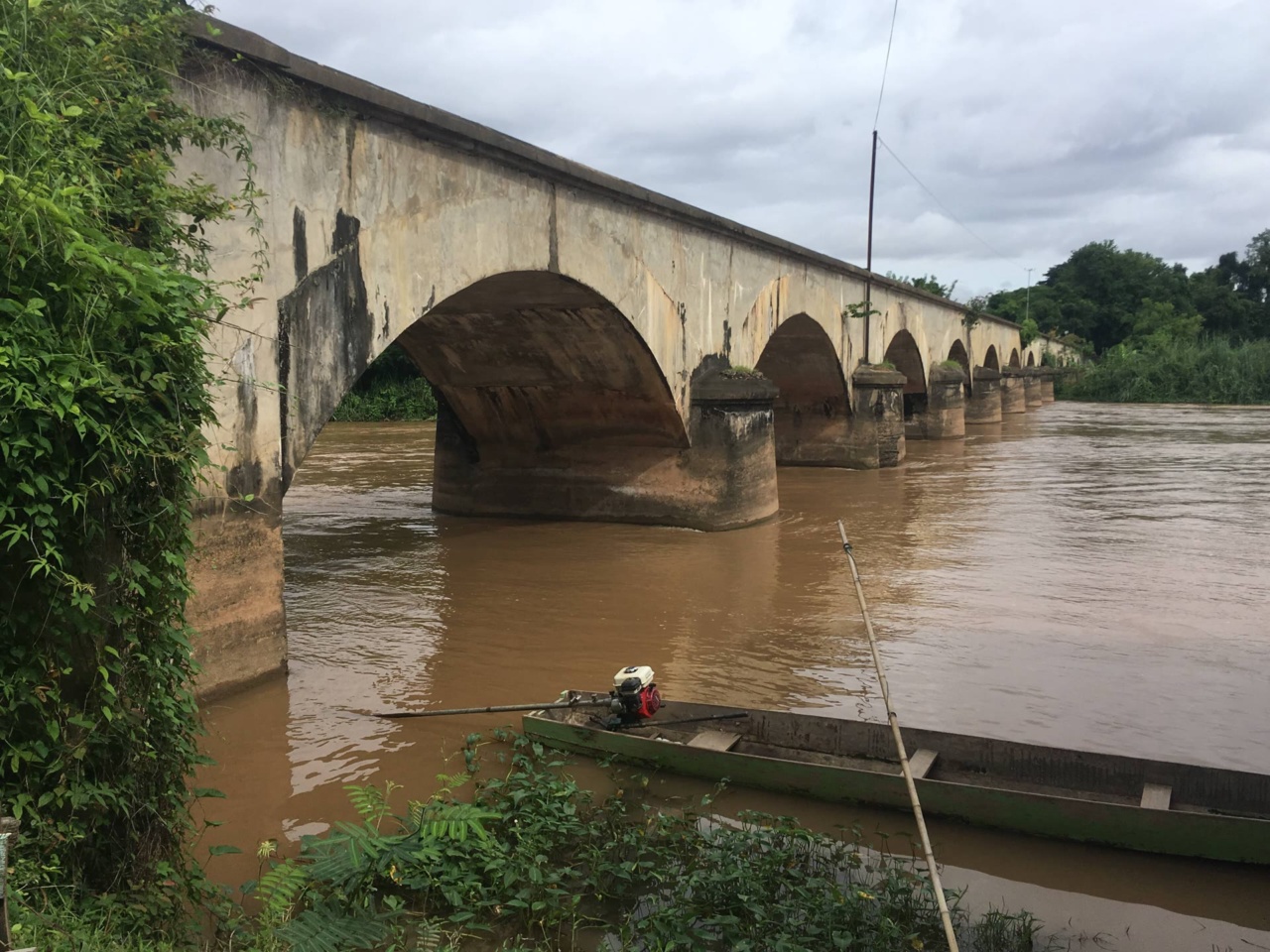
The old French railway bridge connects Don Khone to Don Det at the island's northern end. This is where most boat arrivals from Nakasang dock, and where you will find the densest cluster of guesthouses and small restaurants. Staying here puts you closest to Don Det's amenities if you want occasional access to its livelier scene.
A loose collection of traditional wooden houses, a small temple, and a few shops lines the main path running south from the bridge. This is the most authentically Lao part of the island. Chickens wander freely, monks collect alms at dawn, and children play in the shade of mango trees. A handful of family-run guesthouses here offer the most local experience.
The Southern Tip
The island's southern end is where the action is, if you can call it that. The path leads to Somphamit (Li Phi) Waterfall and to the boat landing. A few riverside bungalow operations down here offer the most secluded accommodation on the island, with direct views over churning rapids.
The Eastern Shore
Quieter still, the eastern side faces smaller islands and wide Mekong channels. A few upscale (by local standards) bungalow resorts have set up here, offering private river frontage and sunset views. This is where to stay if you want maximum peace and slightly better facilities.
Where to Stay by Priority
For the cheapest beds and proximity to Don Det, stay near the bridge. For atmosphere and local life, pick the village center. For seclusion and nature, head south or east. There is no bad choice since the island is so small that everything is a short bike ride from everything else.
Things to Do
Offers are only loaded from GetYourGuide after you click. GetYourGuide can then process your IP address and set cookies. Privacy Policy
GetYourGuide partner offers. GoAsia may earn a commission if you book through these offers. Check whether tickets or transfers are included, and follow the attraction's official booking and admission rules.
Best Time to Visit
Don Khone's climate follows the tropical monsoon pattern of southern Laos, with three loosely defined seasons that significantly affect your experience.
Season
Months
Weather
Crowds
Notes
Cool and Dry
Nov - Feb
Warm days, cool evenings, minimal rain
Peak season
Best overall conditions
Hot and Dry
Mar - May
Extremely hot, hazy from agricultural burning
Moderate
Uncomfortable heat; river levels drop
Rainy
Jun - Oct
Heavy afternoon storms, high humidity, lush landscape
Low season
Waterfalls at maximum power towards the end of the rains; some paths flood
The sweet spot is November to January: rain has stopped, the waterfalls still carry serious volume and temperatures are bearable. February remains pleasant but the falls begin to shrink. By April the heat on this shadeless river island becomes genuinely oppressive.
The Boun Ok Phansa festival (end of Buddhist Lent, usually October) brings boat racing to the Mekong and a festive atmosphere to local villages, though Don Khone's celebrations are modest compared to cities like Luang Prabang. Lao New Year (Pi Mai) in April transforms even this quiet island with water throwing and temple visits, but the heat is punishing.
Getting There and Getting Around
Getting to Don Khone
The gateway to Si Phan Don is the town of Nakasang on the Mekong's east bank, south of Pakse. Minivans with a boat transfer to Don Det run from Pakse in about 2.5 to 3 hours, and a ticket starts at about $8 (October 2026).[1] Don Khone is a short walk or cycle from Don Det across the old railway bridge.
If coming from Cambodia, the border crossing at Nong Nok Khiene (Trapeang Kriel on the Cambodian side) is the closest international entry point.[2] Minivans from Phnom Penh to Don Det take from about 8 hours, and tickets start at about $31 (October 2026).[3]
Pakse has the nearest airport, with domestic flights from Vientiane.[4] From the airport, arrange onward transport to Nakasang by minivan or private car.
Getting Around the Island
Bicycles are the primary transport and can be rented from guesthouses. The island is flat, but the main path is unpaved and can be sandy or muddy depending on the season. Walking is perfectly viable too, and a bicycle is the best way to cover the whole island.
Guesthouses and boatmen at the dock arrange boat and road transfers to Khon Phapheng Falls.
Top Sights and Experiences
Must-See Attractions
Somphamit (Li Phi) Waterfall
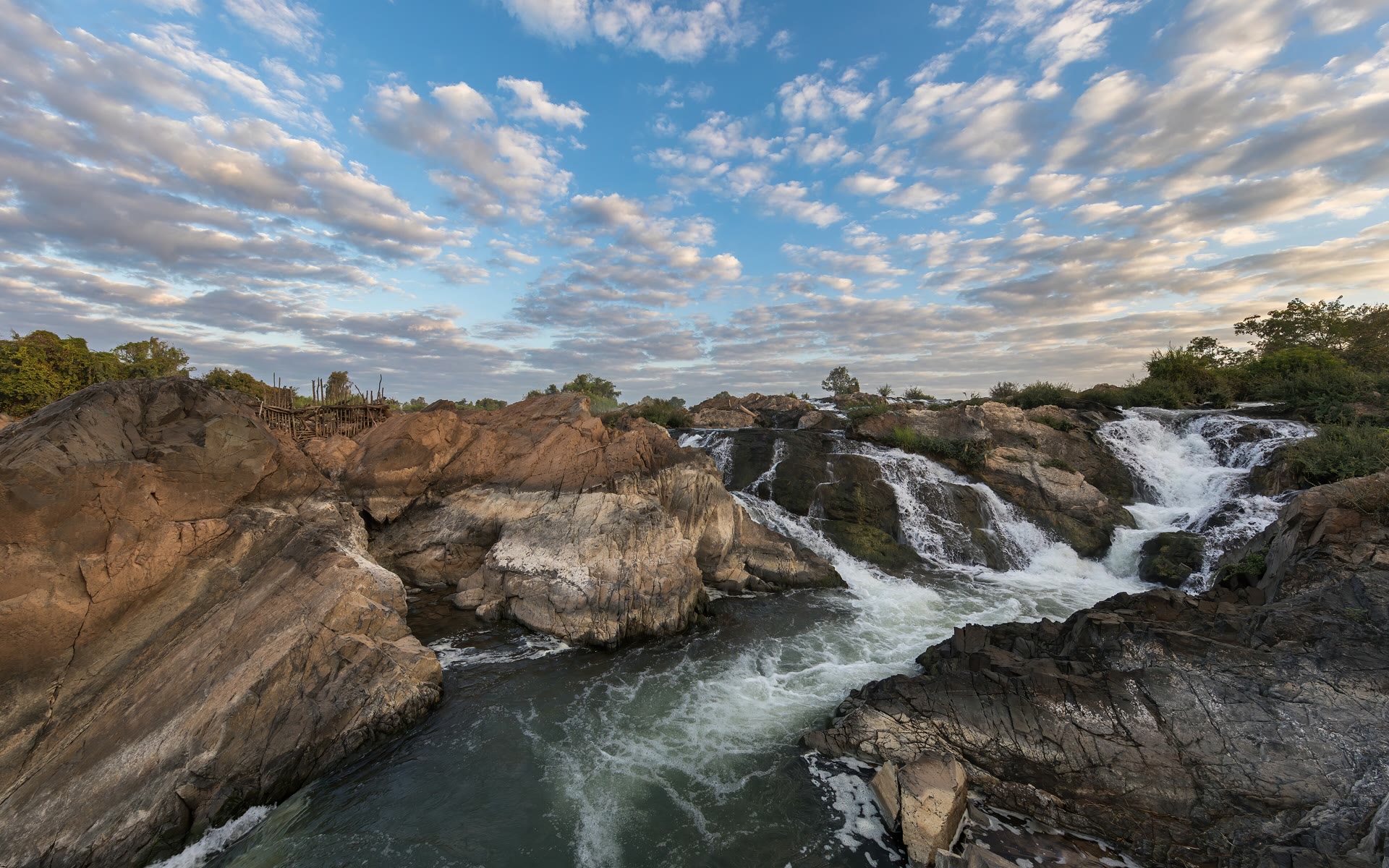
Somphamit is a dramatic series of cascades where the Mekong forces itself through a chaotic maze of rock channels. Li Phi properly refers to the whole 20 km stretch of falls and rapids of Si Phan Don, and Somphamit is reached from Don Lai island, 1 km from Don Khon.[5] The falls are most impressive towards the end of the rains, when the river is high, but they remain powerful for weeks afterwards. Wooden viewing platforms let you get remarkably close to the churning water. Wear shoes with grip since the rocks are slippery. Early morning visits avoid the modest crowds and the midday heat.
Khon Phapheng Falls
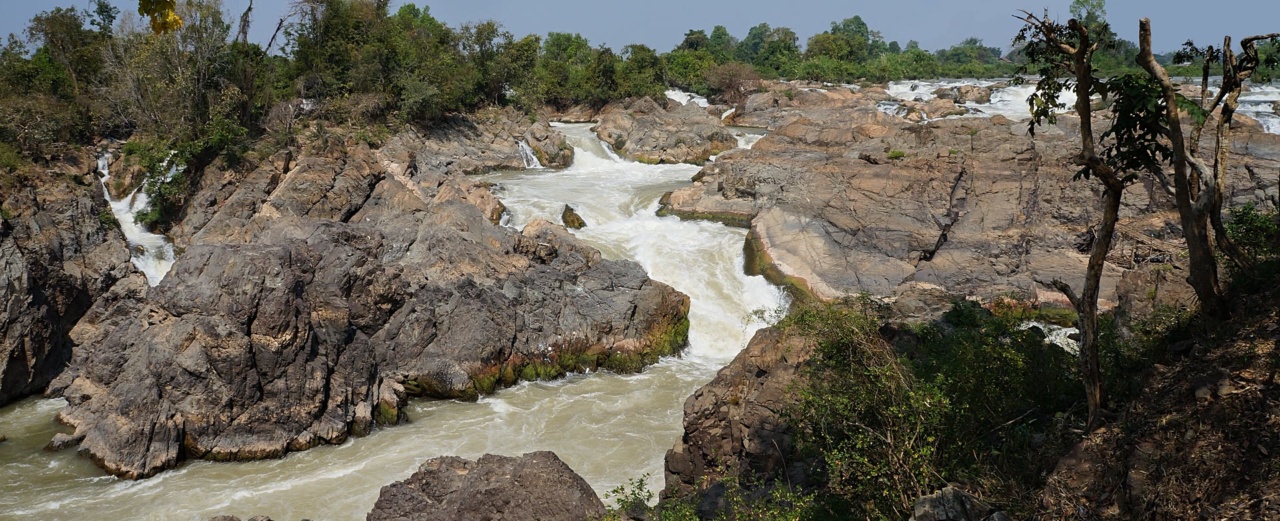
Technically on the mainland rather than on Don Khone itself, Khon Phapheng is the largest waterfall by volume in Southeast Asia.[6] It lies east of Don Khon, around 6 km south of Don Det and 13 km from the Cambodian border.[5] The Mekong tumbles down a series of cascades with an almost industrial roar; the highest drop is 21 m and the rapids stretch over 9.7 km of the river.[6] It is genuinely awe-inspiring during high water, though in the dry season it loses some drama.
Irrawaddy Dolphins
Irrawaddy dolphins once drew visitors to a deep pool in the Mekong on the border with Cambodia. The last known river dolphin in the Cambodia-Laos transboundary pool was found dead on 15 February 2022, which WWF-Laos describes as most likely the national extinction of the species in Laos.[7] About 89 river dolphins were left in Cambodia in the 2020 surveys.[7] Dolphin-watching trips on the Lao side no longer have anything to show, so take the Mekong's rapids and waterfalls as the reason to come.
The Old French Railway
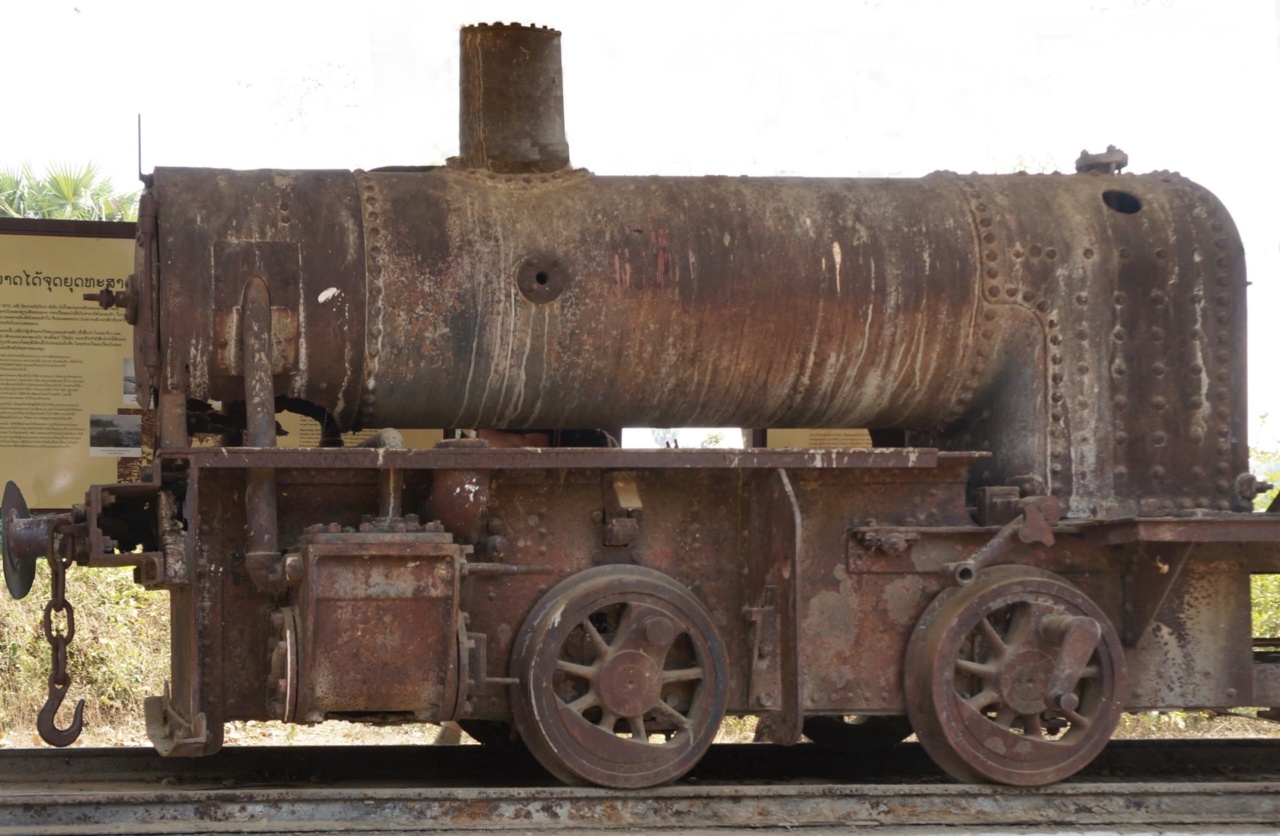
During the French colonial era, a narrow-gauge railway crossed Don Khone and Don Det to portage goods around the Mekong's unnavigable rapids. Rusting locomotive remains sit near the bridge between the two islands, and you can trace the old rail bed along a pleasant shaded path running the length of Don Khone. The locomotive and a few pieces of rolling stock are photogenic in their decay. The railway bridge itself, still used as a pedestrian and bicycle crossing, is a handsome piece of colonial engineering. The walk along the old rail line combines well with a visit to Somphamit Falls.
The eastern shore of Don Khone faces wide Mekong channels perfect for sunrise, while the western side near Somphamit offers sunset views over the rapids. Most guesthouses on the eastern shore have decks positioned for this purpose. These cost nothing and are among the island's finest experiences.
Village Life and Temple Visits
Don Khone's small village has an active Buddhist temple where visitors are welcome to observe morning alms-giving at dawn. The monks are accustomed to respectful visitors. Dress modestly (cover shoulders and knees) and do not touch or hand anything directly to monks if you are female. Wandering through the village in the early morning or late afternoon reveals a slice of rural Lao life that has changed remarkably little.
Kayaking the Channels
A few guesthouses rent kayaks. Paddling through the narrow channels between the smaller islands of Si Phan Don is peaceful and scenic, with birdlife including kingfishers, egrets, and occasionally eagles. Stick to calm channels and avoid the main current, which is dangerously strong near the falls.
Overrated Experiences
Tubing on Don Det: Often marketed as a highlight of Si Phan Don, the tubing scene on Don Det is essentially floating in murky water between riverside bars. The Mekong's current near the islands carries real risks, and the experience adds nothing you could not get from a hammock with a cold beer. Skip it.
The "Four Thousand Islands" boat tour: Some operators sell full-day boat tours promising to show you many islands. In practice, you motor past indistinguishable green lumps and stop at the same waterfalls you could visit independently. Arrange your own boat trips piecemeal instead.
Crossing to Don Det for nightlife: Unless you specifically crave a backpacker bar scene, the walk across the bridge to Don Det's party strip is underwhelming. The music is loud, and the vibe is more Khao San Road imitation than anything authentically Lao.
Food and Drink
Don Khone's food scene is simple but satisfying. Do not expect culinary fireworks. Expect honest Lao cooking, fresh river fish, and a surprising number of decent Western options catering to the backpacker crowd.
Signature Dishes
Dish
Description
Where to Try
Ping pa (grilled fish)
Whole Mekong fish stuffed with lemongrass and herbs, grilled over charcoal
Any riverside restaurant
Laap
Minced meat or fish salad with mint, lime, chilies, and toasted rice powder
Village eateries
Tam mak hoong
Spicy green papaya salad, Lao-style with fermented fish paste (padaek)
Everywhere
Khao niew (sticky rice)
The staple of every Lao meal, served in small bamboo baskets
Everywhere
Or lam
Thick stew with vegetables, meat, and distinctive Lao seasonings including sakhan wood
Guesthouse restaurants
Mekong river weed (khai paen)
Dried river algae seasoned with sesame, a Lao delicacy
Local vendors, some restaurants
Eating on Don Khone
Almost every guesthouse doubles as a restaurant, and these are where most travelers eat. Menus tend to be identical: a mix of Lao standards, fried rice, noodle soups, and banana pancakes for the backpacker breakfast crowd. The quality varies, but the riverside settings make even average food enjoyable. The best meals tend to come from the smallest family-run places in the village center, where the cook is also the owner and the menu is whatever was fresh that morning.
Fresh Mekong fish is the highlight. Grilled whole fish (ping pa) is the island's signature meal and is almost always excellent. Ask for it at any restaurant and expect it to arrive stuffed with fragrant herbs, charred and smoky from the grill. Pair it with sticky rice and tam mak hoong for a quintessential Lao dinner.
Beerlao, the national lager, is ubiquitous. Lao coffee, grown on the Bolaven Plateau, is excellent and served strong with sweetened condensed milk. Fresh fruit shakes are available at most restaurants.
There is nothing on Don Khone that could reasonably be called upscale dining, and that is part of the charm.
Where to Stay
Accommodation on Don Khone is universally simple. Even the most expensive options are basic by international standards, but several places offer genuine riverside charm that no luxury hotel could replicate.
Budget
Simple fan rooms and shared-bathroom bungalows near the bridge or in the village center are the cheapest beds on the island. Expect a mattress, a mosquito net, and not much else. Some budget places have river views, which makes the spartan rooms entirely worthwhile. Cold-water showers are common at this tier.
Mid-Range
Wooden bungalows with private bathrooms, fans or basic air-conditioning, and riverside balconies with hammocks represent the sweet spot on Don Khone. Several operations along the eastern and southern shores offer this level. Hot water is available at most mid-range places. These bungalows are the classic Si Phan Don experience: falling asleep to the sound of the river, waking to birdsong.
Comfort
A small number of boutique-style bungalow resorts on the eastern shore offer air-conditioning, proper hot-water bathrooms, and more polished decor. These are comfortable but still rustic by city standards. One or two places have small swimming pools, a genuine luxury when the heat climbs. Book ahead in peak season for these spots.
There are no large hotels, no international chains, and no hostels with party atmospheres on Don Khone. If you want dorm beds or a social hostel scene, cross to Don Det.
Practical Tips
Money
Bring enough cash from Pakse to cover your entire stay. Cash machines on the islands are scarce and unreliable.
Lao kip is the official currency, but Thai baht and US dollars are often accepted at local exchange rates. Carry small denominations.
Few places accept credit cards. Plan on cash for almost everything.
Tipping is not expected but appreciated. Rounding up a restaurant bill or leaving a small tip for boat drivers is a kind gesture.
Safety
Don Khone is extremely safe from a crime perspective. Petty theft is rare but not impossible, so do not leave valuables unattended.
The Mekong is the real danger. Currents near the falls are lethal, and even calm-looking channels can have powerful undercurrents. Do not swim near rapids or falls under any circumstances.
Cycling accidents are the most common tourist injury. The paths are uneven, sandy, and sometimes shared with wandering livestock. Ride slowly.
Mosquitoes spread dengue fever in this region. Use repellent, especially at dawn and dusk. Malaria is present in the southern provinces including Champasak, so consult a travel health professional before your trip.[8]
Connectivity
Wi-Fi exists at most guesthouses but is slow and unreliable. Mobile data works intermittently. Buy a Lao SIM card in Pakse before heading to the islands. Embrace the disconnection; it is part of what makes Don Khone special.
Language
English is spoken at a basic level by guesthouse owners and restaurant staff along the tourist trail. Away from tourist establishments, very little English is understood. Learning a few Lao phrases (sabaidee for hello, khop jai for thank you) goes a long way and is always met with smiles. A translation app downloaded for offline use is helpful.
Cultural Etiquette
Remove shoes before entering temples and private homes.
Dress modestly in the village, especially near the temple. Swimwear is for the river only.
Do not touch anyone on the head; it is considered the most sacred part of the body in Lao culture.
Do not point your feet at people or Buddha images.
Ask permission before photographing locals, especially monks and children.
Drug use is illegal in Laos despite the relaxed atmosphere on the islands. Penalties are severe.
Electricity and Water
Power is available but can be inconsistent. Some guesthouses run on generators during certain hours. Bring a headlamp or flashlight. Do not drink tap water; bottled water is available everywhere. Refill stations are rare, so plan accordingly to minimize plastic waste by bringing a filter bottle.
Day Trips
Khon Phapheng Falls
The largest waterfall by volume in Southeast Asia is a half-day trip from Don Khone. Arrange transfers through your guesthouse. The viewing platform puts you close enough to feel the spray. Worth it during high water; less impressive in the dry season.
Don Det is across the bridge, a short walk away. It is not really a day trip, but worth an afternoon stroll. Walk or cycle across the old railway bridge, explore Don Det's sunset side for its slightly different restaurant scene, and return to Don Khone's quiet by evening.
Don Khong
Don Khong lies further north and has more of a town feel, with a market, a few temples, and a glimpse of everyday Lao river-town life. Boats can be arranged from Nakasang or through your guesthouse. It is a pleasant half-day excursion but not essential if your time is limited.
Bolaven Plateau
This highland region is famous for coffee plantations, cooler temperatures, and stunning multi-tiered waterfalls. Tad Fane is a 40-minute drive from Pakse,[9] and Tad Yuang about 45 minutes.[10] Treat the plateau as a separate stop on your Laos itinerary rather than a day trip from Don Khone.
Nong Nok Khiene Border Crossing
If you are continuing to Cambodia, the Lao border post at Nong Nok Khiene is open daily from 06:00 to 18:00, with visa on arrival and eVisa available.[2] There is nothing to see here, so treat it as a travel day.
Sample 3-Day Itinerary
Day 1: Arrival and Waterfalls
Morning: Arrive from Pakse or Nakasang by boat. Check into your guesthouse and rent a bicycle. Cycle through the village center, stopping at the old locomotive near the bridge for photos.
Afternoon: Ride south along the old rail bed to Somphamit (Li Phi) Waterfall. Spend an hour exploring the viewing platforms and soaking in the power of the cascades. Continue cycling around the island's western shore.
Evening: Settle into a riverside restaurant near your guesthouse for grilled Mekong fish, sticky rice, and a cold Beerlao. Watch the sunset from the western shore if your accommodation is positioned for it.
Day 2: Khon Phapheng Falls and a Slow Afternoon
Morning: Arrange a boat trip to Khon Phapheng Falls on the mainland. Depart early to avoid the heat. Spend an hour at the falls, then return to Don Khone by late morning.
Afternoon: Rest during the hottest hours. In the late afternoon, cycle to a quiet stretch of shore for the light on the water.
Evening: Walk or cycle to a different restaurant for dinner. Try laap and tam mak hoong if you have not already. Enjoy the profound quiet of a Don Khone evening.
Day 3: Slow Morning and Departure
Morning: Wake early for sunrise over the Mekong from the eastern shore. If you are near the village, observe the monks' alms round at dawn. Have a Lao coffee and a slow breakfast.
Late Morning: Kayak through the channels between smaller islands if your guesthouse offers rentals, or simply spend the morning in a hammock reading. This is not wasted time; this is the point of Don Khone.
Afternoon: Return your bicycle, settle your bill, and catch a boat back to Nakasang for onward transport to Pakse, the Bolaven Plateau, or the Cambodian border.
Budget Overview
Don Khone is inexpensive, and most of what you spend goes on a bed, meals and the odd boat trip. Bring all the cash you need from Pakse, because cash machines on the islands are scarce and unreliable.
Frequently Asked Questions
Is Don Khone worth visiting?
Absolutely, if you value natural scenery and a genuinely slow pace over nightlife or cultural monuments. The waterfalls are spectacular, the remains of the French colonial railway are atmospheric, and the island has a tranquil atmosphere that is increasingly hard to find in Southeast Asia. It is not worth it if you need constant stimulation or luxury amenities.
How many days do you need in Don Khone?
Two full days is the sweet spot. That gives you time to visit both major waterfalls, cycle the island, and still have hammock time. Many travelers stay three or four days because the relaxed vibe is hard to leave, but one full day feels rushed.
Is Don Khone safe for tourists?
Don Khone is generally safe, and theft is rare. The main risks are natural: strong Mekong currents make swimming dangerous, and unpaved roads can cause cycling scrapes. Keep valuables secure during boat transfers and watch your step on slippery rocks near the waterfalls.
What is the best time to visit Don Khone?
November through February offers the best weather with comfortable temperatures and dry skies. The waterfalls are most dramatic towards the end of the rainy season, when water levels peak. March through May is extremely hot. The rainy season from June to October brings lush scenery but muddy roads.
Can you see dolphins at Don Khone?
No. The last known river dolphin in the Cambodia-Laos transboundary pool was found dead in February 2022, which WWF-Laos describes as most likely the national extinction of Irrawaddy dolphins in Laos. Dolphins survive only on the Cambodian stretch of the Mekong.
How do I get to Don Khone from Pakse?
Take a minivan from Pakse to Nakasang or Don Det. With the boat transfer the trip takes about 2.5 to 3 hours. Many tickets include the boat transfer. Don Khone is a short walk or cycle from Don Det across the old railway bridge.
What is the difference between Don Khone and Don Det?
Don Khone is quieter and keeps the hammocks and the calm, while Don Det has the livelier social scene and more budget hostels. The two islands are connected by a bridge, so you can easily stay on one and visit the other.
Is Don Khone expensive?
Don Khone is inexpensive by international standards. Simple fan rooms are the cheapest option, riverside bungalows with private bathrooms cost more, and meals at guesthouse restaurants are modest. Cash is essential because cash machines on the islands are scarce and unreliable.
Do I need a visa to visit Don Khone?
You need a valid Laos visa. Most nationalities can get a visa on arrival at international entry points like Wattay Airport in Vientiane or the Thai-Lao Friendship Bridges. If arriving overland from Cambodia via the nearby border crossing, visa on arrival is also available. Check current fees for your nationality before traveling.
Is there Wi-Fi and phone signal on Don Khone?
Most guesthouses offer free Wi-Fi, but speeds are slow and connections drop frequently. Mobile data on a Lao SIM card (Unitel or Lao Telecom) works in most parts of the island. Treat your time here as a digital detox opportunity.
Sources and background
Numbers in the text such as [1] refer to these sources.