
Getting Around Koh Phangan - Local Transport Guide
Contents
- 1. Getting Around Koh Phangan by Scooter
- 1.1 Important Safety Considerations
- 2. Getting Around Koh Phangan by Songthaew
- 3. Getting Around Koh Phangan by Taxi and Private Car
- 4. Getting Around Koh Phangan by Water Taxi and Longtail Boat
- 5. Getting Around Koh Phangan on Foot
- 6. Getting Around Koh Phangan by Bicycle
- 7. Comparing Your Options
- 8. Practical Tips for Getting Around Koh Phangan
- 9. Popular Routes and Destinations
- 9.1 Thong Sala Pier to Your Accommodation
- 9.2 Thong Sala to Haad Rin
- 9.3 Chaloklum to Bottle Beach
- 9.4 Thong Sala to Thong Nai Pan
- 10. Frequently Asked Questions
- 11. Sources and background
Koh Phangan is not really a city at all. It is a jungle-covered island in the Gulf of Thailand, famous for its Full Moon Party but quietly beloved by long-stay travelers for its laid-back pace, yoga retreats, and beaches tucked behind rutted dirt roads. The main town, Thong Sala, serves as the island's commercial hub and ferry port. Raja Ferry and Seatran run services from Donsak on the mainland to Thong Sala,[1][2] but most visitors scatter across the coast to areas like Haad Rin, Sri Thanu, Baan Tai, Chaloklum, and Thong Nai Pan. The island has no train and no metered taxis, and getting around operates on island logic.
What does that mean in practice? Most travelers rent a scooter soon after arriving. Those who do not ride rely on shared songthaew trucks, taxi pickups, or boats that hop between beaches. Roads range from smooth coastal highways to steep, unpaved jungle tracks that become dangerous in the rain. Understanding your transport options before you arrive will save you money, time, and potentially a trip to the island's clinic.
The rhythm of Koh Phangan rewards patience. Distances are short on paper but slow in reality, because the roads wind through hills. The roads to the northeast coast, for example Thong Nai Pan, climb steeply through the jungle interior. Plan accordingly, travel in daylight when possible, and embrace the island's unhurried tempo.
Getting Around Koh Phangan by Scooter
The scooter is the most popular way to get around Koh Phangan. It is the most flexible way to explore beaches, viewpoints, and restaurants scattered across the coast. Rental shops cluster around Thong Sala pier and in every tourist area. You will also find your guesthouse or hotel offering rentals or connecting you to a local provider.
Rental prices are set by each shop and fall with weekly and monthly rates. Shops usually ask for a deposit, either cash or your passport. Many experienced travelers leave a cash deposit or a photocopy of their passport rather than the original document, though not all shops accept this.
Important Safety Considerations
Koh Phangan's roads are the single biggest danger on the island. Travelers regularly end up at the local hospital with road rash, broken bones, or worse. The hazards are real and specific:
- Steep hills with loose gravel, especially on the roads to Thong Nai Pan, Bottle Beach, and the viewpoints in the island's interior
- Sudden patches of sand on paved roads, particularly near beaches
- Stray dogs that dart into the road without warning
- Other tourists on scooters who have never ridden a motorbike before
- Rain turns dirt roads into slick mud tracks within minutes
Always wear a helmet and expect police checkpoints. Check your brakes, tires, and lights before riding off. Take photos of any existing damage to the scooter before you accept it. If you have never ridden a scooter, Koh Phangan's hills are not the place to learn. Consider the alternatives below instead.
Travel insurance that explicitly covers motorbike use is essential. Many standard policies exclude scooter injuries unless you hold a valid motorcycle license (an international driving permit with the motorcycle endorsement). This is a common and expensive mistake on Koh Phangan.
Getting Around Koh Phangan by Songthaew
Songthaews are the closest thing Koh Phangan has to public transport. These converted pickup trucks with two bench seats in the back operate as shared taxis, running loosely fixed routes from Thong Sala to the main beach areas. They gather near the pier in Thong Sala, especially around ferry arrival times.
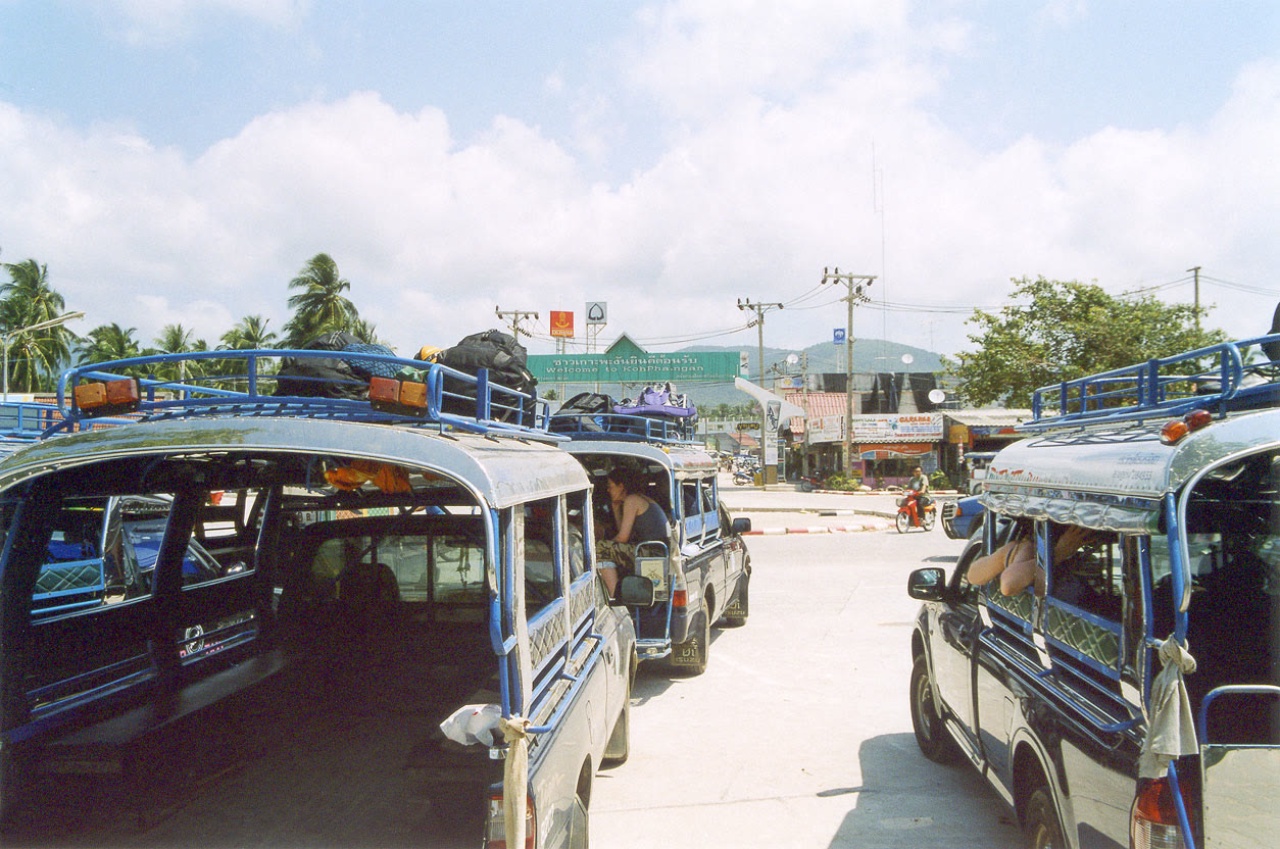
There are no set schedules. Songthaews leave when they have enough passengers, or you can negotiate a private trip. Common routes include Thong Sala to Haad Rin, Thong Sala to Baan Tai, Thong Sala to Sri Thanu, and Thong Sala to Chaloklum. Shared rides cost much less than private hires, and prices depend on distance and on how well you negotiate.
During the Full Moon Party and other major events, songthaew prices rise considerably and trucks fill up. Drivers know demand is high and price accordingly.
Key tips for songthaew travel:
- Agree on the price before you get in. Always.
- Shared rides are significantly cheaper than private hires, so wait for other passengers if you are not in a rush
- Service thins out after dark, especially to remote beaches like Thong Nai Pan or Bottle Beach
- Drivers at the pier can be pushy. Walk a few meters away from the arrival area to find calmer negotiations
Getting Around Koh Phangan by Taxi and Private Car
Koh Phangan does not have metered taxis. What locals call taxis are private cars or pickup trucks driven by individuals who set their own prices. You will find them at Thong Sala pier, near major hotels, and through contacts that your accommodation can share.
Prices are higher than songthaews because you get a private, door-to-door service. They are negotiable, but expect island drivers to have a fairly fixed sense of what trips cost, and trips to remote areas like Thong Nai Pan cost more.
Ride-hailing apps are not a reliable option on Koh Phangan, so do not count on them. Instead, save the phone number of a reliable taxi driver early in your trip. Your hotel or hostel reception will almost certainly have a contact. Many visitors find that building a relationship with one driver for the duration of their stay is the most convenient approach.
Getting Around Koh Phangan by Water Taxi and Longtail Boat
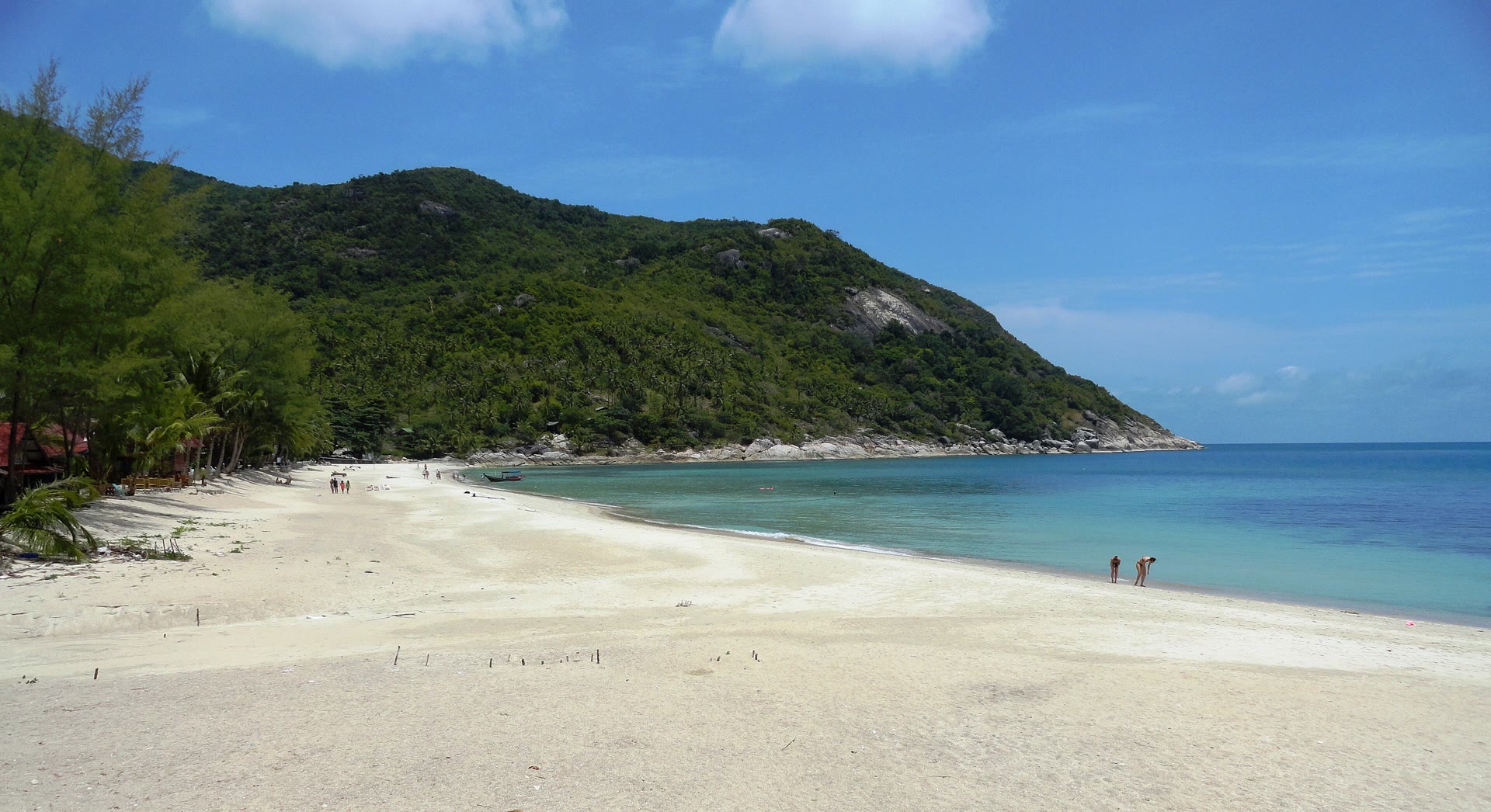
Some of Koh Phangan's most beautiful beaches are difficult to reach by road. Bottle Beach (Haad Khuat) is the classic example: while a rough dirt track connects it to the main road, most visitors arrive by longtail boat from Chaloklum, a short ride along the north coast. Boats leave when enough passengers gather at the Chaloklum pier.
Water taxis also connect various beaches along the north and east coasts. In high season service runs more often. In low season service drops off and you may need to charter a boat privately, which costs considerably more.
For island-hopping day trips, tour operators in Thong Sala and Baan Tai offer speedboat and catamaran packages. These are organized excursions rather than point-to-point transport. Lomprayah also runs high-speed ferries between Koh Phangan, Koh Samui and Koh Tao.[3]
Getting Around Koh Phangan on Foot
Walking is perfectly viable within individual beach areas and towns. Thong Sala's main strip, market area, and pier are all within walking distance of each other. Baan Tai and Sri Thanu each have a stretch of road with restaurants, shops, and yoga studios that you can cover on foot. Haad Rin's two beaches, Sunrise and Sunset, are connected by a short walk through the town center.
Walking between different areas of the island, however, is not practical. The distances, heat, hills, and lack of pedestrian infrastructure (few sidewalks, narrow shoulders, fast-moving scooters) make inter-area walking unpleasant at best and unsafe at worst. Use walking to explore your immediate neighborhood, and motorized transport for everything else.
Getting Around Koh Phangan by Bicycle
A few rental shops in Thong Sala and Sri Thanu offer bicycles, and some guesthouses provide them for guests. On flat coastal stretches, cycling can be pleasant in the cooler morning or late afternoon hours. However, Koh Phangan's terrain is hilly, the heat is intense, and many roads lack shoulders. Cycling is realistic only for fit riders sticking to the flatter western coast between Thong Sala, Baan Tai, and Sri Thanu. For the mountainous interior or the steep roads to the northeast, a bicycle is impractical.
Comparing Your Options
| Mode | Cost | Duration | Best For |
|---|---|---|---|
| Scooter rental | Priced per day by each shop | You set the pace | Maximum freedom, exploring remote beaches, travelers staying multiple days |
| Songthaew (shared) | Cheaper than a private hire, depends on distance | Depends on route | Budget transport between Thong Sala and main beaches without riding a scooter |
| Private taxi | Negotiated per trip | Depends on destination | Door-to-door comfort, late-night rides, groups splitting the fare |
| Water taxi / longtail | Per person, depends on route | Short hops | Reaching Bottle Beach and other road-inaccessible spots |
| Walking | Free | Varies | Exploring within a single beach area or Thong Sala town |
| Bicycle | Priced per day by each shop | Slow on hills | Flat coastal stretches for fit riders, eco-friendly short trips |
Practical Tips for Getting Around Koh Phangan
A few things that will make your island transport experience smoother:
- Cash is essential. Almost all transport on Koh Phangan is paid in cash. ATMs are available in Thong Sala, Baan Tai, and Haad Rin, but they charge withdrawal fees. Carry small bills for songthaews and boat rides, because drivers rarely have change for large notes.
- Download offline maps. Cell signal can be patchy in the jungle interior. Having offline maps is invaluable for navigating the island's unsigned roads on a scooter.
- Fuel up in town. Proper petrol stations exist in Thong Sala and along the main road toward Baan Tai. In remote areas, you will see roadside stalls selling petrol in bottles. These work in a pinch but are more expensive per liter.
- Avoid riding at night. Unlit roads, stray dogs, drunk drivers (especially around party nights), and potholes you cannot see create a dangerous combination after dark. If you must travel at night, take a taxi.
- Full Moon Party logistics: On party nights, songthaews run late between Haad Rin and other areas. Expect inflated prices and crowded trucks. Many travelers stay in Haad Rin for the night rather than trying to get back to distant accommodations.
- Rainy season roads: Heavy rain can make the dirt roads to Thong Nai Pan and Bottle Beach treacherous or impassable. Even experienced riders should think twice about the steep interior roads in wet conditions. Water taxis become the safer alternative for northeast coast beaches.
- Language: Most drivers and rental shop owners speak basic English. For remote destinations, show your accommodation on a map rather than trying to explain the name verbally.
- Check your insurance: Before renting a scooter, confirm that your travel insurance covers motorbike accidents. Many policies require a valid motorcycle license. Medical evacuation from the island is expensive without coverage.
For comparing ferry and transfer options to reach Koh Phangan from the mainland or neighboring islands, GoAsia.cc lets you check schedules and prices across multiple operators in one place.
Popular Routes and Destinations
Here are some of the most common journeys travelers make on Koh Phangan, with practical advice for each:
Thong Sala Pier to Your Accommodation
Every visitor's first transport decision. Songthaew drivers line up at the pier for ferry arrivals. Shared rides to Haad Rin, Baan Tai, Sri Thanu, or Chaloklum are the most affordable option. A private transfer costs more and is worth arranging if you arrive with a lot of luggage. Many hotels and hostels arrange pickup if you book in advance, sometimes included in the room rate, sometimes for a fee comparable to the taxi price.
Thong Sala to Haad Rin
The most-traveled route on the island, especially around party nights. Shared songthaews run frequently during the day. By scooter, the road is paved and in decent condition, but the winding road makes the trip slower than the distance suggests. A private taxi costs more but is the easiest option late at night.
Chaloklum to Bottle Beach
Longtail boats from Chaloklum pier are the standard way to reach Bottle Beach. Boats run more frequently in high season. The overland route exists but involves a very steep, unpaved track best attempted only by confident riders on a sturdy scooter in dry conditions.
Thong Sala to Thong Nai Pan
One of the longer and more challenging routes. The road climbs steeply through the island's interior with sharp switchbacks. The road has been improved in recent years but remains demanding, especially the final descent. Songthaews and taxis serve this route but charge a premium due to the distance and difficulty.
Frequently Asked Questions
Use this guide to compare local transport in Koh Phangan. When bookable tickets are available, the booking tool shows current options and prices.
Renting a scooter is the most popular and flexible way to get around Koh Phangan. It gives you the freedom to explore remote beaches and viewpoints on your own schedule. If you are not comfortable riding a scooter, songthaews (shared pickup trucks) connect Thong Sala to the main beach areas, and private taxis are available for door-to-door service.
Prices on the island are not fixed. Scooter rentals are priced per day by each shop, shared songthaew rides are cheaper than private hires, and taxis set their own prices per trip. Agree on the price before you start, and carry small bills because transport is paid in cash.
There are no metered taxis. Private cars and pickup trucks operate as taxis and set their own prices. Ride-hailing apps are not a reliable option, so ask your accommodation for the phone number of a driver.
The roads are the biggest danger on the island because of steep hills, loose gravel, sand patches and rain. Beginners should not learn to ride here. Always wear a helmet and check that your travel insurance covers scooter use.
Most visitors take a longtail boat from Chaloklum pier. A very steep dirt track also leads to the beach, but it is only suitable for confident riders in dry conditions.
Walking works within a single beach area or town, but not between areas of the island. Cycling is realistic only for fit riders on the flatter western coast, because the interior is steep and hot.
Sources and background
Numbers in the text such as [1] refer to these sources.
- [1] Raja Ferry: Raja Ferry Port. Retrieved October 15, 2026.
- [2] Seatran Ferry Company: Seatran Ferry. Retrieved October 15, 2026.
- [3] Lomprayah: Lomprayah High Speed Ferries. Retrieved October 15, 2026.
Guide prices and journey times are indicative, not live quotes. A booked package may include transfers and waiting time as well as the main journey. Check the selected offer, pickup point and current conditions before booking.