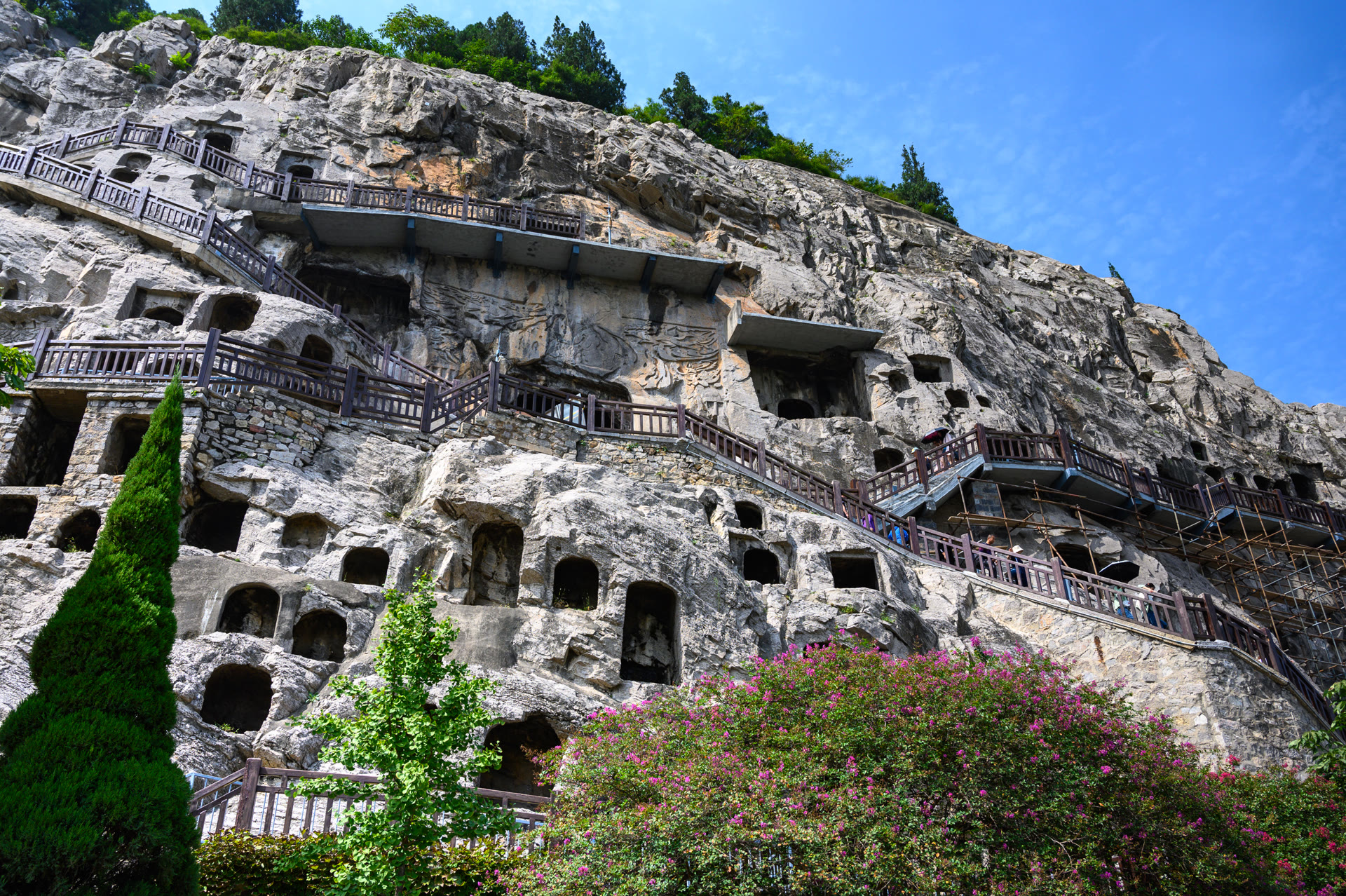
Carved into limestone cliffs along the Yi River just south of Luoyang, the Longmen Grottoes hold one of the densest concentrations of Buddhist art anywhere in the world. Across two facing banks of rock, generations of patrons commissioned tens of thousands of statues, from tiny niches barely larger than a hand to a seated Buddha that towers more than seventeen meters high. Walking the riverside path here is less like visiting a single monument and more like reading a stone archive of more than four centuries of faith, politics, and craftsmanship.
The site earned its place on the UNESCO World Heritage List for exactly this reason: it documents the development of Chinese Buddhist sculpture at the highest artistic level, spanning the Northern Wei and Tang dynasties. For independent travelers, it is also one of the most rewarding day trips in central China, manageable in a half day yet substantial enough to fill a full one if you slow down and read the carvings.
This guide covers what the grottoes are, how to structure a visit across both banks, when to come, how to reach the site from Luoyang, and how to combine it sensibly with the Shaolin Temple. Treat specific prices and hours as things to confirm before you go, since these change without notice.
What the Longmen Grottoes Actually Are
Longmen means "Dragon Gate," a reference to the two hills that face each other across the Yi River, forming a natural gateway. Carving began under the Northern Wei dynasty after the imperial court moved its capital to Luoyang, and it continued in waves through the Tang dynasty, when the site reached its artistic peak. The result is a roughly one kilometer stretch of cliff on both banks, riddled with caves, shrines, and niches.
The numbers are genuinely staggering. The site contains thousands of grottoes and niches and tens of thousands of statues, ranging from monumental seated Buddhas to delicate relief carvings of flying apsaras, attendants, and donors. Many caves also preserve inscriptions, which makes Longmen important not only for art history but for the study of calligraphy and dated religious patronage.
What strikes most visitors is the variety. Northern Wei carving tends toward elongated, ethereal figures with serene expressions, while Tang sculpture is fuller, more rounded, and more naturalistic. You can stand in front of two caves a short walk apart and see centuries of stylistic change in a single afternoon.
Things to Do
The Layout: East Bank, West Bank, and the River Between
The site is organized into distinct zones, and understanding the geography before you arrive saves time and confusion. The main scenic area splits across the West Hill, the East Hill, the Xiangshan Temple, and the Bai Garden, connected by a bridge over the Yi River.
West Bank (West Hill Grottoes)
This is the heart of the site and where the most famous caves cluster. The vast majority of significant grottoes, including the largest and most photographed sculptures, line the cliff on the west side of the river. Most visitors enter from the north and walk south along the riverside path, climbing up to caves at various heights via stairs and walkways. Plan to spend the bulk of your time here.
East Bank (East Hill Grottoes)
After crossing the bridge at the southern end, you reach the East Hill, which has fewer and generally smaller grottoes, many dating to the Tang dynasty. The real reward of the east bank is not just the carvings but the perspective: from here you look back across the river at the towering Fengxian Temple group on the west cliff, which is one of the best photo vantage points in the whole site.
Xiangshan Temple and Bai Garden
Continuing along the east side brings you to Xiangshan Temple, a working temple complex with views over the river, and then to the Bai Garden, the tomb and memorial garden of the famous Tang poet Bai Juyi. These sections are quieter, more contemplative, and a pleasant way to wind down before you exit. They are included in the standard route, so the typical itinerary forms a long loop: down the west bank, across the river, back up the east bank.
The Highlight: Fengxian Temple and the Great Vairocana Buddha
If you see only one thing at Longmen, it is the Fengxian Temple grotto on the West Hill. This open-air shrine is dominated by a colossal seated statue of Vairocana Buddha, the central figure of a group that also includes attendant bodhisattvas, disciples, and fierce guardian kings. The Buddha's face, with its calm half smile and broad, balanced features, is the iconic image of Longmen and one of the masterpieces of Tang sculpture.
The scale is hard to grasp from photographs. The central Buddha stands more than seventeen meters tall, and the entire ensemble was carved directly from the living cliff. Standing on the platform below and looking up at the row of figures, with the guardian kings trampling demons underfoot, is the single most powerful moment of a visit.
Because of its fame, Fengxian Temple is also the most crowded point on the route. The viewing platform funnels everyone into the same space, and during peak periods you may queue for stairs and jostle for a clear photo. Arriving early helps enormously here.
Other Caves Worth Slowing Down For
Beyond Fengxian Temple, several West Hill caves reward attention. The Binyang caves, a set of three grottoes begun under the Northern Wei, show the earlier, more linear style and contain finely detailed reliefs. The Ten Thousand Buddhas Cave is famous for its walls densely packed with small carved Buddha figures, a vivid demonstration of devotional repetition. The Lotus Cave takes its name from a carved lotus flower on its ceiling. You will not be able to enter most caves; viewing is from walkways and platforms, and many niches are protected behind railings.
When to Visit
Luoyang has a temperate climate with four distinct seasons, and the timing of your visit shapes both comfort and crowds.
Best Seasons
Spring and autumn are the most comfortable, with mild temperatures and lower rainfall. Spring in Luoyang is also peony season, when the city is famous across China for its peony displays, which can be combined with a Longmen visit but also brings heavy domestic tourism. Autumn offers clear skies and pleasant walking weather along the river path, which is largely exposed.
Seasons to Approach With Care
Summer is hot and humid, and because much of the visit involves climbing stairs in open sun, midday in summer can be draining. Carry water and sun protection. Winter is cold and quieter, with fewer crowds, but the riverside wind can be biting and some greenery is bare. The carvings themselves are impressive year round.
Crowd Strategy
Longmen is extremely popular with domestic tour groups. Chinese public holidays, especially the national holiday weeks and the peony festival period, bring enormous crowds. If your dates fall on a major holiday, expect long queues and packed platforms at Fengxian Temple. The most effective strategy in any season is to arrive at opening time and walk the West Hill first, before the tour buses arrive in force. By the time large groups reach the highlights, you can be moving on to the quieter east bank.
Night Visits and Lighting
The site has at certain times offered evening opening with the grottoes illuminated, and night lighting can transform the cliffs and the river into a dramatic, atmospheric experience with far thinner crowds. However, evening opening is seasonal and subject to change, so do not build a trip around it without confirming current arrangements. If night opening is running during your visit and the weather is clear, it is worth experiencing for the lighting and the reflections on the Yi River, though the limited illumination means you see fewer carvings in detail than during the day. Treat a daytime visit as the core experience and a night visit as a bonus.
Tickets, Hours, and Practical Access
Longmen is a ticketed scenic area, and the standard ticket covers the main zones: the West Hill grottoes, the East Hill grottoes, Xiangshan Temple, and the Bai Garden. There is usually a single combined admission for the loop rather than separate tickets for each bank.
Because prices, opening hours, and seasonal arrangements change, confirm the current admission fee, the daily opening and closing times, and whether night opening is available before you travel. During major Chinese holidays, the site may require or strongly encourage advance reservation, and entry can be capped, so check reservation rules in advance if you are visiting around a national holiday.
Inside the scenic area, an electric shuttle or sightseeing cart typically runs between zones for an additional fee, which is useful if you are short on time or tired, since the full loop involves a fair amount of walking and stair climbing. You can also walk the entire route on foot.
How to Get There From Luoyang
The grottoes lie a short distance south of central Luoyang, and the city is the natural base. Luoyang is well connected to the rest of China.
Reaching Luoyang
Luoyang has a high speed railway station with frequent fast trains linking it to Xian, Zhengzhou, and beyond, making it an easy stop on a central China rail itinerary. From the high speed station or the regular railway station, you continue to the grottoes by local transport.
From Luoyang to the Grottoes
The most common options are city buses that run from the city center and railway stations toward the Longmen scenic area, taxis, and ride hailing apps, which are widely used in China and often the simplest choice for foreign visitors who do not read Chinese. The drive from central Luoyang to the entrance is short, typically well under an hour depending on traffic and your starting point. There is also a dedicated Longmen high speed rail station on some lines, which puts the grottoes within easy reach for travelers connecting directly.
Getting Around On Arrival
From the parking and ticketing area, you walk to the entrance and then follow the marked route. Wear comfortable shoes, because the West Hill in particular involves climbing and descending stairs along the cliff face. The path is generally well maintained, but it is not flat, and the stairs can be challenging for travelers with limited mobility.
How Much Time to Budget
The amount of time you need depends on how deeply you want to engage with the carvings.
| Visit style | Time needed | What you cover |
|---|---|---|
| Highlights only | 2 to 2.5 hours | West Hill main caves and Fengxian Temple, quick river crossing |
| Standard full loop | 3 to 4 hours | Both banks, Xiangshan Temple, Bai Garden at a relaxed pace |
| In depth | Half to full day | Detailed cave viewing, reading inscriptions, photography, slow loop |
Most independent travelers find that three to four hours covers the site well without rushing. If you are also planning a night visit, treat that as a separate, shorter outing.
Pairing Longmen With Shaolin Temple
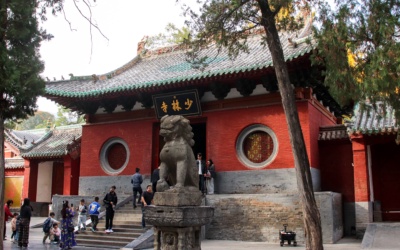
One of the most popular combinations from Luoyang is to pair the grottoes with the Shaolin Temple, the famous Chan Buddhist monastery and birthplace of Shaolin kung fu, located in the Songshan mountains near Dengfeng. The two sites sit roughly between Luoyang and Zhengzhou, so the geography lends itself to a combined day or a two day plan.
The honest tradeoff is that doing both in a single day is ambitious. Each site deserves a few hours, and the travel time between them, plus traffic, eats into your day. If you attempt it independently, start very early, see Longmen at opening, then move on to Shaolin, accepting that you will see each more briefly. Many travelers find it more relaxing to give each site its own half day or to split them across two days, perhaps staying overnight in Dengfeng or returning to Luoyang.
An organized day tour that bundles both can simplify logistics and transport, but you trade flexibility for a fixed schedule and the usual tour group pacing. For travelers who prefer control over their time, basing in Luoyang and arranging private transport or ride hailing for the Shaolin leg often strikes a good balance. For more ideas on building central China itineraries and connecting sites by high speed rail, GoAsia.cc is a useful place to continue planning.
Practical Tips for a Smooth Visit
- Arrive at opening. The single most effective move is to be at the entrance when it opens and walk the West Hill highlights before tour groups fill Fengxian Temple.
- Carry water and sun protection. The riverside path and cliff stairs are largely exposed, and there is little shade at the key viewpoints. This matters most in summer.
- Wear proper shoes. The West Hill involves real stair climbing. Sandals or slick soles are a poor choice.
- Cross the river for the best photos. The classic wide shot of the Fengxian Temple group is taken from the east bank looking back, so save photography energy for that vantage point.
- Use ride hailing or have your destination in Chinese. English is limited. Ride hailing apps with the destination preset, or your hotel writing the name in Chinese, smooths taxi communication.
- Check reservation rules near holidays. If your visit falls on a Chinese public holiday, confirm whether advance booking and daily caps apply, and reserve early.
- Bring small cash and a payment app where possible. Mobile payment dominates in China. Set up a working payment method before arrival if you can, and keep some cash as backup.
- Respect barriers and do not touch carvings. Many statues have already suffered weathering and historical damage. Stay behind railings and avoid flash where signs prohibit it.
Honest Limitations to Know Before You Go
Longmen is spectacular, but it helps to set expectations. Many of the most famous statues have suffered damage over the centuries, and a number of heads and figures are missing entirely, lost to weathering, vandalism, and historical looting. You will see empty niches and headless figures alongside the masterpieces, which can be either poignant or disappointing depending on your frame of mind.
Access is also more distant than at some sites. Because viewing is mostly from walkways and platforms, you generally cannot enter the caves or get close to the carvings, so binoculars or a zoom lens enhance the experience for the higher or more recessed figures. Finally, interpretive signage in English is variable, so reading a little about the dynasties and major caves beforehand, or hiring a guide, greatly deepens what you take away from the visit.
None of this diminishes the core experience. Standing before the great Vairocana Buddha, with the river below and the cliffs rising around you, remains one of the defining sights of central China.
Frequently Asked Questions
Most independent travelers spend three to four hours to walk the full loop across both banks at a relaxed pace, including Fengxian Temple, Xiangshan Temple, and the Bai Garden. If you only want the West Hill highlights, two to two and a half hours is enough. Allow extra time if you plan to read inscriptions or photograph in detail.
Longmen charges a combined admission that covers the main zones, with an optional extra fee for the internal shuttle cart. Because prices change, confirm the current fee before you go. Around Chinese public holidays, advance reservation may be required and daily entry can be capped, so book early if your visit falls on a holiday.
Luoyang is the natural base and connects by high speed rail to Xian, Zhengzhou, and beyond. From the city you can reach the grottoes by city bus, taxi, or ride hailing app, with the drive typically taking well under an hour. Ride hailing with the destination preset is usually the easiest option for foreign visitors.
The site has at times offered seasonal evening opening with the cliffs and river illuminated, which creates a dramatic, less crowded experience. However, night opening is not guaranteed and changes seasonally, so confirm current arrangements before relying on it. Treat a daytime visit as the main experience and a night visit as a bonus.
It is possible but ambitious, since each site deserves a few hours and the travel time between them is significant. Independent travelers who attempt both in a day should start very early and accept a quicker visit at each. Many people prefer giving each site its own half day or splitting them over two days, sometimes staying overnight near Dengfeng.
The Fengxian Temple grotto on the West Hill is the centerpiece, dominated by the colossal seated Vairocana Buddha flanked by attendants and guardian kings. It is the iconic image of Longmen and a masterpiece of Tang dynasty carving. It is also the most crowded spot, so visit it early.
The West Hill involves substantial stair climbing along the cliff face, which can be difficult for travelers with limited mobility. The internal shuttle cart helps cover distances between zones, but reaching many caves still requires steps. Wear comfortable shoes and pace yourself, especially in hot weather.