George Town Street Art: Murals, Artists and Walking Routes
Photo: Lightscape / Unsplash
Contents
Start on Lebuh Armenian for a short walk that mixes painted murals with steel caricatures. With more time, add Cannon Street, Lebuh Ah Quee and Lebuh Muntri. This guide covers George Town on Penang Island. The Butterworth Art Walk is on the mainland and needs a separate trip. The art hangs on public walls, so you need no tour or ticket to see it.
How George Town’s public art developed
George Town is a UNESCO World Heritage Site, listed together with Melaka as historic cities of the Straits of Malacca shaped by 500 years of trade and cultural exchange between East and West.[1] In 2009 the Penang state government opened the international ideas competition Marking George Town to give the heritage site a visual identity, and work on the winning idea started in 2010.[2] The street art scene became famous in 2012, when the Lithuanian artist Ernest Zacharevic painted the Mirrors George Town murals for the George Town Festival.[3]
Things to Do
Offers are only loaded from GetYourGuide after you click. GetYourGuide can then process your IP address and set cookies. Privacy Policy
GetYourGuide partner offers. GoAsia may earn a commission if you book through these offers. Check whether tickets or transfers are included, and follow the attraction's official booking and admission rules.
Murals and their artists
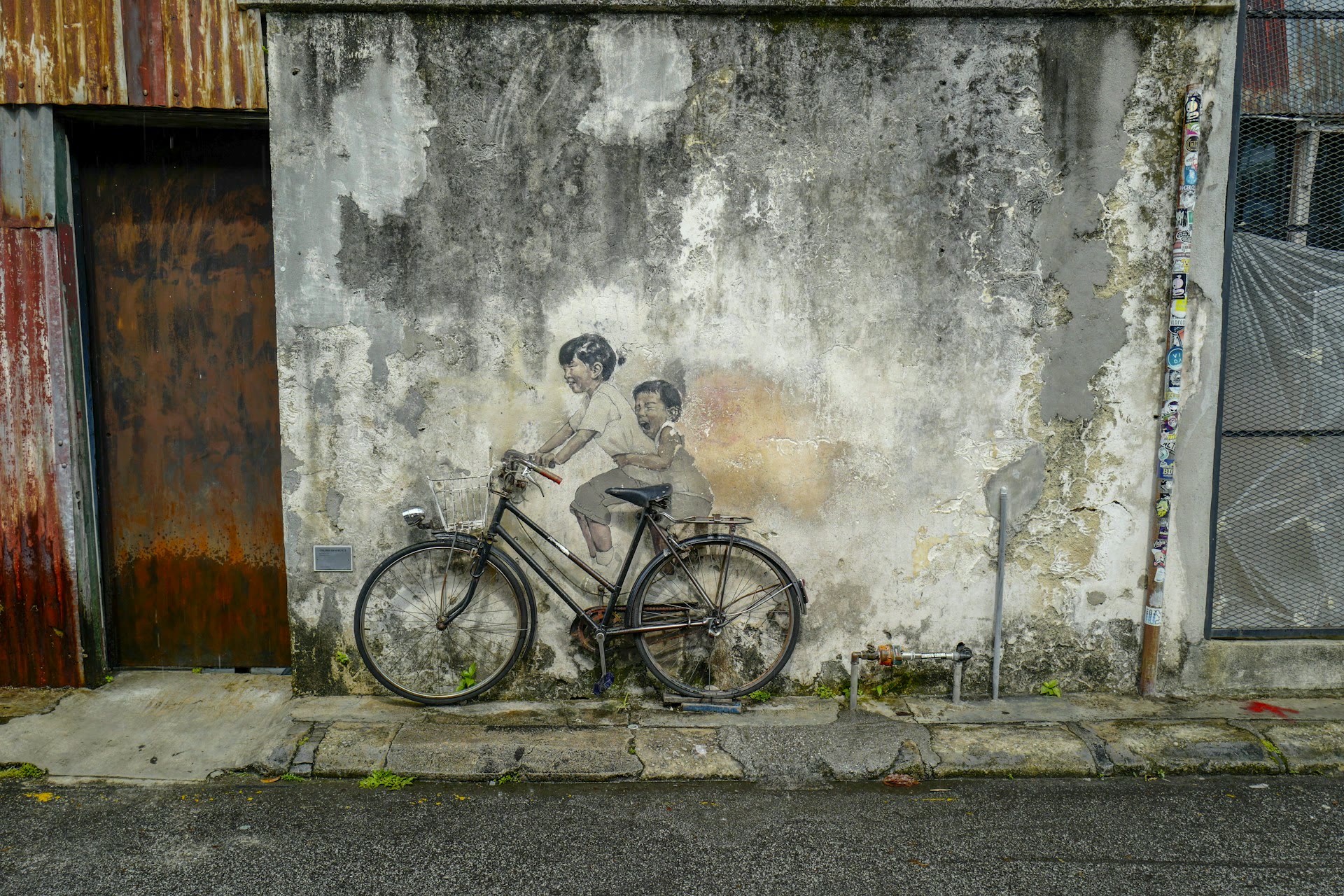
Zacharevic's murals blend painted figures with real objects such as bicycles, swings and motorbikes.[3] Four of them are the most photographed in the city. Search a map by title and street together, because the reaching figure and the chair scene are different works.[3]
| Street | Mural by Ernest Zacharevic |
|---|---|
| Lebuh Armenian | Little Children on a Bicycle[3] |
| Lebuh Ah Quee | Boy on a Bike[3] |
| Cannon Street | Reaching Up[3] |
| Lebuh Muntri | Boy on a Chair[3] |
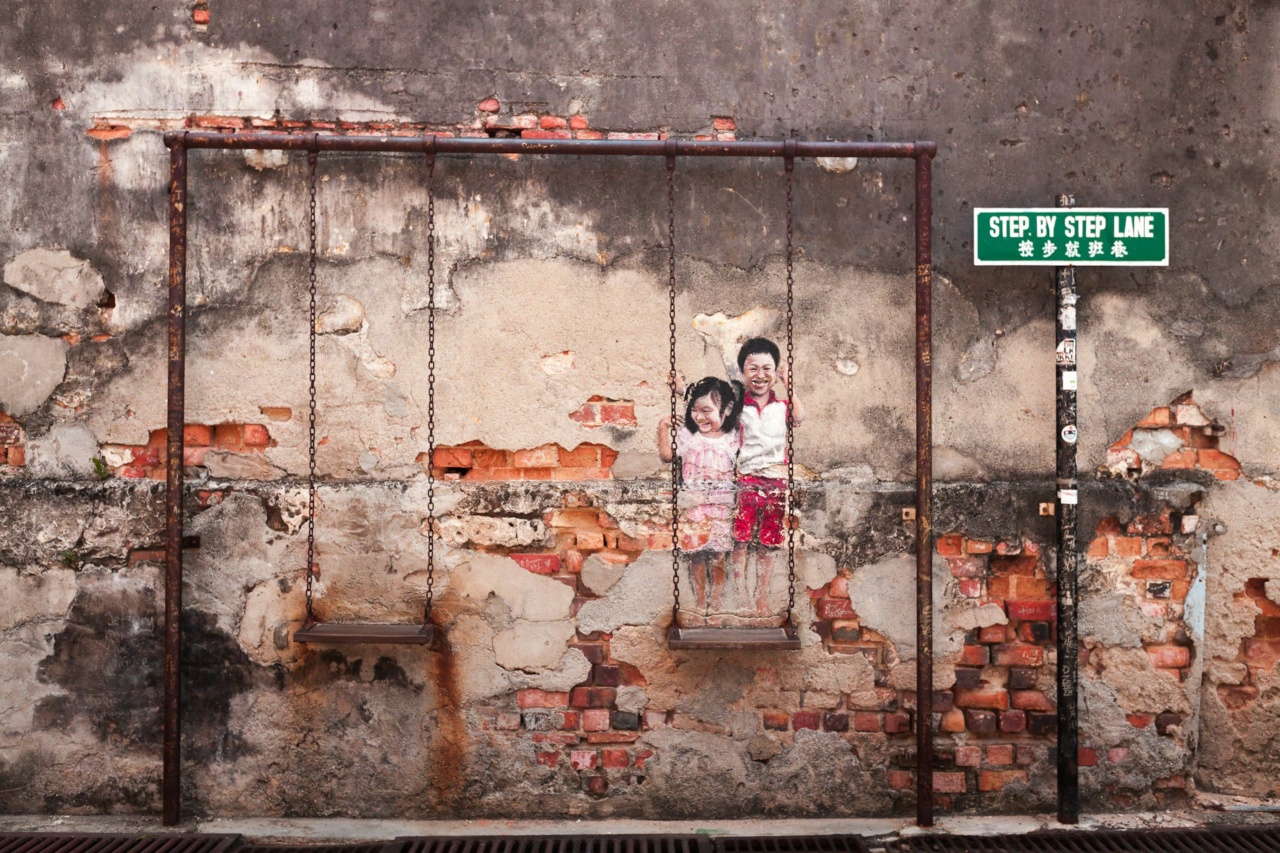
Children Playing Basketball and Brother and Sister on a Swing are by the Penang artist Louis Gan, not by Zacharevic. The Russian artist Julia Volchkova painted several large portraits inspired by local communities and culture, and the playful 101 Lost Kittens project hides small works around the old town.[3] Newer murals keep appearing around Lebuh Armenian, Gat Lebuh Chulia and the Hin Bus Depot, so a walk always turns up something new.[3]
Steel caricatures and local stories
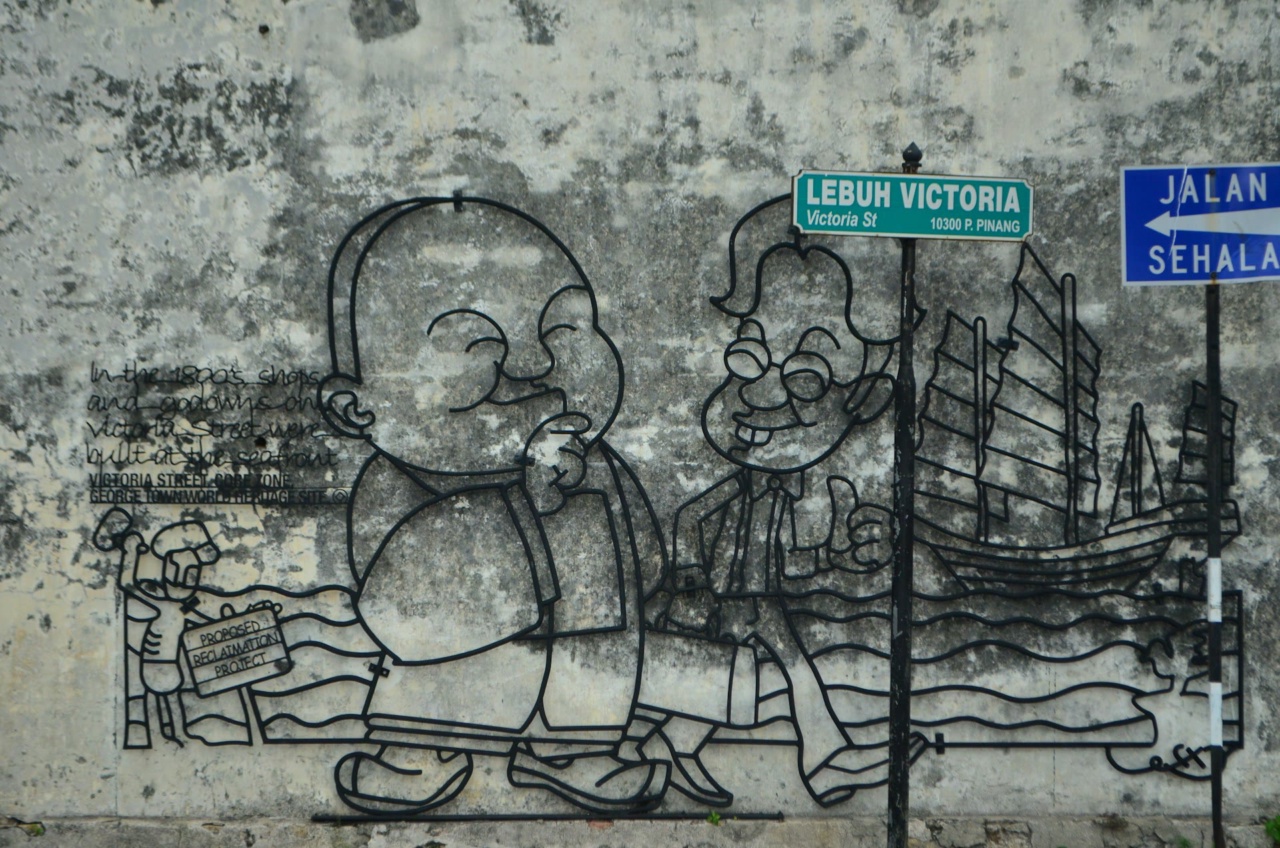
The winning concept in the Marking George Town competition came from the Kuala Lumpur studio Sculpture At Work under the creative direction of the local artist Tang Mun Kian, with the theme Voices of the People.[2] The result is 52 black steel rod sculptures along streets, alleyways and building facades, each telling a humorous story about the people, trades and communities that shaped George Town.[3] Tok Tok Mee on China Street shows itinerant noodle hawkers announcing themselves by striking bamboo sticks. Double Role on Lebuh Prangin refers to early policemen who also served as firefighters. No Plastic Bag on Prangin Lane commemorates Penang's eco-friendly initiatives and the traditional basket weavers. Tiger Procession on Lebuh Armenian recalls the grand float parade of the Year of the Tiger in 1926.[3]
Choose a walk, not a checklist
Pick a cluster of stops from the official Marking George Town map and save them on your phone before you set off. The table above gives street anchors for the murals, and the steel caricatures stand along the same lanes, for example Tiger Procession on Lebuh Armenian. Butterworth and the container artworks of the Penang International Container Art Festival, which stand in George Town, Jelutong, Balik Pulau, Butterworth and Batu Kawan, belong on separate trips.[3]
Give a selective walk 2 to 3 hours, with breaks. Go in the morning or the late afternoon to keep out of the midday heat, bring water and sun protection, and duck into a café when it rains. Choose a few priorities and leave time for photos and for crossing roads.
Costs and considerate visiting
Art on public streets is free to see. Museums, private venues, guides and transport such as trishaws and bicycles charge their own prices, so ask for the total, whether it is per person or per vehicle, how long it lasts and what the rental deposit and return terms are.
Keep entrances and pavements clear, watch for traffic and respect residents and shopkeepers. Do not touch painted surfaces, climb on attached objects or enter a private building for a photo. If a work has faded or is fenced off, move on to the next stop.
Plan a café or food stop in the middle. The old town is full of places to eat, so pick one that is open on the day and suits your diet, and enjoy the walk at a slow pace.
Sources and background
Numbers in the text such as [1] refer to these sources.
- [1] UNESCO World Heritage Centre: Melaka and George Town: historic trading cities and multicultural urban heritage. Retrieved October 22, 2026.
- [2] Penang Global Tourism: Marking George Town map: project history, sculpture stories and printed location reference. Retrieved October 22, 2026.
- [3] Penang Global Tourism: Street art: named mural artists, street locations, steel caricatures and mainland projects. Retrieved October 22, 2026.
Frequently Asked Questions
In 2009 the Penang state government ran the Marking George Town ideas competition for the UNESCO World Heritage Site, and work on the steel caricatures began in 2010. The murals became famous in 2012, when Ernest Zacharevic painted the Mirrors George Town series for the George Town Festival.
Yes, the murals and steel caricatures on public streets are free. Museums, private venues, guides and transport such as trishaws and bicycles charge their own prices, so ask for the total, whether it is per person or per vehicle, how long it lasts and what the rental deposit and return terms are.
Use the official Marking George Town map and pick a cluster of stops, then save them on your phone before you set off. The streets named in this guide are good anchors: Lebuh Armenian, Cannon Street, Lebuh Ah Quee and Lebuh Muntri for the murals, China Street and Prangin Lane for steel caricatures.
2 to 3 hours covers a selection of murals and steel sculptures with breaks. Choose a few priorities and leave time for heat, rain, photos and road crossings. Bring water and sun protection.
Start with Ernest Zacharevic's four best-known works: Little Children on a Bicycle on Lebuh Armenian, Boy on a Bike on Lebuh Ah Quee, Reaching Up on Cannon Street and Boy on a Chair on Lebuh Muntri. Search by title and street together, because the reaching figure and the chair scene are different works.
Go in the morning or the late afternoon to avoid the midday heat. Bring water and sun protection and pause in a café if it rains.
They are 52 black steel rod sculptures on streets, alleyways and building facades, created for the Marking George Town project under the theme Voices of the People. Each tells a humorous story about the people and trades of George Town: Tok Tok Mee on China Street shows noodle hawkers, Tiger Procession on Lebuh Armenian recalls a 1926 parade, Double Role on Lebuh Prangin refers to policemen who also served as firefighters, and No Plastic Bag on Prangin Lane commemorates Penang's eco-friendly initiatives.
Yes. Plan a café or food stop in the middle of the walk and pick a place that is open on the day and suits your diet. A slow walk with a break works better than racing to collect every mural.