The ancestral home of millions in the Chinese diaspora, Jiangmen is a captivating blend of UNESCO-protected watchtowers, colonial arcades, and lush river delta landscapes. It offers a rare, slower-paced look at Guangdong province's history away from the neon glow of its larger neighbors.
Jiangmen occupies a unique position in the Pearl River Delta, serving as the cultural heart for millions of ethnic Chinese living abroad. Unlike the high-tech hubs of Shenzhen or Guangzhou, Jiangmen feels like a living museum where the 19th-century global trade era never quite ended. The city is defined by its 'Qiaoxiang' heritage, the legacy of migrants who returned from Southeast Asia and North America, bringing back building styles that fused Western and traditional Chinese design.[1]
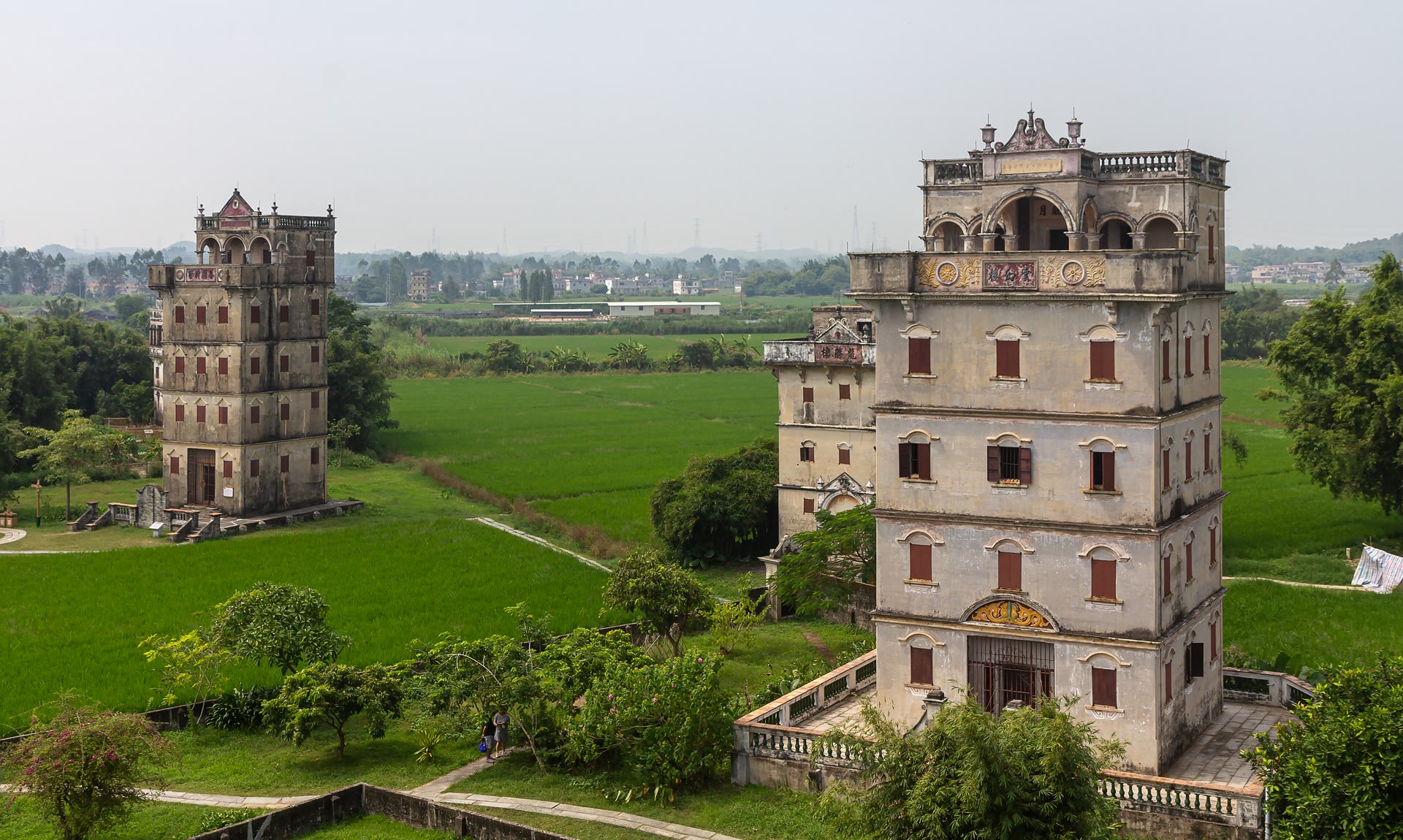
Travelers come here not for skyscrapers, but for the hauntingly beautiful Diaolou watchtowers rising from emerald rice paddies and the crumbling charm of riverside arcade streets. It is a destination for those who appreciate architectural history, slow-cooked Cantonese delicacies, and the quiet rhythm of a city that prioritizes its heritage over rapid modernization. While the city center is a functional urban hub, the outlying districts of Kaiping and Taishan hold the true treasures of the region.
Visiting Jiangmen requires a shift in pace. You will spend your mornings cycling through villages that look like film sets and your afternoons sipping Xinhui orange peel tea in traditional tea houses. It is one of the few places in the industrial heart of Southern China where you can still feel the weight of history in every weathered brick and faded shop sign.
Orientation and Neighborhoods
Jiangmen is a prefecture-level city, meaning it covers a vast area comprising several distinct districts and satellite cities. Understanding the layout is crucial because the most famous attractions are spread far apart. The urban core is centered around Pengjiang and Jianghai, while the cultural heavy hitters lie to the southwest.
Pengjiang District: The historical and administrative center. The Jiangmen Museum (also called the Wuyi Overseas Chinese Museum) stands here and runs the Chen Baisha Memorial Hall and the China Qiaodu Museum of Overseas Chinese. It is open Tuesday to Sunday from 09:00 to 17:00 (last entry 16:00), closed on Mondays except national holidays, and admission is free with a reservation.[2] Pengjiang is the best place to stay if you want urban amenities and easy access to the main railway station.
Kaiping: Southwest of the city center, this is the primary reason tourists visit. It is home to the UNESCO World Heritage Diaolou clusters.[1] The Kaiping Diaolou Cultural Tourism Zone, a national 5A scenic area since December 2020, combines Zili Village, Li Garden and Majianglong Ancient Village.[3] Staying here allows for early morning photography before the tour buses arrive from Guangzhou.
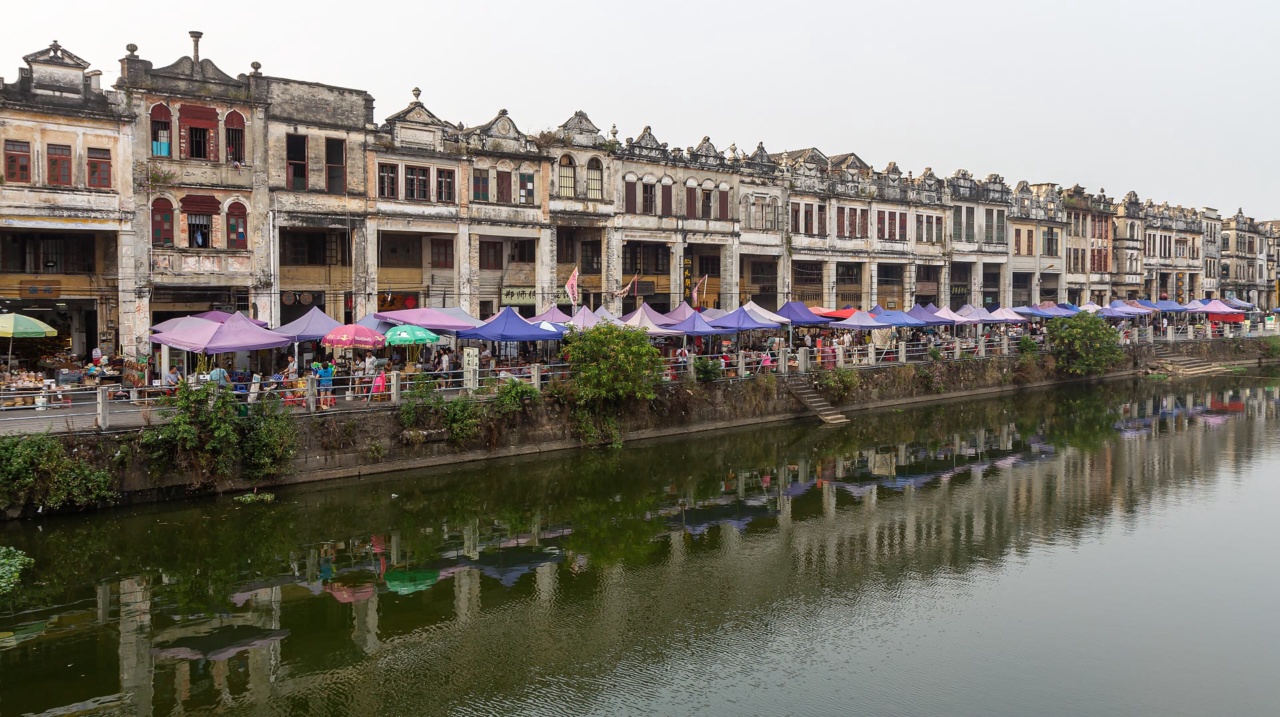
Chikan Old Town: A town in Kaiping with long rows of arcade buildings ('qilou') along the river.
Xinhui: This district is famous for Xinhui chenpi, sun-dried tangerine peel, and for the Bird Paradise.[4] It is effectively a suburb of the main city and very easy to reach.
Taishan: Further south, Taishan offers rugged coastlines and unrestored villages. It is ideal for travelers who find Kaiping too polished.
Things to Do
Offers are only loaded from GetYourGuide after you click. GetYourGuide can then process your IP address and set cookies. Privacy Policy
GetYourGuide partner offers. GoAsia may earn a commission if you book through these offers. Check whether tickets or transfers are included, and follow the attraction's official booking and admission rules.
Best Time to Visit
Jiangmen has a humid subtropical climate. The weather is a major factor in enjoying the rural landscapes of the Diaolou clusters. Humidity is high year-round, but the seasonal shifts are distinct.
Month Range
Weather
Crowds
Prices
October to December
Cool, dry, sunny
Moderate
Standard
January to February
Chilly, damp
High (CNY)
High
March to May
Warm, very rainy
Low
Low
June to September
Hot, humid, typhoons
Moderate
Standard
Autumn (October to December) is the best time to visit. The skies are clear, providing the best backdrop for the watchtowers, and the rice fields turn golden before the harvest. Spring brings long wet spells that create a misty, poetic atmosphere but make cycling between villages difficult. Avoid the Lunar New Year and the Golden Week holiday in early October, when domestic crowds peak and hotel prices rise.
Getting There and Getting Around
Most travelers fly into Guangzhou Baiyun (CAN) or Zhuhai Jinwan (ZUH). From Guangzhou South Station, frequent high-speed trains run to Jiangmen Station.[5] You can check schedules and book connecting travel on GoAsia.cc to streamline your transit through the Pearl River Delta.
Within the city, the public bus system is extensive but can be challenging for non-Chinese speakers. Ride-hailing via Didi (the Chinese equivalent of Uber) is the most practical way to get around, including for the long ride from downtown Jiangmen to the Kaiping Diaolou clusters. In the rural village areas, renting a bicycle is the best way to move between tower clusters.
Top Sights and Experiences
The UNESCO Diaolou of Kaiping
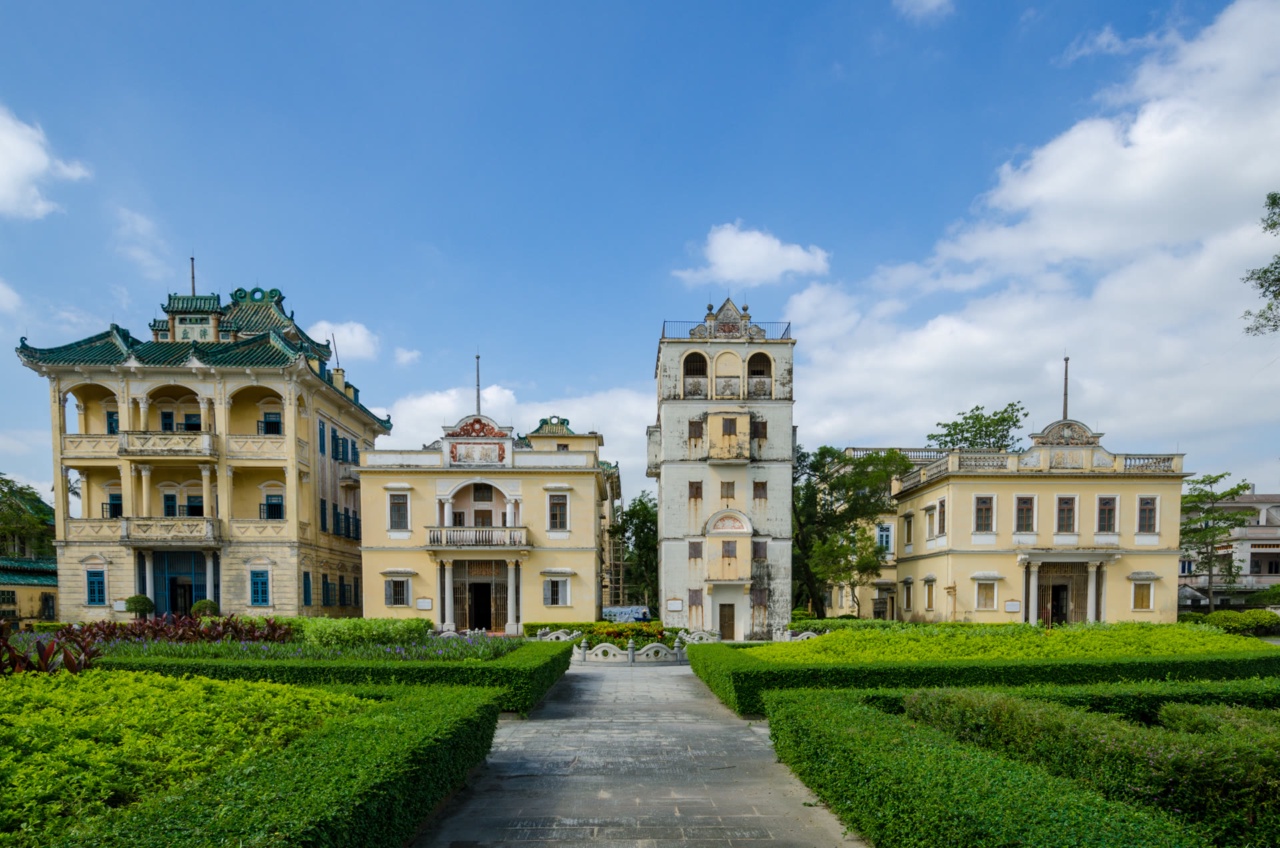
These fortified multi-story towers fuse Chinese and Western building styles. Emigrants from Kaiping built them in the late 19th and early 20th centuries, and 20 of the most symbolic Diaolou, in four groups, are on the UNESCO World Heritage List.[1] They come in three forms: communal towers that gave several families temporary refuge, residential towers of rich families, and watch towers, all answering local banditry.[1] The Zili Village cluster is among the most photographed, with towers set among rice paddies and ponds. Li Garden is another must-see, a classic garden that blends Western and Chinese design.[6] Spend at least 4 hours exploring these two sites.
Chikan Old Town
Once a busy trading port, Chikan features long rows of arcade buildings along the river. Much of it has been restored and turned into a visitor attraction, but the scale of the architecture is impressive. Visit in the late afternoon to see the light fall on the river.
In June 1933 the writer Ba Jin boated here and met a riverside banyan tree so massive that it looked like a small forest from afar, with birds nestled within it.[7] It later became known as the Bird Paradise. Today the banyan's aerial roots cover about 13,000 square meters and tens of thousands of birds live in them. You see them on a boat trip along the Tianma River, and the best bird-watching season in Xinhui runs from November to April.[8] Go at dawn or dusk when the birds are most active.
Food and Drink
Jiangmen cooks in the Cantonese tradition, and its signature ingredient is Xinhui chenpi, the aged tangerine peel that has long been prized in both medicine and cooking.[4]
Dish
Description
Claypot Rice
Rice with a crispy bottom, topped with cured meats.
Chenpi Duck
Duck braised with aged tangerine peel.
Where to Stay
Pengjiang (City Center): Best for first-timers. You will find international chains and local luxury hotels.
Kaiping/Tangkou: For a more immersive experience, stay in a boutique guesthouse or homestay in Tangkou town, where the Diaolou tourism area is based.[6] The atmosphere is quiet and rural.
Budget Options: Domestic budget-hotel chains are the cheapest option, though English-speaking staff may be limited.
Practical Tips
Payment: Most people pay by phone. Download Alipay or WeChat Pay and link your international card before arrival; Alipay accepts both Chinese and international bank cards.[9] Even small fruit stalls expect mobile payment.
Connectivity: A VPN is necessary to access Google, Instagram, or WhatsApp. Alternatively, buy a roaming SIM card (like those from Hong Kong) that bypasses the Great Firewall.
Language: Mandarin is the official language, but the local Taishanese and Cantonese dialects are widely spoken. English is sparse; keep your hotel address and destinations written in Chinese characters on your phone.
Tipping: Tipping is not expected. In high-end hotels, a service charge is usually included in the bill.
Etiquette: When visiting villages, remember that many towers are still privately owned. Do not enter a Diaolou unless it is clearly marked as a public museum.
Day Trips
Gudou Hot Springs
Located in Xinhui, this resort features themed spring pools. It is worth it for a relaxing afternoon, especially in the cooler winter months.
Naqin Peninsula
On the coast of Taishan, this area features dramatic rock formations. The white 'Greek-style' buildings are a bit gimmicky for photos, but the natural coastline is genuinely beautiful. Only worth it if you have more than 3 days in the region.
Sample 3-Day Itinerary
Day 1: The Urban Heritage
Morning: Explore the Pengjiang riverside and the China Qiaodu Museum of Overseas Chinese to understand the history of the region. Afternoon: Head to Xinhui to visit the Bird Paradise and the Liang Qichao Former Residence. Evening: Dinner in Pengjiang featuring Chenpi-infused dishes.
Day 2: The UNESCO Towers
Morning: Take a Didi or bus to Kaiping. Spend the morning in Zili Village, walking among the watchtowers. Afternoon: Visit Li Garden to see the fusion of Western and Chinese landscaping. Evening: Check into a guesthouse in Tangkou and enjoy a traditional claypot rice dinner.
Morning: Cycle from Tangkou to the Majianglong Diaolou cluster. Afternoon: Explore the renovated Chikan Old Town, walking the riverside arcades. Evening: Return to Jiangmen city center or catch a high-speed train to your next destination.
Frequently Asked Questions
Is Jiangmen worth visiting?
Yes, especially for history buffs and architecture lovers. It offers a unique 'East-meets-West' aesthetic found nowhere else in China, specifically through the UNESCO-listed Diaolou towers and the extensive riverside arcade buildings.
How many days do you need in Jiangmen?
Two to three days is ideal. This allows one full day for the Kaiping Diaolou clusters, one day for the historical districts of the city center and Xinhui, and a third day for the coastal areas or a slower exploration of the villages.
Is Jiangmen safe for tourists?
Jiangmen is very safe. Standard precautions against petty theft in crowded markets are sufficient, and the rural village areas are particularly welcoming to visitors.
What is the best time to visit Jiangmen?
The best time is from October to December. The weather is dry and mild, and the golden harvest season in the rural villages provides the most beautiful backdrop for photography.
What food is Jiangmen famous for?
Jiangmen is famous for Xinhui chenpi (aged tangerine peel), which is used in everything from duck to desserts. Claypot rice is another local favorite.
Is Jiangmen expensive?
No, Jiangmen is generally easier on the wallet than Guangzhou or Shenzhen. Good meals, private transport and boutique accommodation are all within reach of a mid-range budget.
Can you drink tap water in Jiangmen?
No, tap water in Jiangmen should not be consumed directly. Bottled water is cheap and available everywhere, and most hotels provide an electric kettle for boiling water.
Is English widely spoken in Jiangmen?
English is not widely spoken outside of major international hotels. Travelers should have translation apps and their destination addresses written in Chinese characters to navigate effectively.
Sources and background
Numbers in the text such as [1] refer to these sources.