
Contents
- 1. Getting Around Shenzhen by Metro
- 2. Getting Around Shenzhen by Bus
- 3. Getting Around Shenzhen by Taxi
- 4. Getting Around Shenzhen by Ride-Hailing (DiDi)
- 5. Getting Around Shenzhen by Bike and Scooter
- 6. Getting Around Shenzhen on Foot
- 7. Comparing Your Options
- 8. Practical Tips for Getting Around Shenzhen
- 9. Popular Routes and Destinations
- 10. Frequently Asked Questions
- 11. Sources and background
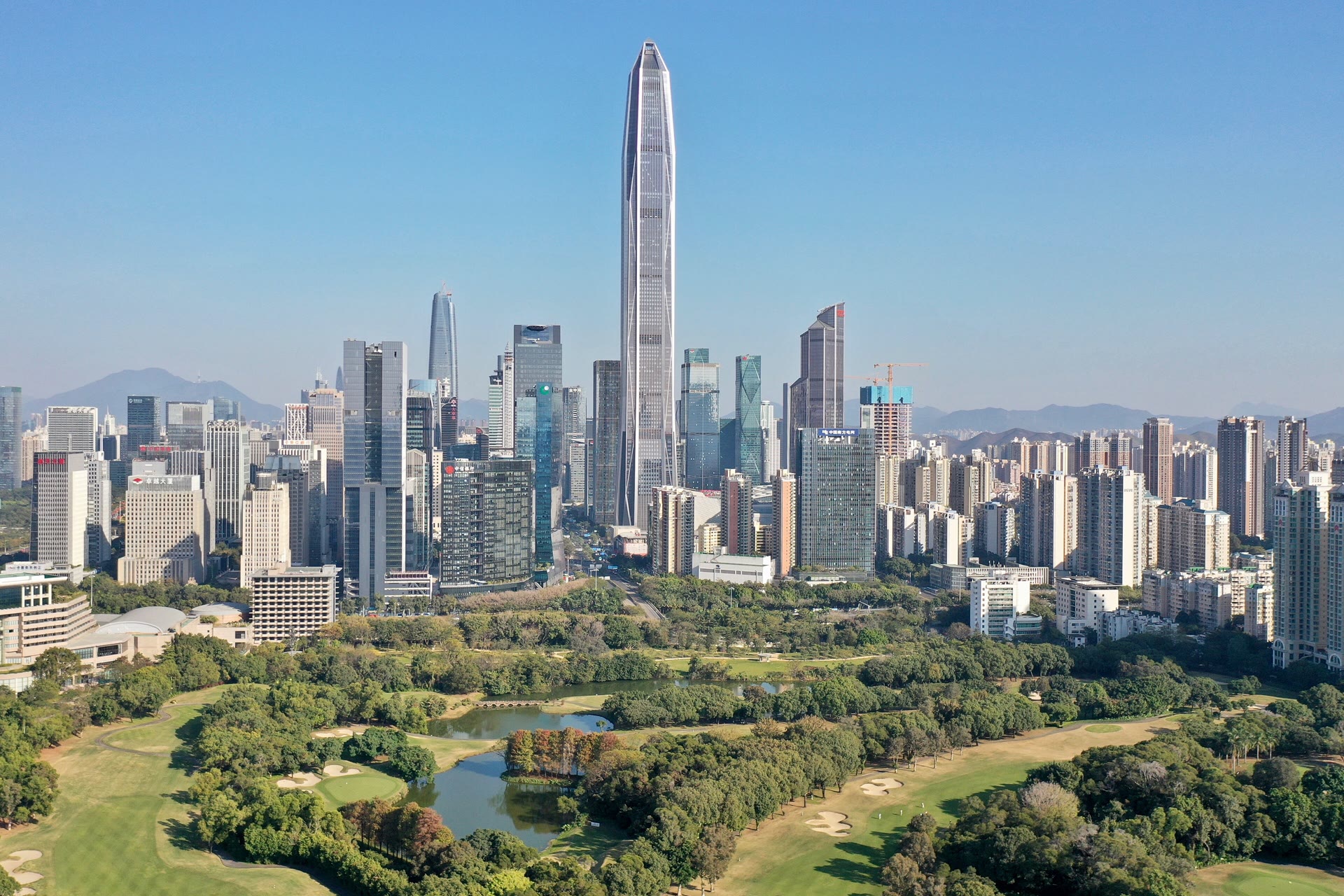
Shenzhen moves at the speed of the industry that built it. This is a city that grew from a fishing village into a megacity of skyscrapers, electronics markets and tech campuses in a single generation, and its transport system reflects that ambition. Everything feels new, fast and digital.
The first thing most visitors notice is the scale. The distance between districts like Luohu, Futian, Nanshan and Bao'an can easily take an hour to cross. Walking works beautifully within a single neighborhood, but you will rely on the metro and your phone to bridge the gaps, and almost everything runs on mobile payment.
One quirk worth understanding before you arrive: Shenzhen is a mainland Chinese city right on the border with Hong Kong, so you will need a working VPN for blocked foreign apps, a Chinese mobile payment setup and a little patience with apps that assume you read Chinese.
Getting Around Shenzhen by Metro
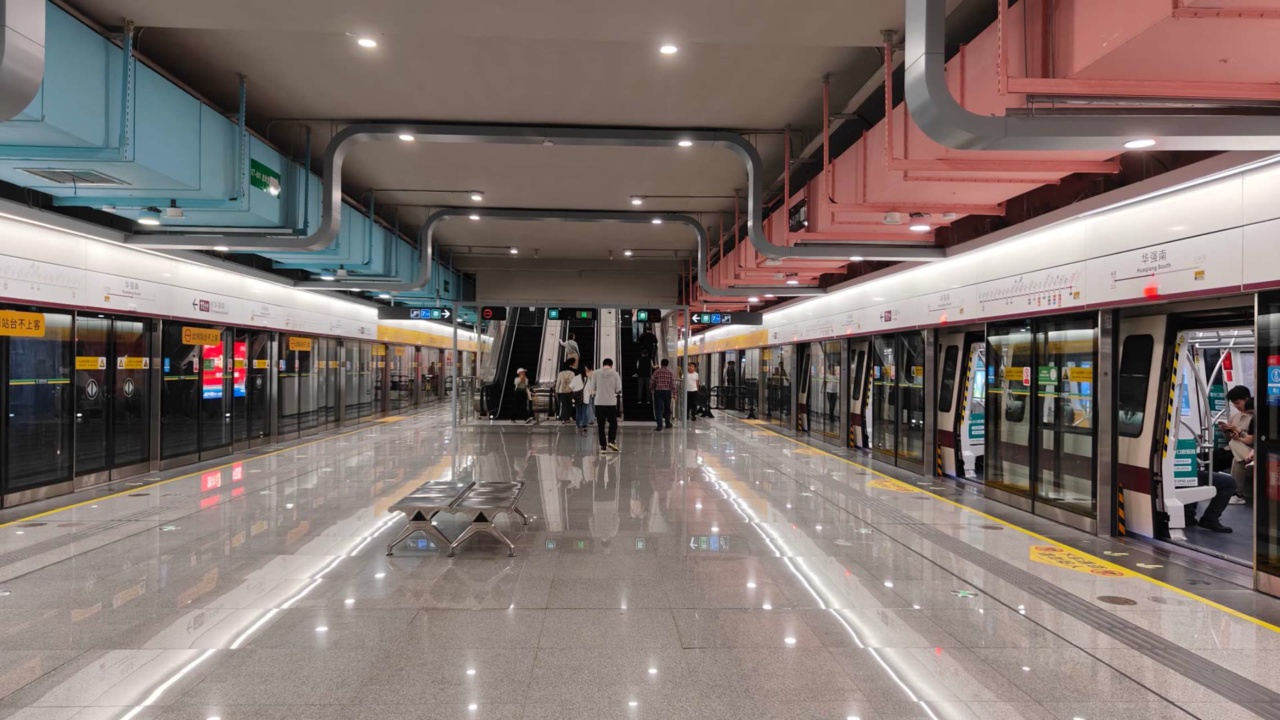
The Shenzhen Metro is the backbone of city travel and the option you will use most. Its lines reach almost every district a traveler cares about, including Luohu (near the Hong Kong border), Futian (the civic and business heart), Nanshan (tech campuses, OCT and the theme parks) and Bao'an (the airport).
Fares are distance-based: 2 yuan for the first 4 km, then 1 yuan for every 4 km between 4 and 12 km, 1 yuan for every 6 km between 12 and 24 km, and 1 yuan for every 8 km beyond that.[1] You can buy a single-journey ticket from a station machine, or register a ride code in the Shenzhen Metro app, the WeChat ride-code mini program or the MTR (Shenzhen) live+ mini program and scan it at the gate.[2]
Metro Line 11 connects Bao'an airport with the city. From Airport station it runs toward Gangxia North via Bao'an, Qianhai Bay, Nanshan, Houhai, Chegongmiao and Futian, with the first train at 05:52 and the last at 00:02 from Airport station in that direction. The operator's timetable of the day applies, so check it before a late or early flight.[3]
Getting Around Shenzhen by Bus
The Shenzhen bus network is dense and reaches places the metro misses, including residential pockets, smaller markets and coastal stretches around Dameisha and Xiaomeisha.
Air-conditioned bus lines up to 11 km cost 2 yuan, lines up to 18 km cost 2.5 yuan and lines up to 28 km cost 3 yuan; longer lines are priced by distance with a cap of 10 yuan, and midi-bus lines up to 10 km cost 1 yuan.[4] Holders of a Shenzhen Tong card get a 20 percent discount on the part of a fare up to 3 yuan.[5] The catch for visitors is that route information and stop announcements lean heavily on Chinese, so a mapping tool that shows live bus routes helps.
Buses are best for short hops where the metro would require an awkward transfer, or for scenic coastal routes on the eastern side of the city. During rush hour they get stuck in the same traffic as everyone else, so the metro remains faster for long distances.
Getting Around Shenzhen by Taxi
Shenzhen's taxis are metered. Under the municipal tariff in force since August 2021, the fare is 10 yuan for the first 2 km and 2.7 yuan per km after that. A 30 percent surcharge applies between 23:00 and 06:00, waiting time costs 0.8 yuan per minute when the taxi moves slower than 10 km/h, and a fixed surcharge of 15 yuan applies to taxis leaving the airport queue and 5 yuan to those leaving the Shenzhen North Station queue.[6]
Very few drivers speak English, so having your destination written in Chinese characters or shown on a map is essential. Mobile payment is widely used. Hailing on the street works during off-peak hours, but in rush hour or rain, empty taxis are hard to find and you are better off using an app.
Getting Around Shenzhen by Ride-Hailing (DiDi)
DiDi is a widely used ride-hailing service and a convenient way to get around if you do not read Chinese. You enter your destination by searching or dropping a pin in the app, so you do not have to explain it to the driver. Check the price shown in the app before you confirm the ride.
This is the option to lean on for late-night trips after the metro has closed, for journeys with luggage, or whenever the language barrier feels daunting. You can compare ride-hailing against metro and taxi options for your specific route on GoAsia.cc.
Getting Around Shenzhen by Bike and Scooter
Dockless shared bikes are scattered across the city and are unlocked by scanning a QR code in the relevant app. They are ideal for the flat, leafy areas around OCT, the Shenzhen Bay waterfront promenade and university campuses.
City center traffic is fast and not always bike-friendly, so stick to dedicated lanes and quieter neighborhoods rather than weaving through Futian's main arteries.
Getting Around Shenzhen on Foot
Within a single district, Shenzhen is surprisingly walkable. Areas like the OCT-LOFT arts zone, the Dongmen shopping district in Luohu and the Shenzhen Bay coastline are pleasant to explore on foot. The catch is the subtropical climate: summers are hot and humid with sudden downpours, so carry water and an umbrella.
For crossing between districts, walking is impractical given the distances. Use the metro to get to a neighborhood, then explore it on foot.
Comparing Your Options
| Mode | Typical Cost | Best For |
|---|---|---|
| Metro | From 2 yuan, by distance[1] | Crossing the city quickly and reliably |
| Bus | 2 yuan on air-conditioned lines up to 11 km[4] | Short hops and coastal routes |
| Taxi | 10 yuan for the first 2 km, then 2.7 yuan per km[6] | Direct trips with luggage |
| Walking | Free | Exploring neighborhoods up close |
Practical Tips for Getting Around Shenzhen
Setting up your phone before you arrive makes the difference between frustration and smooth travel. A few essentials:
- Mobile payment is king. Set up Alipay or WeChat Pay and link an international card before your trip. A ride code in the Shenzhen Metro app or the Shenzhen Tong app lets you go through the metro gates with your phone.[2]
- Download a VPN. Many foreign apps and services are blocked in mainland China. Install and test a VPN before you cross the border.
- Save your destinations in Chinese. Screenshot addresses and place names in Chinese characters to show taxi drivers, since English is rarely spoken.
Popular Routes and Destinations
For Bao'an International Airport on the western edge, Metro Line 11 links the airport to Futian and the central districts, while a DiDi or taxi offers a door-to-door alternative when you have heavy luggage.[3]
For sightseeing, the metro reaches the OCT theme park cluster, the Window of the World, the Shenzhen Bay coastal park and the Dongmen markets in Luohu. Combine a metro ride to the neighborhood with a shared bike or a walk to explore once you arrive.
Frequently Asked Questions
Use this guide to compare local transport in Shenzhen. When bookable tickets are available, the booking tool shows current options and prices.
The metro is the best all-round option, reaching nearly every district quickly and cheaply. For door-to-door trips, late nights or when the language barrier feels difficult, a ride-hailing app such as DiDi or a metered taxi is more convenient.
Metro fares start at 2 yuan for the first 4 km and rise with distance. Air-conditioned buses cost 2 yuan on lines up to 11 km. Taxis charge 10 yuan for the first 2 km and 2.7 yuan per km after that, with a 30 percent surcharge from 23:00 to 06:00.
DiDi is a widely used ride-hailing app. Check the price shown in the app before you confirm the ride, and set up your payment method before you arrive. It is especially useful for late-night trips after the metro has closed.
A physical card is optional. You can register a ride code in the Shenzhen Metro app, the WeChat ride-code mini program or the Shenzhen Tong app and scan it at the metro gates. Setting up one of these options before your trip is the smoothest approach.
Save your destinations in Chinese characters or show them on a map app, since few drivers speak English. A ride-hailing app handles the destination digitally, which sidesteps the issue.
Metro Line 11 connects the airport with Futian and the central districts. If you have heavy luggage, a DiDi or metered taxi offers a door-to-door alternative.
Sources and background
Numbers in the text such as [1] refer to these sources.
- [1] Shenzhen Municipal People's Government: Urban rail transit: how Shenzhen metro fares are calculated. Retrieved October 15, 2026.
- [2] Shenzhen Municipal Transport Bureau (sz.gov.cn): Ticket purchase notice (ride codes, single-journey tickets). Retrieved October 15, 2026.
- [3] Shenzhen Municipal Transport Bureau (sz.gov.cn): Shenzhen airport metro connection (Line 11). Retrieved October 15, 2026.
- [4] Shenzhen Development and Reform Commission: Shenzhen public bus fare table. Retrieved October 15, 2026.
- [5] Shenzhen Municipal People's Government: Public bus travel: Shenzhen Tong card discount. Retrieved October 15, 2026.
- [6] Shenzhen Municipal Transport Bureau: Notice on adjusting the cruising taxi fares. Retrieved October 15, 2026.
Guide prices and journey times are indicative, not live quotes. A booked package may include transfers and waiting time as well as the main journey. Check the selected offer, pickup point and current conditions before booking.