Plan your Malaysia ferry trip with this practical guide covering island routes, booking tips, monsoon seasons, and what to expect on board across Peninsular Malaysia and Borneo.
Malaysia is, at its heart, a maritime nation. Split between Peninsular Malaysia and the states of Sabah and Sarawak on Borneo, with thousands of kilometers of coastline and hundreds of islands scattered across the Strait of Malacca, the South China Sea, and the Sulu Sea, ferries are woven into the fabric of daily life here. From the Penang ferry between Butterworth and George Town to the boats that deliver sun-seekers to the Perhentian Islands, traveling by boat in Malaysia offers something no highway or airport can - the slow reveal of jungle-clad coastlines, the salt spray of open water, and the thrill of watching your island destination materialize on the horizon.
The Ferry Network in Malaysia
Malaysia's ferry network is extensive but decentralized, with numerous private operators serving different regions rather than one unified national system. The busiest routes connect the mainland to popular island destinations, and the network can be broadly divided into three zones.
On the west coast of Peninsular Malaysia, the most iconic route is the Penang ferry linking George Town to Butterworth.[1] Further south, ferries connect the Lumut area (Marina Island Jetty) to Pangkor Island,[2] and from Kuala Perlis and Kuala Kedah, boats run to Langkawi - Malaysia's premier duty-free island.[3]
The east coast of Peninsular Malaysia is where island-hopping really comes alive. Ferries depart from Kuala Besut to the Perhentian Islands and from Merang to Pulau Kapas,[4] from Mersing and Tanjung Gemok to Tioman Island,[5] and from various jetties to smaller islands. Many of these routes are seasonal: during the northeast monsoon, roughly from November to March,[6] most tourist facilities on islands such as Redang stay shut and diving and boating are temporarily barred.[4]
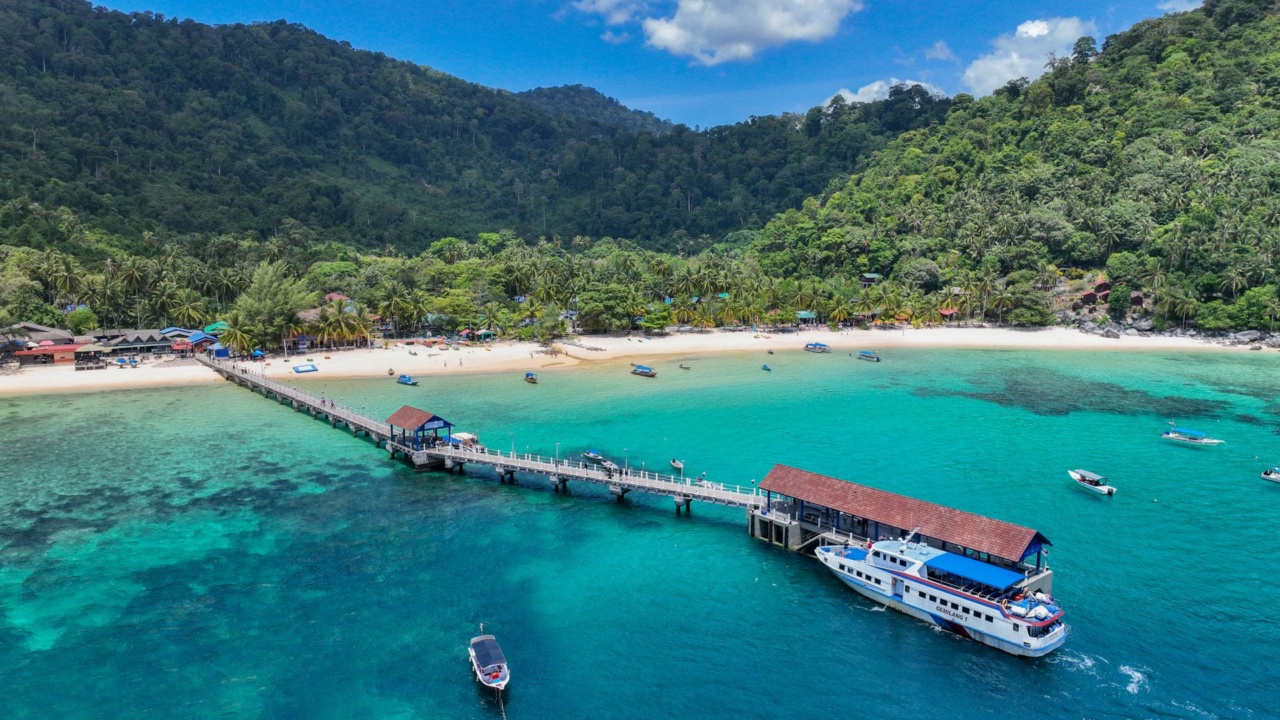
The pier and beach on Redang Island with a passenger boat at the jettyPhoto: Abdulaziz hasan / Pexels
In Malaysian Borneo, ferries serve a different purpose. In Sabah, boats connect Kota Kinabalu's Jesselton Point to the islands of Tunku Abdul Rahman Park, a trip of about 15 minutes by fast boat,[7] and longer routes reach Labuan, a federal territory island.[8] In Sarawak, river ferries and express boats historically served as the main transport arteries into the interior, though road improvements have reduced their role. The route between Peninsular Malaysia and Borneo is not served by passenger ferries - you will need to fly.
Classes and Comfort Levels
Most Malaysian ferry services are relatively straightforward, without the elaborate class systems found on some Southeast Asian routes. However, there are meaningful differences depending on the route and operator.
Standard speedboats and catamarans are the norm for island routes like the Perhentians, Redang, and Tioman. These typically offer a single class with airline-style seating and air conditioning. The crossing from Kuala Besut to the Perhentians takes about 30 minutes.[4] Seats are not usually assigned, so arriving early can help you secure a window spot or a seat near the front where the ride is smoother.
Langkawi ferries are among the most comfortable domestic services. Operators on the Langkawi routes include Langkawi Ferry, My Master, Eks Bahagia and StarCity, and some sailings are sold as VIP class. Local adult fares are RM15 from Kuala Perlis and RM20 from Kuala Kedah.[3]
The Penang ferry is a passenger ferry between Butterworth and George Town. There is no class distinction; you simply walk on and enjoy the breeze and views of George Town's waterfront. The adult fare is RM2, paid by Touch 'n Go card, at the counter or online, and boats run every 20 minutes at peak and every 30 minutes off peak, from 06:30 to 23:00 from Butterworth and from 07:00 to 23:30 from George Town.[1]
Booking and Tickets
Booking practices vary significantly depending on the route. For popular destinations like Langkawi, Tioman, and the Perhentian Islands, booking ahead is recommended during school holidays and festive periods such as Hari Raya and Chinese New Year.
Many operators now offer online booking through their own websites or through aggregator platforms. GoAsia.cc lets you compare ferry schedules and operators across multiple Malaysian routes, which is particularly useful when several companies serve the same destination at different times. For less popular routes, buying tickets at the jetty counter on the day of travel is usually fine, though it means less certainty during peak periods.
The Penang ferry accepts payment by Touch 'n Go card, at the counter or online.[1] Many Langkawi operators sell tickets online; Langkawi Ferry Line charges a convenience fee of RM2 per ticket per way.[3] Keep your ticket with you, as crew members check tickets before boarding.
What to Expect on Board
The experience of riding a Malaysian ferry ranges from exhilarating to meditative, depending on the route and sea conditions. Speedboats to the Perhentians can be a bouncy, spray-soaked adventure when the sea is rough, while the Langkawi ferry glides across calmer waters with the limestone karsts of the Langkawi archipelago slowly growing larger through the window.
Food and drink options on board are limited. Larger ferries may have a small snack counter selling drinks and light bites, but most island speedboats offer nothing at all. Bring water and snacks, especially if you are traveling with children.
Luggage is handled differently across services. On speedboats, bags are typically loaded into a separate compartment or stacked at the back of the boat - label your bags clearly, as mix-ups happen. Larger ferries have more generous luggage space. Backpacks and dive bags are the norm on island routes, and operators are accustomed to handling them.
Wi-Fi is generally not available on Malaysian ferries, and mobile signal drops out quickly once you leave the coast. Charging ports are rare. Treat the crossing as a chance to disconnect, watch the sea, and mentally shift into island mode.
One cultural note: Malaysians tend to be patient and orderly at ferry terminals, but boarding can become a bit of a free-for-all on busy days, especially for speedboats with unassigned seating. Stay calm, follow the crowd, and do not block the jetty walkways with luggage.
Tips for Ferry Travel in Malaysia
Check the monsoon calendar. East coast island ferries (Perhentians, Redang, Tioman, Lang Tengah) typically cease operations during the northeast monsoon, which runs roughly from November to March.[6]
Arrive early at the jetty. Langkawi Ferry Line asks passengers to be inside the ferry terminal at least 60 minutes before departure.[3] At busy terminals like Kuala Besut and Mersing, you may need to check in, pay a marine park fee, and queue for boarding.
Bring motion sickness medication. The smaller speedboats can pitch and roll considerably, especially on the east coast. If you are prone to seasickness, take medication before boarding - once you are on a packed, air-conditioned speedboat, it is too late.
Pack a dry bag. Spray and splashing are common on speedboat crossings. Keeping electronics, passports, and valuables in a waterproof bag is a smart precaution.
Watch for schedule changes. Ferry departures can be delayed or canceled due to weather, low tides, or insufficient passengers on quieter routes. Build flexibility into your itinerary, especially if you have a flight to catch.
Marine park fees are separate. Visitors to Marine Parks Malaysia pay a conservation charge, RM30 for adults without a Malaysian MyKad and RM5 for MyKad holders.[9] Ask your operator or resort how and where it is paid.
Language is rarely a barrier. English is widely spoken at major ferry terminals and by operators on tourist routes. Signage is generally in both Malay and English. On more local routes in Borneo, a few words of Bahasa Malaysia can be helpful and are always appreciated.
Consider the Penang ferry for the experience. While the Penang bridges carry the road traffic, the ferry remains a wonderfully atmospheric way to arrive in George Town, especially at sunset. The adult fare is just RM2.[1]
Sources and background
Numbers in the text such as [1] refer to these sources.