
Getting Around Manila - Local Transport Guide for Travelers
Contents
- 1. Getting Around Manila by MRT and LRT
- 1.1 Tips for Using the Trains
- 2. Getting Around Manila by Jeepney
- 3. Getting Around Manila by Bus
- 4. Getting Around Manila by Grab
- 5. Getting Around Manila by Taxi
- 6. Getting Around Manila by Tricycle
- 7. Getting Around Manila by Pedicab and Walking
- 8. Comparing Your Options
- 9. Practical Tips for Getting Around Manila
- 9.1 Essential Apps
- 9.2 Payment and Money
- 9.3 Timing and Traffic
- 9.4 Safety and Scam Awareness
- 9.5 Language Tips
- 10. Popular Routes and Destinations
- 10.1 Manila to Makati
- 10.2 Getting to and from the Airport
- 11. Frequently Asked Questions
- 12. Sources and background
Manila hits you all at once. Step outside your hotel and the city roars to life: jeepneys painted in every color imaginable squeeze through narrow lanes, motorcycle riders weave between SUVs, and the elevated train rumbles overhead while vendors sell bottled water at red lights. This is a sprawling megacity, and its transport system reflects that sprawl - chaotic, layered, sometimes maddening, but always moving.
The honest truth is that Manila is not an easy city to get around. Traffic is legendary, distances are deceptive, and the public transit infrastructure, while improving, does not yet match the scale of demand. But with the right knowledge, you can move through the city efficiently and affordably. The key is understanding which mode works best for which situation - and accepting that flexibility is your greatest asset here.
Ride-hailing apps have transformed daily life for both locals and visitors. The train lines, though crowded, cover important corridors. Jeepneys remain the backbone of the city's soul. And sometimes, the best option is simply walking a few blocks rather than sitting in gridlock. Here is everything you need to know.
Getting Around Manila by MRT and LRT
Manila's rail network consists of 3 lines: LRT-1 (the yellow line), LRT-2 (the purple line), and MRT-3 (the blue line).[1][2] Together, they form a rough cross pattern over the metro, and they are the fastest way to cover long distances during rush hour when the roads are at a standstill.
LRT-1 runs north-south for 20.1 kilometers across 25 stations, from Fernando Poe Jr. Station (formerly Roosevelt) in Quezon City to Dr. Santos Station in Parañaque.[1] Since November 2024 it continues south past Baclaran with 5 new stations: Redemptorist-ASEANA, MIA Road, PITX, Ninoy Aquino and Dr. Santos.[1] On the way it passes Carriedo (near Chinatown and Quiapo), Central Terminal (connecting to MRT-3), and Pedro Gil (near Ermita and Malate).
LRT-2 runs east-west for 17.6 kilometers across 13 stations from Recto in Manila to Antipolo in Rizal province, passing Araneta Center-Cubao, and an end-to-end trip takes about 40 minutes.[1]
MRT-3 follows EDSA, the main highway, from North Avenue in Quezon City to Taft Avenue in Pasay, with stops at Cubao, Ortigas, Shaw Boulevard, Ayala (Makati), and Magallanes. The 16.9-kilometer line has 13 stations.[2]
Fares are distance-based, and you pay with a beep card or a single-journey ticket. The beep card is a reloadable stored-value card that works on all 3 lines and is sold for PHP 30 plus a PHP 14 minimum load.[3] Since late March 2026, the Department of Transportation has applied a 50% across-the-board discount on LRT-2 and MRT-3 fares: with a beep card the system deducts only 50% of the standard fare, and ticket vending machines already show the reduced price.[3] Since July 2026, selected Fast Lane gates on LRT-2 also accept contactless Visa and Mastercard cards, mobile wallets, and GCash QR codes.[1] Getting a beep card is highly recommended; it saves time and avoids queuing for tickets at every station.
The catch? Overcrowding, especially during the morning and evening rush hours. MRT-3 is notorious for long queues just to enter the station. Trains can be packed to the point of discomfort. If you can travel mid-morning or early afternoon, the experience is vastly more pleasant.
Tips for Using the Trains
- Bags are inspected at station entrances, so allow extra time.
- Keep your belongings close - pickpocketing can happen in crowded cars.
- The connecting station between LRT-1 and MRT-3 is EDSA station (LRT-1) and Taft Avenue station (MRT-3).[4] Follow the signs and allow extra time for the transfer.
- MRT-3 trains run on weekdays from 4:30 AM until the last northbound train from Taft Avenue at 11:09 PM, and on weekends and holidays the last trains leave about an hour earlier.[2] LRT-1's first train leaves at 4:30 AM on weekdays and 5:00 AM on weekends and holidays, with the last weekday train leaving Dr. Santos at 10:30 PM,[5] and LRT-2 stations open daily at 4:50 AM.[6] Schedules can shift for holidays, so check before a late trip.
Getting Around Manila by Jeepney
The jeepney is Manila's most iconic form of transport - originally built from surplus American military jeeps after World War II, now a fleet of colorful, elongated vehicles that serve as the city's informal bus network. They run fixed routes along major roads and are absurdly cheap: since late September 2026 the minimum fare is PHP 14 on traditional jeepneys for the first 4 kilometers and PHP 17 on modern jeepneys.[7]
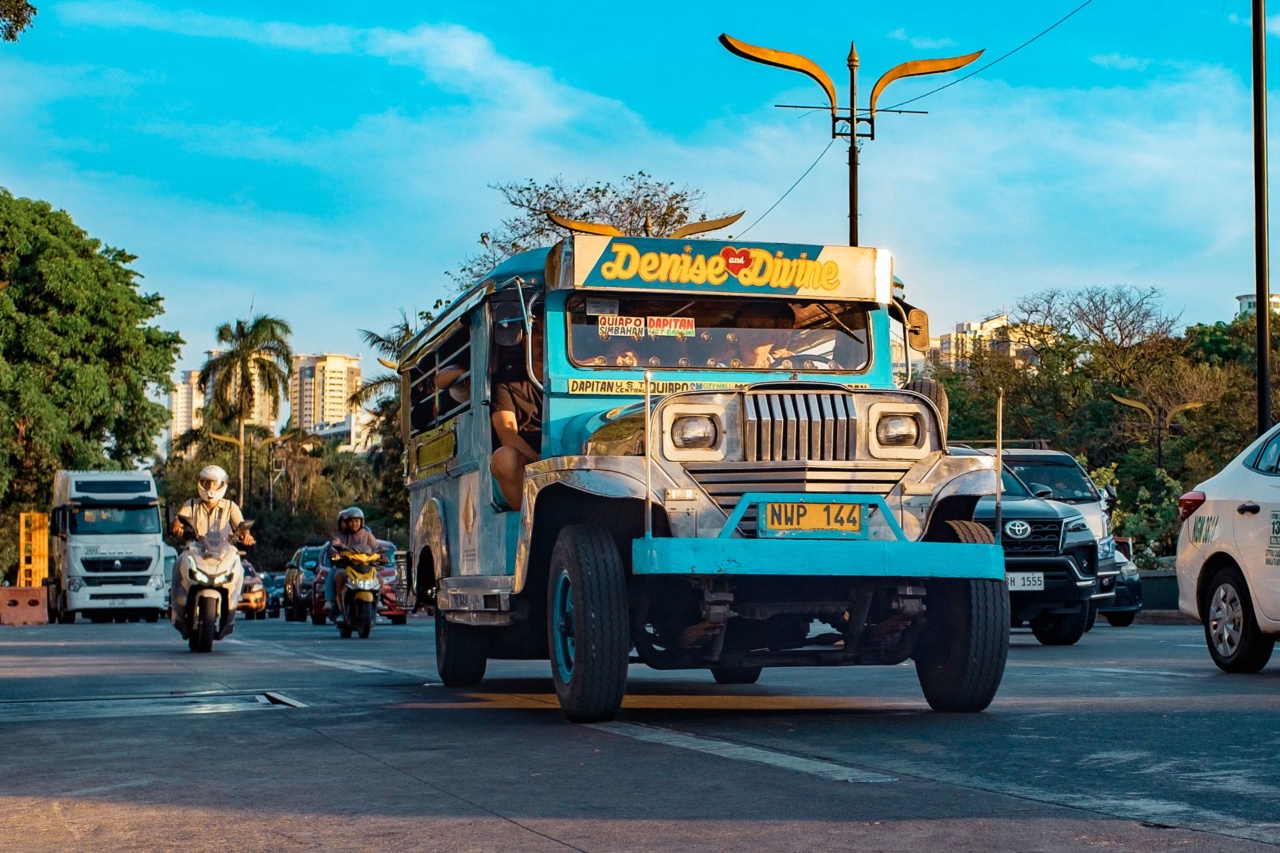
Riding a jeepney is straightforward once you get the hang of it. Routes are painted on the side of the vehicle or displayed on a signboard at the front. You hop on at the back, pass your fare forward to the driver (coins are preferred, and other passengers will relay your money hand-to-hand), and shout "para!" (stop) when you want to get off. Change is given back the same way.
The challenge for tourists is that routes are not mapped in any official app. You need to either ask locals which jeepney goes where or look for the route names painted on the vehicle. Common route markers include "Quiapo," "Divisoria," "Cubao," "Ayala," and "Baclaran." The government has been modernizing the jeepney fleet, replacing older models with air-conditioned "modern jeepneys." These are increasingly common but still share the road with traditional units.
Jeepneys are best for short to medium trips along major corridors. They are not ideal for cross-city travel or if you are in a hurry, as they stop frequently and get caught in the same traffic as everything else. But for budget travelers exploring neighborhoods like Intramuros, Quiapo, or Ermita, jeepneys provide an authentic and affordable way to move.
Getting Around Manila by Bus
City buses in Manila cover longer routes, particularly along EDSA and other major thoroughfares, while provincial buses departing from terminals such as Cubao, Pasay and the Parañaque Integrated Terminal Exchange (PITX) serve destinations outside Metro Manila.[8][9] Bus fares are regulated, and buses were covered by the fare increase that took effect in late September 2026.[7]
For getting around within the metro, buses along EDSA essentially parallel the MRT-3 line[2] and can be a good alternative when train queues are unbearable. Point-to-point (P2P) premium buses also operate between key business districts. These P2P buses are air-conditioned, have designated stops, and are more comfortable than regular city buses.
Bus stops are sometimes marked, but just as often, passengers flag buses down along the route. Be prepared for buses that are standing-room only during peak hours.
Getting Around Manila by Grab
Grab is the dominant ride-hailing app in the Philippines, and for most tourists in Manila, it becomes the default mode of transport. It works exactly like Uber (which Grab acquired in Southeast Asia): you set your pickup and destination, see the fare upfront, and pay via cash or card through the app.
The advantages are significant. You get air-conditioned comfort, door-to-door service, a fixed price with no meter manipulation, GPS-tracked routes, and digital receipts. Fares vary with demand, and longer trips across the metro cost noticeably more during surge pricing.
The main frustration is that during rush hour or rain, finding an available driver can take a long time, and surge pricing can double or triple the fare. GrabCar is the standard sedan option, while GrabShare (when available) lets you share rides for a discount. GrabBike (motorcycle taxi) is another option for solo travelers who want to cut through traffic faster and cheaper, though it requires a helmet and a willingness to ride pillion through Manila's streets.
Download the Grab app before you arrive and link a payment method. Having both cash and a card registered gives you flexibility. Grab is particularly valuable for airport transfers and late-night travel when other options thin out.
Getting Around Manila by Taxi
Metered taxis are plentiful in Manila, and their fares are regulated by the LTFRB. The Department of Transportation said in late September 2026 that the fare petitions for regular, premium silver and premium gold taxis were still pending, while airport taxis were covered by the increase, so check the current rate on the meter.[7]
However, taxis in Manila have a reputation that precedes them. Some drivers refuse to use the meter, quote inflated flat rates, or take longer routes. Others will decline trips if the destination does not suit them, especially during rush hour. To protect yourself:
- Always insist on the meter. If the driver refuses, get out and find another cab.
- Have your destination written in text or shown on a map - some drivers genuinely do not know every area.
- Carry small bills. Drivers often claim to have no change for large notes.
- At the airport, use the official taxi counters. Outside the airport, a regular metered taxi or Grab is the better choice.
Despite the hassles, taxis remain useful when Grab surge pricing is high or when you cannot find a ride-hailing driver. Hailing one from the street is easy in most commercial areas.
Getting Around Manila by Tricycle
Tricycles - motorcycles with attached passenger sidecars - serve as the last-mile transport in Manila's neighborhoods. They operate within specific barangays (neighborhoods) and cover short distances that jeepneys and buses do not reach, like getting from a main road to your hotel or a restaurant tucked in a side street.
Fares are negotiated before you ride or posted locally. In some areas, there are fixed-route tricycles with set fares per person. Tricycles are not comfortable for long rides or for travelers with large luggage, but they are indispensable for covering that last kilometer.
Getting Around Manila by Pedicab and Walking
In older, denser neighborhoods like Intramuros, Binondo (Chinatown), and parts of Ermita, pedicabs (bicycle rickshaws) offer a slow but atmospheric way to get around. Fares are negotiable. They are best for sightseeing rather than serious transport.
Walking in Manila requires some resilience. Sidewalks are inconsistent - some stretches are well-maintained, others are broken, blocked by vendors, or simply nonexistent. The heat and humidity can be punishing, especially midday. That said, certain areas are quite walkable: Intramuros has been improved for pedestrians, Bonifacio Global City (BGC) has wide sidewalks and pedestrian-friendly streets, and the Makati CBD is manageable on foot. For exploring these specific districts, walking is often faster than sitting in traffic.
Comparing Your Options
| Mode | Typical Cost | Duration | Best For |
|---|---|---|---|
| MRT/LRT | Distance-based, with a 50% discount on LRT-2 and MRT-3[3] | Varies by distance, fast when running | Crossing the city along major corridors, beating traffic on EDSA |
| Jeepney | From PHP 14 (traditional) or PHP 17 (modern)[7] | Slow, depends on traffic | Short hops on a budget, experiencing local culture |
| City Bus | Regulated fare, raised in late September 2026[7] | Moderate, depends on traffic | Longer routes along EDSA, P2P connections between business districts |
| Grab (car) | Fare shown upfront, rises with surge pricing | Varies with traffic | Door-to-door comfort, airport transfers, late-night travel |
| Metered Taxi | Metered, regulated rates | Varies with traffic | Spontaneous trips when Grab is surging, short to medium rides |
| Tricycle | Negotiated or posted | Short hops | Last-mile connections, getting from main roads to your hotel |
| Pedicab | Negotiated | Slow | Short sightseeing trips in old neighborhoods |
| Walking | Free | Depends on distance | Exploring BGC, Makati CBD, Intramuros |
Practical Tips for Getting Around Manila
Essential Apps
- Grab - your most important transport app. Set it up before arriving.
- Google Maps - surprisingly useful for transit directions in Manila, including jeepney and bus routes. It will often suggest multi-modal combinations.
- Sakay.ph - a Filipino-made commute app that maps public transit routes in Metro Manila.
- Waze - if you rent a car (not recommended for most tourists), Waze is essential for navigating Manila's traffic.
Payment and Money
- Carry plenty of small bills and coins. Jeepney drivers, tricycle operators, and even taxi drivers rarely have change for large denominations.
- Get a beep card at any MRT/LRT station. It costs PHP 30 with a PHP 14 minimum load and works on all LRT and MRT lines.[3] Reload it at the stations.
- Grab accepts cash, credit cards, and GrabPay (an e-wallet). Having cash as a backup payment method is wise.
- GCash, a local mobile wallet, is widely used in the Philippines and can be linked to Grab or used for other payments.
Timing and Traffic
Manila's traffic is not just bad - it defines daily life. Rush hours in the morning and evening can turn a short ride into an ordeal, especially on EDSA, C5, and major intersections. Plan your travel around these windows. Mid-morning and early afternoon are the sweet spots. Weekends are dramatically better.
Rain transforms the city. Manila floods easily, and even moderate rainfall can paralyze traffic and make some roads impassable. During the rainy season (June to November), check weather forecasts before heading out and keep flexible plans.
Safety and Scam Awareness
- Use Grab over street taxis when possible, especially at night. The tracked route and upfront pricing eliminate most risks.
- At the airport, use only the official taxi counters or Grab pickup zones. Ignore touts offering "cheap rides" in the arrivals hall.
- On jeepneys, keep your phone in your pocket and bags on your lap. Petty theft happens, particularly on crowded routes.
- Avoid flashing expensive items on public transport. Manila is generally safe for tourists, but common-sense precautions apply.
- At night, stick to well-lit main roads and use ride-hailing rather than walking through unfamiliar neighborhoods.
Language Tips
English is widely spoken in the Philippines, which is a huge advantage for travelers. Most drivers understand basic English directions, and signs on trains and buses are in English. That said, learning a few Filipino phrases helps: "Magkano?" (How much?), "Para po" (Please stop - on jeepneys), and "Saan po ang...?" (Where is...?). Having your destination address saved on your phone to show drivers is always a smart backup.
Popular Routes and Destinations
Manila to Makati
Makati is Manila's main business and nightlife district, and getting there from central Manila (Intramuros, Ermita, or Malate) is a common trip. The MRT-3 stations Guadalupe, Buendia, Ayala and Magallanes serve Makati.[2] Take LRT-1 to EDSA, transfer to MRT-3 at Taft Avenue, and ride to Ayala. This is the cheapest and often the fastest option. Grab is a comfortable alternative, with fares varying based on traffic and surge pricing. You can compare transfer options for this route on GoAsia.cc to find the best fit for your schedule and budget.
Getting to and from the Airport
Ninoy Aquino International Airport (NAIA) sits in the southern part of Metro Manila. Grab is available from designated pickup areas at each terminal and is often the most convenient option for first-time visitors. LRT-1 now has stations south of Baclaran at MIA Road, PITX and Ninoy Aquino Avenue,[1] but check how far your terminal is from the station before you rely on the train. Genesis Transport runs point-to-point buses between NAIA Terminal 3 and Clark International Airport.[10]
Frequently Asked Questions
Use this guide to compare local transport in Manila. When bookable tickets are available, the booking tool shows current options and prices.
The best way depends on the situation. For longer distances, the MRT and LRT train lines are fastest during rush hour when roads are gridlocked. For door-to-door convenience, Grab (ride-hailing) is the most tourist-friendly option. Jeepneys and buses are the cheapest for short to medium trips. Most travelers use a combination of trains and Grab throughout their stay.
Manila is very affordable for transport. Since late September 2026, the minimum jeepney fare is PHP 14 on traditional jeepneys and PHP 17 on modern jeepneys. Train fares are distance-based, and LRT-2 and MRT-3 fares have been discounted by 50% since late March 2026. Taxis are metered, and Grab shows the fare upfront.
Public transport in Manila is generally safe for tourists who take basic precautions. Keep your belongings close on jeepneys and trains, avoid displaying expensive electronics, and stay alert in crowded spaces. At night, Grab is safer than street-hailed taxis.
Yes, Grab is widely available throughout Metro Manila and is the most popular ride-hailing app. It offers car rides, motorcycle taxis (GrabBike), and delivery services. Download the app and set up your account before arriving. During rush hour or rain, expect longer wait times and higher surge pricing.
A beep card is not mandatory but highly recommended. It works on all MRT and LRT lines, saving you from queuing for single-journey tickets each time. The card costs PHP 30 plus a PHP 14 minimum load, and you can reload it at stations.
Manila is partially walkable. Specific districts like Bonifacio Global City (BGC), Makati CBD, and Intramuros have decent sidewalks and are pleasant to explore on foot. However, most of Metro Manila has inconsistent sidewalks, heavy traffic, and intense heat, making walking impractical for anything beyond short distances within a single neighborhood.
From NAIA, the most convenient option is Grab from the designated pickup zones at each terminal. Regular taxis are an alternative, and LRT-1 now has stations south of Baclaran, including MIA Road, PITX and Ninoy Aquino Avenue, though you should check the distance from your terminal to the station first. Avoid unofficial taxi touts inside the terminal and use only official counters or ride-hailing apps.
Sources and background
Numbers in the text such as [1] refer to these sources.
- [1] Light Rail Transit Authority (LRTA): Railway Operations. Retrieved October 15, 2026.
- [2] DOTr-MRT3: About Us: Train Schedule and Stations. Retrieved October 15, 2026.
- [3] Light Rail Transit Authority (LRTA): Tickets and Fares. Retrieved October 15, 2026.
- [4] Light Rail Manila Corporation (LRMC): Train Route. Retrieved October 15, 2026.
- [5] Light Rail Manila Corporation (LRMC): LRT-1 to extend operating hours starting 26 March 2025. Retrieved October 15, 2026.
- [6] Light Rail Transit Authority (LRTA): Train Operating Schedule. Retrieved October 15, 2026.
- [7] Department of Transportation (DOTr): DOTr APPROVES FARE ADJUSTMENT FOR PUVs. Retrieved October 15, 2026.
- [8] Parañaque Integrated Terminal Exchange (PITX): Transport. Retrieved October 15, 2026.
- [9] Victory Liner: Bus Schedules. Retrieved October 15, 2026.
- [10] Clark International Airport: Getting to and from Clark International Airport. Retrieved October 15, 2026.
Guide prices and journey times are indicative, not live quotes. A booked package may include transfers and waiting time as well as the main journey. Check the selected offer, pickup point and current conditions before booking.