South Korea is a country where a bullet train takes about 3 hours from Seoul to Busan,[1] so flying domestically can seem counterintuitive. Yet the flight network plays an important role, above all for reaching the volcanic island of Jeju: Seoul Gimpo to Jeju was the busiest airline route in the world in 2025, with 14.4 million seats scheduled.[2] Beyond Jeju, domestic flights link Seoul with a number of regional cities, and Incheon International Airport is the country's main gateway for international flights.
The Flight Network in South Korea
South Korea's primary international gateway is Incheon International Airport (ICN), which lies about 1 hour from downtown Seoul.[3] Gimpo International Airport (GMP), closer to central Seoul, handles domestic routes and a handful of short-haul international routes. Its departure board lists flights to Tokyo Haneda, Osaka Kansai, Shanghai Hongqiao, Beijing, Taipei Songshan and a few other cities in Japan, China and Taiwan.[4]
The Seoul (Gimpo) to Jeju route dominates the domestic network, with frequent departures through the day,[4] and 7 carriers operated it in 2025.[2] Gimpo also has domestic flights to Busan Gimhae, Gwangju, Ulsan, Yeosu and Sacheon.[4] Other airports run by Korea Airports Corporation include Cheongju, Daegu, Muan, Yangyang, Pohang Gyeongju, Gunsan and Hoengseong/Wonju.[5] Given South Korea's size and its KTX high-speed rail network, flying often saves little time between mainland cities. Flights make the most sense for Jeju, which you can reach by air or by ferry from several mainland ports.[6]
Airlines flying from Gimpo include the full-service carriers Korean Air and Asiana Airlines and low-cost carriers such as Jin Air, T'way Air, Jeju Air, Air Busan, Air Seoul and Eastar Jet.[5] Check which airline operates your flight when you book.
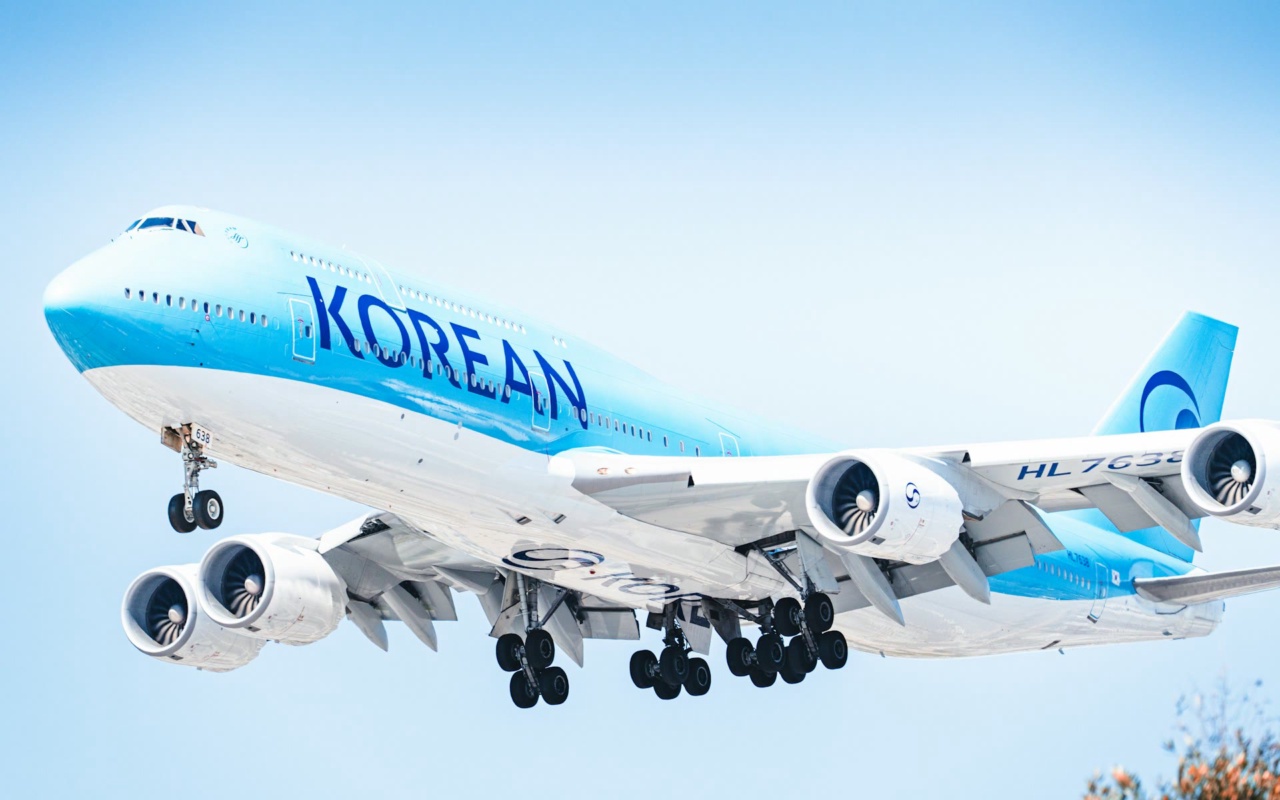
A large Korean Air passenger jet in flight with its landing gear downPhoto: Hieu / Unsplash
Classes and Comfort Levels
On domestic flights, most services are economy only, especially on the low-cost carriers. Flights of about 1 hour make this perfectly workable. Scheduled flight times are typically 1 hour to 1 hour 15 minutes between Jeju and Busan Gimhae.[7]
International flights are where class differences become meaningful. Full-service carriers such as Korean Air and Asiana offer several cabins on long-haul routes, while low-cost carriers on short international routes usually sell a basic seat with meals, extra legroom or checked baggage as paid extras. Check what your fare includes before you book.
Booking and Tickets
You can book through the airline's own website or app, or compare fares across several airlines on platforms like GoAsia.cc, which is especially useful when weighing full-service carriers against low-cost options on popular routes.
For domestic flights, book early for peak travel periods such as Lunar New Year (Seollal), Chuseok (Korean Thanksgiving), summer holidays and long weekends, when Jeju-bound flights can sell out quickly. Outside these periods, booking a few days ahead often works, though walk-up fares are rarely the cheapest.
What to Expect on Board
Domestic flights are short, and mainland routes are shorter still. Expect little onboard service beyond a drink on the shortest flights.
Baggage rules differ between airlines and fares, so verify your allowance before you arrive at the airport. At the airport, domestic flights are generally open for check-in and baggage drop from 30 minutes before departure.[5]
Tips for Flight Travel in South Korea
Use Gimpo for domestic flights. Gimpo is the Seoul airport for domestic routes. It is a station on subway Lines 5 and 9, the Gimpo Gold Line and AREX,[3] while Incheon is about 1 hour from the city center.[3] Double-check which airport your flight uses.
Arrive early during holiday periods. Korean holidays create large travel surges, so allow extra time even for domestic flights.
Consider the KTX alternative for mainland routes. Seoul to Busan takes about 3 hours by KTX and about 1 hour by plane from Gimpo to Gimhae,[1] but airport transfers, security and boarding take time on top. Reserve flights for Jeju or international travel.
Download the airline's app. Apps give you real-time updates and easy rebooking, which helps if weather disrupts flights to Jeju.
Transit tours at Incheon. Passengers with a layover of up to 24 hours can join the airport's transit tour programme,[8] which offers trips into the Seoul metropolitan area of less than 5 hours.[9]
Weather awareness for Jeju. Fog, strong winds or typhoons can delay or cancel flights to the island, so keep your itinerary flexible and consider travel insurance.
Pack light for domestic trips. On a low-cost carrier, a carry-on-only fare keeps costs down, if the airline's rules allow it.
Sources and background
Numbers in the text such as [1] refer to these sources.