

Getting Around Hat Yai - Local Transport Guide for Travelers
Contents
- 1. Getting Around Hat Yai by Songthaew
- 2. Getting Around Hat Yai by Motorbike Taxi
- 3. Getting Around Hat Yai by Tuk-Tuk
- 4. Getting Around Hat Yai by Grab and Ride-Hailing Apps
- 5. Getting Around Hat Yai by Private Car or Van
- 6. Getting Around Hat Yai on Foot
- 7. Comparing Your Options
- 8. Practical Tips for Getting Around Hat Yai
- 8.1 Apps to Download
- 8.2 Money and Payment
- 8.3 Avoiding Common Mistakes
- 8.4 Language Tips
- 8.5 Safety
- 9. Popular Routes and Destinations
- 9.1 Hat Yai Airport to City Center
- 9.2 Day Trips by Van
- 9.3 Train Station to Night Market Area
- 10. Frequently Asked Questions
- 11. Sources and background
Hat Yai hits you with its energy the moment you step outside. Thailand's largest southern city is a commercial hub and a shopping magnet for visitors from Malaysia and Singapore, louder and more urban than the beach towns most travelers associate with southern Thailand. Markets, shopping malls and hotels cluster in a compact center, so most visitors only need a few short rides.
Hat Yai has no metro or skytrain, so ground-level transport rules: songthaews, motorbike taxis, ride-hailing apps and private cars. Here is how each works and when to use it.
Getting Around Hat Yai by Songthaew
Songthaews are converted pickup trucks with two bench seats in the covered bed and work as shared local buses on semi-fixed routes. Flag one down on the side of the road, tell the driver where you are going before you climb in, and press the buzzer or knock when you want to get off. Payment is in cash only, so carry small bills and coins, because drivers rarely have change for large notes.
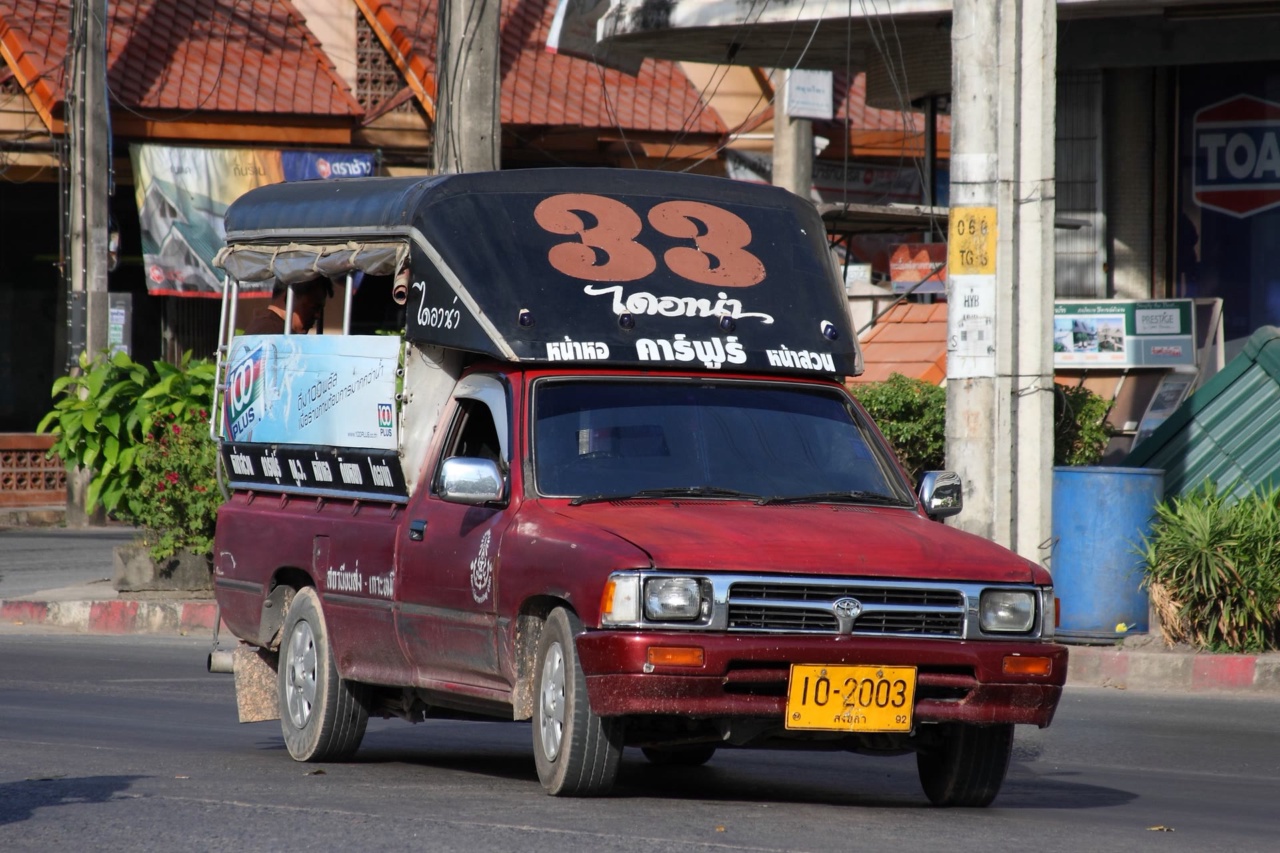
Songthaews have no published route maps and are not air-conditioned. Frequency drops after dark, and they fill up fast during rush hours.
Getting Around Hat Yai by Motorbike Taxi
Motorbike taxis, ridden by drivers in numbered vests, wait at intersections, market entrances and the mouths of side streets. They are the quickest option for short and medium distances when traffic clogs the main roads. Agree on the fare before you get on. Most drivers speak limited English, so show your destination written in Thai or on a map. A helmet is legally required, so ask for one if it is not offered.
Motorbike taxis are less suitable in heavy rain or with large bags.
Getting Around Hat Yai by Tuk-Tuk
Three-wheeled tuk-tuks are less common in Hat Yai than songthaews and motorbike taxis, but you can find them near the train station and the markets. They offer a covered seat and room for shopping bags. They have no meters, so agree on the fare before you depart, and be wary of drivers who quote inflated prices to new arrivals.
Getting Around Hat Yai by Grab and Ride-Hailing Apps
Grab lists Songkhla-Hat Yai among the provinces where GrabCar and JustGrab (car or taxi) are available.[1] The app shows the price before you book, excluding tolls and surcharges, and you can pay with cash, a credit or debit card or GrabPay.[1] It also offers motorcycle rides (GrabBike) in Thailand, but check in the app whether they are available in Hat Yai. Because you enter the destination in the app, there is no language barrier.
Grab is useful for the airport, for trips outside the center and for late-night rides when songthaews and tuk-tuks are scarce. During peak times or heavy rain you may have to wait longer for a driver. Download the app and set up your account before you arrive.
Getting Around Hat Yai by Private Car or Van
For day trips to places such as Songkhla Lake or Ton Nga Chang Waterfall, or for cross-border runs to Malaysia, a hired car or van is often the most practical choice. Hotels and travel agencies can arrange one. Booking platforms list private cars within the Hat Yai area at about $15 to $60 per vehicle for trips of 20 to 30 minutes, and vans at about $22 to about $110 depending on the distance (October 2026).[2] Always confirm the price, whether it includes fuel and tolls, and the expected duration before you commit.
Car rental desks operate in the main terminal of Hat Yai International Airport, for example Avis and Asap Car Rental.[3] Hat Yai's traffic can be chaotic around the markets, and street signs are mostly in Thai, so a hired driver may be easier if you are not used to driving in Southeast Asian cities.
Getting Around Hat Yai on Foot
The commercial heart of Hat Yai, with its shopping streets, markets and many hotels, is compact enough to cover on foot. Sidewalks range from decent to nonexistent, market stalls spill onto walkways, and vehicles rarely yield to pedestrians, so cross carefully and with a group where possible. Walk in the early morning, late afternoon and evening; at midday the heat and humidity make anything beyond a short stroll uncomfortable. Duck into an air-conditioned mall such as Central Festival when you need a break.
Comparing Your Options
| Mode | How it works | Best For |
|---|---|---|
| Songthaew | Shared pickup truck on semi-fixed routes, cash only | Budget travel along main roads during daytime |
| Motorbike Taxi | Agree the fare before riding | Quick hops through congested market areas |
| Tuk-Tuk | No meter, agree the fare before riding | Short rides with shopping bags |
| Grab (GrabCar, JustGrab) | Price shown in the app before booking[1] | Air-conditioned comfort, language-free booking, late-night rides |
| Private Car or Van | About $15 to $110 per vehicle depending on distance[2] | Airport transfers, day trips, group travel |
| Walking | Free | Exploring markets and the central shopping district |
Practical Tips for Getting Around Hat Yai
Apps to Download
- Grab for ride-hailing.
- Google Maps for navigation and walking directions. Download offline maps in case mobile data is patchy.
- Google Translate with the Thai language pack for offline use. The camera translation feature helps with signs and menus.
Money and Payment
- Cash is needed for songthaews, tuk-tuks and motorbike taxis.
- Keep small notes for transport, because breaking a large note with a songthaew driver is hard.
- 7-Eleven stores are a good place to break large bills with a small purchase.
Avoiding Common Mistakes
- Do not assume tuk-tuk drivers will use a meter. Agree on the fare before boarding.
- Be cautious of drivers at the train station who quote inflated prices to newly arrived travelers.
- Avoid unlicensed drivers who approach you at the airport or bus terminal. Use the official transport counters or Grab instead.
Language Tips
English proficiency among transport drivers is generally low. Save your hotel name and address in Thai script on your phone, because screenshots work well. Useful Thai words: the train station is sa-thaa-nee rot fai, the airport is sa-naam bin, and the night market is commonly called talaat kim yong or talaat yen (evening market).
Safety
Standard precautions apply: keep bags close on songthaews, wear a helmet on motorbike taxis, and avoid poorly lit areas on foot late at night.
Popular Routes and Destinations
Hat Yai Airport to City Center
Hat Yai International Airport lists a public bus, an AOT limousine, metered taxis and car rental among its ground transport options.[3] The metered taxi service of the Songkhla taxi cooperative at the main terminal is open from 08:00 to midnight.[4] Grab is also available, and you can book an airport ride in advance.[1] Some hotels provide their own shuttles, so ask your accommodation first.
Day Trips by Van
Private vans are the usual choice for places beyond the city, such as Songkhla Old Town, the border crossing at Sadao for onward travel to Malaysia, and Ton Nga Chang Waterfall. You can arrange them through your hotel, travel agencies or the transport desks at the train station.
Train Station to Night Market Area
Hat Yai Junction is centrally located, and the Kim Yong Market and night market area is within walking distance. With luggage, a tuk-tuk, motorbike taxi or Grab is easier.
Frequently Asked Questions
Use this guide to compare local transport in Hat Yai. When bookable tickets are available, the booking tool shows current options and prices.
For most travelers, a combination of walking and Grab covers nearly all needs. The center is compact enough to walk between markets and hotels, while Grab offers air-conditioned rides with the price shown in the app for longer distances or when the heat becomes too much. Songthaews are the cheapest option for budget travelers moving along main roads.
Fares for songthaews, motorbike taxis and tuk-tuks are not published, so agree on motorbike taxi and tuk-tuk fares before you ride and ask the driver about the songthaew fare. Grab shows the price before you book. Booking platforms list private cars within the Hat Yai area at about $15 to $60 per vehicle (October 2026).
Generally yes, with standard precautions: keep your belongings close, wear a helmet on motorbike taxis, and stay on well-lit streets if you walk at night. Grab rides are tracked in the app.
Yes, Grab lists Songkhla-Hat Yai among the provinces where GrabCar and JustGrab are available. You can pay by cash, card or GrabPay. Set up the app before you arrive.
The central commercial area is walkable, with markets, hotels and restaurants close together. Sidewalks can be uneven or blocked and the midday heat is intense, so walking suits early morning, late afternoon and evening.
Hat Yai International Airport lists a public bus, an AOT limousine, metered taxis and car rental. You can also use Grab or ask your hotel whether it offers a shuttle.
Knowing some Thai helps but is not essential. Most transport drivers speak limited English, so save your destination name and address in Thai script on your phone. Grab removes the language barrier because you enter the destination in the app.
After dark, songthaews and tuk-tuks become scarce. Grab is the most reliable option, and motorbike taxis can be found near nightlife areas. Avoid walking alone in poorly lit areas far from the center.
Sources and background
Numbers in the text such as [1] refer to these sources.
- [1] Grab Thailand: Grab Thailand: Book Rides, Taxis & Mobility Services. Retrieved October 15, 2026.
- [2] 12Go: 12Go timetable: Hat Yai local transfers. Retrieved October 15, 2026.
- [3] Airports of Thailand (Hat Yai Airport): Transportation - Hat Yai International Airport. Retrieved October 15, 2026.
- [4] Airports of Thailand (Hat Yai Airport): Taxi Meter - Hat Yai International Airport. Retrieved October 15, 2026.
Guide prices and journey times are indicative, not live quotes. A booked package may include transfers and waiting time as well as the main journey. Check the selected offer, pickup point and current conditions before booking.