Lijiang Old Town: Naxi Heritage, Where to Stay and Trip Planning
Contents
- 1. Choose the shape of your stay
- 2. What the World Heritage listing actually includes
- 3. Follow the water and the architecture
- 4. Heilong Pool and individual attractions
- 5. Fees: separate preservation arrangements from attraction tickets
- 6. Where to stay: questions that matter more than the label
- 7. Shuhe and Baisha are not just substitutes for crowds
- 7.1 Shuhe
- 7.2 Baisha
- 8. Altitude: plan the actual route, not just the destination name
- 9. Walks, meals and the practical day plan
- 10. Sources and background
- 11. Frequently Asked Questions
Lijiang is a good fit if you want to explore Naxi-influenced architecture, trace a historic water system and compare three heritage settlements in Yunnan. Start with Dayan, then decide whether Shuhe and Baisha belong in your stay. Choose accommodation by its actual location and arrival access, and leave room in your itinerary for the altitude rather than adding a strenuous mountain trip straight after arrival.
Choose the shape of your stay
| Your priority | A useful starting plan | What to check |
|---|---|---|
| Old-town architecture and canals | A day for Dayan with a separate walk at a different time | The routes and individual sites you want to enter |
| Compare the heritage settlements | Add Shuhe and Baisha as separate visits | Transfers, actual access and time for the murals |
| Sleep and uncomplicated arrival | Compare an old-town edge address with a central courtyard stay | Night-time surroundings, room location and the final luggage transfer |
| Mountain or gorge excursions | Plan the chosen route separately from the city walk | Altitude, trail conditions, permissions, return transport and your health |
Two or three nights can be a useful editorial starting point for Dayan and additional heritage visits, not a minimum stay or a guarantee of acclimatization. Longer excursions need their own travel and recovery time. Do not count the old-town walk and a demanding regional route as interchangeable sightseeing days.
Things to Do
Offers are only loaded from GetYourGuide after you click. GetYourGuide can then process your IP address and set cookies. Privacy Policy
GetYourGuide partner offers. GoAsia may earn a commission if you book through these offers. Check whether tickets or transfers are included, and follow the attraction's official booking and admission rules.
What the World Heritage listing actually includes
The UNESCO listing comprises Dayan Old Town, including Heilong Pool or Black Dragon Pond, together with the housing clusters of Baisha and Shuhe. It is not limited to the central shopping streets. UNESCO places Lijiang on a plain at about 2,400 metres, with mountain passes connecting the region to surrounding areas.
Trade and cultural exchange explain much of what you see. UNESCO describes Lijiang as a distribution centre linking Sichuan, Yunnan and Tibet from the 12th century onward. Naxi traditions developed alongside influences from Han, Bai and Tibetan communities. The heritage is therefore not a single untouched style: look for the combination of courtyard layouts, gateways, screen walls and carved wooden elements.
Follow the water and the architecture
Rivers and springs associated with Yulong Snow Mountain supply Heilong Pool, from which waterways reach the town's channels. The network served daily life, production and fire prevention. Streets face the canals, and bridges and buildings cross them, so the water is part of the settlement's structure rather than an ornamental feature added for visitors.
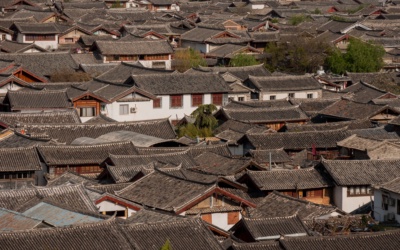
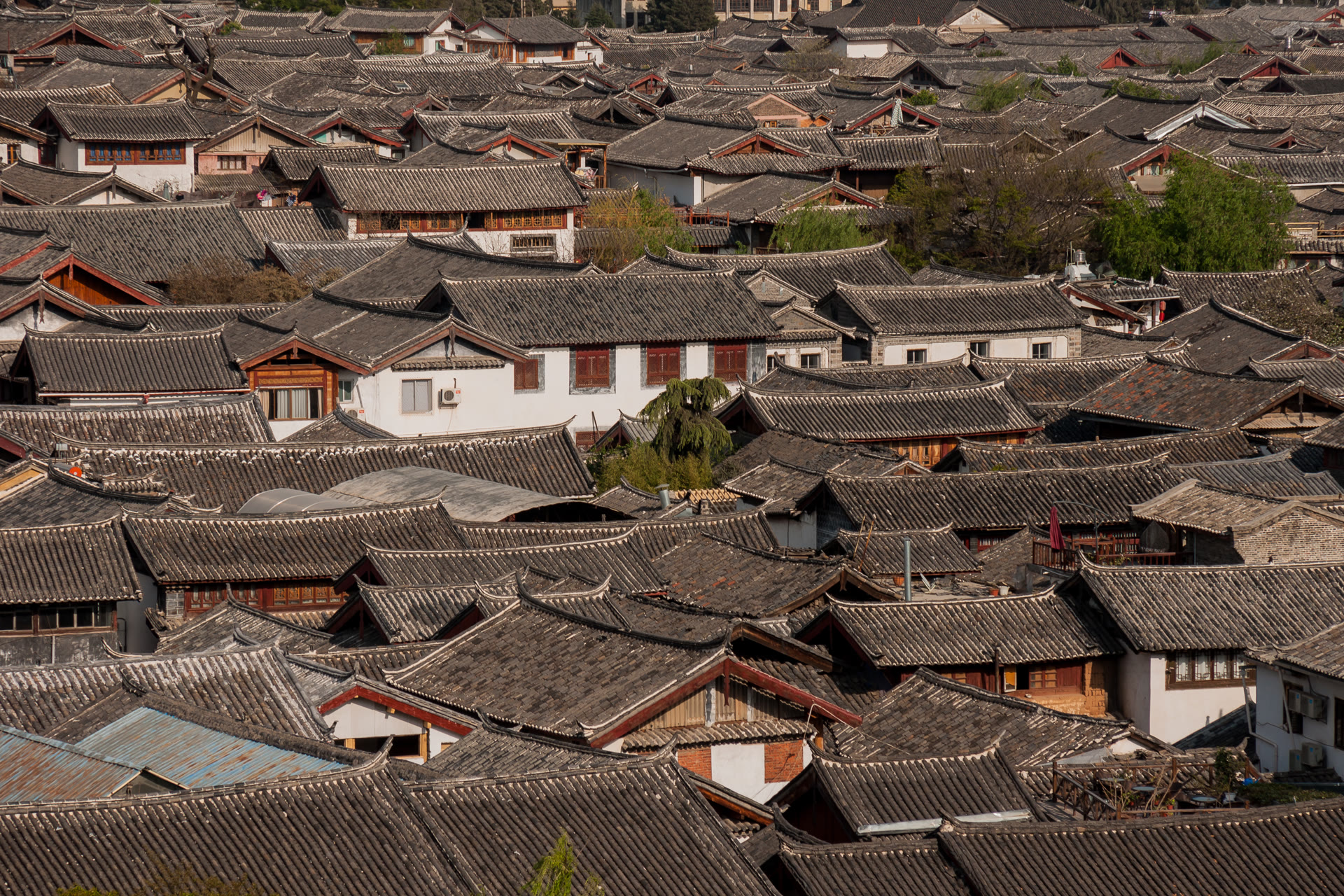
Notice how the lanes and houses follow the terrain instead of imposing a uniform grid. The traditional two-storey houses combine timber frames and tiled roofs; courtyards, roof beams and gateways reward a slower walk. Carved motifs described by UNESCO include flowers, birds, musical instruments and domestic objects. Looking at these details gives the walk a purpose beyond buying souvenirs.
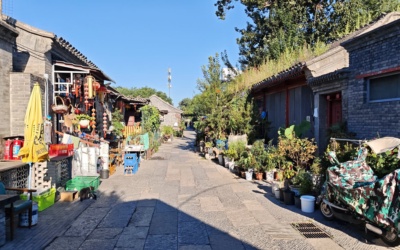
Use a small number of landmarks to build your own route rather than assuming that walking uphill always leads to a quiet edge or following a canal always returns you to an entrance. Keep the address and map point of your accommodation available, and agree a meeting point if your group separates. Follow public routes; a courtyard that is photogenic is not necessarily open to visitors.
Heilong Pool and individual attractions
Heilong Pool is part of the Dayan heritage component and a useful place to understand how water reaches the town. UNESCO also identifies historic Yuquan structures there, alongside surviving elements of the former Mujia compound elsewhere in Dayan. A visit focused on these features complements the residential lanes.
If you add the Mu Mansion, Wangu Pavilion or a museum, check each site's current opening, ticket and visitor arrangements. The World Heritage description is not a current admission list or permission to enter every building. Mountain views, reflections and access depend on the conditions and route on your day; do not build the plan around a guaranteed photograph.
Fees: separate preservation arrangements from attraction tickets
Before arrival, ask the heritage administration or official visitor service whether a preservation charge applies to your visit, how it is collected, what proof is issued and which exemptions exist. Check individual attraction admissions separately. An open street or a previous visitor's report is not proof that every applicable charge has disappeared.
A current municipal fee notice could not be verified for this review on 5 October 2026, so this guide does not state a current amount, validity period, free-access rule or attraction bundle. Keep any official receipt or ticket you are issued and ask the collecting authority what it covers. Your accommodation can help with local contact and arrival logistics, but should not be the sole basis for interpreting an official obligation.
Where to stay: questions that matter more than the label
| Area | Why consider it | Questions before booking |
|---|---|---|
| Inside Dayan | Courtyard architecture and a walk starting near your room | Which lane and room? Nearby bars or businesses? Can a vehicle reach the door, and who handles luggage? |
| Dayan edge | A possible compromise between the heritage walk and arrival arrangements | Exact entrance route, road crossing, collection point and night-time surroundings |
| Other Lijiang neighbourhoods | Compare room facilities and access for your wider itinerary | Actual travel to Dayan, transfer costs and the return connection |
| Shuhe | Base a stay in a different World Heritage component | Connections to Dayan and Baisha, access to your room and the specific surroundings |
No area name guarantees silence, lower prices or a doorstep taxi. If sleep is important, ask about the room's orientation and nearby evening businesses. If you have heavy luggage or limited mobility, ask for the actual route from the vehicle stop, including slopes, surfaces and stairs, not merely the straight-line distance on a map.
Shuhe and Baisha are not just substitutes for crowds
Shuhe
UNESCO places the Shuhe housing cluster about four kilometres northwest of Dayan. It forms part of the same history of settlement around mountains and water. Visit to compare its layout and residential architecture with Dayan, not on the assumption that it will automatically be quiet. That listing distance is geographical orientation, not a taxi or bus journey time.
Baisha
The Baisha cluster developed earlier, during the Song and Yuan dynasties, and UNESCO locates it about eight kilometres north of Dayan. Houses are arranged around a central terraced square along a north-south axis. The religious halls and pavilions contain paintings whose subjects include Buddhism, Taoism and Naxi life, with Bai cultural influences.
Those murals make Baisha a distinct art and cultural visit, not merely an image of a supposedly untouched village. Confirm which halls are open, the actual admission arrangements and any photography restrictions. Allow time to view the paintings rather than treating Baisha as a quick stop between transport legs.
Altitude: plan the actual route, not just the destination name
Lijiang's roughly 2,400-metre elevation deserves attention, especially after arrival from low altitude or before further ascent. The CDC's altitude guidance recommends gradual ascent, mild activity during the first 48 hours at altitude and avoiding alcohol during that period. Individual susceptibility varies; fitness and a short city stay do not guarantee protection.
Do not ascend to sleep higher when you have symptoms of altitude illness. Seek medical advice about symptoms; worsening despite rest at the same elevation calls for descent. Severe breathlessness at rest, confusion or difficulty walking require urgent medical help. Small handheld oxygen cans contain too little oxygen for sustained improvement and are not a substitute for descent or appropriate care. Discuss medical conditions and a high-altitude itinerary with a clinician before travelling.
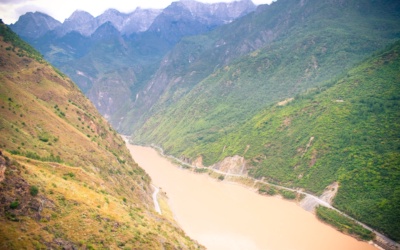
Tiger Leaping Gorge is not uniformly higher than Lijiang. The operator distinguishes Upper, Middle and Lower Gorge from the high walking route. A roadside viewpoint, a descent toward the river and a high trail are different undertakings. Check the chosen route's ascent, exposure, current access and return options; the heights of surrounding summits do not tell you the height of every visitor path.
For Yulong Snow Mountain, Shangri-La or any onward mountain itinerary, obtain the actual elevations, sleeping plan and operating information for your chosen trip. Do not assume that buying oxygen or completing one easy day in Lijiang makes a rapid ascent suitable for everyone.
Walks, meals and the practical day plan
Choose an early walk if it suits your itinerary, then compare a second walk at another time. There is no verified universal quiet window between 06:00 and 08:00, nor a promise that moving a few hundred metres removes crowds. If an area feels busy or noisy, choose another public route rather than relying on a fixed crowd forecast.
For local food ideas, a June 2026 notice published by China's General Administration of Sport names Lijiang baba (丽江粑粑), jidou liangfen (鸡豆凉粉) and butter tea (酥油茶) in its Lijiang event programme. These names give you a starting point when asking about a menu, not a guarantee of a particular restaurant's recipe or availability. Confirm ingredients, preparation, dietary requirements and prices with the place you choose.
- Arrival: Match the actual flight or train offered for your date to a confirmed final transfer. Agree the luggage route and return collection with your accommodation or driver.
- Walking: Choose shoes for the surfaces and slopes on your route; take extra care if paths are wet. Ask about access if steps or uneven ground would be difficult.
- Navigation: Save your address, a map point and a practical meeting landmark. Avoid entering homes or religious areas without permission.
- Weather and payments: Check the forecast, pack layers accordingly and confirm payment methods for the places you plan to use.
- Respect: Ask before photographing residents, be considerate at religious sites and do not treat cultural activity as a scheduled performance without checking.
Use the China travel overview for a wider itinerary. A successful Lijiang stay is built from the particular heritage walks, room, transport and regional route you choose, not from a promise of an empty old town or effortless mountain access.
Sources and background
These sources support the topics listed below, not every statement or current price in this article.
- [1] UNESCO World Heritage Centre: Lijiang heritage components, water system and Naxi architecture. Retrieved October 5, 2026. History, Nature
- [2] Shangri-La Tiger Leaping Gorge tourism operator: Distinct Tiger Leaping Gorge sections and high walking route. Retrieved October 5, 2026. Access, Nature
- [3] Centers for Disease Control and Prevention: Gradual ascent and response to altitude-illness symptoms. Retrieved October 5, 2026. Safety
- [4] General Administration of Sport of China: Local food names in the June 2026 Lijiang event programme. Retrieved October 5, 2026. Culture
Frequently Asked Questions
Two or three nights are an editorial starting point for Dayan and separate Shuhe or Baisha visits, not a minimum or a guarantee of acclimatization. Allow additional time for your chosen regional excursion, transfers and recovery. A mountain route needs a different plan from a city walk.
Confirm any applicable preservation charge with the heritage administration or official visitor service, and check individual attraction tickets separately. No current municipal amount or validity period was verified for this review on 5 October 2026. An open street does not establish that every applicable obligation is waived.
Choose an actual flight or train for your date, confirm its arrival point and arrange the final transfer to your accommodation. Ask whether a vehicle reaches the door or whether luggage must be carried along a separate walking route. This guide does not certify current timetables, fares or app availability.
Compare the particular room, evening surroundings and arrival route. A courtyard stay can place the heritage walk close by, while an edge address or another neighbourhood may suit your transport needs. Neither the area name nor Shuhe automatically guarantees quietness, a lower price or vehicle access.
Yes, plan for roughly 2,400 metres and any further ascent. Ascend gradually, take only mild exercise and avoid alcohol during the first 48 hours at altitude. Do not ascend to sleep higher with altitude-illness symptoms; seek medical advice and descend if symptoms worsen despite rest. Small oxygen cans do not replace appropriate care.
An early walk can fit a flexible itinerary, but no verified time slot guarantees empty lanes, closed shops or a particular quality of light. Leave time for a second walk if you want to compare the town at another hour. Follow open public routes and consider the actual weather and your return arrangements.
They are separate components of the same World Heritage listing, not just quieter replacements for Dayan. Shuhe offers another settlement layout to compare; Baisha adds religious paintings and an earlier housing cluster. Confirm transfers and hall access rather than assuming a fixed half-day trip or a guaranteed escape from crowds.