Melaka Old Town: Walking Through Malaysia's Living Museum of Trade and Culture
Melaka's old town is one of those rare places where five centuries of colonial history sit compressed into a few walkable blocks. Portuguese, Dutch, British, Chinese, Malay, and Indian influences layer on top of each other in the architecture, the food, and the daily rhythms of a city that was once the most important trading port in Southeast Asia. UNESCO recognized this in 2008, jointly inscribing Melaka and George Town as Historic Cities of the Straits of Malacca.
What makes Melaka special for visitors is its compactness. The entire historic core can be explored on foot in a day, though two days lets you go deeper into the food scene and smaller museums. Getting here from Kuala Lumpur takes about two hours by bus from TBS station, with frequent departures and tickets costing 10-15 MYR. From Singapore, expect a 4-5 hour bus journey including the border crossing. Once in town, walking is genuinely the best way to get around the old quarter.
Dutch Square and the Colonial Core
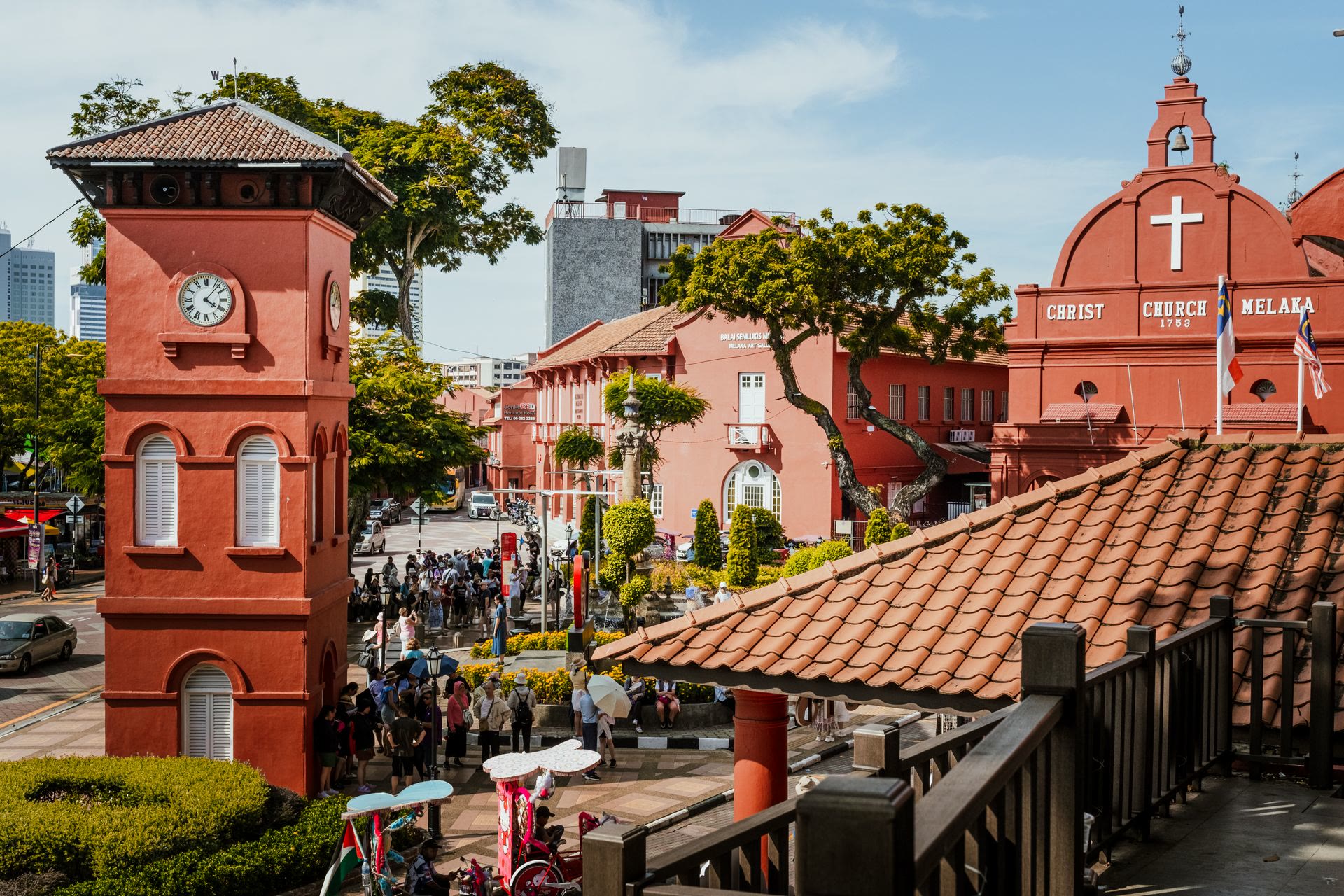
Dutch Square is the natural starting point for exploring Melaka. The cluster of salmon-red buildings around the central fountain dates from the Dutch colonial period and remains the most photographed spot in town. The Stadthuys, built around 1650, is believed to be one of the oldest surviving Dutch buildings in Asia and now houses several museums tracing Melaka's history from its founding as a Malay sultanate through the Portuguese conquest, Dutch rule, and British era.
Christ Church, completed in 1753, stands next to the Stadthuys and is the oldest functioning Protestant church in Malaysia. Its interior features handmade pews, each carved from a single tree trunk, and original Dutch ceiling beams. The church is free to enter and still holds weekly services.
From the square, a short climb up St. Paul's Hill brings you to the ruins of St. Paul's Church, originally built by the Portuguese in 1521. This is the oldest church building in Malaysia, and though roofless, its weathered walls and ancient tombstones create a powerfully atmospheric setting. The hilltop also offers the best panoramic view over Melaka's rooftops to the Straits beyond.
Things to Do
A Famosa and the Portuguese Legacy
Descending St. Paul's Hill on the opposite side from Dutch Square, you reach the Porta de Santiago, the last surviving gate of A Famosa fortress. Built in 1511 by the Portuguese under Alfonso de Albuquerque, this was once a massive fortification enclosing the entire hill. The British nearly demolished it completely before Stamford Raffles intervened to save the gate. Today it stands as a small but significant reminder of Melaka's role as a strategic prize fought over by European powers for centuries.
The Sultanate Palace nearby is a wooden reconstruction of the 15th-century Malay sultan's palace, based on descriptions in the Malay Annals. The museum inside covers Melaka's pre-colonial golden age when it was the dominant port in the region, controlling trade between China, India, and the Spice Islands.
Jonker Street and Chinatown
Cross the bridge from Dutch Square and you enter Melaka's Chinatown, centered on Jonker Street (Jalan Hang Jebat). During the day, this is a quieter affair of antique shops, art galleries, and heritage shophouses with ornate facades. The real transformation happens on Friday, Saturday, and Sunday nights when Jonker Walk Night Market takes over the street from 6 PM to midnight.
The night market is a sensory overload in the best way. Hundreds of stalls pack the narrow street selling everything from satay celup (a Melaka specialty where you dip skewered ingredients into a bubbling communal pot of spicy peanut sauce) to coconut shakes, chicken rice balls, and cendol. Between the food stalls, vendors sell handicrafts, clothing, and souvenirs. Arrive early on Friday or Saturday, as the crowds can become intense by 8 PM.
Must-Try Melaka Foods on Jonker Street
- Chicken rice balls: Melaka's signature dish, where the rice is shaped into small balls instead of served loose. Several shops on and around Jonker Street compete for the title of best in town.
- Satay celup: A communal hotpot experience unique to Melaka. Choose skewers of meat, seafood, vegetables, and tofu, then cook them in a bubbling cauldron of spicy peanut sauce at your table.
- Cendol: Shaved ice with green pandan jelly noodles, palm sugar syrup, and coconut milk. The version at Jonker 88 draws long queues for good reason.
- Nyonya laksa: A coconut-based curry noodle soup that reflects the Peranakan fusion of Chinese and Malay cooking.
- Pineapple tarts: Buttery pastry filled with sweet pineapple jam, a Peranakan specialty that makes an excellent edible souvenir.
Peranakan Heritage
The Peranakan (also called Baba Nyonya) are descendants of Chinese traders who settled in the Malay archipelago centuries ago and intermarried with local Malay women, creating a distinctive fusion culture with its own cuisine, language, dress, and customs. Melaka is one of the heartlands of Peranakan culture, and exploring this heritage is one of the most fascinating aspects of visiting the old town.
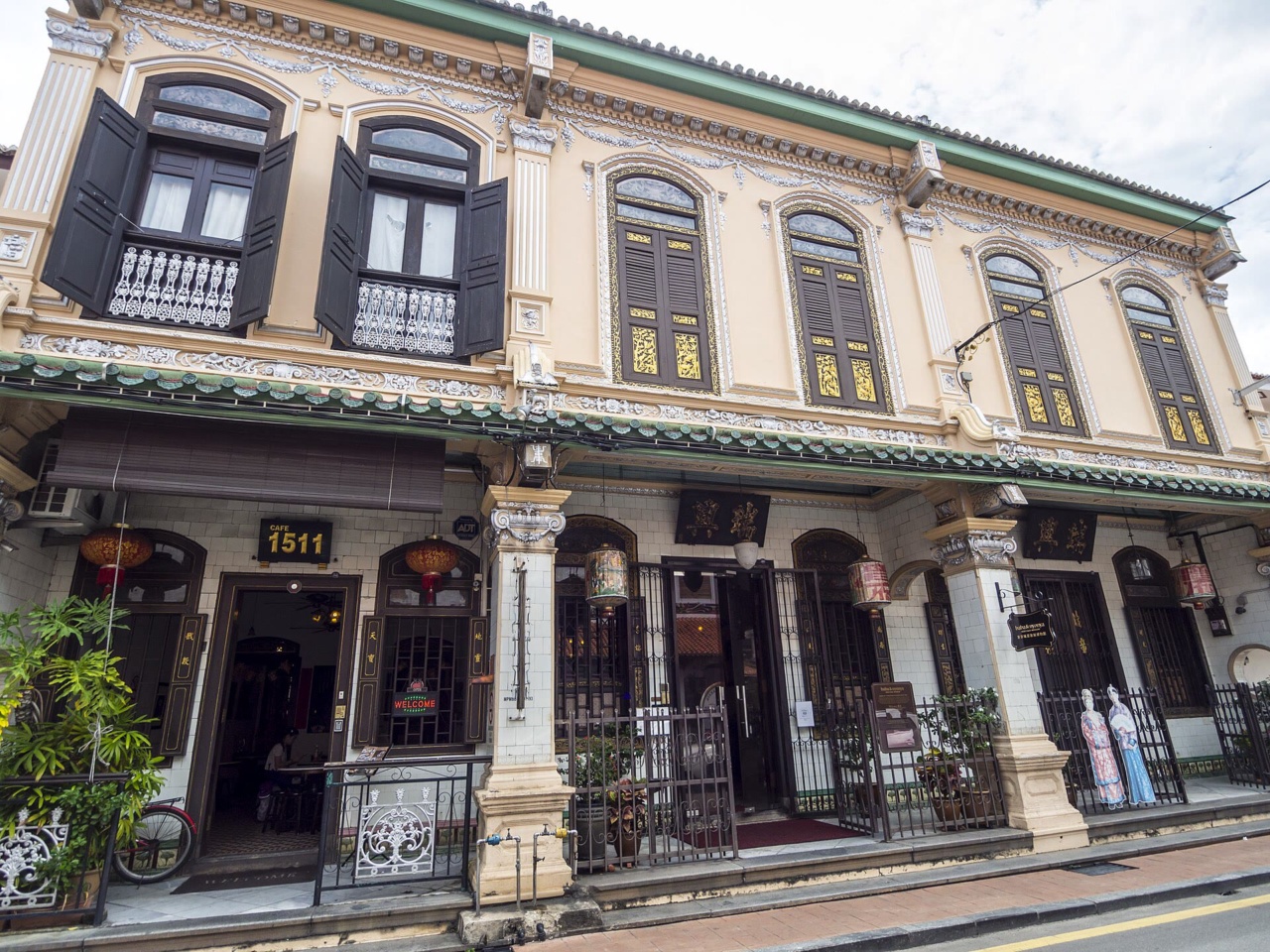
The Baba and Nyonya Heritage Museum on Jalan Tun Tan Cheng Lock occupies a beautifully restored 19th-century townhouse. Guided tours (the only way to visit) take about 45 minutes and walk you through rooms furnished with original Peranakan furniture, porcelain, and wedding costumes. The level of detail in the carved woodwork, beaded shoes, and imported tiles gives a vivid picture of how wealthy Peranakan families lived. Entry costs 18 MYR for adults.
For more Peranakan culture, walk along Jalan Tun Tan Cheng Lock (also known as Heeren Street), where rows of ornate townhouses display the characteristic blend of Chinese, Malay, and European architectural elements. Many have been converted into boutique hotels, restaurants, and galleries.
Harmony Street and Religious Heritage
One block inland from Jonker Street, Harmony Street (Jalan Tokong) earned its nickname because a Hindu temple, a mosque, and a Chinese temple have stood side by side here for centuries, a testament to Melaka's tradition of multicultural coexistence.
The Cheng Hoon Teng Temple, founded in 1673, is Malaysia's oldest Chinese temple and remains an active place of worship. Its ornate roof ridges, painted murals, and carved interior have been meticulously maintained using traditional techniques. The Kampung Kling Mosque, built in the Sumatran style with a tiered roof rather than a dome, dates from a similar period. Both are free to enter, though visitors should dress respectfully and remove shoes.
Sri Poyyatha Vinayaga Moorthy Temple, the oldest Hindu temple in Malaysia, completes the trio. These three buildings within a few dozen meters of each other capture something essential about Melaka's character as a place where different cultures didn't just coexist but genuinely influenced each other.
Melaka River and Street Art
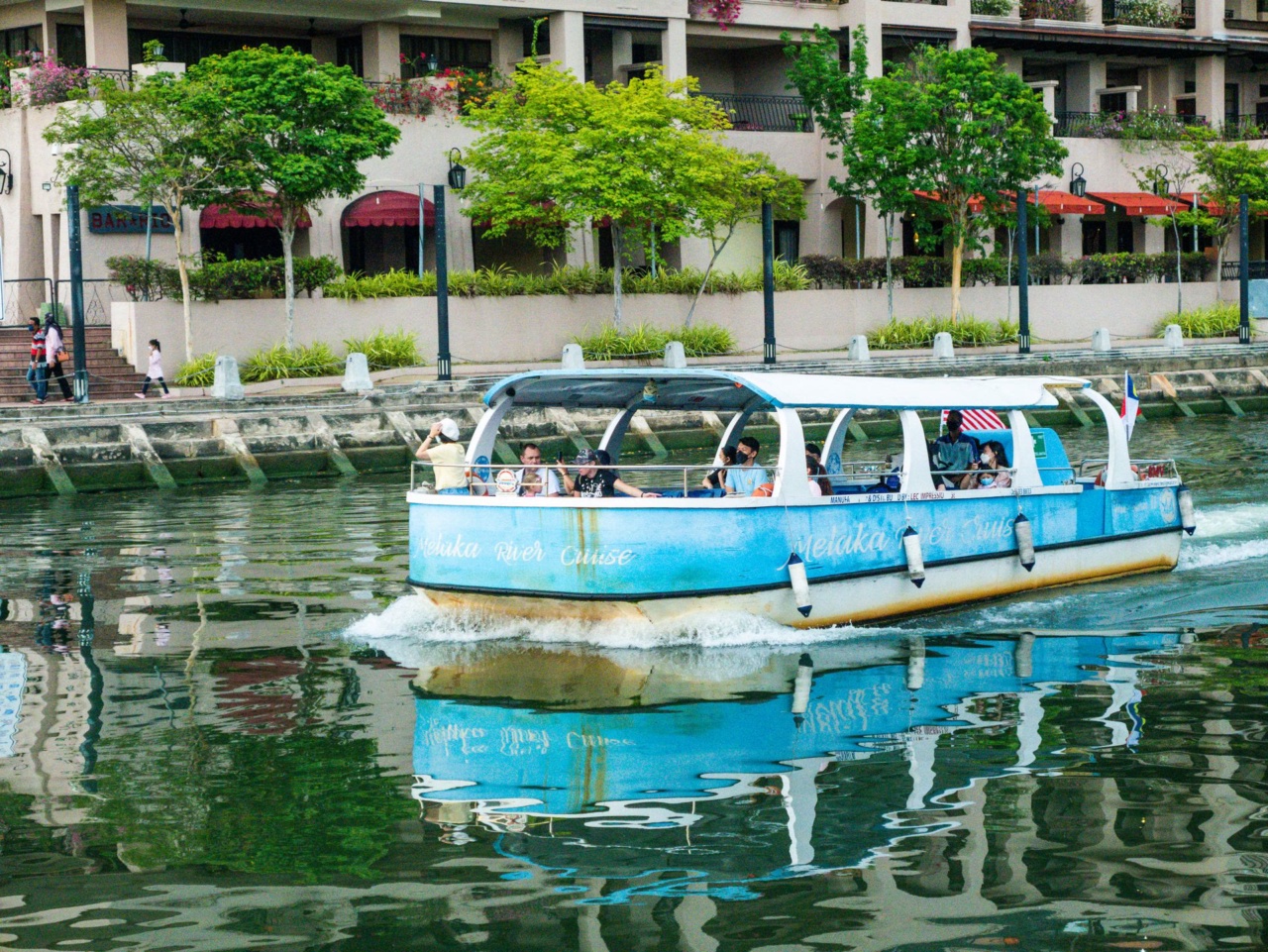
The Melaka River was historically the commercial lifeline of the city, and a cleanup project has transformed its banks into a pleasant walking path lined with murals and restored warehouses. A river cruise lasting about 45 minutes covers the route between the river mouth and the upstream turning point, passing colorful street art, old godowns (warehouses), and kampung houses. Tickets cost around 30 MYR for adults, and the sunset departure offers the best lighting as buildings along the banks are illuminated.
Walking the riverbanks on your own is equally rewarding and free. The street art along the river walls tells stories of Melaka's past, from trading ships and fishing scenes to portraits of historical figures. The stretch between Jonker Street bridge and the Maritime Museum is the most densely painted.
Practical Tips for Visiting Melaka Old Town
Melaka is manageable as a day trip from KL, but staying overnight lets you experience the night market and explore at a relaxed pace. Most travelers find one to two nights ideal. Here's what to know before you go.
- The best time to visit is on a Friday or Saturday to catch the Jonker Walk Night Market. Arrive Friday morning, explore the historic sites during the day, and hit the night market in the evening.
- Weekdays are significantly quieter and better for photography at the major sites. If you don't care about the night market, a Tuesday or Wednesday visit is most pleasant.
- Melaka is hot and humid year-round. Start your walking tour early in the morning and take a break during the midday heat. Most museums and temples are air-conditioned or at least shaded.
- Cash is essential for street food, night market stalls, and smaller shops. ATMs are available around Dutch Square and Jonker Street. Budget 50-80 MYR per day for food if you eat mainly at local stalls and restaurants.
- Grab (ride-hailing) works well in Melaka for getting between the bus terminal and old town (about 10-15 MYR) or reaching attractions outside the core area.
- Dress modestly when visiting mosques and temples. Carry a scarf or sarong in your bag for covering shoulders or legs when needed.
- For more guides to Malaysia's heritage destinations and travel planning tips, explore GoAsia.cc.
Frequently Asked Questions
Melaka Old Town is a UNESCO World Heritage Site where Portuguese, Dutch, British, Chinese, Malay, and Indian influences are all visible within a compact walkable area. The combination of colonial architecture, Peranakan heritage, multicultural religious sites, and one of Malaysia's best street food scenes makes it one of the most historically rich destinations in Southeast Asia.
Most of Melaka's attractions are free or very affordable. Walking the old town, visiting temples, and exploring Dutch Square costs nothing. The Baba and Nyonya Heritage Museum charges 18 MYR, the river cruise is about 30 MYR, and other museums range from 5-15 MYR. Budget travelers can eat well for 30-50 MYR per day at local stalls and restaurants.
Buses run frequently from TBS (Terminal Bersepadu Selatan) in KL to Melaka Sentral bus terminal, taking about two hours and costing 10-15 MYR. From the bus terminal, a Grab ride to the old town costs 10-15 MYR. Driving takes about 1.5-2 hours via the North-South Expressway.
One full day covers the main historic sites and a night market visit, but two days allows you to explore more museums, try more food, and walk the river at a comfortable pace. If you're only doing a day trip from KL, leave early and plan to catch a late bus back after the night market.
The night market operates on Friday, Saturday, and Sunday evenings from 6 PM to midnight. Friday and Saturday are the busiest and most atmospheric. The market stretches along Jonker Street with hundreds of food and merchandise stalls. Arrive before 7 PM to eat comfortably before the peak crowds.
The three essential Melaka dishes are chicken rice balls (the city's signature dish), satay celup (communal hotpot with spicy peanut sauce), and cendol (shaved ice dessert). Nyonya laksa and Peranakan kuih (cakes) are also distinctive to the area and hard to find this authentic elsewhere in Malaysia.
The entire UNESCO-listed old town is very walkable, with all major attractions within a 15-20 minute walk of each other. You only need transport to get between the bus terminal and old town (use Grab), or to reach attractions outside the core like the Portuguese Settlement. Trishaws decorated with flowers and lights are a fun novelty but expensive for the distance covered.
Yes, but it's a long day. Buses from Singapore take 4-5 hours each way including the border crossing at Johor. This leaves limited time for sightseeing, so an overnight stay is strongly recommended. Several bus companies operate direct services from Singapore's Golden Mile or Lavender Street to Melaka Sentral.