Songzanlin Monastery: Yunnan's Little Potala Above Shangri La
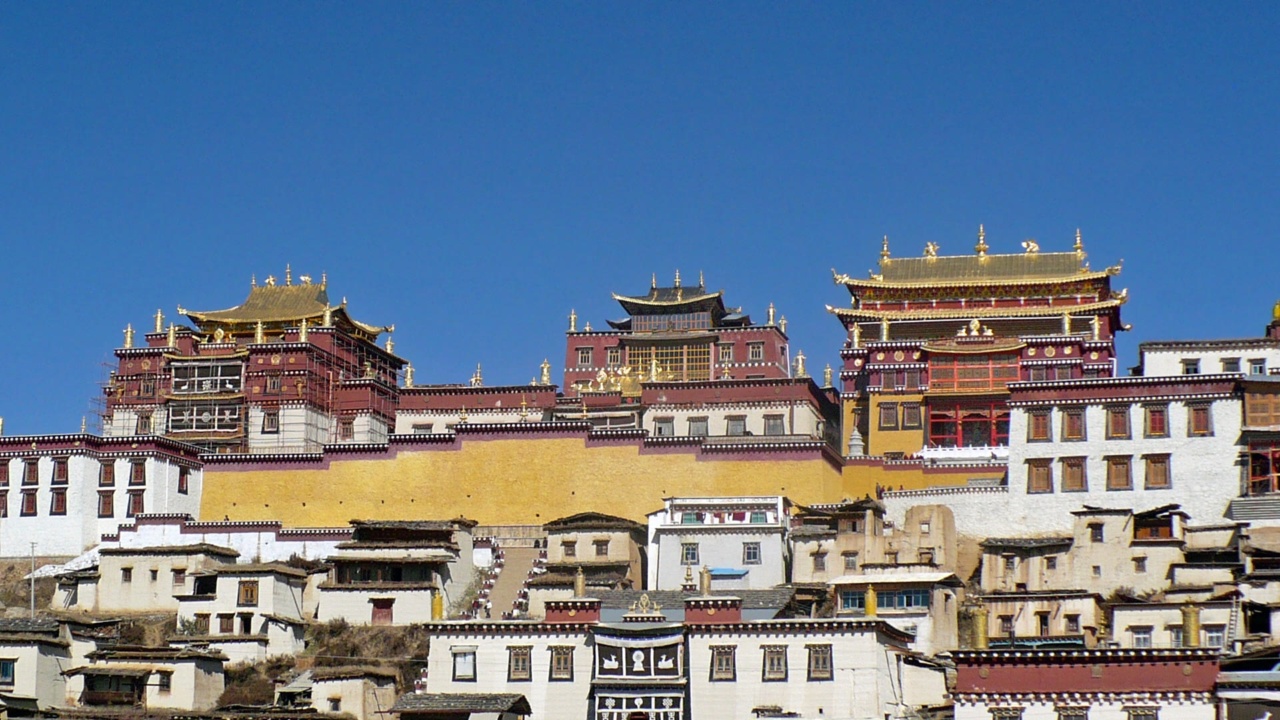
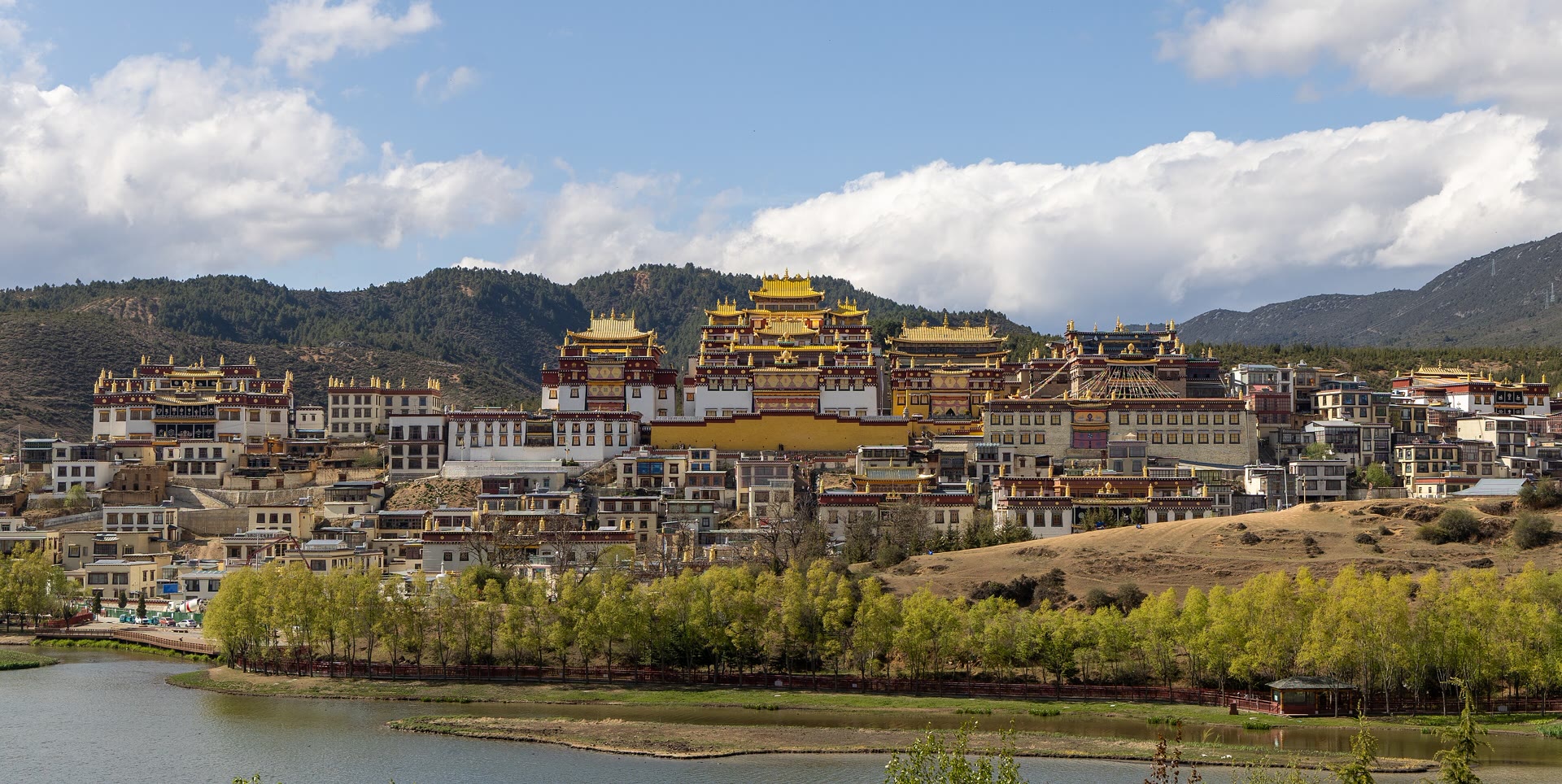
Rising from a hillside on the edge of Shangri La, Songzanlin Monastery looks like a fortress town built for prayer. Golden roofs catch the high mountain light, whitewashed walls climb in tiers toward the central halls, and the whole complex is often called the Little Potala Palace for its resemblance to the famous monastery in Lhasa. This is the largest Tibetan Buddhist monastery in Yunnan province, and for many travelers it is the single most memorable stop in the entire Shangri La region.
At roughly 3,300 meters above sea level, Songzanlin sits in genuine high country. The air is thin, the light is sharp, and the surrounding plateau of grasslands, yaks, and barley fields feels far more Tibetan than Chinese. The monastery is a living religious center, home to hundreds of monks of the Gelug school, the same tradition led by the Dalai Lama. Visitors walk the same stone steps and prayer halls that pilgrims have used for centuries.
This guide covers how to reach Songzanlin from Shangri La, what to expect at altitude, how to behave respectfully inside an active monastery, when the famous lake reflections appear, and how to pair the visit with Dukezong Ancient Town for a full day of Tibetan culture.
What Songzanlin Monastery Is
Songzanlin Monastery, sometimes written Sumtseling, was founded in the seventeenth century and is the most important Gelug monastery in southwest China. The Gelug school is the dominant order of Tibetan Buddhism, and Songzanlin functioned historically as a regional religious and political hub for the surrounding Tibetan communities.
The complex is large. Beyond the two main assembly halls at the top of the hill, the monastery includes dozens of smaller residences, chapels, and courtyards where monks live and study. The tiered layout, the gilded roof ornaments, and the steep central staircase all echo the architecture of the Potala Palace, which is why the nickname has stuck.
It is important to understand that this is not a museum. Monks pray, debate, and go about daily life here. Butter lamps burn in the halls, pilgrims circle the buildings turning prayer wheels, and ceremonies happen on the Tibetan calendar rather than for tourist schedules. Treat the entire site as a place of worship, because that is exactly what it is.
Things to Do
Why It Matters
Yunnan sits on the southeastern fringe of the Tibetan cultural world. The town of Shangri La, formerly known as Zhongdian, was officially renamed to match the fictional paradise from the novel Lost Horizon, a marketing move that drew tourism but also reflects a real Tibetan presence in the region. Songzanlin is the spiritual heart of that presence.
For travelers who cannot easily reach Lhasa, where access requires permits and organized tours, Songzanlin offers an accessible window into authentic Tibetan Buddhist life. You see the architecture, the rituals, the monks, and the devotional rhythm without the bureaucratic hurdles of entering the Tibet Autonomous Region. That accessibility makes it one of the most significant cultural sites in southwest China.
How to Get There
Songzanlin lies about five kilometers north of central Shangri La, which makes it an easy half day trip from town. There are several practical ways to reach it.
By city bus
A local public bus runs between central Shangri La and the monastery area. It is the cheapest option and drops you near the visitor center and ticket area. Buses are infrequent compared to big cities, so check the return schedule when you arrive so you are not stranded waiting at the end of the day. Confirm the current bus number and route at your hotel before setting out, since local routes can change.
By taxi or ride hailing
A taxi from central Shangri La to the monastery is quick and inexpensive by international standards, usually taking around fifteen to twenty minutes. Ride hailing apps operate in Shangri La and are often the most convenient choice, especially for the return trip. Agree on the fare or use the metered app before you go. Many travelers take a taxi out and the bus back, or arrange for the driver to wait.
By organized tour or hotel arrangement
Many guesthouses in Dukezong Ancient Town can arrange a driver for a half or full day that combines Songzanlin with other regional sights such as Pudacuo National Park or Napa Lake. This is worth considering if you want to cover more ground in limited time, but it is not necessary just to see the monastery.
Getting to Shangri La first
Shangri La itself is reached by air through Diqing Shangri-La Airport, which has connections to major Chinese cities including Kunming, or by long distance bus from Lijiang and Kunming. The bus from Lijiang is the common overland route and climbs steadily into the mountains. Plan your arrival so you can acclimatize a little before any strenuous activity.
Altitude: Take It Seriously
This is the single most important practical point for visiting Songzanlin. At around 3,300 meters, Shangri La and the monastery sit high enough to cause altitude sickness in unprepared travelers, especially those flying in directly from low elevation cities.
The monastery itself involves climbing a long, steep central staircase to reach the main halls. At sea level this would be a minor effort. At this altitude, even fit travelers find themselves short of breath and needing to pause. Symptoms of mild altitude sickness include headache, fatigue, dizziness, nausea, and trouble sleeping. Most cases are mild, but they are common.
Practical advice for managing the altitude:
- Give yourself a day in Shangri La before strenuous sightseeing if you flew in, so your body can begin to adjust.
- Climb the monastery steps slowly. There is no prize for speed, and pacing yourself prevents the worst of the breathlessness.
- Drink plenty of water and avoid heavy alcohol the night before.
- Carry any altitude medication you normally use, and consult a doctor before your trip if you have heart or lung conditions.
- If symptoms become severe, descend to lower elevation. Lijiang sits considerably lower and is a reasonable place to recover.
The thin air also means strong ultraviolet exposure. Sunburn happens quickly here even on cool days, so bring sunscreen, sunglasses, and a hat.
What to See at the Monastery
Plan to spend around two to three hours at Songzanlin if you want to explore at a relaxed pace and absorb the atmosphere rather than rushing through.
The main assembly halls
At the top of the staircase sit the two principal halls, the largest and most ornate buildings in the complex. Inside you find towering Buddha statues, intricate murals, hanging silk banners called thangkas, rows of butter lamps, and the deep red columns typical of Tibetan temple interiors. The scale and richness of the decoration are the highlight for most visitors. Move quietly and follow the lead of pilgrims and monks around you.
The smaller chapels and monk residences
Spread across the hillside below the main halls are dozens of smaller buildings. Wandering the lanes between them gives you a sense of the monastery as a living town. You may pass monks going about their day, hear chanting drifting from open doorways, or watch elderly pilgrims spinning prayer wheels.
The rooftops and views
From the upper terraces, the views over the plateau, the grasslands, and the town below are sweeping. The gilded roof finials, dragons, and dharma wheels are best appreciated from these upper levels where you can see them against the open sky.
The reflecting lake
Below the monastery lies a lake, sometimes called Lhamu Lhatso, that produces the postcard image of Songzanlin: the entire golden and white complex mirrored in still water. On a calm, clear morning the reflection is striking and is the photograph most travelers come for. The reflection depends heavily on weather and water conditions, so it is not guaranteed every day. Early morning, before wind picks up, gives the best chance of a glassy surface. The lake area also has walking paths and is worth circling for different angles.
Etiquette and Respectful Behavior
Songzanlin is an active place of worship, and respectful behavior matters both out of courtesy and to avoid causing offense. Tibetan Buddhist communities are generally welcoming to visitors who behave appropriately.
- Dress modestly. Cover your shoulders and knees. Avoid tight or revealing clothing inside temple buildings.
- Walk clockwise. When circling shrines, stupas, or prayer wheels, move in a clockwise direction, following the practice of pilgrims around you.
- Ask before photographing people. Photographing monks or pilgrims without permission is intrusive. Many interior halls prohibit photography entirely, often to protect the artwork, so look for signs and respect them.
- Remove hats inside halls and lower your voice. Do not point your feet at altars or statues, and avoid touching religious objects.
- Do not turn your back to a Buddha image when posing for photos, and do not climb on any structures.
- Be unobtrusive during ceremonies. If you happen on a prayer session or ritual, watch quietly from the side rather than crowding the participants.
A small donation in the offering boxes inside the halls is customary and appreciated, though not required.
Tickets, Hours, and Practical Logistics
Songzanlin charges an entrance fee, and the ticket typically includes shuttle transport from the visitor center area up toward the monastery, since the site sits some distance from the main road. Specific prices, opening hours, and whether the shuttle is mandatory can change, so verify the current details with your hotel or the official site before you go rather than relying on older figures.
A few practical points to plan around:
- Arrive earlier in the day for softer light, calmer lake conditions, and fewer tour groups. Domestic tour buses tend to arrive through the late morning and midday.
- Wear sturdy shoes. The staircase and the stone paths around the complex are uneven, and you will be climbing at altitude.
- Bring layers. Mountain weather changes fast, and mornings can be cold even when afternoons are mild.
- Carry water and a snack, though there are basic facilities near the entrance.
- Keep your passport handy. Identification can be required at sites and for transport in China.
Pairing With Dukezong Ancient Town
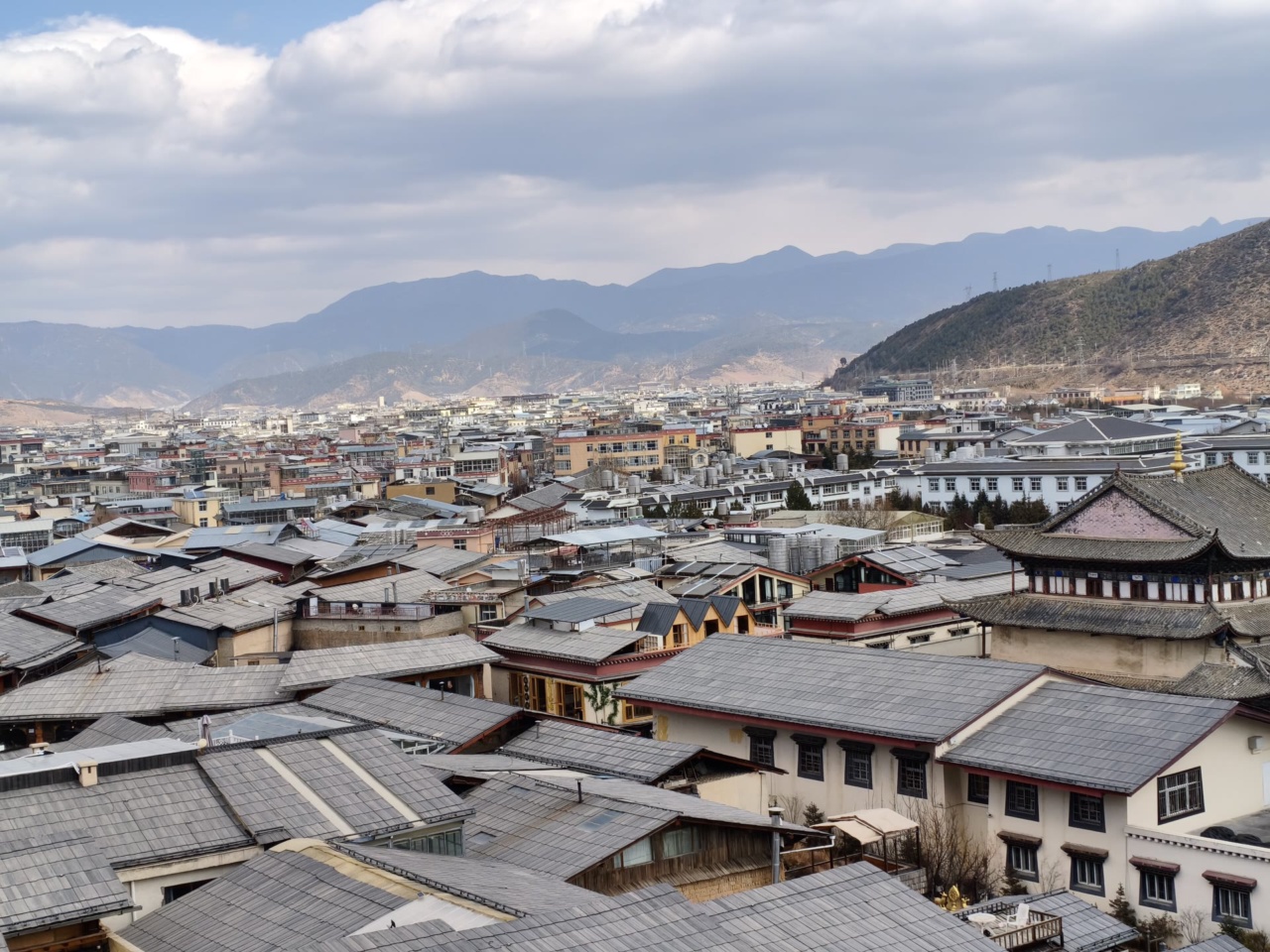
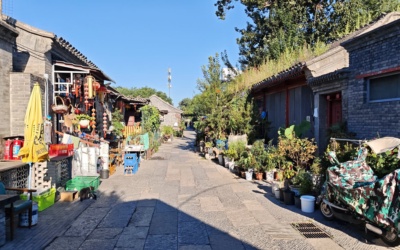
The natural companion to Songzanlin is Dukezong Ancient Town, the old quarter of Shangri La itself. Dukezong is a historic Tibetan settlement with cobbled lanes, wooden buildings, guesthouses, teahouses, and shops selling Tibetan crafts and silver. At its center sits a square with one of the largest prayer wheels in the world, a massive gilded cylinder that takes several people to turn. Spinning it clockwise alongside locals is a memorable experience.
A sensible full day plan is to visit Songzanlin in the morning, when the light and lake are at their best and the crowds are thinner, then return to Dukezong in the afternoon to wander the old town, climb to the hilltop temple and giant prayer wheel for sunset views, and have dinner in one of the local restaurants. The two sites together give you both the grand monastic side and the everyday Tibetan town side of Shangri La.
Part of Dukezong was damaged by fire in the past and has been rebuilt, so some sections feel newer than others. It remains atmospheric, especially in the early morning and evening when day trippers have left and the lanes quiet down.
When to Visit
Shangri La has a high mountain climate with significant seasonal variation, and your experience of Songzanlin will differ a lot depending on when you come.
| Season | Conditions | What to expect |
|---|---|---|
| Spring | Cool, variable, occasional rain | Green grasslands returning, moderate crowds, changeable skies |
| Summer | Mild days, frequent afternoon rain | Lush plateau, wildflowers, peak domestic travel, lake reflections possible on calm mornings |
| Autumn | Clear, crisp, dry | Often the best season: blue skies, golden grasslands, reliable views |
| Winter | Cold, dry, occasional snow | Fewest crowds, dramatic light, very cold; some services reduced |
Autumn is widely considered the most reliable time for clear skies and strong views, which matters for both the rooftop panoramas and the lake reflection. Summer is lush and popular but brings rain and the largest domestic crowds. Winter is starkly beautiful and quiet but genuinely cold at this altitude, so prepare with warm layers.
Realistic Downsides
Songzanlin is genuinely impressive, but it is fair to set expectations honestly.
It is a heavily visited site, and during peak periods the main halls and staircase can feel crowded with domestic tour groups. Arriving early is the best defense. The mandatory ticketing and shuttle system can feel commercialized for a religious site, and the entrance procedure adds friction compared to simply walking up to a temple.
The altitude affects some travelers significantly, and the long climb is harder than it looks. If you are very short on time or struggling with the elevation, the lake and exterior views alone still deliver much of the visual payoff without the full climb.
The famous mirror reflection is weather dependent. If you arrive on a windy or overcast day, or when the water level is low, you will not get the glassy mirror image seen in photographs. Manage your expectations and treat a perfect reflection as a bonus rather than a guarantee.
Finally, photography restrictions inside the halls mean the richest interiors cannot always be captured. This protects the art but can disappoint photographers. Respect the rules regardless.
Sample Half Day and Full Day Plans
For a focused half day, take a taxi from central Shangri La in the morning, spend two to three hours exploring the monastery and walking around the lake, then return to town for lunch. This works well if you have limited time or are easing into the altitude.
For a full day that captures the region's Tibetan character, visit Songzanlin in the morning, return to Dukezong Ancient Town in the early afternoon, explore the lanes and craft shops, climb to the giant prayer wheel for late afternoon, and stay for sunset and dinner. With a hired driver you could also add Napa Lake or a stretch of grassland on the way back, especially in autumn when the plateau is at its most photogenic.
However you structure it, build in buffer time. At altitude everything takes a little longer, and rushing defeats the contemplative atmosphere that makes the monastery special. For more on planning routes through Yunnan and the wider Tibetan plateau region, GoAsia.cc is a useful place to continue mapping out your itinerary.
Final Practical Tips for Songzanlin
- Acclimatize before you climb. Spend a night in Shangri La first if you flew in from low elevation.
- Go early for the best light, the calmest lake, and the smallest crowds.
- Carry cash for the entrance fee, the offering boxes, and local transport, alongside a payment app if you have one set up.
- Dress in modest layers and bring strong sun protection for the high altitude light.
- Move clockwise around shrines and prayer wheels, and ask before photographing people.
- Verify current ticket prices, hours, and shuttle rules before you visit, as these change.
- Pair the monastery with Dukezong Ancient Town for a complete picture of Shangri La's Tibetan heritage.
Songzanlin rewards travelers who slow down. Climb the steps at the pace the mountain demands, sit for a while on an upper terrace watching the light move across the golden roofs, and let the chanting and butter lamp smoke remind you that this is a living center of faith. For many visitors to Yunnan, it becomes the moment that defines the whole trip.
Frequently Asked Questions
Plan for two to three hours to explore the main halls, walk the smaller chapels and lanes, and circle the reflecting lake. Combined with travel time from Shangri La, a relaxed visit fits comfortably into a half day. Allow extra time because climbing the staircase at altitude is slower than it looks.
Yes, the monastery charges an admission fee that usually includes a shuttle from the visitor center toward the complex. Prices and whether the shuttle is mandatory can change, so confirm the current fee and rules with your hotel or the official site before visiting. Bring cash and a payment app to be safe.
The monastery is about five kilometers north of central Shangri La. A local public bus is the cheapest option, while a taxi or ride hailing app takes only fifteen to twenty minutes and is the most convenient, especially for the return. Many travelers take a taxi out and the bus back, or hire a driver for the day.
It is possible, since the monastery sits at around 3,300 meters and involves a steep climb. Mild symptoms like headache and breathlessness are common, especially if you flew in from low elevation. Acclimatize for a day first, climb slowly, drink water, and descend to lower ground such as Lijiang if symptoms become severe.
Early morning on a calm, clear day gives the best chance of a glassy mirror reflection of the monastery in the lake. The reflection depends on wind and water conditions and is not guaranteed every day. Autumn generally offers the most reliable clear skies for both the lake and the rooftop views.
Photography is often prohibited inside the main halls to protect the artwork, so look for signs and respect them. Exterior photography and shots of the lake and rooftops are usually fine. Always ask before photographing monks or pilgrims, as doing so without permission is considered intrusive.
Yes, and it makes an excellent full day. Visit the monastery in the morning for the best light and fewer crowds, then explore Dukezong Ancient Town in the afternoon, including its giant prayer wheel and hilltop temple for sunset. Together they show both the grand monastic and everyday Tibetan sides of Shangri La.