Summer Palace: How to Visit Beijing's Great Imperial Garden

Summer Palace: How to Visit Beijing's Great Imperial Garden

Last updated: June 9, 2026

The Summer Palace is the grandest surviving imperial garden in China, a sprawling royal landscape in northwest Beijing where emperors escaped the heat and formality of the Forbidden City. It is built around Kunming Lake and Longevity Hill, with pavilions, temples, marble bridges, and a covered walkway that stretches for the better part of a kilometer. The whole composition was designed to feel like a poem made of water, hills, and architecture.

For visitors, the appeal is twofold. First, this is one of the finest examples of Chinese garden design anywhere, recognized by UNESCO as a masterpiece of landscape gardening that blends natural scenery with human craft. Second, it is genuinely pleasant to spend time here. Unlike the dense halls of the Forbidden City, the Summer Palace invites you to wander, walk a lakeshore, ride a boat, and slow down. On a good day it is part history lesson, part long walk in a beautiful park.

It is also large. The grounds cover several hundred acres, most of it water, and the distances between highlights are real. Going in with a plan for which gate to use, how much walking you want to do, and whether to take a boat will turn a tiring slog into one of the best half days in the city.

What the Summer Palace Is and Why It Matters

The Summer Palace served as a retreat and seasonal residence for the Qing imperial court. Its layout is dominated by two features: Longevity Hill, crowned by tiered temple architecture, and Kunming Lake, a vast artificial lake that fills roughly three quarters of the site. The design draws inspiration from famous gardens and lakes across China, including West Lake in Hangzhou, compressed and recomposed into a single imperial setting.

The garden carries a heavy political history. It was looted and damaged during foreign invasions in the nineteenth century, then rebuilt at enormous expense, including funds famously diverted from the imperial navy. That story is part of why the site matters: it is both a triumph of garden art and a symbol of the late Qing dynasty's troubled final decades.

UNESCO inscribed the Summer Palace as a World Heritage Site, describing it as an outstanding expression of the Chinese philosophy and practice of garden design, where natural landscape and human creation are brought into harmony. For travelers, that translates into a place where almost every viewpoint has been deliberately framed, from the long sightline down the Long Corridor to the reflection of the Tower of Buddhist Incense in the lake.

Things to Do

East Gate Versus North Gate: Choosing Your Route

The single most useful planning decision is which gate you enter and exit. The Summer Palace has several gates, but two matter most for first-time visitors: the East Palace Gate and the North Palace Gate.

East Palace Gate

The East Palace Gate is the traditional main entrance and the one closest to the imperial court buildings. Entering here, you arrive in the formal palace area first, including the halls where the emperor and empress dowager handled affairs of state and lived. From there the route flows naturally toward the lakeshore, the start of the Long Corridor, and the climb up Longevity Hill. This is the classic sequence and the one most tours follow.

North Palace Gate

The North Palace Gate sits behind Longevity Hill near Suzhou Street, a recreated waterside market lane. Entering here means you tackle the hill and temple complex relatively early, then descend toward the lake and the Long Corridor. Many independent travelers like this approach because it lets you do the uphill section while you are fresh, then finish with flat lakeside walking.

A smart strategy is to enter one gate and exit another rather than backtracking. Entering at the North Gate and exiting at the East Gate, or the reverse, gives you a one-way walk that covers the highlights without retracing your steps. Confirm which gates are open and their hours before you go, since access points and ticketing arrangements can change.

The Long Corridor and Longevity Hill

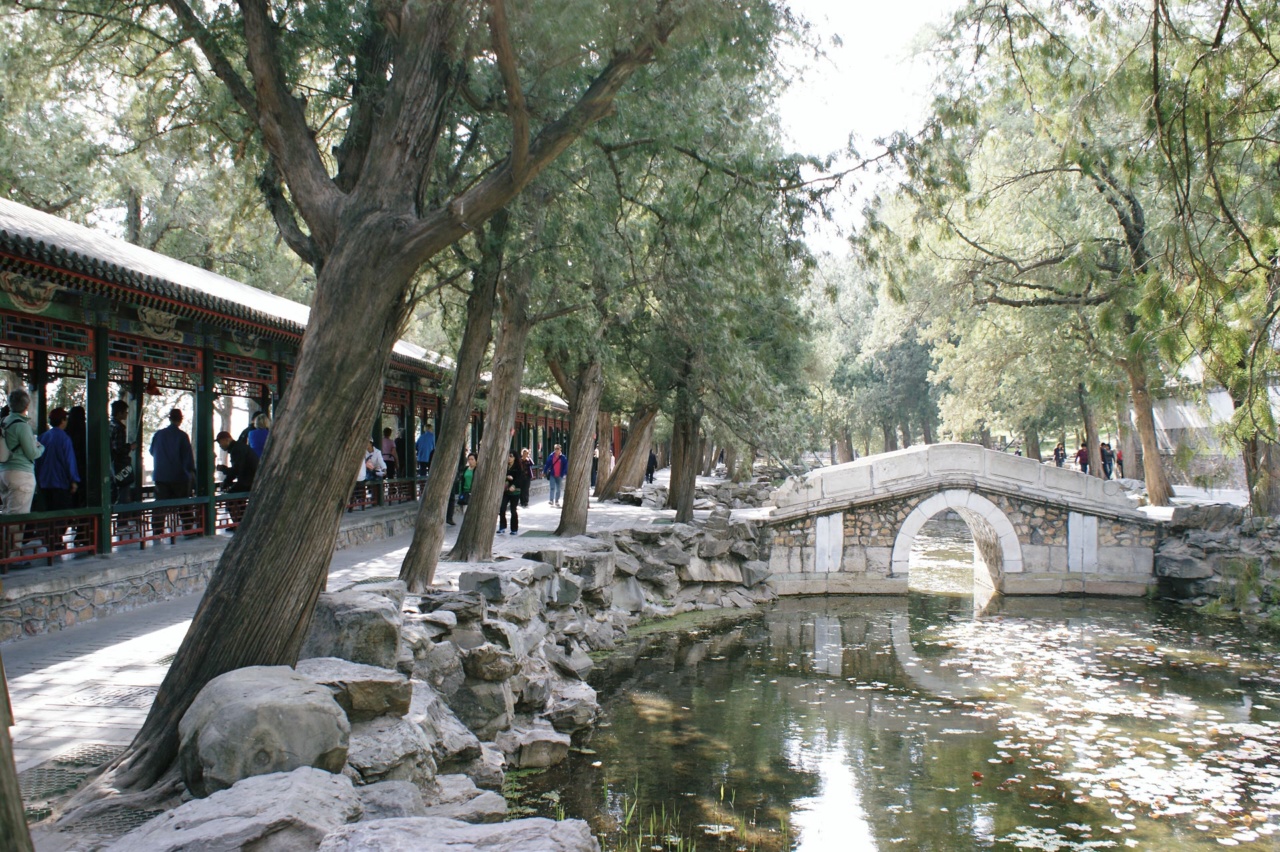
The Long Corridor is the signature walk of the Summer Palace and one of the longest covered walkways in the world. It runs along the northern shore of Kunming Lake at the foot of Longevity Hill, linking pavilions and shaded by a continuous painted ceiling. Every beam carries a painting, with thousands of individual scenes drawn from Chinese landscapes, literature, and legend. Walking its full length is the easiest way to appreciate the scale of the place while staying out of sun or light rain.

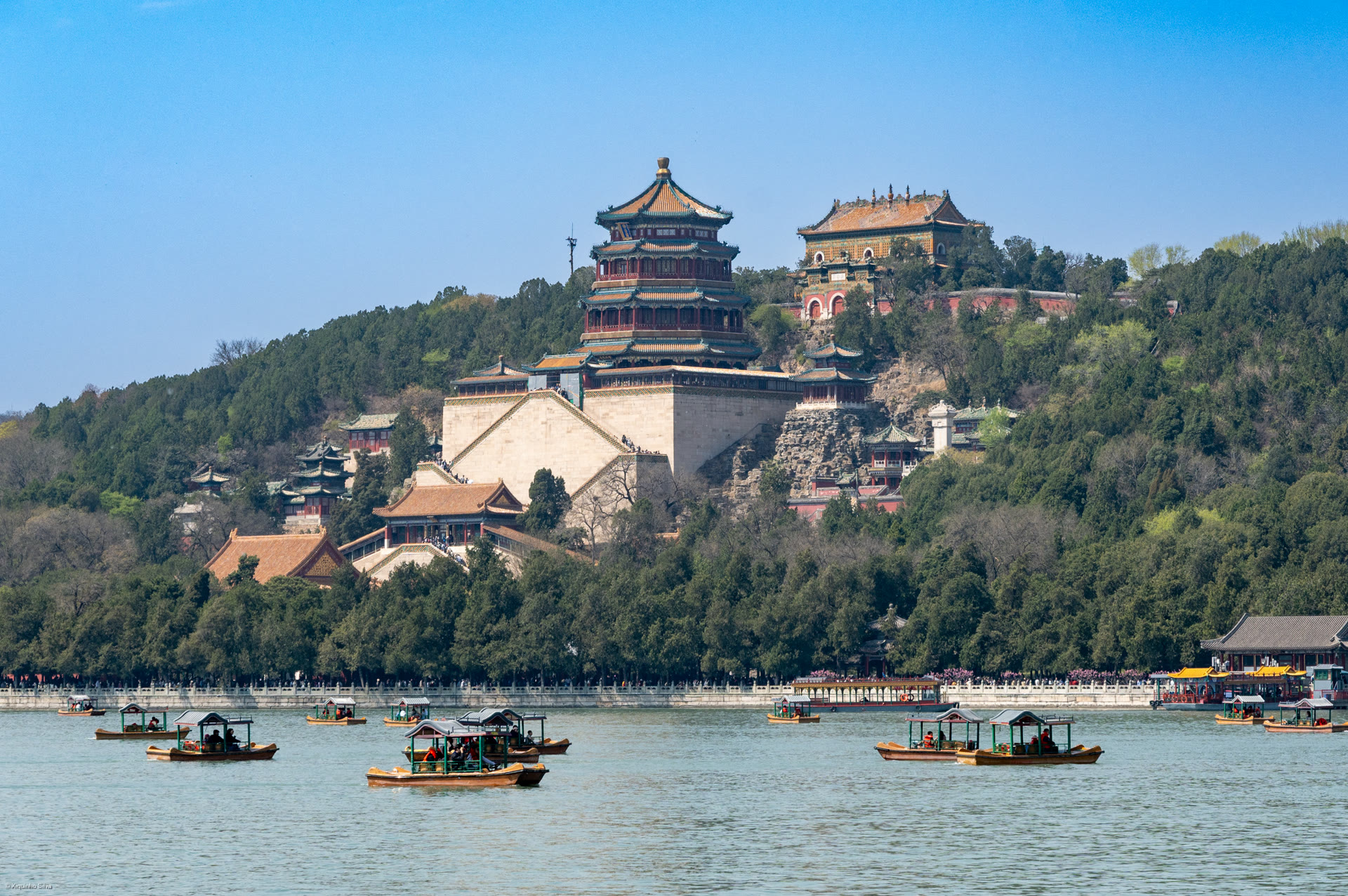
Above the corridor rises Longevity Hill, the architectural heart of the garden. The climb leads through a sequence of halls and gates up to the Tower of Buddhist Incense, the tall octagonal structure that dominates the skyline and offers the best views back over the lake. The ascent is steep in places with many steps, so allow time and pace yourself. The reward is the panorama: the lake spread out below, the long causeway crossing the water, and the seventeen arch bridge in the distance.

Near the western end of the corridor sits the Marble Boat, a lakeside pavilion built in the shape of a boat from stone. It is one of the most photographed and most debated features of the site, often tied to the story of misused naval funds. Whether or not the tale is exact, the structure is a striking and slightly absurd folly that fits the garden's theatrical character.

Kunming Lake, Boats, and Walking Distances

Kunming Lake is the soul of the Summer Palace, and how you cross or circle it shapes your whole visit. The lake is large, and walking the full perimeter is a serious undertaking, easily several kilometers, with the western and southern shores being far quieter and less developed than the busy northern strip.

Boat options

Boats are a popular and practical way to enjoy the lake and to cut down on walking. There are typically two kinds. Larger ferry style dragon boats run set routes across the water, often connecting the northern shore area near the Marble Boat with the area by South Lake Island and the seventeen arch bridge. Smaller pedal boats and rowing boats can be rented for free roaming on the lake. Ferries are the time saver: instead of walking all the way around to reach the island and bridge, you can ride across and save your legs. Check current boat schedules and ticket prices on the day, as services vary by season and weather.

The seventeen arch bridge and South Lake Island

The seventeen arch bridge is the longest bridge in the garden, a graceful stone span linking the eastern shore to South Lake Island. It is one of the most beautiful structures on the site, especially in soft morning or late afternoon light. The island itself holds a temple and offers fine views back toward Longevity Hill. Reaching it on foot from the northern entrances takes real walking, which is exactly why the boat connection is so useful.

How Much Time to Allow

The Summer Palace is not a place to rush. A focused visit hitting the palace halls, the Long Corridor, Longevity Hill, and the lakeshore takes around three hours. If you want to climb to the top of the hill at a relaxed pace, take a boat, walk to the seventeen arch bridge, and linger over views, plan for half a day. Garden lovers and photographers can easily spend longer.

Combining the Summer Palace with another major site in the same day is possible but tiring. Many travelers pair it instead with the nearby Old Summer Palace, which is much closer and thematically linked, rather than trying to squeeze in something central like the Forbidden City on the same day.

Pairing With the Old Summer Palace

The Old Summer Palace, known as Yuanmingyuan, lies a short distance to the east of the Summer Palace and is often confused with it. They are different places. The Old Summer Palace was an even larger imperial garden complex that was destroyed and looted during foreign invasions and never fully rebuilt. Today it is largely ruins and parkland, most famously the broken marble columns of the European style palaces, which stand as a deliberate national memorial.

Visiting both makes for a thoughtful contrast: the restored grandeur of the Summer Palace against the haunting ruins of the Old Summer Palace. They are close enough to combine in a day, and both are reachable by the Beijing subway. If you have a strong interest in history, doing them together deepens the story of the late Qing court. If your time is short, the Summer Palace is the priority for sheer scenery and intact architecture.

Getting There and Tickets

The Summer Palace sits in the northwest of Beijing, well outside the central core. The Beijing subway is the most reliable way to reach it. Several lines serve stations near different gates, so check the current network map and choose the station that matches the gate you want to enter. From the station exit it is usually a short walk to the gate. Taxis and ride-hailing also work but traffic in this part of the city can be heavy.

Tickets are typically sold in two forms: a basic entrance ticket to the grounds, and a combined ticket that adds access to specific interior attractions such as the Tower of Buddhist Incense, certain halls, Suzhou Street, and other paid spots inside. If you want to enter those, the combined ticket usually works out simpler. Boats are charged separately. China's major sites increasingly require advance online booking and identity registration, often tied to a passport, and daily visitor caps can apply, especially in peak season. Verify the current booking system and bring your passport for entry and ticket checks.

Practical comparison

AspectSummer PalaceOld Summer Palace
Main appealIntact imperial garden, lake, pavilionsRomantic ruins and parkland
ConditionRestored and well maintainedLargely ruins, partly landscaped
WalkingLarge, lots of walking, boats helpLarge, more open park feel
Time neededHalf dayTwo to three hours
Best forScenery and architectureHistory and reflection

Best Time to Visit and Seasonal Notes

The Summer Palace rewards good light and tolerable weather. Spring and autumn are the most comfortable seasons, with mild temperatures and clearer skies. Autumn in particular brings color to the trees and crisp air, while spring offers fresh greenery and blossoms around the lake.

Summer can be hot and humid, which is ironic for a place built to escape the heat, and the open lakeside areas offer little shade beyond the Long Corridor. Winter is cold but quiet and atmospheric, and the lake can freeze, sometimes drawing locals onto the ice, though many boat services pause in the cold season. Air quality varies through the year, and a clear day dramatically improves the long views from Longevity Hill.

Crowds are heaviest on weekends, public holidays, and during Chinese national holiday periods, when visitor numbers can be intense. Arriving early in the morning is the single best crowd strategy. It gives you cooler air, softer light, and the chance to walk the Long Corridor and climb the hill before the tour groups arrive.

Practical Tips for a Smooth Visit

  • Pick a one-way route. Enter at one gate and exit at another to avoid backtracking across a very large site. Decide this before you arrive so you choose the right subway station.
  • Bring your passport. Online booking and gate entry often require passport based registration. Without it you may be turned away or unable to buy a ticket on the spot.
  • Use a boat to save your legs. If you want to reach the seventeen arch bridge or South Lake Island, a ferry across the lake saves a long walk around the shore.
  • Wear good shoes. Expect kilometers of walking and steep steps up Longevity Hill. This is not a casual stroll if you cover the highlights.
  • Go early. Morning means thinner crowds, better photos, and cooler conditions, especially in summer.
  • Carry water and sun protection. Much of the lakeshore is open and exposed, with limited shade outside the Long Corridor.
  • Decide on the combined ticket. If you want to climb the Tower of Buddhist Incense or enter the paid interiors, the combined ticket is usually the cleaner option.
  • Allow more time than you think. Distances look short on a map but feel long on foot. Half a day is realistic for a proper visit.

Realistic Downsides

The Summer Palace is genuinely large, and that size cuts both ways. It is wonderful for wandering but exhausting if you try to see everything on foot in limited time. The northern lakeshore and Long Corridor get crowded, and on peak days the bottleneck around the most famous structures can be uncomfortable. The climb up Longevity Hill is steep and may not suit travelers with mobility issues, though the lower lakeside areas remain accessible and flat.

Signage and the online booking system can be confusing for non Chinese speakers, so it helps to prepare your tickets in advance and screenshot key information. And because the site is so spread out, it is easy to underestimate the walk back to your exit gate at the end of a tiring day. Plan your final stretch so you are not racing the closing time on foot.

Planning the Rest of Your Trip

The Summer Palace fits naturally into a Beijing itinerary that mixes imperial history with green space. A common pattern is to spend one day on the central axis of the Forbidden City and Tiananmen area, another day on a section of the Great Wall outside the city, and a calmer half day at the Summer Palace, ideally paired with the Old Summer Palace next door. For wider route ideas and more on traveling independently across the region, GoAsia.cc is a useful place to keep planning your Asia trip.

However you arrange it, the Summer Palace is best treated as a place to slow down rather than tick off. Give yourself permission to sit by the lake, watch the boats, walk the painted corridor without hurrying, and take in the views from the hill. That is exactly how it was meant to be enjoyed.

Frequently Asked Questions

How much time should I plan for visiting the Summer Palace?

Allow at least three hours for a focused visit covering the palace halls, Long Corridor, Longevity Hill, and lakeshore. For a relaxed half day that includes a boat ride and the seventeen arch bridge, budget four to five hours. The site is large, so distances on foot add up quickly.

How do tickets work and is there a combined ticket?

There is usually a basic entrance ticket plus a combined ticket that adds access to interior attractions like the Tower of Buddhist Incense and Suzhou Street. Boats are charged separately. Many major Chinese sites require advance online booking tied to your passport with daily visitor caps, so verify the current system and bring your passport.

Should I enter at the East Gate or the North Gate?

The East Palace Gate puts you near the formal palace halls first, then leads to the lake and Long Corridor. The North Palace Gate starts you behind Longevity Hill near Suzhou Street, so you climb the hill early and finish along the flat lakeshore. Entering one gate and exiting the other avoids backtracking across a very large site.

How do I get to the Summer Palace from central Beijing?

The Beijing subway is the easiest option, with several lines reaching stations near different gates in the northwest of the city. Choose the station that matches your chosen entry gate. Taxis and ride-hailing also work but traffic can be heavy, so confirm current routes and gate hours before you go.

Is the Summer Palace the same as the Old Summer Palace?

No, they are different places located near each other. The Summer Palace is a restored imperial garden with intact pavilions and a large lake, while the Old Summer Palace, or Yuanmingyuan, is mostly ruins left after being destroyed by foreign invasions. They sit close together and many travelers visit both in one day for the historical contrast.

When is the best time to visit to avoid crowds?

Arrive early in the morning on a weekday for the thinnest crowds, cooler air, and the best light. Spring and autumn offer the most comfortable weather and clearest views from Longevity Hill. Avoid weekends and Chinese national holidays when visitor numbers can be very high.

Are boats worth taking on Kunming Lake?

Yes, especially if you want to reach South Lake Island and the seventeen arch bridge. Ferry style boats cross the lake and save a long walk around the shore, while smaller rental boats let you roam at your own pace. Check schedules and prices on the day, since boat services depend on season and weather.