Taj Mahal in Agra: tickets, entry gates and a practical visit plan
Contents
- 1. Day trip, overnight stay or a night-viewing slot?
- 2. What to notice beyond the central photograph
- 3. Day ticket prices and the mausoleum supplement
- 4. Opening time, Friday closure and the correct entrance
- 5. Night viewing: book the actual programme, not just the moon
- 6. Photography and items: day and night are different
- 7. Delhi, Jaipur and other Agra visits
- 8. Sources and background
- 9. Frequently Asked Questions
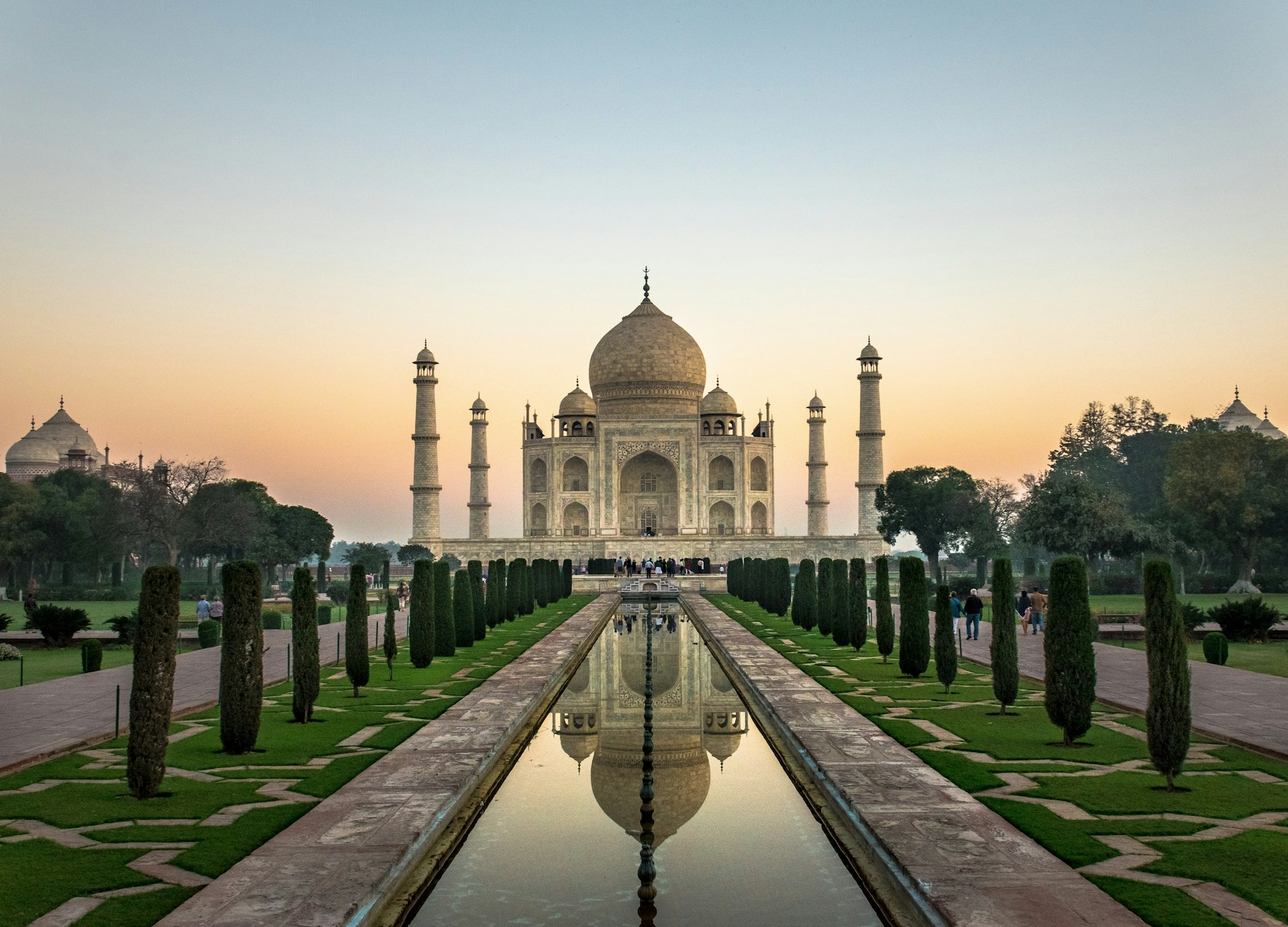
The Taj Mahal is Shah Jahan's marble mausoleum for Mumtaz Mahal on the Yamuna in Agra, Uttar Pradesh. Come for the way tomb, formal garden, monumental gateway and inlay work fit together, not just for the familiar photograph. UNESCO's description helps you read those parts as you walk.
For a first visit, allow 2 to 3 hours on site, plus time for tickets, security, the approach from the parking area and the journey from your station or hotel. Decide whether you want to enter the main mausoleum as well as the grounds, and check that your Agra day is not a Friday.[1]
Day trip, overnight stay or a night-viewing slot?
| Plan | Why choose it | Main constraint |
|---|---|---|
| Daytime garden and mausoleum visit | See the architecture and add the optional main-mausoleum ticket | The right ticket category, security and the closing time |
| Overnight in Agra | An early visit without a pre-dawn intercity journey | Lodging location and the opening day |
| Separate night viewing | A short, scheduled view under the moon | A bookable date and slot, a separate ticket and stricter item rules |
For a first visit, prioritise the daytime complex. A night ticket does not replace wandering through the garden and the mausoleum. An overnight stay simplifies an early start, but nothing guarantees empty paths, clear skies or a particular colour of the marble.
Things to Do
Offers are only loaded from GetYourGuide after you click. GetYourGuide can then process your IP address and set cookies. Privacy Policy
GetYourGuide partner offers. GoAsia may earn a commission if you book through these offers. Check whether tickets or transfers are included, and follow the attraction's official booking and admission rules.
What to notice beyond the central photograph
Construction began in 1632 and the tomb was completed in 1648. The mosque, the guest house, the main gateway on the south and the outer courtyard with its cloisters followed and were finished in 1653. Ustad-Ahmad Lahori was the main architect.[2]
The tomb stands at one end of the four-part garden, not in its centre, which gives the view of it depth and perspective. Walk the gateway, the garden alignment and the exterior first, then the interior where permitted.[2]
Look closely at the marble reliefs, stone inlay and carved lattice around the cenotaphs from the authorised viewing position. The cenotaphs you see in the chamber are symbolic. The real graves lie in the lower chamber, as in other imperial Mughal tombs.[2] A main-mausoleum ticket does not let you touch the decoration, and the monument asks visitors not to touch or scratch the walls and surfaces.[3]
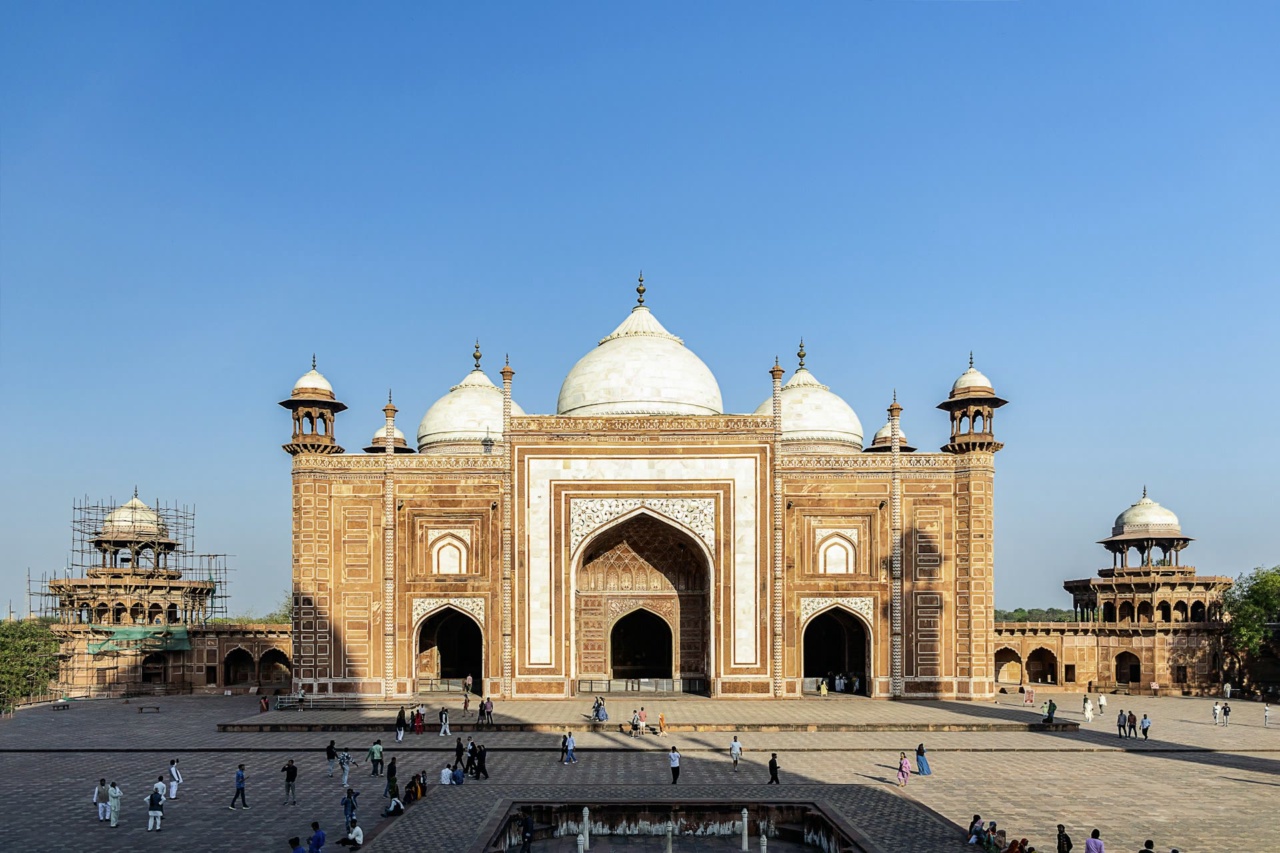
The red-sandstone mosque and guest house contrast with the central marble tomb, and 4 free-standing minarets rise at the corners of the platform.[2] Do not judge your visit by whether you reproduce a photograph. Crowds, light and weather shape the view you get.
Day ticket prices and the mausoleum supplement
| Visitor category | General admission per person | Optional main mausoleum | Total with supplement |
|---|---|---|---|
| Domestic, Indian or OCI cardholder | 50 INR[1] | 200 INR | 250 INR |
| Citizen of a SAARC or BIMSTEC country | 540 INR[1] | 200 INR | 740 INR |
| Foreign tourist | 1,100 INR[1] | 200 INR | 1,300 INR |
These are the tourism department's published amounts, including ASI and Agra Development Authority fees.[1] Tickets bought online are 5 INR cheaper per Indian ticket and 50 INR cheaper per foreign ticket.[1] Children below 15 enter free.[1][4]
Carry government-issued ID.[4] The 200 INR mausoleum supplement is optional, so pick it if the cenotaphs and the interior decoration matter to you. The SAARC, BIMSTEC and foreign entry tickets include shoe covers, a half-litre water bottle, a tourist guide map of Agra and the battery-bus and golf-cart service.[3] Admission does not cover transport, a guide or other Agra monuments, and a day ticket is not a night-viewing ticket.
Taj Mahal tickets are sold online through the ASI Agra Circle, and the ticket windows open one hour before sunrise.[4] Choose the right product, date and visitor details, and read the entry and refund conditions before you pay.
Opening time, Friday closure and the correct entrance
The Taj Mahal opens 30 minutes before sunrise and closes 30 minutes before sunset on normal days, and it is closed on Fridays for general viewing. Ticket counters run from 1 hour before sunrise until 45 minutes before sunset.[1] Check sunrise for your date, because the admission window and the ticket deadline differ.
Use the East or West Gate. The South Gate is currently exit only. Foreign and domestic visitors queue separately, and signs direct you.[1] Choose your gate by your lodging, your permitted drop-off and your return, not by a rumour about which queue is shortest.
No polluting vehicles may enter within 500 metres of the monument. Parking is at Shilpgram for the East Gate and Amrood ka Teela for the West Gate, with battery buses and golf carts from the parking areas to the gates.[3] Agree the exact drop-off with your driver, since a ride from Agra Cantonment does not always end at the security line.
Allow time for security, even with an online ticket. Keep your ticket and matching ID ready, and ask about cloakroom arrangements before you bring luggage.
Night viewing: book the actual programme, not just the moon
Night viewing runs on 5 nights a month: the full-moon night and the 2 nights before and after it, except Fridays and the month of Ramzan. Visitors enter in 8 batches of 50, for 30 minutes each.[5] Book online at the ASI portal up to 7 days before the viewing date.[6] The ASI Agra Circle lists slots from 20:30 to 00:30, and the tourism FAQ gives 20:00 to 23:59. Go by the slot on your ticket.[5][6] Confirm the bookable dates before you plan an overnight stay for the night view alone.
Report at Shilpgram half an hour before your slot. Entry is through the East Gate after a security check, and luggage goes to a free counter.[5] Night viewing costs 510 INR for a domestic adult and 750 INR for a foreign adult.[6] Moonlight, clouds and a short, controlled visit give a different experience from the daytime interior.
Photography and items: day and night are different
Photography is prohibited inside the main mausoleum. Drones are prohibited inside and around the Taj Mahal. The list of prohibited items covers tripods, smoking items, tobacco, liquor, food, headphones, knives, mobile chargers and electrical goods other than a camera.[3] If you plan to carry anything unusual, check the full list before you leave your accommodation.
In the daytime, keep your phone switched off or on silent.[3] At night viewing, phones are banned, together with video cameras and spare batteries. A still camera is allowed after the security check.[3] Check your ticket and the arrival instructions before you rely on your phone for entry.
Water bottles are allowed inside the monument, and free shoe racks stand just below the main mausoleum.[4] A wheelchair and a first-aid box are available at the ASI office at the Taj Mahal, 0562-2330498.[3] Ask about the whole route from parking to the area you want, including steps.
Delhi, Jaipur and other Agra visits
For an intercity train, compare the departure and Agra arrival station, the running date, the arrival time and the return. Delhi terminals differ, and the train time is not the hotel-to-gate time. Check the current timetable and the last-mile transport before you commit to a same-day return.
With a vehicle, agree the total per vehicle, passengers and luggage, the permitted drop-off, waiting time and the return. Choose an overnight stay if it makes your preferred opening-time visit realistic. With a guide, use an approved guide who displays identification, and agree language, duration, route and the full price before you start.
Agra Fort, Mehtab Bagh and other monuments each have their own tickets, and a Taj Mahal ticket does not cover them.[4] Mehtab Bagh gives a riverside view back across the Yamuna.
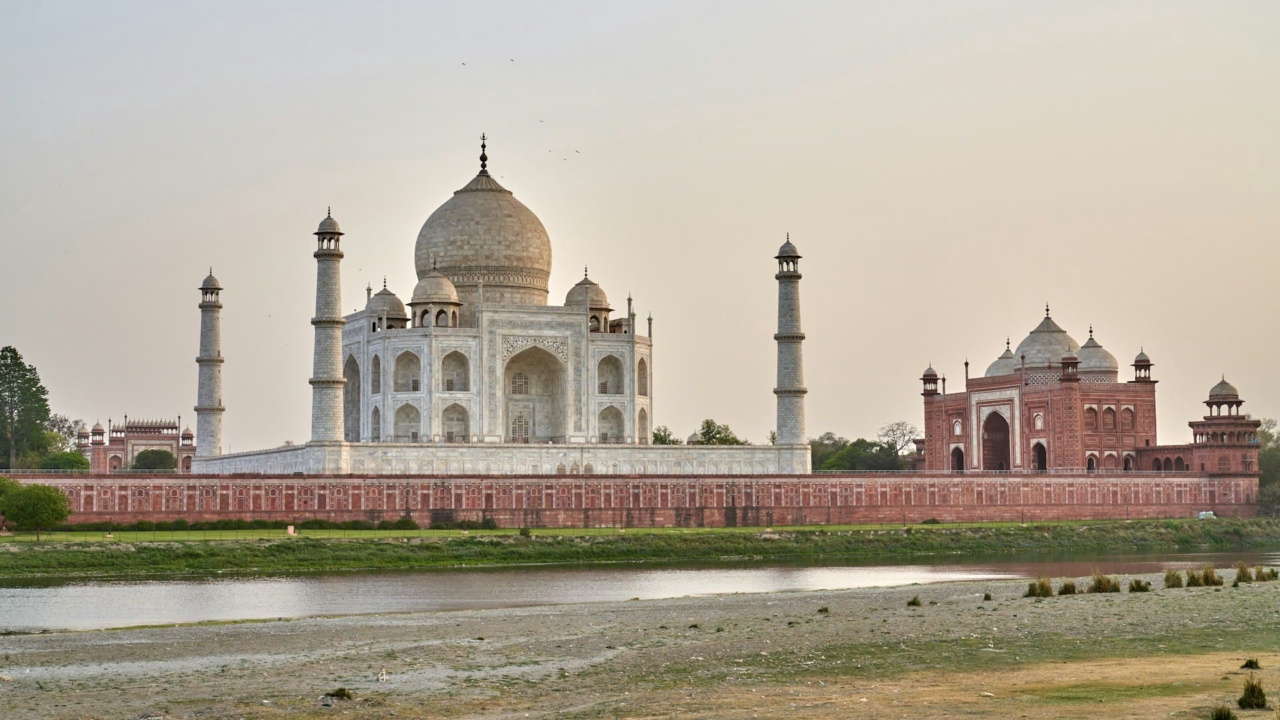
Do not squeeze an Agra monument circuit and an intercity connection into a late arrival. Use the India travel overview for onward planning. A good Taj visit starts with the right date, product and entrance, then leaves time for the architecture and a workable way home.
Sources and background
Numbers in the text such as [1] refer to these sources.
- [1] Department of Tourism, Government of Uttar Pradesh: Taj Mahal visiting hours: entry gates, published day tariffs and ticket-counter deadlines. Retrieved October 21, 2026.
- [2] UNESCO World Heritage Centre: Taj Mahal: architecture, cenotaphs and Outstanding Universal Value. Retrieved October 21, 2026.
- [3] Department of Tourism, Government of Uttar Pradesh: Official visitor rules: photography, prohibited items, night restrictions and assistance. Retrieved October 21, 2026.
- [4] Department of Tourism, Government of Uttar Pradesh: Official Taj Mahal ticketing guide: admission categories, mausoleum supplement and Agra monuments. Retrieved October 21, 2026.
- [5] Archaeological Survey of India, Agra Circle: ASI Agra Circle visitor information: night-viewing programme. Retrieved October 21, 2026.
- [6] Department of Tourism, Government of Uttar Pradesh: Official visitor FAQ: night-viewing booking guidance and prices. Retrieved October 21, 2026.
Frequently Asked Questions
Use the East or West Gate, whichever suits your hotel and your permitted drop-off. The South Gate is currently exit only. Shilpgram parking serves the East Gate and Amrood ka Teela serves the West Gate.
General admission is 50 INR for domestic, Indian and OCI visitors, 540 INR for SAARC and BIMSTEC citizens and 1,100 INR for foreign tourists, plus an optional 200 INR for the main mausoleum. Totals with the supplement are 250, 740 and 1,300 INR. Buying online saves 5 INR on an Indian ticket and 50 INR on a foreign ticket, and children below 15 enter free.
It opens 30 minutes before sunrise and closes 30 minutes before sunset, and it is closed to general viewing on Fridays. Ticket counters are open from 1 hour before sunrise until 45 minutes before sunset. Check sunrise for your date.
An early visit suits the light and your itinerary, but it does not guarantee fewer people or clear skies. An overnight stay in Agra makes the early start easier. Allow 2 to 3 hours on site, plus access and security.
Yes, on the full-moon night and the 2 nights before and after it, except Fridays and the month of Ramzan. Book the separate night-viewing ticket online up to 7 days ahead and follow the slot and the reporting instructions on it.
No. Photography is prohibited inside the main mausoleum. Drones and tripods are also prohibited, so check the full list of prohibited items before you bring equipment.
No. Phones, video cameras and spare batteries are banned for night viewing. A still camera is allowed after the security check. In the daytime, keep your phone off or on silent.
No. Mehtab Bagh is a separate monument with its own ticket. It gives a view across the river but does not admit you to the Taj Mahal complex.