
Contents
- 1. Getting Around Hong Kong by MTR
- 2. Getting Around Hong Kong by Iconic Tram (Ding Ding)
- 3. Getting Around Hong Kong by Star Ferry
- 4. Getting Around Hong Kong by Taxi
- 5. Getting Around Hong Kong by Bus and Minibus
- 5.1 Public Light Buses (Minibuses)
- 6. Comparing Your Options
- 7. Practical Tips for Getting Around Hong Kong
- 8. Popular Routes and Destinations
- 9. Frequently Asked Questions
- 10. Sources and background
Hong Kong is a vertical marvel where transport is not just a utility but the very pulse of the city. Stepping out of your hotel, you are immediately met with double decker buses, red taxis, and a subway network that moves millions of people. The city is dense and leans heavily on its public transport, which makes owning a car a burden rather than a luxury.
While the central districts of Hong Kong Island and Kowloon are walkable via a web of elevated footbridges and the famous outdoor escalator system, the humidity and steep terrain often make wheels or rails the smarter choice. Whether you are crossing Victoria Harbour on a ferry or riding the MTR, the system lets you breakfast in a dim sum parlor in Mong Kok and hike an island trail by midday without a private vehicle.
Getting Around Hong Kong by MTR
The Mass Transit Railway (MTR) is the backbone of the city. It is clean, safe and frequent, and the network covers much of the territory, including the New Territories and Lantau Island. Fares depend on the distance you travel.
Payment is most convenient via an Octopus card, a contactless smart card that you tap at the gates. On the Airport Express, the gates also accept contactless bank cards and e-wallet QR codes, and tickets are sold at customer service centres and ticket machines.[1] During rush hours, stations like Admiralty and Central become very crowded; if you are carrying large luggage, try to avoid those windows. Stations have signage in English and Chinese.
Getting Around Hong Kong by Iconic Tram (Ding Ding)
The double decker trams, affectionately known as 'Ding Dings', run exclusively along the northern shore of Hong Kong Island between Kennedy Town and Shau Kei Wan, plus a short loop around Happy Valley.[2] This is the slowest way to get around, but also the most atmospheric and affordable. It is perfect for sightseeing through the neon heart of Wan Chai and Causeway Bay.
The Transport Department lists an adult fare of HK$3.3, with lower fares for children aged 3 to 11 and for seniors.[2] You enter through the rear door and pay at the front when you exit. For the best experience, head straight to the top deck and grab a front row seat. It provides a view of the city's street life, wet markets and towering skyscrapers at a meditative pace.
Getting Around Hong Kong by Star Ferry
No trip to Hong Kong is complete without crossing Victoria Harbour on the Star Ferry. It connects Tsim Sha Tsui in Kowloon with Central and Wan Chai on the Island, and it offers one of the world's most beautiful commutes.
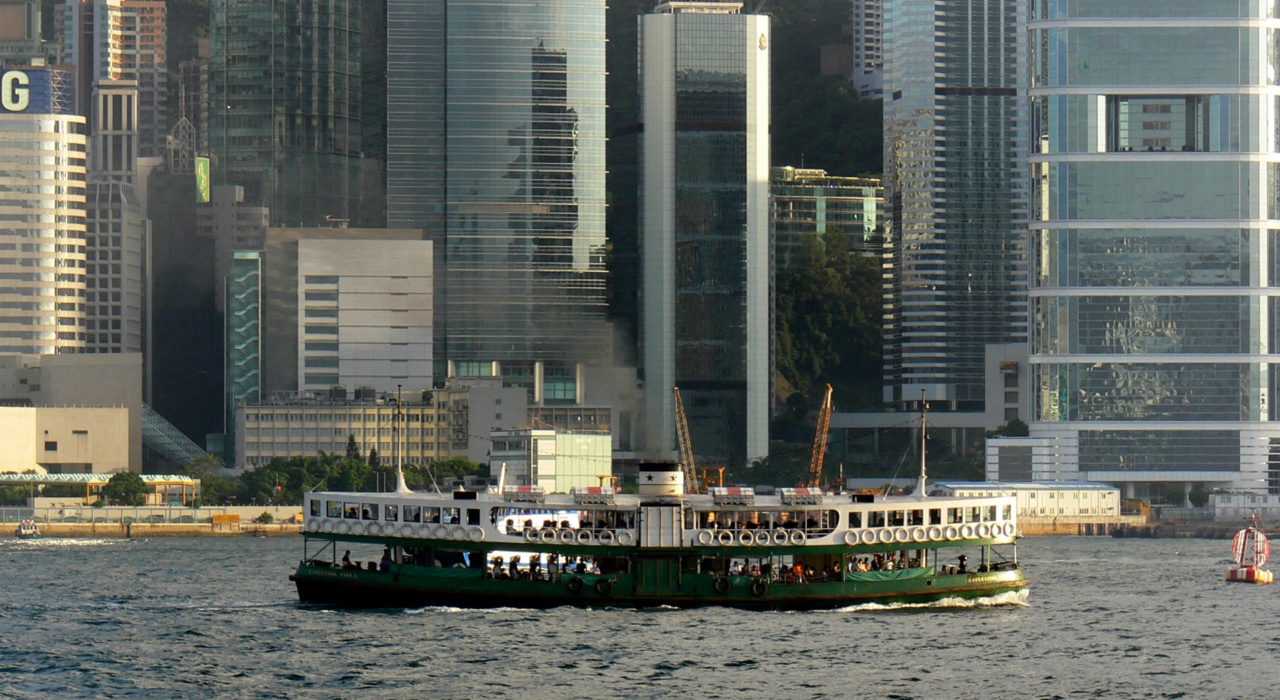
On the Central to Tsim Sha Tsui route, the adult fare is HK$5.0 on the upper deck and HK$4.0 on the lower deck from Monday to Friday, and HK$6.5 and HK$5.6 on weekends and public holidays. Wan Chai to Tsim Sha Tsui costs HK$5.0 on weekdays and HK$6.5 on weekends and public holidays.[3] Boats from Central and from Tsim Sha Tsui run from 06:30 to 23:30, while the Wan Chai route runs on a shorter day, roughly 07:20 to 23:00.[3] You tap your Octopus card at the gates of all Star Ferry terminals.[3] It is the most scenic way to transition between the city's two main hubs.
Getting Around Hong Kong by Taxi
Taxis in Hong Kong are plentiful and colour coded. The Transport Department publishes separate fare tables for urban (red) taxis, New Territories taxis and Lantau taxis.[4] All taxis are metered.
The urban taxi fare starts at HK$29 for the first 2 kilometres, and every further 200 metres adds HK$2.1 until the fare reaches HK$102.5. Baggage in the boot costs HK$6 per piece extra, and the Cross-Harbour Tunnel adds HK$25 for the toll plus a HK$25 return toll unless the trip ends on the same side of the harbour or starts at a cross-harbour taxi stand.[4] New Territories taxis start at HK$25.5 and Lantau taxis at HK$24.[4] While many drivers speak basic English, it is wise to have your destination written in Chinese characters or shown on a map. Taxis are useful late at night when trains have stopped running.
Getting Around Hong Kong by Bus and Minibus
Buses in Hong Kong are predominantly double deckers, offering great views and coverage where the MTR does not reach, such as the beaches of Stanley or the hills of Lantau. Fares depend on the route, so long distance buses cost more.
Public Light Buses (Minibuses)
Minibuses come in two types: green and red. Green minibuses run on set routes and behave like small buses. Red minibuses are more flexible and less predictable. For visitors, green minibuses are much easier to navigate. On many minibuses you must tell the driver when you want to get off, in Cantonese or English. If you are not familiar with the route, stick to the big double deckers.
Comparing Your Options
| Mode | Typical Cost | Best For |
|---|---|---|
| MTR (Train) | Depends on distance | Crossing the city quickly and reliably |
| Star Ferry | HK$4.0 - 6.5 (Central to Tsim Sha Tsui)[3] | Scenic harbour crossings and photography |
| Tram (Ding Ding) | HK$3.3 for adults[2] | Leisurely sightseeing on Hong Kong Island |
| Taxi | From HK$29 in urban areas (first 2 km)[4] | Door-to-door comfort and late night travel |
| Double Decker Bus | Depends on the route | Reaching South Island or the New Territories |
| Airport Express | HK$105 to HK$120 one way for adults (Octopus)[1] | Fastest link from the airport to Kowloon and Central |
Practical Tips for Getting Around Hong Kong
- Get an Octopus Card: It works on almost all public transport. You can buy a Tourist Octopus at the Airport Station Customer Service Centre.[1]
- Download Essential Apps: Use 'Citymapper' or 'Google Maps' for real time transit data. The 'HKeMobility' app by the Transport Department is also useful for comparing routes.
- The Mid-Levels Escalator: If you are in Central, use this escalator system to travel uphill. It runs downhill from 06:00 to 10:00 and uphill from 10:00 until midnight.[5]
- Avoid the Cross-Harbour Struggle: At rush hour a taxi across the harbour can get stuck in traffic. The MTR crosses under the water without the delay.
- Language Barrier: Most public transport has English signage. For taxis, have your hotel's name and address saved as a photo on your phone in Chinese.
Before you commit to a specific mode, you can compare various transport options and prices on GoAsia.cc to find the most efficient route for your itinerary.
Popular Routes and Destinations
The journey from the airport is well organised.
- Hong Kong Airport to Central/Kowloon: The Airport Express train takes about 22 minutes to Kowloon and 24 minutes to Hong Kong Station.[6] The adult single fare is HK$105 to Kowloon and HK$120 to Hong Kong with Octopus, a contactless bank card or a QR code, and HK$115 and HK$130 with a single journey ticket.[1] Trains run from about 05:54 until 00:48 from the airport.[6]
Frequently Asked Questions
Use this guide to compare local transport in Hong Kong. When bookable tickets are available, the booking tool shows current options and prices.
The MTR is the most efficient way to get around thanks to its frequency and coverage. For a more scenic experience, the Star Ferry and the Hong Kong Island trams are good options for short distances.
Fares depend on the mode and distance. The Transport Department lists a tram fare of HK$3.3 for adults, the Star Ferry costs HK$4.0 to HK$6.5 for adults between Central and Tsim Sha Tsui, and urban taxis start at HK$29 for the first 2 kilometres.
Public transport in Hong Kong is widely used by locals and visitors alike and is generally considered very safe. As anywhere, keep an eye on your belongings in crowded stations.
Not strictly, but it is recommended. The Octopus card is accepted at MTR gates and Star Ferry terminals and saves you from carrying exact change.
The fastest way is the Airport Express train, which takes about 24 minutes to Hong Kong Station and costs HK$120 for adults with Octopus (HK$105 to Kowloon).
Sources and background
Numbers in the text such as [1] refer to these sources.
- [1] MTR Corporation: Airport Express tickets and fares. Retrieved October 15, 2026.
- [2] Transport Department, Hong Kong SAR Government: Tram. Retrieved October 15, 2026.
- [3] Star Ferry: Star Ferry: services, timetables and fares. Retrieved October 15, 2026.
- [4] Transport Department, Hong Kong SAR Government: Taxi fare of Hong Kong. Retrieved October 15, 2026.
- [5] Transport Department, Hong Kong SAR Government: Hillside Escalator. Retrieved October 15, 2026.
- [6] MTR Corporation: MTR Airport Express timetable and journey times. Retrieved October 15, 2026.
Guide prices and journey times are indicative, not live quotes. A booked package may include transfers and waiting time as well as the main journey. Check the selected offer, pickup point and current conditions before booking.