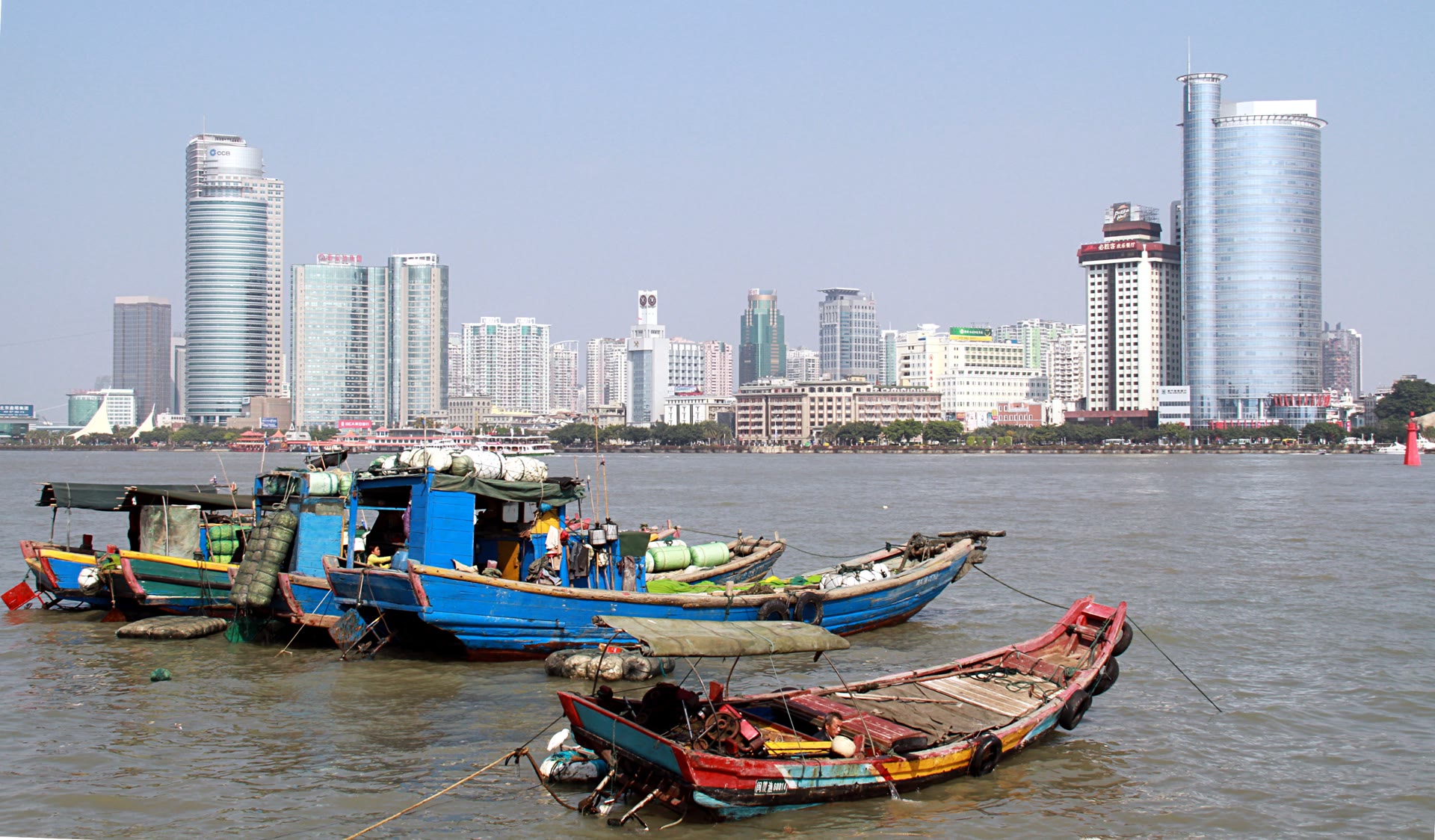
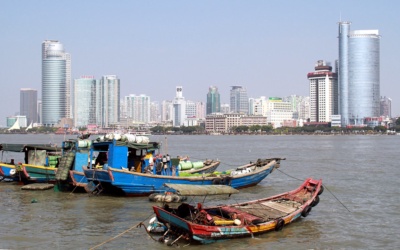
Xiamen is a sophisticated coastal garden city where colonial architecture meets a relaxed Fujianese lifestyle. It is a haven for travelers seeking a slower pace, famous for its pedestrian island, sandy beaches, and thriving coffee culture.
Xiamen serves as a refreshing contrast to the frantic pace of China's inland megacities. Situated on the southeast coast of Fujian province, this island city is defined by its salty sea breeze, subtropical greenery, and a distinct lack of heavy industry. It is a place where the air is clean, the streets are lined with banyan trees, and the local Hokkien culture remains deeply rooted despite the city's modern skyline.
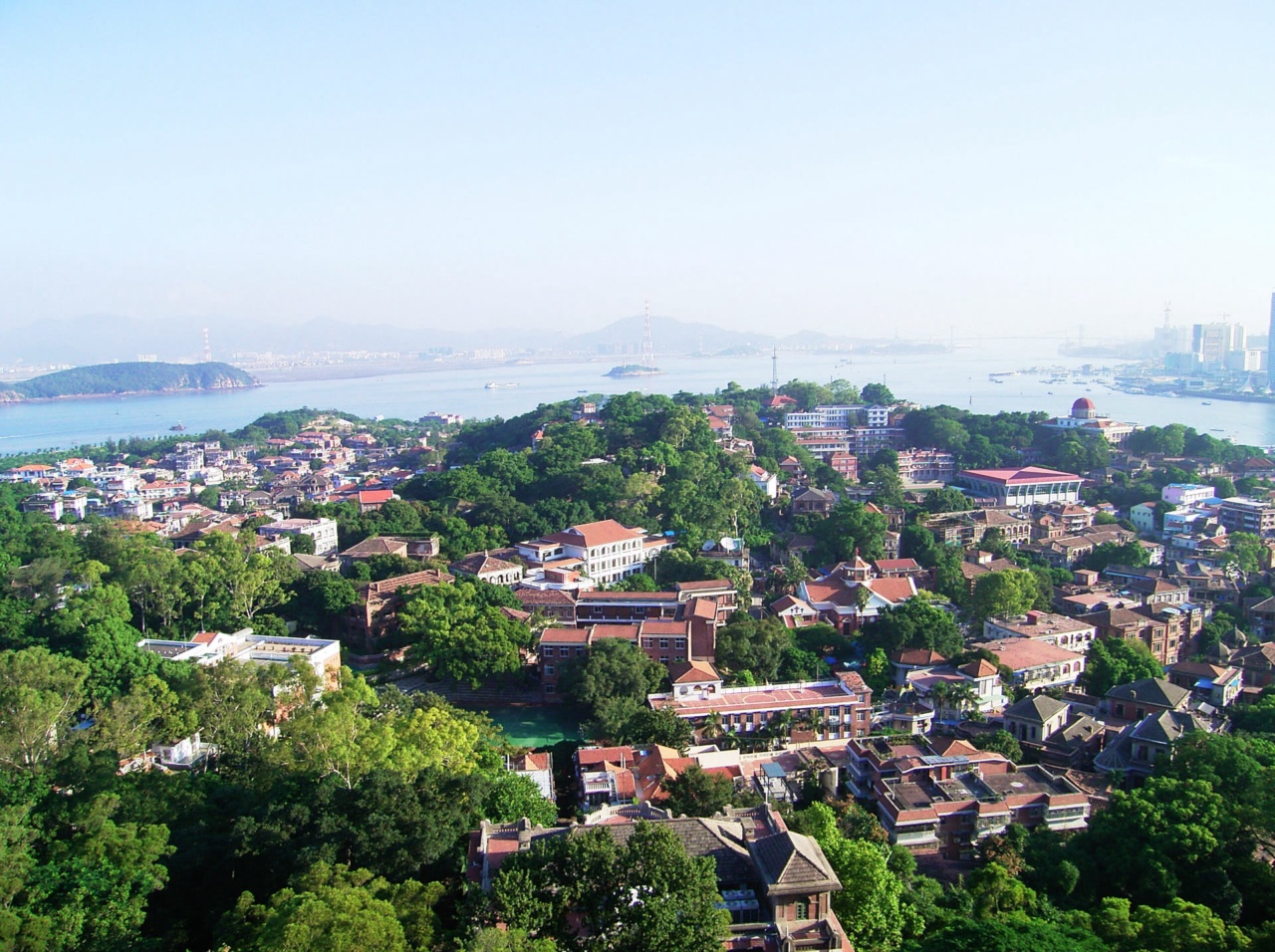
Historically known as Amoy, the city was one of the first Treaty Ports opened to foreign trade, leaving behind a legacy of Victorian and Neoclassical architecture that blends seamlessly with traditional red-brick southern Chinese homes. It is a city designed for walking, from the winding alleys of the old town to the vast, scenic boardwalks that hug the coastline. Travelers often find themselves lingering longer than planned, seduced by the rhythmic clinking of tea sets and the slow-motion pace of life on Gulangyu Island.
The city appeals most to those who appreciate history, photography, and seafood. It is exceptionally popular with domestic tourists, yet it retains a local charm that makes it accessible to international visitors. Whether you are exploring the sprawling grounds of Xiamen University or cycling along the Huandao Road, the city offers a sense of space and tranquility that is rare in urban China.
Orientation and Neighborhoods
Xiamen is primarily centered on Xiamen Island, which is connected to the mainland districts of Jimei, Haicang, and Xiang'an by bridges and tunnels. The heart of the city is the southwestern corner of Xiamen Island, where the old port and commercial centers are located.
Siming District: The cultural and commercial hub. This area contains the famous Zhongshan Road pedestrian street, Xiamen University, and Nanputuo Temple. It is the most convenient place to stay for first-time visitors who want to be close to major sights and dining.
Gulangyu Island: A small, car-free island just off the coast of Siming. Famous for its colonial architecture and piano history, it is a UNESCO World Heritage site (inscribed in 2017).[1] Staying here offers a quiet, nostalgic experience after the day-trip crowds depart, but requires a ferry to reach the main city.
Huandao Road (Ring Road): This eastern coastal stretch is lined with beaches, luxury resorts, and parks. It is ideal for families or those looking for a resort-style stay away from the dense urban center.
Jimei District: Located on the mainland, Jimei is known for its unique 'Jiageng' architecture, which blends Chinese roofs with Western-style bodies. It is quieter and more academic, home to Jimei University and several large cultural parks.
Things to Do
Offers are only loaded from GetYourGuide after you click. GetYourGuide can then process your IP address and set cookies. Privacy Policy
GetYourGuide partner offers. GoAsia may earn a commission if you book through these offers. Check whether tickets or transfers are included, and follow the attraction's official booking and admission rules.
Best Time to Visit
Xiamen enjoys a humid subtropical climate, meaning it is rarely freezing but can become oppressively humid in the summer. The best windows for visiting are spring and autumn when the weather is mild and the flowers are in full bloom.
Month Range
Weather
Crowds
Prices
March to May
Warm and humid
Moderate
Average
June to August
Hot, rainy, typhoon risk
High (School holidays)
High
September to November
Dry, sunny, pleasant
Moderate
Average
December to February
Cool and breezy
Low
Low
Avoid the National Day holiday, which runs from 1 to 7 October in 2026,[2] and the Chinese New Year period (usually January or February), as Gulangyu Island and Zhongshan Road become extremely overcrowded and hotel prices rise sharply.
Getting There and Getting Around
Xiamen Gaoqi International Airport (XMN) is located on the northern end of Xiamen Island, and Metro Line 3 has stations at Gaoqi Airport and the T4 terminal.[3] A new airport, Xiamen Xiang'an International Airport on Dadeng Island, is due to open by the end of 2026, so check which airport your flight uses.[4] The city is also a high-speed rail hub, with Xiamen North Station (mainland) and Xiamen Station (island) both on the metro network.[3]
Public transport is excellent. The operator's route planner lists metro lines 1, 2, 3, 4 and 6 and three BRT (Bus Rapid Transit) lines, Jimei, Tong'an and Qianpu.[3] The BRT runs on elevated tracks and is a good way to cross the island during rush hour. For short distances, the public bus system is extensive, and ride-hailing via Didi is highly practical.
To reach Gulangyu Island, visitors from outside Xiamen can take a ferry from Dongdu Passenger Terminal to Sanqiutian or Neicuo'ao pier (35 yuan standard, 80 yuan premium sailing), or a tourist boat from the First Ferry Terminal to Neicuo'ao (80 yuan). A cheaper route is the 2 yuan boat from the First Ferry Terminal to Haicang Songyu terminal, then a 35 yuan boat to Neicuo'ao. After the day services stop, tourists board at Hall 2 of the Xiamen Ferry Terminal opposite Zhongshan Road (35 yuan). Each ticket includes one free return trip within 20 days, and you need a valid ID or passport to buy and use it.[5] The operator recommends buying tickets in advance through its "Yujian Xiamen" mini-program, especially at weekends and on holidays.[5] The fares were as published by the operator in October 2026 and can change.
Gulangyu Island: This pedestrian-only island is a living museum of 19th-century diplomacy. Spend at least half a day wandering the backstreets to see the old consulates and the Shuzhuang Garden, which houses a world-class piano museum. Climb Sunlight Rock at dawn or dusk for a panoramic view of the red-roofed villas against the Xiamen skyline.
Nanputuo Temple: A significant Buddhist site located at the foot of Wulao Peaks. The temple architecture is stunning, but the real highlight is the hike behind the temple. The trail leads to various viewpoints overlooking Xiamen University and the sea. Entry is free, but visits run on booked time slots, so check the current reservation rules before you go.
Xiamen University (Xiada): Frequently cited as the most beautiful university campus in China, it features traditional architecture, a large central lake, and the Graffiti Tunnel (Yanwu Tunnel). Visitors must reserve in advance through the university's official visitor reservation account on WeChat, at least one day and at most three days ahead, under rules in place since September 2023.[6] If you cannot get a spot, the view from the adjacent white-sand Baicheng Beach is a good alternative.
Lesser-Known Gems
The Railway Culture Park: A stretch of decommissioned railway track converted into a linear park. It cuts through the heart of the old city, offering a quiet walk through tunnels and past local neighborhoods that most tourists miss.
Shapowei Art Zone: Once a sheltered harbor for fishing boats, this area has been transformed into a creative district. It retains its old stone embankments but is now lined with independent galleries, craft breweries, and boutique cafes. It is the best place to experience Xiamen's modern, youthful energy.
What to Skip
Hulishan Cannon Fort: While historically significant, the experience is often underwhelming for the entrance fee. Unless you are a military history enthusiast, you can see similar coastal views for free along the Huandao Road boardwalk. Similarly, avoid the 'underwater world' aquariums on Gulangyu; they are dated and overpriced compared to modern facilities in other Chinese cities.
Food and Drink
Xiamen's cuisine is a subset of Minnan (Southern Fujian) food, characterized by fresh seafood, sweet-and-savory flavor profiles, and a heavy reliance on peanuts and shallots. Street food is a major part of the culture, particularly around the 8th Market (Bashi), the city's largest wet market.
Dish
Description
Where to Try
Satay Noodles (Shacha Mian)
Yellow noodles in a spicy, peanut-based broth with customizable toppings.
Bashi Market stalls
Oyster Omelet (Hezi Jian)
Fresh oysters fried with sweet potato starch, eggs, and garland chrysanthemum.
Zhongshan Road
Peanut Soup (Tangmian)
A sweet, warm soup where peanuts are boiled until they melt in the mouth.
Huang Ze He (Zhongshan Rd)
Ginger Duck (Jiangmu Ya)
Duck slow-cooked in a clay pot with heaps of ginger and black sesame oil.
Lao Ya Fan (Siming)
For a mid-range dining experience, look for 'Pai Dang' (open-air seafood stalls) where you point at live tanks to select your meal. Xiamen also has a sophisticated tea culture; always accept a cup of Tieguanyin oolong if offered by a shopkeeper.
Where to Stay
Budget: Look for youth hostels or 'minshus' (guesthouses) in the alleys around Zeng Cuo An. Originally a fishing village, it is now a dense cluster of street food and affordable lodging, popular with backpackers.
Mid-Range: The area around Lujiang Avenue or the upper end of Zhongshan Road offers modern hotels within walking distance of the ferry terminals and colonial-era streets. These hotels provide easy access to both the old town and transport links.
Upscale: The Huandao Road coastline features international luxury hotels. These offer floor-to-ceiling sea views and a resort atmosphere, though you will need to take a taxi to reach the historical city center.
Practical Tips
Payment: Cash is rarely used. Alipay and WeChat Pay are essential. Link your international Visa or Mastercard to these apps before arriving. While some high-end hotels take cards, most small shops and taxis do not.
Internet: A VPN is required to access Google, Facebook, and Instagram. Alternatively, an international roaming SIM or eSIM routes your traffic outside China.
Language: English is not widely spoken outside of luxury hotels. Download a translation app (like Baidu Translate or Google Translate with offline files). Mandarin is the official language, but you will hear locals speaking the Minnan (Hokkien) dialect.
Safety: Xiamen is incredibly safe, even at night. Standard precautions against pickpockets in crowded markets like Bashi apply, but violent crime is extremely rare.
Tipping: Tipping is not expected and can sometimes be seen as confusing or rude.
Day Trips
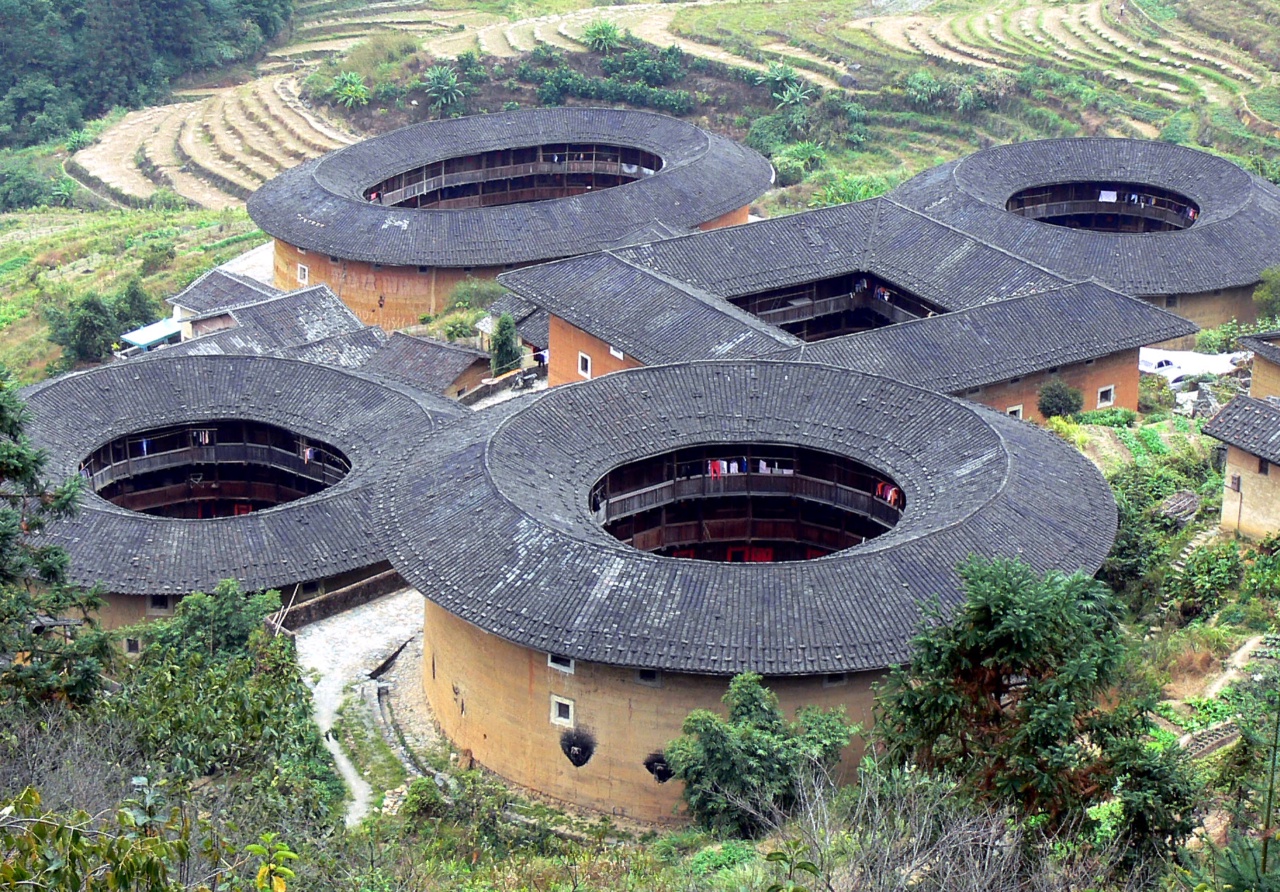
Fujian Tulou (Earth Buildings): These massive, circular fortified dwellings are a long day trip by road from Xiamen and were inscribed as UNESCO World Heritage in 2008.[1] While you can book a bus, hiring a private driver for the day allows you to visit the less-crowded clusters like Tianluokeng or Yunshuiyao. It is a long day but the most essential trip in the region.
Quanzhou: A short high-speed train ride away, Quanzhou is a UNESCO World Heritage city, inscribed as "Quanzhou: Emporium of the World in Song-Yuan China".[7] It is much more traditional and less 'polished' than Xiamen, offering incredible ancient mosques, Hindu carvings, and Buddhist temples. It is highly worth a full day trip for history buffs.
Kinmen Island (Taiwan): Visible from Xiamen's coast, this island is administered by Taiwan. Ferries run from the Wutong Ferry Terminal and take about 30 minutes; ID such as a passport is required before boarding.[8] Check the entry rules for Taiwan and for re-entering mainland China before you go.
Sample 3-Day Itinerary
Day 1: Colonial History and Old Town
Morning: Take the early ferry to Gulangyu Island to beat the heat and crowds. Explore the Piano Museum and hike up Sunlight Rock. Afternoon: Return to the main island and walk through the 8th Market (Bashi) to see the local seafood trade. Evening: Walk the length of Zhongshan Road for street food and shopping, ending at the waterfront to see the skyline lights.
Day 2: Culture and Creativity
Morning: Visit Nanputuo Temple early, then hike the peaks behind it for city views. Afternoon: Head to the Shapowei Art Zone for lunch and coffee. Explore the nearby Railway Culture Park. Evening: Enjoy a seafood dinner at a local 'Pai Dang' near the university area.
Day 3: Coastal Breezes
Morning: Rent a bicycle at Baicheng Beach and ride along the Huandao Road (Ring Road) toward the Exhibition Center. Afternoon: Visit the Jimei School Village on the mainland to see the unique fusion architecture and the Tan Kah Kee Memorial. Evening: Catch a sunset at a beach bar along the eastern coast before heading to the airport or train station.
Frequently Asked Questions
Is Xiamen worth visiting?
Yes, Xiamen is one of China's most livable and scenic cities. It offers a unique blend of European colonial history on Gulangyu Island, traditional Fujianese culture, and beautiful coastal scenery that differs significantly from northern Chinese cities.
How many days do you need in Xiamen?
Three days is sufficient to see the main highlights, including Gulangyu Island, Nanputuo Temple, and the coastal Ring Road. If you plan to visit the Fujian Tulou (Earth Buildings) as a day trip, add a fourth day.
Is Xiamen safe for tourists?
Xiamen is extremely safe for international travelers. Petty crime is rare, and the city is well-lit and easy to navigate at night. Standard travel precautions apply in crowded markets, but generally, it is one of the safest cities in Asia.
Can you drink tap water in Xiamen?
No, tap water in Xiamen is not potable. Most hotels provide bottled water daily, and boiled water is safe for tea. Bottled water is cheap and available at every convenience store.
Is English widely spoken in Xiamen?
English is limited. You will find English speakers in high-end hotels and some trendy cafes in Shapowei, but most taxi drivers and market vendors speak only Mandarin or Hokkien. Using a translation app is highly recommended.
What is the best neighborhood to stay in Xiamen?
Siming District is the best choice for most travelers as it is close to the ferry terminals, Zhongshan Road, and major sights. For a quieter, more upscale experience, the resorts along Huandao Road are excellent.
Do I need a visa to visit Xiamen?
Eligible travellers can use China's 240-hour visa-free transit policy for a stay of up to 10 days within the permitted areas. This requires an ordinary passport from an eligible country, entry through a designated port, and an onward ticket with a confirmed seat and departure date to a third country or region. It is not a general visa exemption for every traveller or itinerary. Check the current nationality list, ports and permitted areas with the National Immigration Administration before booking.
What is Xiamen famous for?
Xiamen is famous for Gulangyu Island (a car-free UNESCO site), its prestigious Xiamen University, fresh seafood, and being the gateway to the Fujian Tulou earth buildings.
Sources and background
Numbers in the text such as [1] refer to these sources.