
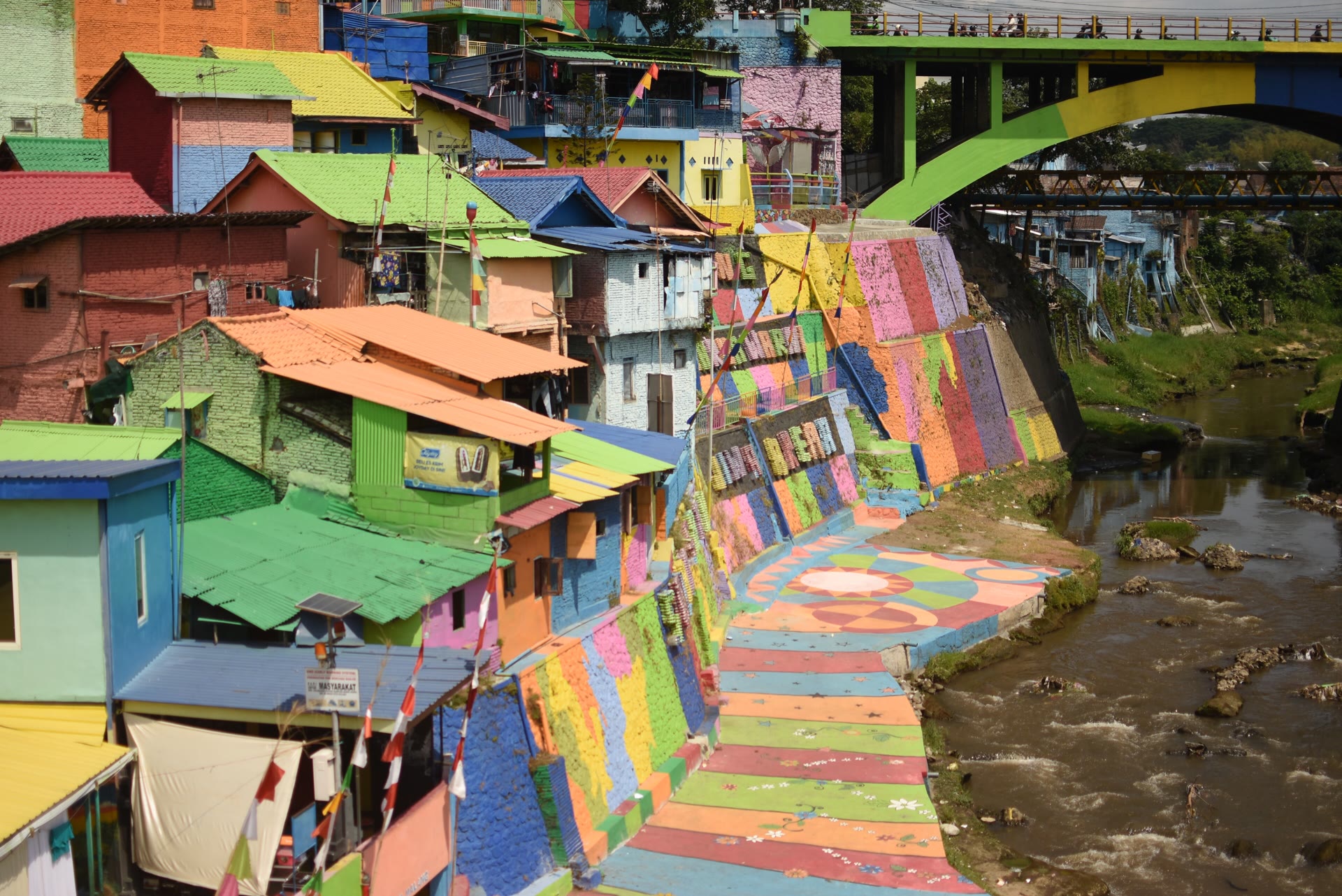
Getting Around Malang - Local Transport Guide for Travelers
Contents
- 1. Getting Around Malang by Angkot
- 1.1 Tips for Riding Angkots
- 2. Getting Around Malang by Ojek (Motorcycle Taxi)
- 3. Getting Around Malang by Grab and Gojek
- 3.1 GrabBike and GoRide (Motorcycle)
- 3.2 GrabCar and GoCar (Car)
- 4. Getting Around Malang by Becak
- 5. Getting Around Malang by Rental Motorbike or Car
- 6. Getting Around Malang on Foot
- 7. Getting Around Malang by Local Bus
- 8. Getting Around Malang by Train
- 9. Comparing Your Options
- 10. Practical Tips for Getting Around Malang
- 11. Popular Routes and Destinations
- 12. Frequently Asked Questions
- 13. Sources and background
Malang moves at a different pace than most Javanese cities. Tucked into the highlands of East Java, the air is cooler, the streets are narrower, and the chaos of Indonesian urban life feels a few notches more manageable. The city center is compact enough that you can walk between the grand Dutch colonial buildings around Alun-Alun Merdeka and the bustling Pasar Besar market, but Malang's greater area sprawls outward into university districts, hillside neighborhoods, and satellite towns like Batu that require motorized transport.
Unlike Surabaya or Jakarta, Malang has no rail-based mass transit. The city runs on a patchwork of aging public minibuses, motorcycle taxis, and ride-hailing apps. For most travelers, Grab becomes the default tool for getting around, but understanding the local angkot routes and knowing when to hop on the back of an ojek will save you money and open up parts of the city that feel genuinely off the tourist track. The street grid can be confusing, with one-way systems threading through the colonial core, so a bit of orientation goes a long way.
Getting Around Malang by Angkot
The angkot (short for angkutan kota, or city transport) is Malang's backbone public transit system. These brightly colored minivans - typically older minivans - run fixed routes across the city, identified by letter-number codes like AG, AL, or GM painted on the side. Many routes crisscross Malang, connecting terminals like Arjosari (north), Landungsari (west), Gadang (south), and Hamid Rusdi (east) through the city center.
Riding an angkot costs a low fare of a few thousand rupiah per trip regardless of distance, making it the cheapest way to travel. You simply flag one down on the road, hop in through the sliding side door, and tell the driver or shout "kiri" (left) when you want to stop. Payment is in cash, handed to the driver as you exit. There is no fixed schedule; angkots circulate from early morning until the early evening, with frequency dropping sharply after dark.
The experience is distinctly local. Seats are narrow wooden benches facing each other, ventilation comes from open windows, and the driver's music selection is non-negotiable. Angkots are slow because they stop constantly to pick up and drop off passengers, and routes can be circuitous. For travelers, the main challenge is figuring out which route goes where - there are no official maps posted at stops, and stops themselves are unmarked. Ask your hotel or a local to help identify the right code for your destination. The route from Terminal Arjosari through the city center to Terminal Gadang (AG line) is one of the most useful for visitors, passing near Alun-Alun and Pasar Besar.
Tips for Riding Angkots
- Carry small bills. Drivers rarely have change for large notes.
- Sit near the door so you can exit quickly at your stop.
- If you are unsure of the route, tell the driver your destination when boarding. They will usually wave you off if their route does not go there.
- Angkots do not run reliably after sunset, so plan evening transport differently.
Getting Around Malang by Ojek (Motorcycle Taxi)
Before ride-hailing apps arrived, the ojek was the go-to solution for quick, affordable point-to-point travel in Malang. Traditional ojek drivers cluster at intersections, near markets, and outside terminals. You negotiate the fare before hopping on the back of the motorbike. Short rides are cheap, though as a foreigner you may be quoted higher and should negotiate politely.
Ojek are unbeatable for navigating Malang's narrow gang (alleyways) and one-way streets. They weave through traffic that would stall a car and can reach hillside neighborhoods or university areas quickly. The downside is obvious: there is no seatbelt, helmets provided to passengers vary in quality, and the ride can feel hair-raising if you are not used to Indonesian traffic. Rain also makes ojek uncomfortable and more dangerous.
Traditional ojek have largely been displaced by app-based motorcycle taxis (GrabBike and GoRide), but you will still find them at markets, bus terminals, and in neighborhoods where app drivers are scarce. They remain useful when your phone battery is dead or you are in a spot with poor signal.
Getting Around Malang by Grab and Gojek
Ride-hailing apps have transformed urban transport across Indonesia, and Malang is no exception. Both Grab and Gojek operate here with strong coverage. For travelers, these apps eliminate the two biggest headaches of getting around: the language barrier and fare negotiation. You input your destination, the app calculates the fare, and a driver comes to you.
GrabBike and GoRide (Motorcycle)
App-based motorcycle taxis are the fastest and cheapest way to move around Malang. The app shows the fare before you book, and a ride across the city center is quick. Drivers provide a helmet, and the GPS-tracked route gives you an added layer of security. This is the mode most budget travelers and locals use daily.
GrabCar and GoCar (Car)
If you prefer four wheels, GrabCar and GoCar provide air-conditioned sedan rides at metered app prices. The app shows the fare before you book, including for longer trips such as from the city center to Batu. Cars are particularly useful when traveling with luggage, in the rain, or with companions.
Both apps accept cash payment, which is convenient if you have not set up an Indonesian e-wallet. However, loading credit into GoPay or OVO (linked to Grab) unlocks discounts and promotional pricing that can cut fares significantly. You can top up e-wallets at Indomaret and Alfamart convenience stores found on virtually every block.
One quirk in Malang: during the morning and evening rush hours, finding a driver can take a few extra minutes, and surge pricing may apply. Around universities like Universitas Brawijaya and Universitas Negeri Malang, demand for rides spikes when classes let out.
Getting Around Malang by Becak
Malang is one of the Javanese cities where becak (cycle rickshaws) still operate, though their numbers have dwindled over the years. These three-wheeled pedal-powered vehicles are most common around Pasar Besar, Alun-Alun Merdeka, and older residential neighborhoods. A becak ride is slow, charming, and best suited for short distances of a kilometer or two.
Always negotiate the fare in advance. Becak drivers tend to quote high prices to tourists, so start by offering about half and settle somewhere in the middle. The ride gives you a leisurely, open-air view of the city and is a pleasant way to explore the heritage district around Kayutangan (Jalan Basuki Rahmat) without the noise and speed of motorized traffic.
Becak are not practical for longer distances or hilly routes - Malang's terrain rises toward the north and west, and pedaling uphill is tough for the drivers. Use them for atmosphere and short errands, not as a primary transport mode.
Getting Around Malang by Rental Motorbike or Car
Renting your own vehicle gives you maximum flexibility, especially if you plan to explore beyond the city into the surrounding highlands, coffee plantations, or toward Mount Bromo. Motorbike rentals are widely available through guesthouses, rental shops, and online platforms. Rates are usually quoted per day, so compare a few shops and agree the price before you take the bike.
Check the licence requirements for riding a motorbike in Indonesia before you rent one. More importantly, Malang's traffic requires confidence: roads are busy, lane discipline is loose, and potholes appear without warning. If you have ridden motorbikes elsewhere in Southeast Asia, you will adapt quickly. If Malang is your first rodeo, consider sticking to ride-hailing apps.
Car rental with a driver is a popular option for day trips to Batu, Coban Rondo waterfall, or the Bromo area. Rates are usually quoted per day including the driver and fuel for local trips, so agree the price in advance. This is often the most comfortable and stress-free way to see the wider Malang region, and you can arrange it through your hotel or a local travel agent.
Getting Around Malang on Foot
Malang's colonial core is genuinely pleasant to walk. The highland altitude keeps temperatures cooler than in the sweltering lowland cities of Java. The stretch along Jalan Ijen, a boulevard lined with towering colonial-era mansions and shady trees, is one of the most beautiful urban walks in East Java. From there, it is a manageable stroll south to Alun-Alun Merdeka and the surrounding shopping streets.
That said, walking in Malang comes with the usual Indonesian caveats. Sidewalks exist in the center but are frequently occupied by motorbikes, food carts, and merchandise displays. You will often find yourself walking on the road edge, sharing space with traffic. Crosswalks are decorative rather than functional - vehicles will not stop for you, so cross assertively but carefully.
Walking is ideal for exploring the Kayutangan heritage corridor, browsing the shops around Pasar Besar, and wandering the quieter residential streets in the Klojen district. Beyond the center, distances grow and the terrain gets hilly, making other transport modes more practical.
Getting Around Malang by Local Bus
Malang's inter-city bus terminals - primarily Arjosari in the north and Gadang in the south - serve regional routes connecting to Surabaya, Batu, Blitar, and other East Java destinations. Within the city itself, there is no formal city bus network separate from the angkot system. However, larger buses and minibuses do run between terminals, and travelers heading to regional destinations will pass through these hubs.
For intercity travel, bus fares vary widely depending on the class of service and destination. Connections to Surabaya, for example, range from basic economy buses to more comfortable options. If you are heading further afield, you can compare transport options on GoAsia.cc to find the right balance of price and comfort for your route.
Getting Around Malang by Train
Malang Station (Stasiun Malang) sits right in the city center, making the train a convenient option for arriving or departing rather than for intra-city travel. A commuter-style train service also links Malang with nearby Kepanjen (Stasiun Kepanjen) to the south.
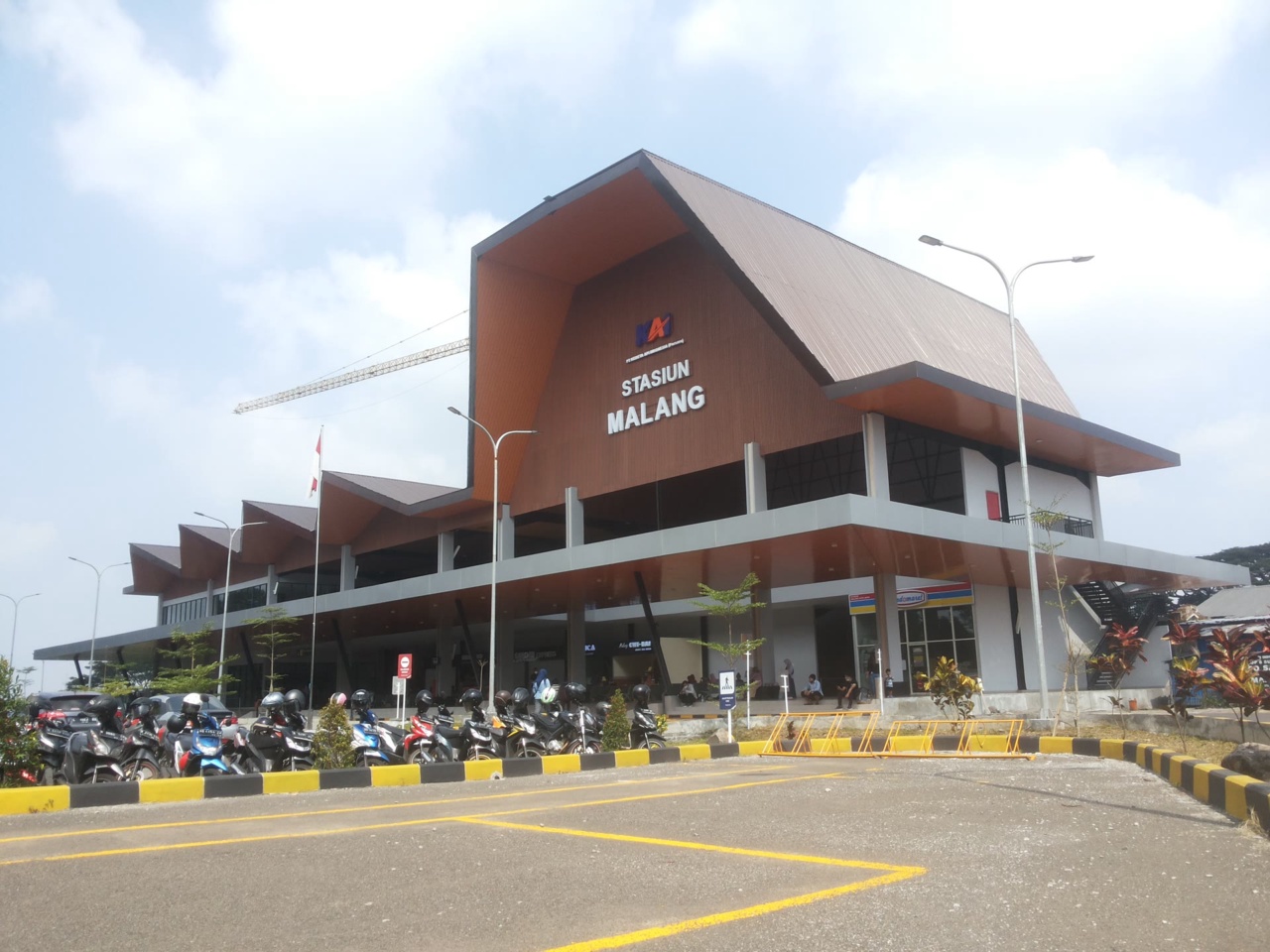
The station itself is well-connected to the rest of the city. From Stasiun Malang, you can walk to Alun-Alun Merdeka, or grab a GrabBike to reach most central hotels.
Comparing Your Options
| Mode | Typical Cost | Duration | Best For |
|---|---|---|---|
| Angkot | Low flat fare per ride | Varies by route | Budget travel on main corridors between terminals |
| GrabBike / GoRide | Fare shown in the app | Short trips across the center | Quick, cheap point-to-point trips anywhere in the city |
| GrabCar / GoCar | Fare shown in the app | Varies with traffic and distance | Comfort, rain, luggage, or traveling with companions |
| Traditional Ojek | Negotiated in advance | Short trips | Areas with poor app coverage or when your phone is dead |
| Becak | Negotiated in advance | Short hops | Leisurely sightseeing in the old city center |
| Rental Motorbike | Priced per day | Self-paced | Day trips and exploring beyond the city at your own pace |
| Rental Car with Driver | Priced per day, including driver | Self-paced | Comfortable day trips to Batu, Bromo, or waterfalls |
| Walking | Free | Varies | Exploring the colonial core, Kayutangan, and Jalan Ijen |
Practical Tips for Getting Around Malang
Apps to download before you arrive:
- Grab and Gojek - Essential for ride-hailing. Download both, as driver availability varies between apps at different times.
- Google Maps - Works well for navigation in Malang and can show angkot routes (though not always accurately). Offline maps are useful for areas with spotty data.
- Maps.me - A good offline alternative that shows smaller streets and alleys.
Money and payment:
- Carry plenty of small bills. Angkot drivers, becak riders, and small vendors rarely have change for large notes.
- Set up GoPay or OVO through your ride-hailing app. Top up at any Indomaret or Alfamart. This unlocks cheaper fares and lets you pay for food delivery and convenience store purchases too.
- Credit cards are not accepted on any public transport. Even taxis and rental shops typically want cash or e-wallet.
Timing your travel:
- Traffic congestion is worst around Jalan Kawi, the university areas, and the approaches to Alun-Alun. GrabBike cuts through traffic easily; GrabCar does not.
- Angkot service thins dramatically after dark. Plan evening transport via ride-hailing apps.
- Malang's highland weather means afternoon rain showers are common. Carry a light rain jacket, and expect GrabBike wait times to spike during downpours as drivers take shelter.
Common mistakes to avoid:
- Do not assume metered taxis are common in Malang. Unlike Surabaya or Jakarta, conventional metered taxis are rare here. Ride-hailing apps fill that gap entirely.
- Avoid renting a motorbike if you have no prior experience riding in Asian traffic. Malang's roads are forgiving compared to bigger cities, but the learning curve is still steep and hospital visits are no fun.
- Do not rely on street addresses alone. Many locals navigate by landmarks - "near the big mosque," "opposite Matos mall," "behind Brawijaya University." When giving directions to a driver, a dropped pin on Google Maps is far more effective than a street address.
Language tips:
- "Kiri" (literally "left") means "I want to get off" on an angkot. Shout it clearly and the driver will pull over.
- "Berapa?" means "How much?" - useful for negotiating becak and ojek fares.
- Save your hotel's name and address in Indonesian on your phone's notes app. Showing it to a driver is faster than trying to pronounce unfamiliar street names.
- Most Grab and Gojek drivers communicate through the app's chat, where Google Translate can help bridge any gaps.
Popular Routes and Destinations
Getting to and from Malang by train: Malang Station connects to Surabaya, Yogyakarta, and other Javanese cities. Book through the official KAI app or at the station.[1]
Intercity bus connections: Buses from Arjosari and Gadang terminals connect Malang to destinations across East Java and beyond, from short regional hops to long overnight routes. Fares and journey times depend on the destination and service class.
Private transfers: For airport connections or direct intercity travel, private transfer services run between Malang and nearby cities. This is particularly useful for reaching Abdul Rachman Saleh Airport (MLG), where a private transfer avoids the hassle of finding public transport with luggage.
Day trips to Batu: The highland town of Batu, home to Jatim Park, Coban Rondo waterfall, and apple orchards, is Malang's most popular day trip. GrabCar is the simplest option, or you can take an angkot from Terminal Landungsari for a fraction of the price if you have time and patience.
Frequently Asked Questions
Use this guide to compare local transport in Malang. When bookable tickets are available, the booking tool shows current options and prices.
For most travelers, ride-hailing apps like Grab and Gojek offer the best combination of convenience, affordability, and ease of use. You can order a car (GrabCar) or motorcycle taxi (GrabBike) directly from your phone without worrying about language barriers or price negotiation. For short distances in the city center, walking is pleasant thanks to the cooler highland climate.
Local transport in Malang is generally cheap. Angkot rides cost a low flat fare of a few thousand rupiah per trip. Grab and Gojek show the fare in the app before you book, while ojek and becak fares are negotiated in advance, so agree the price before you get on.
Public transport in Malang is generally safe, though angkot minibuses can feel cramped and are not always well-maintained. Ride-hailing apps are considered very safe as trips are tracked by GPS and driver details are recorded. As with any Indonesian city, keep valuables close on crowded public transport and avoid flashing expensive phones in open angkot windows.
Yes, both Grab and Gojek operate in Malang and are the most popular way for locals and travelers alike to get around. Coverage is good within the city and extends to surrounding areas like Batu. You can pay with cash or load credit into the app's e-wallet (GrabPay or GoPay).
The city center around Alun-Alun Merdeka, Jalan Ijen, and the Kayutangan heritage area is quite walkable, especially since the highland elevation keeps temperatures pleasant. However, sidewalks are inconsistent and sometimes blocked by parked motorbikes or street vendors. Beyond the core, distances grow quickly and you will want motorized transport.
Malang Station (Stasiun Malang) is centrally located, so many hotels are within a short ride. The easiest option is to order a GrabBike or GrabCar from just outside the station. Ojek drivers also wait outside the station if you prefer to negotiate a fare directly.
Batu lies northwest of Malang and is a popular day trip destination. The most comfortable option is a GrabCar, which takes less than an hour depending on traffic, with the fare shown in the app before you book. You can also take an angkot from Terminal Landungsari, which is cheaper but slower and requires some patience with the route.
Sources and background
Numbers in the text such as [1] refer to these sources.
- [1] PT Kereta Api Indonesia (KAI): PT KAI: Home (Access by KAI app, passenger services). Retrieved October 15, 2026.
Guide prices and journey times are indicative, not live quotes. A booked package may include transfers and waiting time as well as the main journey. Check the selected offer, pickup point and current conditions before booking.