
Surabaya
Indonesia's gritty, generous second city rewards travelers who look beyond the surface with some of Java's best street food, a complex colonial and revolutionary history, and a genuine urban energy untouched by mass tourism.
Last updated: March 12, 2026
Contents
- 1. Orientation and Neighborhoods
- 1.1 Kota Tua (Old Town) and the Arab Quarter
- 1.2 Chinatown (Kya Kya)
- 1.3 Tunjungan and City Center
- 1.4 South Surabaya
- 1.5 West Surabaya and Pakuwon Area
- 2. Best Time to Visit
- 3. Getting There and Getting Around
- 3.1 Arriving
- 3.2 Getting Around
- 4. Top Sights and Experiences
- 4.1 Must-See Attractions
- 4.2 Hidden Gems
- 4.3 Overrated Attractions
- 5. Food and Drink
- 5.1 Signature Dishes
- 5.2 Where to Eat
- 6. Where to Stay
- 6.1 Budget (Under $20 per night)
- 6.2 Mid-Range ($20 - $60 per night)
- 6.3 Upscale ($60 - $150 per night)
- 7. Practical Tips
- 8. Day Trips
- 8.1 Mount Bromo
- 8.2 Ijen Crater
- 8.3 Madura Island
- 8.4 Trowulan
- 8.5 Tretes and Batu
- 9. Sample 3-Day Itinerary
- 9.1 Day 1: Old Town, Arab Quarter, and Chinatown
- 9.2 Day 2: Heroes History, City Core, and South Surabaya
- 9.3 Day 3: Madura Day Trip or Market Immersion
- 10. Budget Overview
- 11. Frequently Asked Questions
The smell hits you first. Not unpleasant, but unmistakable: clove cigarettes, charcoal-grilled satay, and the warm, humid air rolling off the Madura Strait. Surabaya is not a city that performs for visitors. Indonesia's second-largest metropolis, home to roughly three million people, moves at its own pace, fueled by fierce local pride and a culinary tradition that rivals anything Jakarta can offer. The city earned its name from a legendary battle between a shark (sura) and a crocodile (baya), and that fighting spirit has defined its character ever since, most famously during the brutal Battle of Surabaya in 1945 that galvanized Indonesian independence.
Most international travelers pass through Surabaya on their way to Mount Bromo or the Ijen Crater, barely spending a night. That is a mistake. Give this city two or three days and you will discover Arab Quarter alleyways fragrant with cardamom, a Chinatown older than many Southeast Asian capitals, colonial architecture slowly being reclaimed by tropical vegetation, and a street food scene so deep that locals argue about the best rawon stall the way Parisians argue about bistros.
Surabaya is not conventionally beautiful. Traffic is relentless, sidewalks are inconsistent, and the tropical heat can be punishing. But if you travel to experience how people actually live rather than to tick off Instagram spots, this city delivers something rare: authenticity without pretension.
Orientation and Neighborhoods
Surabaya sprawls along the northeastern coast of Java, split by the Kalimas River that once served as the city's commercial lifeline. The city does not have a single obvious center, but understanding a few key zones will help you navigate.
Kota Tua (Old Town) and the Arab Quarter
The historical heart sits in the north, near the old port of Tanjung Perak. The Arab Quarter (Kampung Arab) around Jalan Ampel is anchored by the Ampel Mosque, one of Java's oldest. Narrow lanes here are packed with shops selling dates, perfume, kopiah hats, and Middle Eastern textiles. This is where Surabaya's multicultural identity is most vivid. Nearby, you will find crumbling Dutch colonial warehouses and the remnants of the old European commercial district.
Chinatown (Kya Kya)
Just south of the Arab Quarter, the Chinatown district along Jalan Kembang Jepun has been a trading hub for centuries. Temples, traditional medicine shops, and some of Surabaya's best food stalls cluster here. The area has been partly pedestrianized and revitalized, making it pleasant for evening strolls.
Tunjungan and City Center
Jalan Tunjungan is Surabaya's most famous street, a colonial-era boulevard now lined with malls, hotels, and the grand Majapahit Hotel. The area around Tunjungan Plaza is the commercial core, with the highest concentration of mid-range and upscale hotels. Stay here if you want walkable access to malls, restaurants, and easy ride-hailing connections.
South Surabaya
The southern districts around Jalan Raya Darmo and Jalan Diponegoro are leafier and more residential, with upscale restaurants, boutique cafes, and colonial-era mansions converted into offices. This area feels calmer and is a good base if you prefer a quieter stay.
West Surabaya and Pakuwon Area
The western suburbs are newer and more suburban, dominated by malls like Pakuwon Mall and Ciputra World. Unless you have specific business here, there is little reason for tourists to venture this far out.
Where to stay: Tunjungan for convenience and walkability, the Old Town area for atmosphere and history (though hotel options are more limited), or South Surabaya for a calmer, more upscale vibe.
Things to Do
Offers are only loaded from GetYourGuide after you click. GetYourGuide can then process your IP address and set cookies. Privacy Policy
GetYourGuide partner offers. GoAsia may earn a commission if you book through these offers. Check whether tickets or transfers are included, and follow the attraction's official booking and admission rules.
Best Time to Visit
Surabaya sits just south of the equator and is hot year-round, with temperatures rarely dropping below 25 degrees Celsius at night or exceeding 35 during the day. Humidity is consistently high.
| Season | Months | Weather | Crowds | Prices |
|---|---|---|---|---|
| Dry Season | May - October | Hot, less rain, lower humidity | Moderate (peak around Eid) | Standard to slightly higher |
| Wet Season | November - April | Hot, heavy afternoon rain, very humid | Low | Lower |
The dry season is the most comfortable time to visit, especially if you plan to combine Surabaya with a Bromo or Ijen trip, as clear skies make a huge difference for volcanic sunrise views. However, Surabaya itself is a year-round destination since the rain typically falls in intense afternoon bursts rather than all-day drizzle.
Eid al-Fitr (dates shift annually based on the Islamic calendar) transforms the city. Many locals leave for their hometowns, some businesses close, but the festive atmosphere is wonderful if you are around. The Surabaya anniversary on May 31 brings cultural performances and city-wide celebrations. The annual jazz festival and various cultural events add flavor throughout the year.
Getting There and Getting Around
Arriving
Juanda International Airport (SUB) handles domestic flights from across Indonesia and a handful of international routes, mainly from Kuala Lumpur, Singapore, and Hong Kong. It sits about 20 kilometers south of the city center. An airport bus runs to Purabaya Bus Terminal and some central stops for around $1. Grab (Southeast Asia's dominant ride-hailing app) is the easiest option, costing roughly $5 to $10 to central Surabaya depending on traffic. Metered taxis from the official airport taxi counter cost slightly more. For more details on transport connections across the region, GoAsia.cc has comprehensive route information.
Surabaya is also reachable by train from Jakarta (around 9 to 12 hours), Yogyakarta (around 5 hours), and other Javanese cities. Pasar Turi and Gubeng stations are the main rail hubs, both centrally located.
Getting Around
Surabaya's public transport is improving but still limited compared to Jakarta. The Suroboyo Bus system covers major routes and is notable for accepting payment via plastic bottle recycling, though conventional payment also works. Routes are limited and schedules can be inconsistent.
In practice, Grab (both GrabCar and GrabBike) is how most visitors get around. GrabBike (motorcycle taxi) is the fastest way to cut through traffic and costs as little as $0.50 to $1 for short trips. GrabCar rides across the city rarely exceed $3 to $5.
Walking is feasible within specific neighborhoods like the Arab Quarter, Chinatown, or along Jalan Tunjungan, but connecting between areas on foot is unpleasant due to heat, inconsistent sidewalks, and heavy traffic. Do not plan to walk between major districts.
Top Sights and Experiences
Must-See Attractions
Ampel Mosque and Arab Quarter: The spiritual anchor of Surabaya's Arab community, this mosque dates to the 15th century and is one of the most important Islamic sites in Java. The surrounding lanes are the real attraction: a dense, aromatic market selling everything from oud perfume to Yemeni honey. Visit in the morning when the market is busiest. Free entry; dress modestly and remove shoes.
House of Sampoerna: Housed in a stunning Dutch colonial building, this museum tells the story of Indonesia's famous clove cigarette (kretek) industry. The ground floor still operates as a hand-rolling factory where hundreds of workers roll cigarettes with astonishing speed. Free admission, and free heritage walking tours of the surrounding Old Town depart from here daily. Allow 1 to 2 hours.
Tugu Pahlawan (Heroes Monument): This 41-meter obelisk commemorates the Battle of Surabaya, the bloodiest single battle of the Indonesian independence struggle. The underground museum beneath it is well-designed, with dioramas and archival footage that bring the events of November 1945 to life. Entry is roughly $0.50. Allow an hour.
Submarine Monument (Monkasel): A decommissioned Soviet-era KRI Pasopati submarine sits in a park near the Kalimas River. You can walk through the cramped interior and get a visceral sense of Cold War-era submarine life. Entry is around $1. It is genuinely interesting and takes about 30 to 45 minutes.
Chinatown and Hok An Kiong Temple: The oldest Chinese temple in Surabaya, dating to the 18th century, sits at the heart of the Kembang Jepun Chinatown district. The temple is small but beautifully maintained. Combine a visit with an evening walk along the pedestrianized section of Kya Kya street, where food stalls set up after dark.
Hidden Gems
Kampung Lawas Maspati: A community-run heritage kampung (village) tucked behind the old city. Residents have preserved traditional Javanese houses and offer informal walking tours. It is a rare chance to see how urban Javanese communities organize themselves. Donations appreciated.
Kenjeran Beach and the Sanggar Agung Temple: While the beach itself is not swimmable, the massive Chinese-Javanese temple complex perched on the waterfront is visually striking, with towering statues of Guan Yin and traditional Balinese-style gates. Best visited late afternoon for the light. Entry around $0.50.
Bungkul Park: Surabaya's best public park, located in the south of the city, comes alive in the evenings and weekends with food vendors, families, and street performers. It won a UN award for best city park in Asia. A pleasant place to sit with a coffee and observe daily life.
Overrated Attractions
Surabaya Zoo (Kebun Binatang Surabaya): Once one of Southeast Asia's largest zoos, it has long suffered from underfunding and animal welfare concerns. Conditions have improved somewhat, but it remains a depressing experience for most visitors accustomed to modern zoo standards. Skip it.
Tunjungan Plaza: It is just a mall. A large, air-conditioned mall useful for escaping the heat or buying a SIM card, but not a destination in itself despite being listed in many guides.
Jembatan Merah (Red Bridge): Historically significant as a flashpoint in the 1945 battle, but the bridge itself is a small, unremarkable structure over a canal. Worth a quick look if you are in the Old Town, but do not make a special trip.
Food and Drink
Surabaya's food scene is the single best reason to spend time here. East Javanese cuisine is bolder, sweeter, and more aromatic than Central or West Javanese cooking, with liberal use of petis (fermented shrimp paste), palm sugar, and keluak nut.
Signature Dishes
| Dish | Description | Where to Try | Typical Price |
|---|---|---|---|
| Rawon | Jet-black beef soup colored by keluak nut, intensely savory with bean sprouts and sambal | Warung stalls near Pasar Genteng or along Jalan Embong Malang | $1 - $2 |
| Rujak Cingur | Fruit, vegetables, and sliced cow snout in a thick petis-based sauce - an acquired taste and a must-try | Street vendors throughout the city, especially near traditional markets | $0.75 - $1.50 |
| Lontong Balap | Rice cakes with bean sprouts, fried tofu, and lentho (mung bean fritters) in a light broth | Stalls near Pasar Atum or the Old Town area | $0.50 - $1 |
| Sate Klopo | Beef or chicken satay coated in grated coconut, grilled over charcoal | Night stalls along Jalan Bongkaran and various warungs | $1 - $2 |
| Tahu Campur | Mixed tofu dish with noodles, vegetables, and a rich broth | Widely available at street stalls and small warungs | $0.50 - $1 |
| Nasi Goreng Jancuk | Surabaya's famously spicy fried rice, named after a local expletive | Night food stalls, especially around Jalan Karah | $1 - $2 |
| Sego Sambel | Rice with a variety of sides and a heavy dose of raw chili sambal | Late-night stalls across the city | $1 - $1.50 |
Where to Eat
Street food is king in Surabaya. The best eating happens at humble warung stalls and pushcarts, not restaurants. Pasar Genteng is a great daytime food market. The Chinatown area (Kya Kya) lights up at night with stalls selling Chinese-Indonesian specialties. Jalan Bongkaran near the Arab Quarter has excellent satay and Middle Eastern-influenced dishes.
For mid-range dining, the area around Jalan Raya Darmo and Jalan Diponegoro in South Surabaya has a growing cafe and restaurant scene with Indonesian, Japanese, and Western options. Expect to pay $5 to $15 per person for a full meal with drinks.
Upscale dining exists primarily in hotel restaurants and a handful of standalone establishments in the south of the city. A fine meal will rarely exceed $20 to $30 per person, making Surabaya incredibly good value even at the top end.
Coffee culture is booming. Surabaya has excellent local roasters and third-wave coffee shops, with East Java producing some of Indonesia's best beans. A specialty coffee runs $1.50 to $3.
Where to Stay
Budget (Under $20 per night)
Budget hotels and guesthouses cluster around Jalan Genteng and the streets near Gubeng train station. Rooms are basic but typically clean, with air conditioning and private bathrooms at the higher end of this range. True backpacker hostels are rare in Surabaya, but budget hotels offer single rooms for as little as $8 to $12. Check online reviews carefully, as quality varies.
Mid-Range ($20 - $60 per night)
The best value tier in Surabaya. Modern chain hotels (Ibis, Luminor, Citihub) and local boutique options around Tunjungan and Jalan Basuki Rahmat offer clean, well-equipped rooms with pools and breakfast included. The Majapahit Hotel, a colonial-era landmark, sometimes falls into the upper end of this range during promotions and is worth checking for its historical significance alone.
Upscale ($60 - $150 per night)
International brands like JW Marriott, Shangri-La, and Bumi Surabaya occupy the top tier. For $80 to $120, you get genuinely luxurious rooms, excellent service, and facilities that would cost three times as much in Singapore or Tokyo. South Surabaya and the Tunjungan area have the highest concentration of upscale options.
Practical Tips
Safety: Surabaya is generally safe for tourists. Violent crime targeting visitors is very uncommon. The main risks are petty theft (watch your phone on busy streets, as bag-snatching from passing motorbikes occurs) and traffic. Always look both ways multiple times before crossing any road.
- Payment: Cash is still king at street stalls, warungs, and smaller shops. ATMs are everywhere and accept international cards. Mid-range restaurants and malls accept credit cards. QRIS (Indonesia's QR payment system) is increasingly universal, but you need an Indonesian bank account or e-wallet to use it. Carry small bills (Rp 10,000 and Rp 20,000 notes) for street food.
- Tipping: Not expected at warungs or street stalls. In restaurants, a 5 to 10 percent tip is appreciated but not required. Hotel porters appreciate Rp 10,000 to 20,000 (roughly $0.60 to $1.25).
- SIM cards: Buy a local SIM at the airport or any phone shop. Telkomsel has the best coverage. A tourist SIM with ample data costs around $3 to $5. You will need to register with your passport.
- Language: English proficiency is low outside of hotels and tourist-facing businesses. Download Google Translate with the Indonesian language pack for offline use. Learning basic Indonesian phrases (terima kasih for thank you, berapa for how much, permisi for excuse me) goes a long way and locals genuinely appreciate the effort.
- Dress: Surabaya is a predominantly Muslim city but relatively relaxed. Modest clothing (covering shoulders and knees) is respectful and practical for sun protection. Cover up fully when visiting mosques. Beachwear is only appropriate at the beach.
- Heat management: The heat is relentless. Carry water, use sunscreen, and plan indoor or shaded activities for the midday hours between noon and 3 PM. Malls and cafes are your air-conditioned refuges.
Day Trips
Mount Bromo
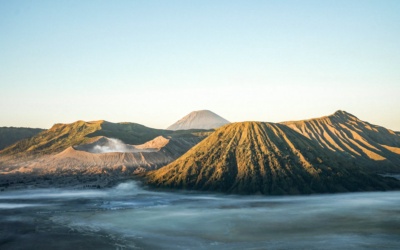
The most popular reason people come to East Java. Bromo is roughly 3 to 4 hours by car from Surabaya, typically via Probolinggo. Most visitors depart Surabaya around midnight to arrive for the famous sunrise at the Penanjakan viewpoint. You can book a tour from Surabaya (around $30 to $60 per person for a group tour) or arrange private transport. The experience is genuinely spectacular, but be prepared for extreme cold at the summit before dawn (bring layers) and large crowds at the main viewpoint. Absolutely worth it.
Ijen Crater
Further east, about 5 to 6 hours from Surabaya, the Ijen Crater is famous for its turquoise acid lake and the ethereal blue flames visible in the predawn darkness. This is a more strenuous trip than Bromo, involving a steep 3-kilometer hike in the dark. Often combined with Bromo in a two-day, one-night tour starting from $80 to $120 per person. The blue flames are genuinely otherworldly and worth the effort.
Madura Island
Connected to Surabaya by the Suramadu Bridge (Indonesia's longest), Madura is reachable in under an hour. The island is famous for bull racing (karapan sapi), which takes place seasonally, and for its distinct Madurese cuisine, particularly sate with peanut sauce. Sumenep, at the eastern tip, has a charming royal palace and quieter beaches, but requires a longer commitment (3 to 4 hours each way). A half-day trip to the western part of Madura for food and the bridge experience is easy and worthwhile.
Trowulan
About 60 kilometers southwest of Surabaya, Trowulan is the site of the former Majapahit Empire capital, one of Southeast Asia's greatest pre-colonial kingdoms. The open-air archaeological site includes temple ruins, ancient gates, and an excellent museum. It is not dramatic like Angkor Wat, but history enthusiasts will find it fascinating. Reachable by car in about 90 minutes. Entry is minimal.
Tretes and Batu
The hill towns south and southwest of Surabaya offer cooler temperatures and mountain scenery. Tretes (about 1.5 hours south) is a quiet highland retreat. Batu (about 2.5 hours west) has theme parks, apple orchards, and a more developed tourist infrastructure aimed at domestic visitors. Batu is pleasant but can feel overly commercialized. Tretes is better for a quiet escape.
Sample 3-Day Itinerary
Day 1: Old Town, Arab Quarter, and Chinatown
Morning: Start at the House of Sampoerna for the free museum and heritage tour. Explore the surrounding Old Town streets, noting the Dutch colonial warehouses and the Jembatan Merah area.
Afternoon: Walk south into the Arab Quarter. Visit Ampel Mosque, then lose yourself in the market lanes. Sample dates, pick up some oud perfume, and have a late lunch of nasi kebuli (spiced rice) at one of the Arab Quarter warungs.
Evening: Head to Chinatown for dinner along the Kya Kya pedestrian street. Try lontong balap and sate klopo from different stalls. Visit Hok An Kiong Temple if it is still open, or simply soak in the evening atmosphere.
Day 2: Heroes History, City Core, and South Surabaya
Morning: Visit Tugu Pahlawan and the underground museum. Continue to the Submarine Monument nearby. Both are close together and can be covered in a couple of hours.
Afternoon: Walk or ride to Jalan Tunjungan. Peek into the Majapahit Hotel lobby for a taste of colonial grandeur. If you need to cool down, duck into Tunjungan Plaza for air conditioning and a coffee. Then head south to Bungkul Park.
Evening: Explore the restaurant and cafe scene along Jalan Raya Darmo. Have a proper dinner of rawon at a well-regarded warung, followed by dessert at one of the area's trendy coffee shops.
Day 3: Madura Day Trip or Market Immersion
Option A - Madura: Cross the Suramadu Bridge early morning. Explore the western Madura towns, eat Madurese sate for lunch, visit a local batik workshop, and return to Surabaya by late afternoon.
Option B - Markets and Neighborhoods: Spend the morning at Pasar Genteng, Surabaya's vibrant central market. Eat your way through the food stalls. In the afternoon, visit Kenjeran Beach and the Sanggar Agung Temple complex. End with a sunset dinner at a seafood warung near the coast.
Evening (both options): Hunt down nasi goreng jancuk at one of the late-night stalls for a fiery farewell meal.
Budget Overview
| Category | Budget | Mid-Range | Comfort |
|---|---|---|---|
| Accommodation | $8 - $15 | $25 - $50 | $60 - $120 |
| Food | $5 - $8 | $10 - $20 | $20 - $40 |
| Transport | $2 - $4 | $5 - $10 | $10 - $20 |
| Activities | $1 - $3 | $5 - $10 | $10 - $25 |
| Daily Total | $16 - $30 | $45 - $90 | $100 - $205 |
Surabaya is one of the most affordable major cities in Southeast Asia. Even on a tight budget, you will eat extraordinarily well. The biggest expenses are typically day trips (Bromo and Ijen tours) and international-standard hotels. The city rewards travelers who spend on food rather than accommodation, as the gap between a $1 street meal and a $15 restaurant dish is often more about ambiance than flavor.
Frequently Asked Questions
Is Surabaya worth visiting?
Yes, especially if you enjoy food-driven travel, colonial history, and authentic urban experiences. Surabaya lacks the polished tourist infrastructure of Bali or Yogyakarta, but that is part of its appeal. It is also the natural staging point for Mount Bromo, Ijen Crater, and Madura Island.
How many days do you need in Surabaya?
Two to three days is ideal for the city itself. One day covers the historical core and Arab Quarter, another handles Chinatown, museums, and food exploration, and a third allows for a Madura day trip or deeper neighborhood wandering. If using Surabaya as a base for Bromo or Ijen, add two more days.
Is Surabaya safe for tourists?
Surabaya is generally safe for tourists, with violent crime against visitors being rare. Petty theft and bag-snatching from motorbikes can happen in crowded areas, so keep valuables close. Traffic is the biggest genuine danger, so cross roads carefully and use ride-hailing apps rather than walking along busy highways.
What food is Surabaya famous for?
Surabaya is legendary for rawon (black beef soup with keluak nut), rujak cingur (a pungent fruit and vegetable salad with cow snout), lontong balap (rice cake with bean sprouts and tofu), and sate klopo (coconut-coated satay). The city's street food culture is one of the richest in Java.
Is Surabaya expensive?
Surabaya is very affordable by international standards. Budget travelers can manage on around $25 to $35 per day including accommodation, food, and transport. Mid-range travelers will find comfortable hotels and excellent restaurant meals without spending more than $60 to $80 daily.
How do I get from Juanda Airport to the city center?
Juanda International Airport is about 20 kilometers south of central Surabaya. The cheapest option is the airport bus (around $1), while Grab or taxi rides cost roughly $5 to $10 depending on traffic and your destination. The journey takes 30 minutes to over an hour depending on congestion.
Can you drink tap water in Surabaya?
No, do not drink tap water in Surabaya. Stick to bottled or filtered water, which is cheap and available everywhere. Most restaurants use filtered water for cooking and ice, but street stalls may vary, so use your judgment.
Is English widely spoken in Surabaya?
English is not widely spoken outside of hotels, upscale restaurants, and travel agencies. Learning a few basic Indonesian phrases will make a significant difference. Younger Indonesians in malls and cafes often speak some English, and Google Translate works well for more complex interactions.
What is the best time to visit Surabaya?
The dry season from May through October offers the most comfortable weather and is ideal if you plan to visit Mount Bromo or Ijen. The wet season brings heavy afternoon downpours but also lower prices and fewer crowds. Temperatures stay hot year-round, typically between 27 and 34 degrees Celsius.
Is Surabaya good for solo travelers?
Surabaya is excellent for solo travelers who enjoy independent exploration. The city is safe, affordable, and navigable with ride-hailing apps. The lack of a big tourist scene means you will interact more with locals, which is rewarding if you are open to it. Hostels are limited, but budget hotels are plentiful.
Guides & Tips
1/1
Routes
🗺️ Getting Around Surabaya - Local Transport Guide for Travelers
→ Routes from Surabaya (14)