Plan your flights across Indonesia with this guide to airlines, baggage rules, booking tips and what to expect flying between the archipelago's 17,000 islands.
Indonesia is an archipelago of more than 17,000 islands,[1] making it a country where flying isn't just convenient - it's often the only practical way to get around. From the volcanic peaks of Sumatra to the remote tribal highlands of Papua, domestic aviation stitches together a nation so geographically fragmented that ferries and overland travel can consume days for journeys a plane covers in hours. For travelers, understanding how it works unlocks access to an extraordinary range of destinations.
The Flight Network in Indonesia
Many domestic routes run through Jakarta's Soekarno-Hatta International Airport (CGK), which has nonstop flights to Bali, Makassar, Medan, Yogyakarta and many other cities.[2][3][4] Bali's Ngurah Rai International Airport (DPS) is a second major hub, with direct flights to Surabaya, Lombok, Labuan Bajo and other cities.[5][6][7] Makassar links Sulawesi with Manado, Surabaya and Jakarta.[8]
The carriers on these routes include Garuda Indonesia, Lion Air, Batik Air, Citilink, Super Air Jet, Indonesia AirAsia, TransNusa and Wings Air.[4][7] Wings Air flies smaller ATR 72 turboprops on thinner routes such as Lombok to Labuan Bajo.[9]
Java and Bali are exceptionally well connected. Remote destinations such as Labuan Bajo in Flores also have regular scheduled service: flights from Bali take about 1 hour 5 minutes and are operated by several airlines.[7]
Domestic flights in Indonesia generally fall into two categories: full-service carriers such as Garuda Indonesia and Batik Air, and low-cost carriers such as Lion Air, Citilink, Super Air Jet and Indonesia AirAsia. The experience can differ significantly, and so can the baggage that is included in the fare.
Baggage rules are set by each airline and change over time. Lion Air includes 10 kg of checked baggage and 7 kg of cabin baggage on tickets bought or rescheduled on or after 17 July 2025.[10] Citilink's domestic Airbus A320 tickets bought from 5 March 2026 include 15 kg of checked baggage (20 kg when booked as a LinkMiles member on Citilink's website or app) and 7 kg of cabin baggage.[11] Garuda Indonesia changes to a piece-based allowance for tickets bought on or after 1 September 2026, so your ticket shows how many bags are included.[12]
Booking and Tickets
Booking domestic flights in Indonesia is straightforward, with multiple options available. Each airline has its own website and mobile app, and third-party platforms are widely used by both locals and visitors. Travelers looking to compare fares and schedules across carriers can check options on GoAsia.cc to find the best connections for their itinerary.
Advance booking is strongly recommended for popular routes, especially Jakarta to Bali, Jakarta to Yogyakarta, and any flights around major holidays. For Lebaran 2026, the Transport Minister forecast about 143,910,000 people traveling, with Soekarno-Hatta Airport among the busiest points.[13] For less popular routes, booking a few days ahead is usually sufficient.
E-tickets are standard across Indonesian carriers. You will receive a booking code via email, and most airlines allow online check-in. Indonesian airlines occasionally change flight times or cancel routes, particularly on lower-demand sectors, so reconfirm your flight a day or two before departure and provide a working phone number when booking so you receive notifications of any changes.
What to Expect on Board
Most domestic flights in Indonesia are relatively short. Jakarta to Bali takes about 1 hour 45 minutes,[2] Jakarta to Yogyakarta (YIA) about 1 hour 10 minutes[14] and Jakarta to Makassar about 2 hours 25 minutes.[3] The brevity of most routes means the experience is functional rather than luxurious, even on full-service carriers.
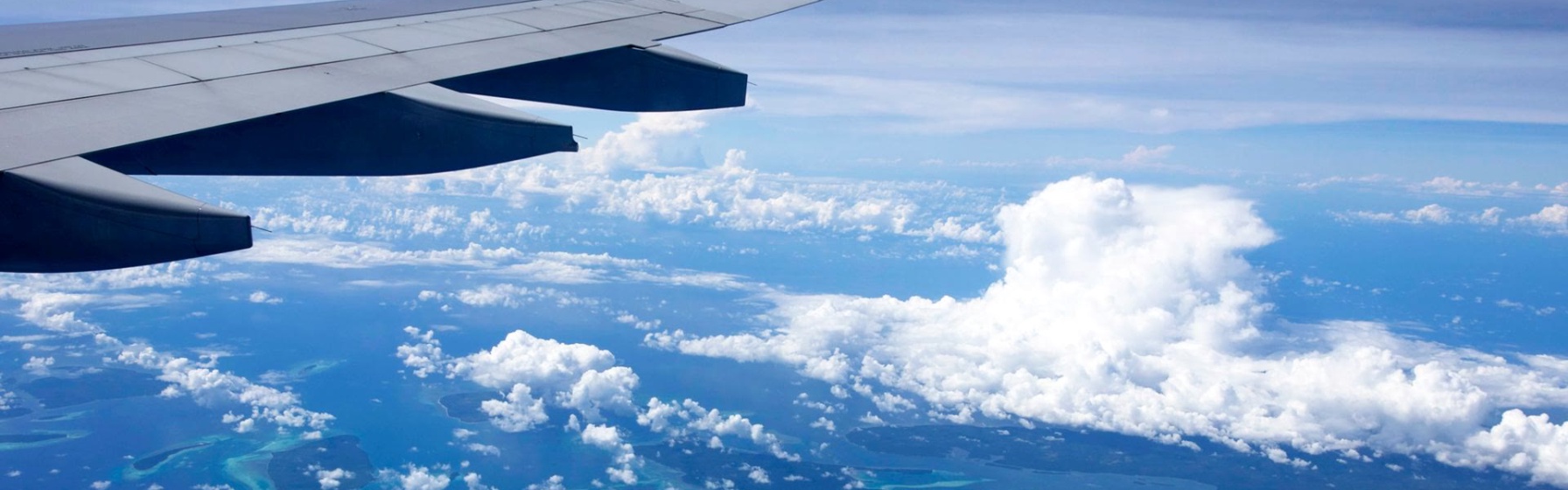
Window seats frequently reward passengers with spectacular views. Volcanic cones rising through cloud layers, the turquoise shallows of coral reefs, and the dense jungle canopy of Borneo all pass beneath you depending on the route. Flights into destinations like Labuan Bajo or Wamena offer particularly dramatic approaches.
Tips for Flight Travel in Indonesia
Build in buffer time. Delays are a fact of life in Indonesian aviation, particularly when thunderstorms hit the archipelago in the rainy season. Avoid tight connections, and never schedule a domestic flight and an international departure on the same day without a generous gap.
Watch your baggage allowance. Cabin baggage is limited to 7 kg at Lion Air and Citilink, and on AirAsia hand luggage above 7 kg means buying checked baggage.[10][11][15] Lion Air sells prepaid baggage online before departure at lower rates than at the airport.[10] Weigh your bags before heading to the airport.
Arrive early at busy airports. AirAsia advises arriving 2 to 3 hours before departure, which is wise at busy airports like Soekarno-Hatta, especially during holidays.[15]
Holiday travel requires planning. During Lebaran, millions of Indonesians travel at the same time. If your travel dates overlap with major Indonesian holidays, book as far ahead as possible or consider adjusting your itinerary.
Sources and background
Numbers in the text such as [1] refer to these sources.