Plan your Indonesia train journey across Java and Sumatra. Discover routes, ticket booking tips, onboard comfort classes, and scenic highlights by rail.
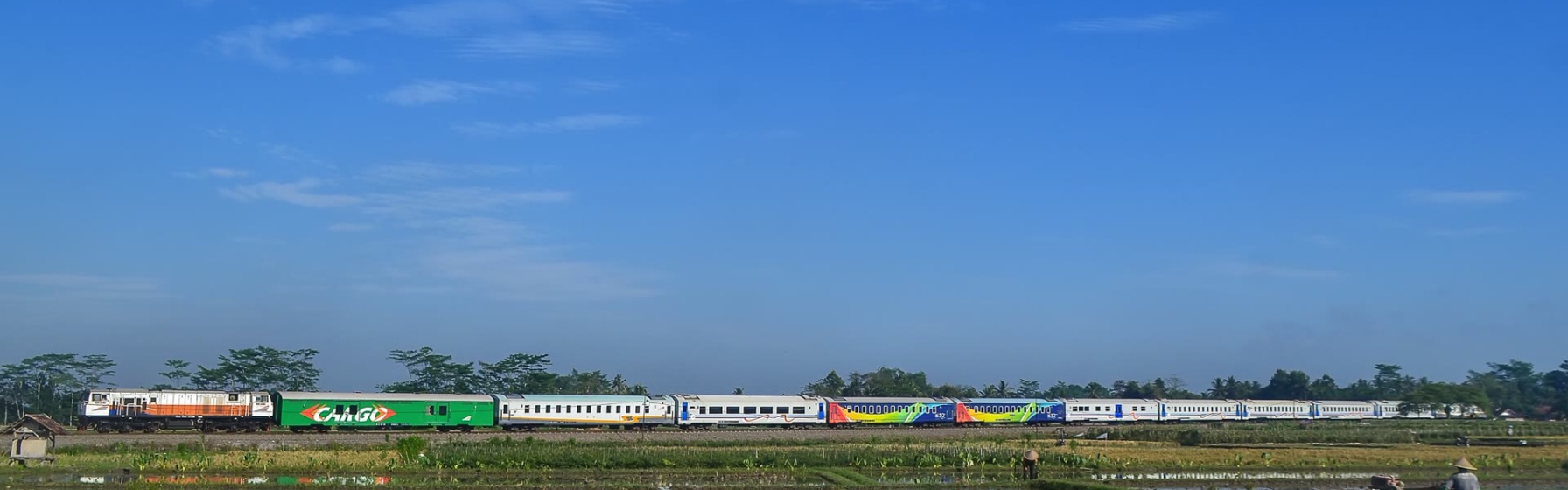
A locomotive horn echoes across the rice paddies of Central Java as a long train snakes between volcanic peaks, carrying passengers from one city to the next. Indonesia's passenger railways are concentrated on Java and Sumatra, and riding the rails there is a front-row seat to some of the archipelago's landscapes, shared with locals who treat the train as a social occasion as much as a way of getting from A to B.
The Train Network in Indonesia
Indonesia's state railway operator, PT Kereta Api Indonesia (KAI), sells tickets for all passenger trains on Java and Sumatra in its Access by KAI app.[1] The network is densest on Java: KAI's flagship Argo trains link Jakarta's Gambir Station with Solo Balapan, Semarang Tawang Bank Jateng and Surabaya Gubeng, and the Argo Wilis links Bandung with Surabaya Gubeng.[2] The Gajayana runs between Gambir and Malang via Cirebon, Purwokerto, Yogyakarta, Solo, Madiun, Kediri, Tulungagung and Blitar.[3]
On Sumatra, the network is smaller. Around Medan, Railink runs an airport train between the city and Kualanamu airport.[4] South Sulawesi also has passenger trains on the Makassar-Parepare railway, which is not connected to the networks on Java or Sumatra: in February 2024 the Ministry of Transportation reported four trips a day with a journey time of up to two hours.[5] Check the current timetable before you plan around it; buses, ferries and flights remain important for journeys between islands.
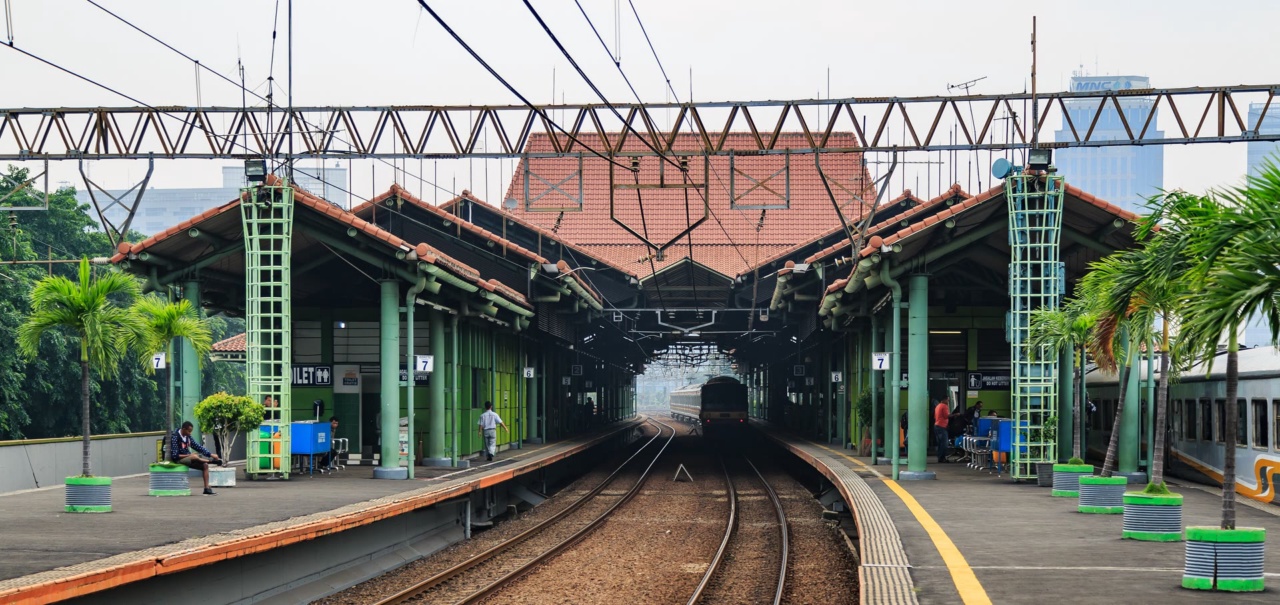
On Java, the key hubs are Gambir and Pasar Senen stations in Jakarta, Tugu in Yogyakarta, Semarang Tawang in Semarang, and Gubeng in Surabaya.[2][6]
KAI offers several classes of service. Check the class of the specific train when you book, because the cars differ from train to train.
Class
What to know
Eksekutif (Executive)
All Argo services offer executive class, with operating speeds of up to 120 km/h[2]
Ekonomi (Economy)
KAI runs new-generation economy cars on its services[2]
Luxury, Panoramic and Suite Class
Luxury cars, Panoramic cars and the private Suite Class Compartment are offered on selected services; Suite Class Compartment is available, for example, on the Bima and Argo Semeru between Gambir and Surabaya Gubeng[7]
Booking and Tickets
The official Access by KAI app is the main way to buy tickets. Intercity tickets can be booked from 45 days before departure until 30 minutes before the train leaves, local and airport train tickets from 7 days before until 10 minutes before departure, and Commuter Line tickets only on the day of travel.[1] Foreign travelers enter their passport number when booking, and one booking code covers up to four tickets, excluding infants.[1] On intercity trains you can choose your seat while seats are available.[1] Third-party platforms, including GoAsia.cc, let you compare routes and classes side by side.
Tickets for popular routes, especially Jakarta to Yogyakarta, Jakarta to Surabaya and Jakarta to Bandung, can sell out during Lebaran (the Eid al-Fitr holiday period), school holidays and long weekends. For these periods, book as soon as sales open for your date.
What to Expect on Board
Java's train journeys pass through rice paddies and volcanic scenery, and the stretch between Surabaya and Malang climbs into the highlands. Most long-distance trains offer food and drinks on board, but bringing your own water and snacks is a good idea.
KAI allows each passenger to bring up to 20 kg of baggage into the train (up to 100 dm³ and at most 4 items) without additional charge. Larger baggage is charged by weight depending on the class, so check the official KAI baggage conditions for the service.[8] A local SIM card with mobile data is a good way to stay connected.
Tips for Train Travel in Indonesia
Arrive at the station in good time. Major stations check tickets and identity before you board, especially busy stations such as Jakarta's Gambir.
Bring a light layer. Air conditioning on Indonesian trains can be strong. A thin jacket or scarf keeps you comfortable on long journeys.
Download Access by KAI before your trip. With the app installed and your account set up, you save time at booking, and you can follow your train live in the app.[2]
Be mindful of Lebaran. The weeks around Eid al-Fitr are the busiest travel period of the year in Indonesia. If your trip coincides with it, book as early as possible or adjust your dates.
Try the Jakarta-Bandung high-speed train. Whoosh covers the route in 36 to 44 minutes, so Bandung is an easy side trip from the capital.[9]
Keep your passport accessible. Conductors check tickets and matching ID during the journey, so keep your passport in your daypack and not in your luggage.
Sources and background
Numbers in the text such as [1] refer to these sources.