
Getting Around Sukhothai - Local Transport Guide for Travelers
Contents
- 1. Getting Around Sukhothai by Bicycle
- 2. Getting Around Sukhothai by Songthaew
- 3. Getting Around Sukhothai by Tuk-Tuk and Motorcycle Taxi
- 4. Getting Around Sukhothai by Motorbike Rental
- 5. Getting Around Sukhothai on Foot
- 6. Getting Around Sukhothai by Private Car or Transfer
- 7. Comparing Your Options
- 8. Practical Tips for Getting Around Sukhothai
- 9. Popular Routes and Destinations
- 9.1 Sukhothai Airport to New Sukhothai or the Historical Park
- 9.2 New Sukhothai to the Historical Park
- 9.3 Sukhothai to Si Satchanalai Historical Park
- 10. Frequently Asked Questions
Sukhothai moves at a pace that feels like it belongs to another era. This small Thai city, famous for the ruins of the first Kingdom of Siam, is split into two distinct areas: the modern New City (New Sukhothai) and the Historical Park, located about 12 kilometers to the west. Understanding this geography is the single most important thing for getting around, because almost every transport decision you make will revolve around bridging the gap between these two zones - or exploring within them.
Unlike Bangkok or Chiang Mai, Sukhothai has no rail system, no ride-hailing dominance, and no complex bus network. What it does have is a charming, low-key collection of transport options that match the town's relaxed character: rattling songthaews, buzzing motorbikes, patient tuk-tuk drivers, and - most iconically - bicycles. The Historical Park was practically designed for cycling, with flat terrain, shaded paths, and ruins spread across a vast green landscape. In the New City, the compact center is walkable for short distances, but you will need wheels of some kind to connect the dots between your guesthouse, the night market, and the ancient temples.
Sukhothai rewards travelers who slow down and embrace its simplicity. There is no Grab or Bolt presence here to speak of, so you will rely on more traditional methods. Here is everything you need to know.
Getting Around Sukhothai by Bicycle
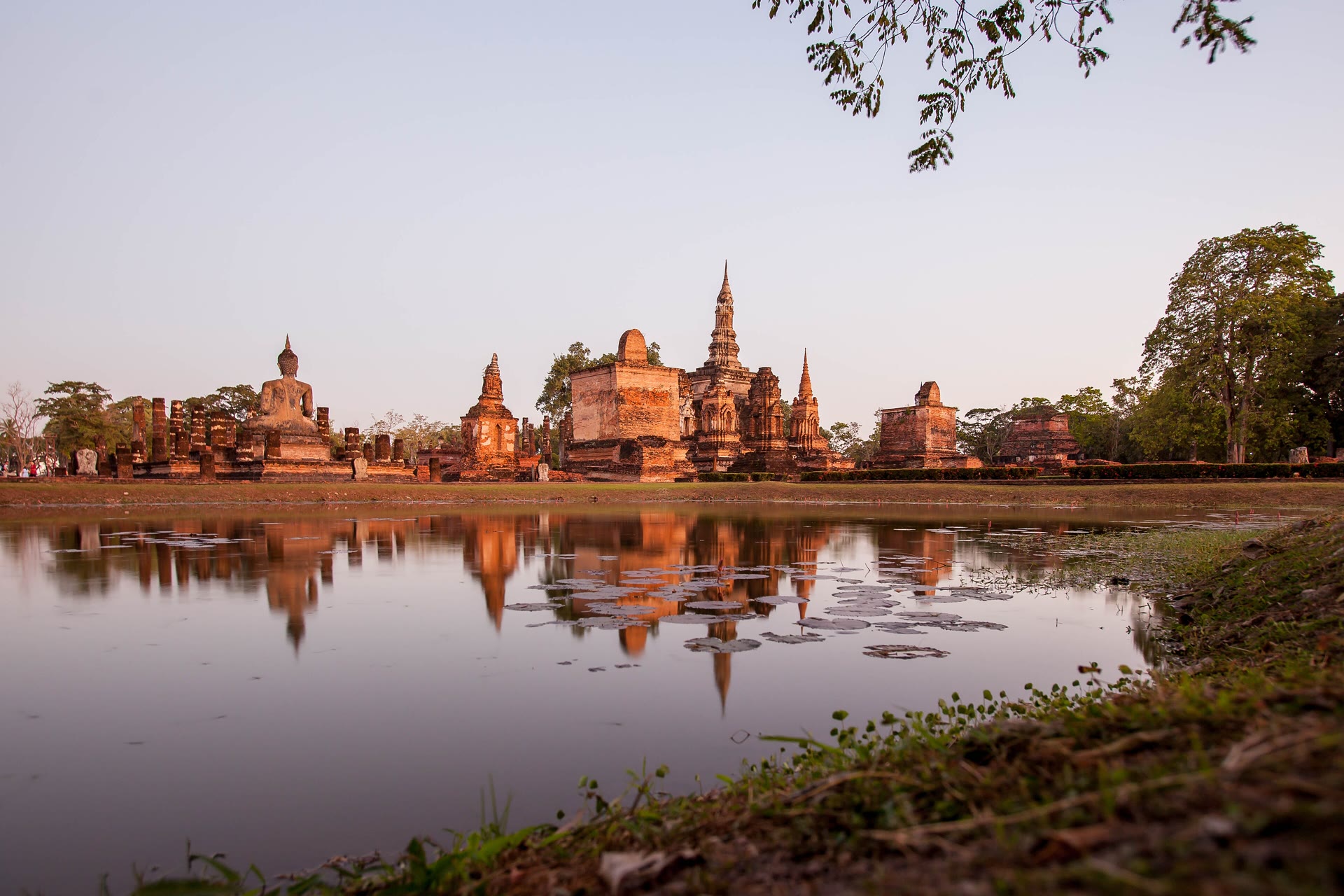
If there is one transport mode that defines the Sukhothai experience, it is the bicycle. The Sukhothai Historical Park - a UNESCO World Heritage Site - is a sprawling complex of temple ruins, ponds, and grassy fields covering roughly 70 square kilometers across three zones (central, north, and west). The terrain is almost perfectly flat, the roads within the park are smooth and quiet, and distances between major ruins in the central zone are short enough to cover comfortably on two wheels.
Bicycle rental shops cluster around the entrance to the Historical Park and along the main road in the New City. Expect to pay around 30 to 50 baht (roughly $1 to $2) per day for a basic single-speed bike. Some guesthouses include free bicycle use or rent them out directly. The bikes are simple - no gears, sometimes squeaky brakes - but they do the job on flat ground. Check the tires and brakes before you ride off.
For the central zone of the Historical Park, cycling is unbeatable. You can loop through Wat Mahathat, Wat Si Sawai, and Wat Sa Si at your own pace, stopping to photograph reflections in lotus ponds without worrying about a driver's schedule. If you want to explore the northern and western zones as well, be prepared for longer rides on roads with some car and truck traffic. The northern zone temples like Wat Si Chum are about 1.5 kilometers from the central zone entrance, manageable but hot in the midday sun.
Tip: Start early in the morning - by 7 or 8 AM if possible. The light is beautiful on the ruins, the park is nearly empty, and you will beat the worst of the heat. Carry water, sunscreen, and a hat. By noon, cycling becomes genuinely exhausting in the Thai heat, especially from March to May.
Getting Around Sukhothai by Songthaew
The songthaew - a converted pickup truck with two bench seats in the covered bed - is the backbone of public transport linking New Sukhothai to the Historical Park. These vehicles run a fixed route along Route 12 (Jarot Withithong Road) between the New City center and the park entrance throughout the day.
Songthaews depart from near the main bridge in New Sukhothai (close to the 7-Eleven and the municipal market area) and drop passengers at the Historical Park entrance. The ride takes around 20 to 30 minutes depending on stops. The fare is typically 30 baht (about $1) per person each way. Service runs roughly from early morning until late afternoon, with departures every 20 to 40 minutes depending on passenger volume. There is no fixed timetable - they leave when reasonably full.
After about 5 PM, songthaew service becomes sparse or stops entirely. If you are lingering at the Historical Park for the sunset, plan your return in advance - either arrange a tuk-tuk or ensure you have your own wheels. On nights when the park hosts its famous light-and-sound show (during the Loy Krathong festival period), special transport is usually arranged, but do not count on regular songthaew service after dark.
Songthaews can also be flagged down along the route if you see one passing. Just wave your hand, hop in the back, and pay when you get off. It is a no-frills experience - open-air, bumpy, and loud - but it is cheap, reliable during daytime hours, and a genuine slice of local Thai life.
Getting Around Sukhothai by Tuk-Tuk and Motorcycle Taxi
Tuk-tuks in Sukhothai are not the flashy, neon-lit machines of Bangkok. They are simpler, smaller three-wheeled vehicles, and they serve as the default option for short to medium trips when a songthaew is not available or convenient. You will find tuk-tuk drivers waiting near the bus terminal in New Sukhothai, around the market areas, and at the Historical Park entrance.
A tuk-tuk ride from New Sukhothai to the Historical Park typically costs around 150 to 300 baht ($4 to $9) depending on your negotiation skills, the time of day, and how many passengers are sharing. This is significantly more expensive per person than the songthaew, but it offers door-to-door service and is your best bet for evening returns from the park. Always agree on the fare before getting in - there are no meters.
Motorcycle taxis also operate in the New City area, identifiable by drivers wearing numbered vests (usually orange or yellow). These are best for quick hops within the New City - from your guesthouse to the bus station, for instance. Fares for short trips run around 20 to 50 baht. They are fast but not for the faint-hearted if you are not used to riding pillion on Thai roads.
Negotiation tip: Tuk-tuk drivers in Sukhothai are generally more laid-back and less aggressive than their counterparts in Bangkok or tourist-heavy beach towns. Still, the first price quoted is almost always inflated. A friendly counter-offer and a smile usually get you to a fair price quickly. If a driver quotes something outrageous, simply walk toward the next one.
Getting Around Sukhothai by Motorbike Rental
Renting a motorbike gives you the most freedom to explore Sukhothai at your own pace, especially if you want to venture beyond the central Historical Park zone to the more remote northern, western, and southern ruins. Several guesthouses and rental shops in New Sukhothai offer motorbikes (typically 110cc to 125cc automatic scooters) for around 200 to 300 baht ($6 to $9) per day.
You will usually need to leave your passport or a cash deposit. Some places accept a photocopy of your passport instead - ask around. An international driving permit with a motorcycle endorsement is technically required by Thai law, though enforcement in Sukhothai is minimal. That said, if you have an accident without proper documentation, your travel insurance may not cover you.
The roads around Sukhothai are generally in good condition and traffic is light compared to larger Thai cities. The ride from New Sukhothai to the Historical Park is straightforward along the main highway. Beyond the park, you can use a motorbike to reach Si Satchanalai Historical Park (about 55 kilometers north), which sees far fewer tourists and offers a wonderfully quiet experience among overgrown ruins in a forested setting. The road there passes through rice paddies and small villages - one of the most scenic rides in central Thailand.
Fuel is cheap and readily available from gas stations and roadside bottle vendors (look for glass bottles filled with amber gasoline displayed on wooden racks). Always wear a helmet - it is the law, and police checkpoints do occur on the main roads.
Getting Around Sukhothai on Foot
Walking is perfectly viable within the compact center of New Sukhothai. The area around the main road (Nikorn Kasem Road), the night market, and the riverside is pleasant enough for strolling, especially in the cooler evening hours. You can walk between most guesthouses, restaurants, and the bus terminal within 10 to 15 minutes.
Walking within the central zone of the Historical Park is also possible, though distances add up quickly in the heat. The central zone alone covers a significant area, and you will want to visit temples that are 500 meters to a kilometer apart. A bicycle is strongly recommended over walking inside the park unless you enjoy long, hot strolls and have plenty of water.
The 12-kilometer stretch between New Sukhothai and the Historical Park is not walkable in any practical sense - there is no sidewalk for much of it, the road carries fast-moving traffic, and the heat makes it miserable. Use a songthaew, tuk-tuk, or your own wheels for this connection.
Getting Around Sukhothai by Private Car or Transfer
For travelers who prefer air-conditioned comfort, private car transfers can be arranged through hotels, guesthouses, or local tour operators. This is particularly useful for airport transfers, as Sukhothai Airport (THS) is located about 27 kilometers north of the city. The airport is small, served primarily by Bangkok Airways, and there is no public transport connecting it to town. A private transfer is essentially your only option unless your hotel provides a shuttle.
Private transfers are also a practical choice for day trips to Si Satchanalai or Kamphaeng Phet Historical Parks, especially if you are not comfortable on a motorbike. Some guesthouses can arrange a driver for the day at a reasonable rate - expect to pay around 1,500 to 2,500 baht ($43 to $72) for a full-day car hire with driver, depending on distance and negotiation.
There is no Grab, Bolt, or other ride-hailing app presence in Sukhothai. Do not count on app-based transport here. Your smartphone is useful for maps and translation, but hailing a ride still happens the old-fashioned way - in person, by phone through your guesthouse, or by walking to a tuk-tuk stand.
Comparing Your Options
| Mode | Typical Cost | Duration | Best For |
|---|---|---|---|
| Bicycle | 30-50 baht/day ($1-$2) | Self-paced | Exploring the Historical Park at your own rhythm |
| Songthaew | 30 baht ($1) per trip | 20-30 min (New City to Park) | Budget travel between New City and Historical Park |
| Tuk-Tuk | 150-300 baht ($4-$9) | 15-25 min (New City to Park) | Door-to-door trips, evening returns from the park |
| Motorcycle Taxi | 20-50 baht per short trip | 5-10 min within New City | Quick hops within New Sukhothai |
| Motorbike Rental | 200-300 baht/day ($6-$9) | Self-paced | Maximum freedom, day trips to Si Satchanalai |
| Walking | Free | Varies | New City center, evening market browsing |
| Private Car/Transfer | 1,500-2,500 baht/day ($43-$72) | Varies | Airport transfers, air-conditioned day trips |
Practical Tips for Getting Around Sukhothai
Cash is king. Sukhothai is a cash-based economy for transport. No songthaew, tuk-tuk, or bicycle rental shop will accept credit cards. ATMs are available in New Sukhothai (look near the 7-Eleven and the banks along the main road), but carry small bills - 20 and 100 baht notes are ideal. Breaking a 1,000 baht note for a 30 baht songthaew ride will not make you popular.
- Download offline maps. Google Maps works well for navigating between ruins and finding your way on the roads. Download the Sukhothai area for offline use before you arrive, as mobile signal can be patchy around the Historical Park.
- No ride-hailing apps. Forget Grab, Bolt, or any app-based transport. It simply does not exist here. Your guesthouse reception is your best booking tool for tuk-tuks and transfers.
- Beat the heat. The single biggest factor affecting your transport choices is temperature. Plan cycling and walking for early morning or late afternoon. Midday (11 AM to 3 PM) is brutal from February through May - if you are out at the ruins, seek shade and hydrate constantly.
- Historical Park admission. Each zone of the Historical Park charges a separate entry fee (typically 100 baht per zone for foreigners). If you are cycling between zones, you will pay each time. Budget accordingly and keep your tickets handy.
- Language barrier. English is limited outside hotels and guesthouses. Learn a few Thai phrases: "pai nai" (where are you going), "tao rai" (how much), and "Historical Park" is understood universally. Having your destination written in Thai script on your phone helps enormously with tuk-tuk drivers.
- Evening transport. After dark, your options narrow significantly. Songthaews stop running, and finding a tuk-tuk requires either pre-arrangement or luck. If you plan to eat at the excellent night market in New Sukhothai after a day at the ruins, sort your return transport before the sun sets.
- Scams are rare. Sukhothai is refreshingly low on transport scams compared to Bangkok or Phuket. The most common issue is mild overcharging on tuk-tuks, which a polite negotiation usually resolves. You are unlikely to encounter rigged meters (there are none) or gem shop detours.
For travelers planning multi-city trips across Thailand or Southeast Asia, you can compare transport options between destinations on GoAsia.cc to find the best connections to and from Sukhothai.
Popular Routes and Destinations
Sukhothai Airport to New Sukhothai or the Historical Park
Sukhothai Airport is a small, almost boutique facility operated largely for Bangkok Airways flights. There is no public bus or songthaew serving the airport. Your options are a private transfer arranged through your hotel or a minivan service operated by Bangkok Airways. Transfer prices typically range from $46 to $115 depending on the vehicle type and whether you are heading to New Sukhothai or directly to the Historical Park area. The journey takes between 33 minutes and 1 hour depending on your exact destination and traffic conditions. Book your transfer in advance through your accommodation to avoid being stranded - there are no taxis waiting at the airport rank in the way you might expect at a larger Thai airport.
New Sukhothai to the Historical Park
This is the route you will travel most frequently. The songthaew is the cheapest option at 30 baht, taking 20 to 30 minutes. A tuk-tuk costs 150 to 300 baht and is faster and more convenient, especially with luggage or in a group. On a rented motorbike, the ride takes about 15 minutes along Route 12 - straightforward and well-signed.
Sukhothai to Si Satchanalai Historical Park
Si Satchanalai, about 55 kilometers north, is Sukhothai's quieter, wilder sibling. You can reach it by rented motorbike (around 1 hour, a beautiful ride), by local bus from the New Sukhothai bus terminal (infrequent service, about 1.5 hours), or by hiring a private car for the day. The ruins there are spread along the Yom River and see a fraction of the visitors - well worth the effort to reach.
Frequently Asked Questions
Use this guide to compare local transport in Sukhothai. When bookable tickets are available, the booking tool shows current options and prices.
The best way depends on what you are doing. For exploring the Historical Park, renting a bicycle is the ideal choice - the terrain is flat, distances are manageable, and you can stop at ruins freely. For traveling between New Sukhothai and the Historical Park, songthaews are the cheapest option during the day, while tuk-tuks offer more flexibility. Renting a motorbike gives you the most overall freedom.
Transport in Sukhothai is very affordable. Bicycle rental costs around 30 to 50 baht ($1 to $2) per day. Songthaews between New Sukhothai and the Historical Park cost 30 baht ($1) per ride. Tuk-tuks for the same route run 150 to 300 baht ($4 to $9). Motorbike rental is around 200 to 300 baht ($6 to $9) per day. Cash is required for all local transport.
Yes, Sukhothai is one of the safest places in Thailand for getting around. Songthaews and tuk-tuks are reliable and drivers are generally honest. Scams are rare compared to larger tourist cities. The main safety concern is road safety on motorbikes - always wear a helmet and drive cautiously, especially on the highway between the New City and the Historical Park.
No, ride-hailing apps like Grab and Bolt do not operate in Sukhothai. The city is too small to support these services. You will need to rely on songthaews, tuk-tuks, bicycle or motorbike rentals, and private transfers arranged through your accommodation. Your guesthouse front desk is your best resource for booking transport.
The center of New Sukhothai is compact enough to walk between restaurants, markets, and guesthouses. However, the Historical Park is 12 kilometers away and not walkable from town. Within the Historical Park itself, walking is possible but tiring due to heat and distances between temples. A bicycle is strongly recommended for the park.
There is no public transport from Sukhothai Airport. You will need a private transfer, which costs between $46 and $115 depending on vehicle type and destination. The journey takes 33 minutes to 1 hour. Book through your hotel in advance, as taxis do not queue at the airport reliably.
Songthaews between New Sukhothai and the Historical Park generally stop running by late afternoon, around 5 PM. There is no fixed schedule, and service becomes very sparse after 4 PM. If you plan to stay at the park for sunset, arrange a tuk-tuk for your return trip in advance or have your own motorbike or bicycle.
Guide prices and journey times are indicative, not live quotes. A booked package may include transfers and waiting time as well as the main journey. Check the selected offer, pickup point and current conditions before booking.