
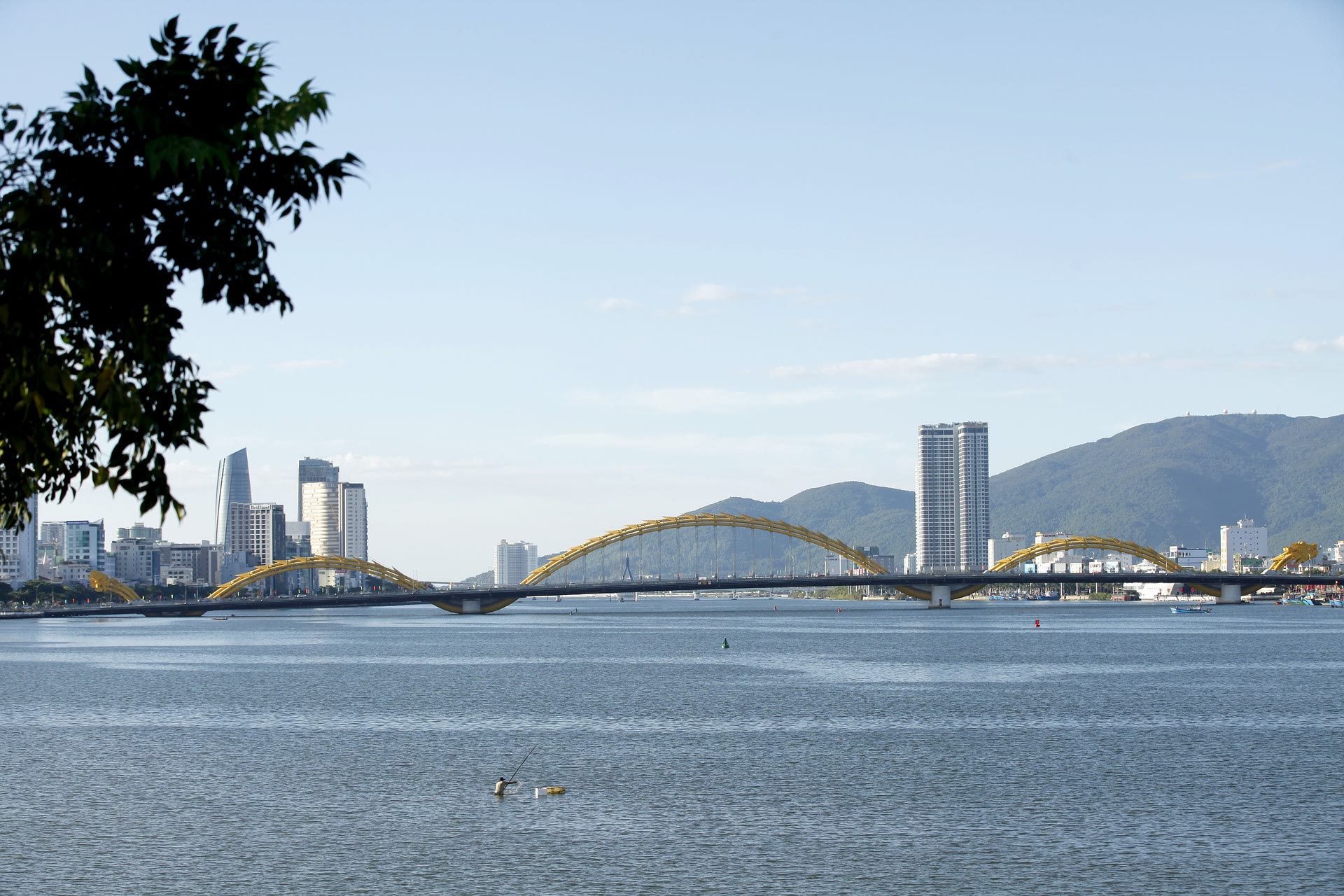
Getting Around Da Nang - Local Transport Guide for Travelers
Photo: Thangphan / Wikimedia Commons, CC0
Contents
- 1. Getting Around Da Nang by Grab and Ride-Hailing Apps
- 2. Getting Around Da Nang by Taxi
- 3. Getting Around Da Nang by Motorbike Rental
- 4. Getting Around Da Nang by Local Bus
- 5. Getting Around Da Nang by Cyclo and Xe Om
- 6. Getting Around Da Nang on Foot
- 7. Getting Around Da Nang by Bicycle
- 8. Comparing Your Options
- 9. Practical Tips for Getting Around Da Nang
- 10. Popular Routes and Destinations
- 10.1 Da Nang Airport to the City Center and Beaches
- 10.2 Da Nang to Hoi An
- 11. Frequently Asked Questions
Da Nang sprawls along a gorgeous stretch of central Vietnam coastline, squeezed between the Han River and the East Sea, with the Marble Mountains and Son Tra Peninsula framing its edges. It is a city that feels surprisingly manageable despite its size. Most of the places travelers care about - the beach hotels along My Khe, the riverside restaurants downtown, the Dragon Bridge, and the museum district - sit within a relatively compact zone that rarely takes more than 20 minutes to cross by motorbike.
The rhythm of Da Nang's streets is distinctly Vietnamese: a river of motorbikes punctuated by the occasional bus, with taxis and ride-hailing cars weaving through. Unlike Hanoi's chaotic Old Quarter or Ho Chi Minh City's relentless traffic, Da Nang moves at a gentler pace. Roads are wider, intersections are less terrifying, and the city's relatively modern infrastructure means you will not spend hours stuck in gridlock. That said, public transit is limited, so most travelers rely on a mix of ride-hailing apps and rented motorbikes to explore freely.
Here is everything you need to know about moving around Da Nang, from the cheapest local buses to the freedom of your own two wheels.
Getting Around Da Nang by Grab and Ride-Hailing Apps
Grab is the undisputed king of urban transport in Da Nang, and for most travelers, it will be the default way to get around. The app works exactly like Uber: you set your pickup and drop-off, see the fare upfront, and pay either by cash or card. No haggling, no language barrier, no wondering if the meter is rigged.
Grab offers several vehicle types in Da Nang. GrabBike is the cheapest and fastest option for solo travelers - a motorbike taxi that zips through traffic. A typical ride across the city center costs around 15,000-30,000 VND (roughly $1-$2). GrabCar is a private car, usually costing around 40,000-80,000 VND ($2-$4) for trips within the central area. For groups, GrabCar 7-seater is available.
Wait times are generally short - under five minutes in the city center and beach areas. In quieter neighborhoods or during heavy rain, you might wait a bit longer. Surge pricing kicks in during rush hours (roughly 7:30-8:30 AM and 5:00-6:30 PM) and during sudden downpours, which are common in the rainy season from September through December.
One practical tip: always confirm your pickup pin is accurate. Vietnamese addresses can be confusing, and drivers navigate primarily by the map pin rather than the written address. If you are standing on a one-way street, place the pin on the correct side to avoid a long detour.
Getting Around Da Nang by Taxi
Traditional metered taxis are plentiful in Da Nang and remain a solid option, especially if your phone battery is dead or you prefer hailing from the street. The two most reputable companies are Mai Linh (green cars) and Vinasun (white cars with red and green stripes). Stick to these two and you will almost certainly get an honest metered fare.
Fares start at around 10,000-15,000 VND for the first kilometer, then roughly 15,000-18,000 VND per kilometer after that. A ride from the beach hotels to the city center typically runs 50,000-80,000 VND ($2-$4). Taxis are metered, so you do not need to negotiate - just make sure the driver turns the meter on when you get in.
Avoid unmarked taxis or cars where the company branding looks slightly off. Fake taxis mimicking Mai Linh or Vinasun do exist, though Da Nang has far fewer scams than tourist hotspots like Hanoi. A quick check: legitimate Mai Linh taxis have a consistent shade of green and a clear phone number on the door.
Getting Around Da Nang by Motorbike Rental
Renting a motorbike is the most liberating way to explore Da Nang and its surroundings. The coastal roads along My Khe Beach, the winding climb up Son Tra Peninsula to the Linh Ung Pagoda, and the scenic route to the Marble Mountains all feel best on two wheels with the sea breeze in your face.
Rentals are widely available from hotels, guesthouses, and dedicated rental shops. Expect to pay around 100,000-150,000 VND ($4-$7) per day for a semi-automatic scooter (Honda Wave or Yamaha Nouvo), or 150,000-250,000 VND ($7-$11) for an automatic (Honda Lead or Air Blade). Always check the brakes, lights, and horn before riding off, and photograph any existing damage.
Technically, you need a Vietnamese driving license or an International Driving Permit (IDP) with a motorbike endorsement to ride legally. In practice, enforcement is lax for tourists in Da Nang, but if you are in an accident without proper documentation, your travel insurance will almost certainly refuse your claim. This is a real financial risk, not a theoretical one.
Da Nang's traffic is relatively forgiving by Vietnamese standards, but a few rules apply: always ride with the flow, use your horn liberally to signal your presence (it is communication, not aggression here), and never make sudden stops. Parking is easy - most restaurants and shops have designated motorbike parking, sometimes with a small fee of 5,000-10,000 VND.
Getting Around Da Nang by Local Bus
Da Nang has a modest public bus network that is extremely cheap but limited in coverage and frequency. The most useful route for travelers is Bus Route 1, which connects Da Nang city center to Hoi An, running along the coast. This is a popular budget option for day-tripping to Hoi An's ancient town.
Local buses within the city cost around 5,000-6,000 VND (about $0.25) per ride. Buses run from roughly 5:30 AM to 6:00 PM, with frequencies of 15-30 minutes on main routes. Payment is cash only, handed to the conductor on board. Air conditioning is available on most routes, which is a relief in the summer heat.
The bus network connects major points like the train station, the main market (Han Market), and some beach areas, but coverage is thin compared to what you would find in Hanoi or Ho Chi Minh City. For most travelers, buses are useful for the Da Nang-Hoi An corridor but impractical for daily sightseeing within the city itself.
Getting Around Da Nang by Cyclo and Xe Om
Cyclos (bicycle rickshaws) still exist in Da Nang, though they are increasingly rare and mostly found near tourist areas like the Han River waterfront and Han Market. They are slow, scenic, and best treated as an experience rather than practical transport. Expect to pay around 50,000-100,000 VND for a short ride of 15-20 minutes. Always agree on the price before you climb in.
Xe om (motorbike taxis) are the traditional alternative to Grab. Drivers wait at street corners and outside markets, calling out to passing foreigners. While they can be convenient for quick hops, the lack of fixed pricing means you will need to negotiate. Fares should be roughly comparable to GrabBike rates, but drivers often start high with tourists. If you do not speak Vietnamese, showing your destination on a map app helps enormously. Most travelers find Grab more convenient and transparent, but xe om drivers are handy when you are in a spot with poor phone signal.
Getting Around Da Nang on Foot
Da Nang is more walkable than most Vietnamese cities, thanks to its wide sidewalks (at least in the central and beach districts), relatively orderly traffic, and flat terrain. The riverside promenade along Bach Dang Street is a genuine pleasure to walk, especially in the evening when the Dragon Bridge lights up and the city comes alive with food stalls and families.
Walking works well for exploring the compact downtown area - Han Market, the Cham Museum, the cathedral, and the riverside restaurants are all within a 20-minute stroll of each other. The beach strip along Vo Nguyen Giap Street is also pleasant for walking, with seafood restaurants and cafes lining the road.
That said, distances between Da Nang's main attractions can be significant. Walking from the beach to the Marble Mountains, for example, would take well over an hour in the heat. Use walking for neighborhood exploration and grab a Grab for anything over a couple of kilometers.
Getting Around Da Nang by Bicycle
Cycling is an underrated way to experience Da Nang, particularly along the coastal roads and the Han River. Many hotels and guesthouses offer free or cheap bicycle loans, and dedicated rental shops charge around 30,000-50,000 VND ($1-$2) per day. The terrain is flat throughout the city center and beach areas, making cycling easy even for casual riders.
The stretch from My Khe Beach south toward the Marble Mountains is a popular cycling route, as is the loop around Son Tra Peninsula (though the hills there are serious). Cycling along the Han River at sunrise or sunset, with the bridges lit up and locals exercising along the waterfront, is one of Da Nang's quiet highlights.
Be cautious in traffic - stick to the right side of the road, signal your turns, and avoid cycling after dark on roads without streetlights. Helmets are technically required even for bicycles on main roads, though enforcement is minimal.
Comparing Your Options
| Mode | Typical Cost | Duration | Best For |
|---|---|---|---|
| GrabBike | $1-$2 per ride | 5-15 min across center | Quick solo trips, beating traffic |
| GrabCar / Taxi | $2-$4 per ride | 10-20 min across center | Comfort, groups, luggage, rainy days |
| Motorbike Rental | $4-$7 per day | Self-paced | Full-day exploring, Son Tra Peninsula, freedom |
| Local Bus | $0.25 per ride | Varies (35 min to Hoi An) | Budget travel to Hoi An, ultra-cheap city hops |
| Bicycle | $1-$2 per day | Self-paced | Riverside rides, beach cruising, short distances |
| Cyclo | $2-$4 per ride | 15-20 min | Scenic riverside experience, nostalgia |
| Walking | Free | Self-paced | Downtown exploring, riverside promenade, markets |
Practical Tips for Getting Around Da Nang
Essential apps to download:
- Grab - your primary ride-hailing app. Set it up and link a payment method before you arrive.
- Google Maps - works well for navigation in Da Nang, including bus routes and walking directions. Save your hotel location as a pin.
- Maps.me - useful offline backup if you lose data signal, especially on Son Tra Peninsula.
Money and payment:
- Carry small bills. Drivers and bus conductors often cannot break 500,000 VND notes. Keep a stash of 10,000-50,000 VND notes for transport.
- Grab accepts both cash and linked cards (Visa/Mastercard). Paying by card avoids the small-change problem entirely.
- Taxis are cash only in most cases. A few Mai Linh taxis accept cards, but do not count on it.
Timing your travel:
- Rush hours (7:30-8:30 AM, 5:00-6:30 PM) cause moderate congestion, especially on the bridges crossing the Han River. If you need to cross from the beach side to downtown, allow extra time.
- The Dragon Bridge spews fire and water on weekend evenings (Saturday and Sunday at 9 PM). Traffic around the bridge becomes chaotic from about 8:30 PM onward - plan accordingly or enjoy the show on foot.
- Midday heat from May through August is intense. Schedule outdoor activities and walking for early morning or late afternoon.
Avoiding common mistakes:
- Do not assume every motorbike driver waving at you is a scammer - xe om drivers are a legitimate part of Vietnamese transport culture. But do agree on a price before getting on.
- Crossing the street in Da Nang requires the Vietnamese method: walk slowly and steadily, and let the motorbikes flow around you. Do not stop suddenly or run. It feels terrifying the first time but works remarkably well.
- If renting a motorbike, never leave your passport as a deposit. A photocopy or a cash deposit is acceptable. Reputable shops will not insist on holding your actual passport.
Language tips: Most Grab drivers speak little English, but the app handles communication through the map. For taxis and xe om, have your destination written in Vietnamese or show it on your phone screen. Useful phrases: "di thang" (go straight), "re trai" (turn left), "re phai" (turn right), and "dung lai" (stop here). You can compare transport options and plan your routes on GoAsia.cc before heading out.
Popular Routes and Destinations
Da Nang Airport to the City Center and Beaches
Da Nang International Airport is remarkably close to the city - just 3 kilometers from the center, making it one of the most convenient airport transfers in Southeast Asia. A Grab or taxi ride to the beach hotels or downtown takes around 10 minutes and costs between $6 and $10 depending on your exact destination. For budget travelers, the airport bus connects to the city center for a fraction of the price. Private transfers and hotel shuttles are also available, ranging from $6 to $185 depending on vehicle type and whether you are booking a shared shuttle or a premium private car for a larger group heading further afield, with journey times from 10 minutes to the city up to 1 hour 45 minutes for more distant destinations like Ba Na Hills.
Da Nang to Hoi An
The 30-kilometer trip to Hoi An Ancient Town is the most popular day trip from Da Nang. You have several options:
- Local bus (Route 1): The cheapest option at $15-$25 for a tourist bus ticket, taking around 35 minutes. The public local bus is far cheaper at around 20,000 VND but slower.
- Grab/Taxi: A private transfer runs $11-$19, taking 40 minutes to 1 hour 45 minutes depending on traffic and your pickup location. This is the most comfortable option for small groups.
- Motorbike: The coastal road via Marble Mountains is a beautiful ride of about 45 minutes. Stop at My Khe or Non Nuoc Beach along the way.
For the return trip, note that Grab availability in Hoi An can be limited in the evening. Book a car in advance or arrange a return with your taxi driver if heading back late.
Frequently Asked Questions
Use this guide to compare local transport in Da Nang. When bookable tickets are available, the booking tool shows current options and prices.
For most travelers, Grab (Vietnam's dominant ride-hailing app) is the easiest and most reliable way to get around Da Nang. GrabBike is fast and cheap for solo travelers, while GrabCar works well for groups or rainy days. If you want more freedom, renting a motorbike gives you flexibility to explore the beaches, Son Tra Peninsula, and Marble Mountains at your own pace.
Da Nang is very affordable to get around. GrabBike rides within the city typically cost $1-$2, while GrabCar and taxi rides range from $2-$4. Motorbike rentals run $4-$7 per day, and local buses cost just $0.25 per ride. Even a taxi from the airport to the beach hotels rarely exceeds $10.
Yes, Da Nang is one of the safest cities in Vietnam for travelers. Grab provides tracked, fare-transparent rides, and reputable taxi companies like Mai Linh and Vinasun are reliable. Buses are safe but basic. The main safety concern is road traffic if you rent a motorbike - always wear a helmet and ride defensively.
Absolutely. Grab is widely available throughout Da Nang with short wait times in the city center and beach areas. You can choose GrabBike (motorbike taxi), GrabCar (private car), or GrabCar 7-seater. The app accepts both cash and linked credit/debit cards, making it the most convenient transport option for visitors.
The downtown area along the Han River and the beach strip are quite walkable, with wide sidewalks and flat terrain. You can comfortably walk between Han Market, the Cham Museum, and the riverside restaurants. However, Da Nang's main attractions are spread out, so you will need motorized transport for distances beyond the immediate city center.
If you are comfortable on two wheels, renting a motorbike is the best way to explore Da Nang and its surroundings, especially Son Tra Peninsula and the road to Hoi An. Rentals cost $4-$7 per day. However, you technically need an International Driving Permit with a motorbike endorsement, and riding without one can void your travel insurance in case of an accident.
Da Nang Airport is just 3 kilometers from the city center, making transfers quick and cheap. A Grab or taxi takes around 10 minutes and costs $6-$10 depending on your destination. Simply open the Grab app at arrivals, set your hotel as the destination, and a driver will pick you up within minutes.
The most convenient option is a Grab or private transfer, costing $11-$19 and taking 40 minutes to over an hour depending on traffic. Budget travelers can take the local bus for a fraction of the price. If you have rented a motorbike, the coastal road through the Marble Mountains is a scenic 45-minute ride and one of the highlights of central Vietnam.
Guide prices and journey times are indicative, not live quotes. A booked package may include transfers and waiting time as well as the main journey. Check the selected offer, pickup point and current conditions before booking.