Chengde Mountain Resort: Gardens, Temples and Visit Planning
Contents
Choose the palace area and lake gardens for your first visit, then add one outer temple if your actual travel times leave room. Staying a night makes it easier to give the garden and temples separate time blocks. The resort and the outlying temples are separate scenic areas with their own tickets and opening hours.[1]
Tickets and opening hours
The scenic area's price notice of 1 July 2026 lists the following prices per person.[1] In peak season (1 April to 31 October) the Mountain Resort ticket costs CNY 130, with a half-price ticket at CNY 65, and the Potala scenic area (Putuo Zongcheng Temple and Xumi Fushou Temple) costs CNY 80, half price CNY 40. In the off-season (1 November to 31 March) these are CNY 90 and CNY 60. The Qingchui Peak scenic area, which includes Pule Temple and Anyuan Temple, costs CNY 50 in both seasons. The Mountain Resort ticket includes the palace area, and every ticket is valid for one entry within two days of purchase.[1] Puning Temple does not appear in this notice, so ask the service centre for its ticket and hours.
Children aged 6 or under, or up to 1.2 metres tall, enter free. Minors aged 6 to 18 and full-time students up to bachelor level pay half price with an ID card or student card, and visitors over 60 enter free with an original ID card, passport or Hong Kong, Macao or Taiwan permit.[1] Entry is by real-name reservation: the scenic area recommends buying online in advance and scanning a resident ID card at the entrance gates.[2] Foreign visitors should ask the service centre on 0314-2025918 how a passport is accepted for the booking.[1]
| Scenic area | 10 October to 31 March | 1 to 30 April | 1 May to 9 October |
|---|---|---|---|
| Mountain Resort | 08:00 to 17:30[1] | 07:30 to 17:30[1] | 07:00 to 18:00[1] |
| Outlying temples and Qingchui Peak | 08:30 to 17:00[1] | 08:00 to 17:30[1] | 08:00 to 18:00[1] |
Ticket sales and entry stop one hour before closing, and the scenic area may change the hours in extreme weather, so check its latest announcement for your date.[1] Resident annual passes follow separate hours and do not cover the palace area, so do not use them to judge visitor hours.[2]
Things to Do
Offers are only loaded from GetYourGuide after you click. GetYourGuide can then process your IP address and set cookies. Privacy Policy
GetYourGuide partner offers. GoAsia may earn a commission if you book through these offers. Check whether tickets or transfers are included, and follow the attraction's official booking and admission rules.
The imperial residence and garden
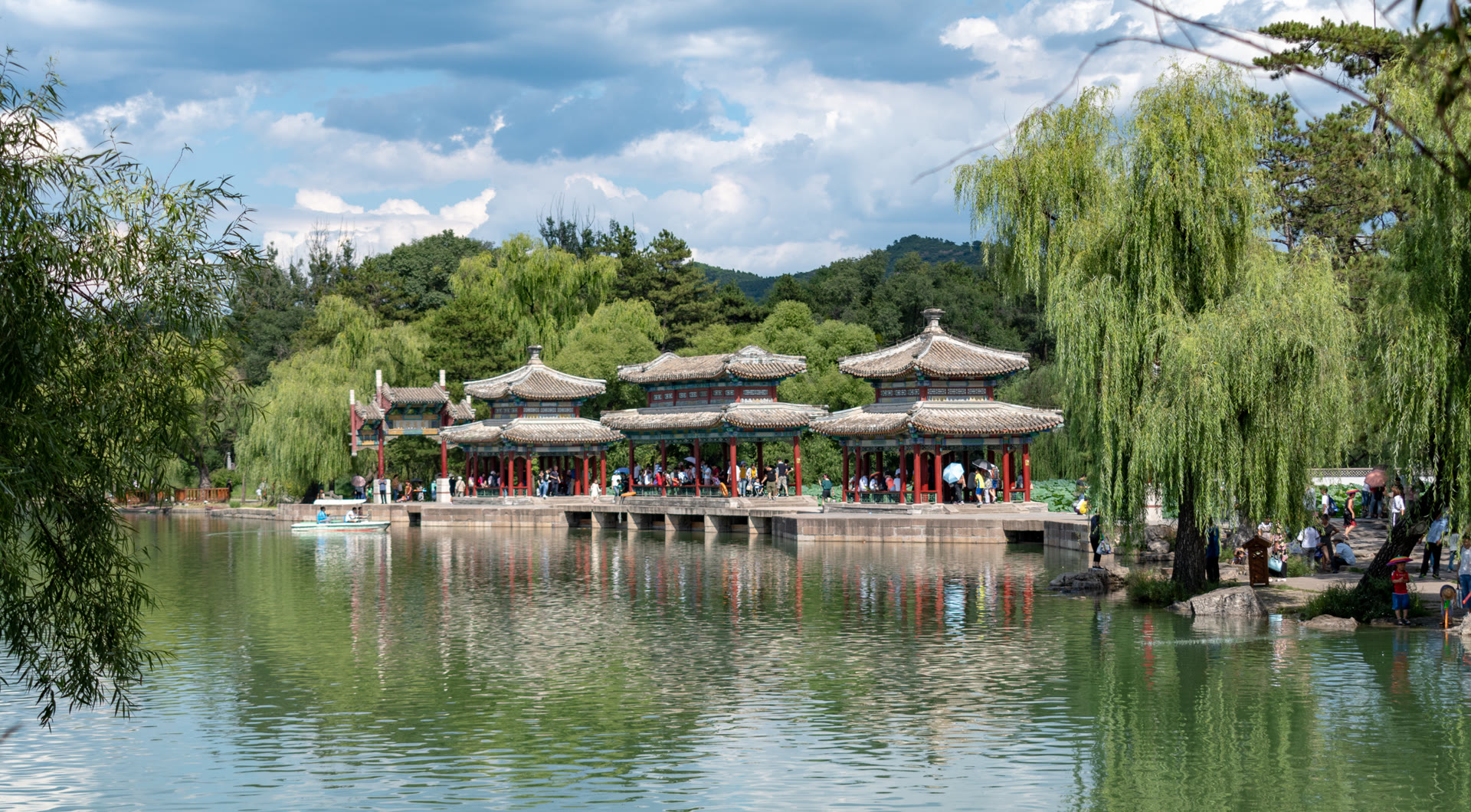
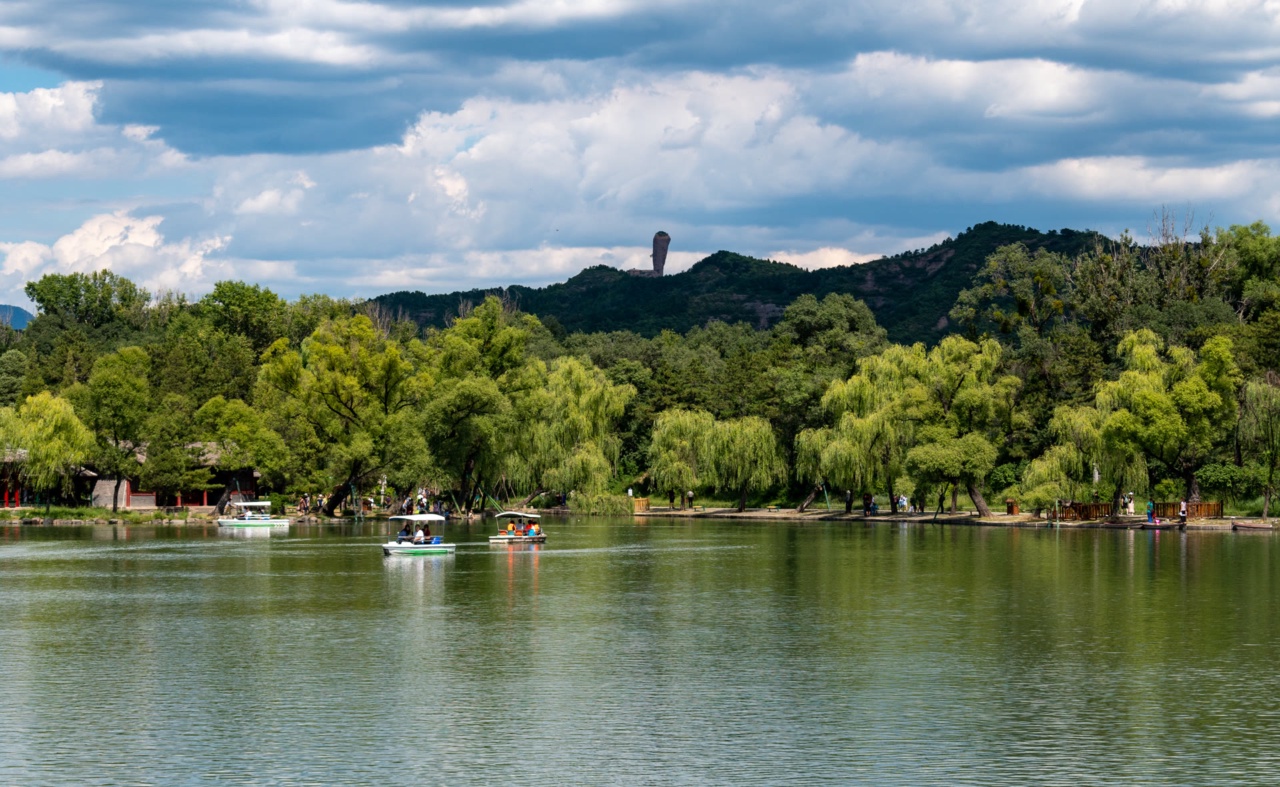
UNESCO describes the Mountain Resort and its Outlying Temples as the largest existing imperial palace-garden and temple complex in China, covering 611.2 hectares in total. It was built between 1703 and 1792 as the Qing emperors' detached summer palace near the imperial Mulan hunting ground, 350 kilometres from Beijing, and served as a base to strengthen administration in the border regions.[3] Every summer and autumn the emperors, including Kangxi and Qianlong, handled military and government affairs here and received leaders of ethnic minority groups and foreign envoys.[3] The landscape follows the natural hills and water, with lakes, pastureland and forest.[3]
Start with the palace area, where daily life, government business and ceremonies took place. Then follow the lake paths, islands, causeways and pavilions, and add the plains or lower hills only if time remains. Allow roughly half a day for the palace and one lake circuit, and leave a turning point and enough time to reach the exit. If you are choosing between seasons, the notice's lower off-season prices come with later opening and earlier closing hours.[1]
Choose the outlying temples
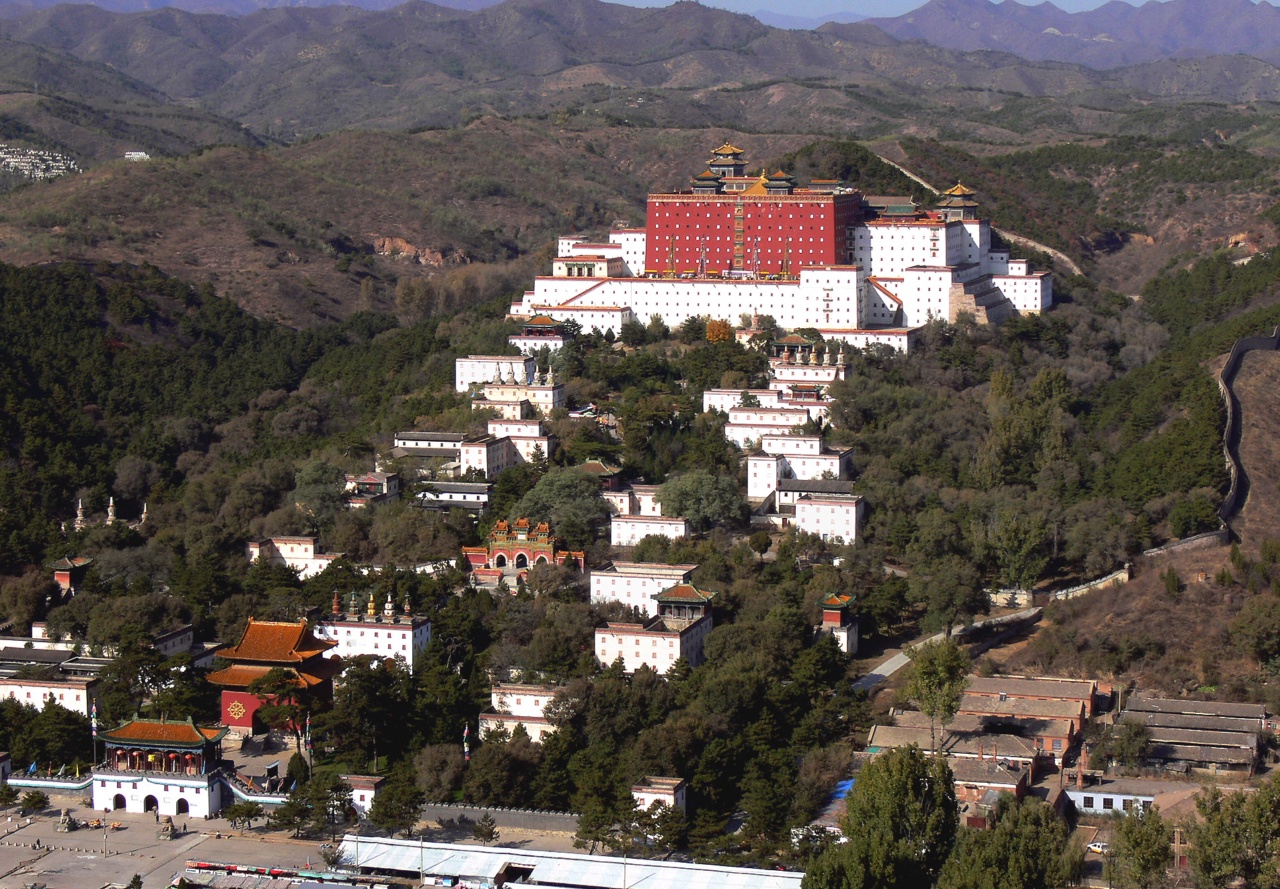
UNESCO counts 12 outlying imperial temples, some built in the architectural styles of ethnic minorities, spread across the eastern and northern hills outside the palace and garden area. They fostered relations with the ethnic minorities and helped to safeguard the Mountain Resort.[3] By combining Han, Mongolian and Tibetan architectural art, they reflect cultural exchange between different groups.[3] Not all of them are open to visitors, and the heritage listing is not a combined ticket.
The scenic area sells two temple groups. The Potala scenic area covers Putuo Zongcheng Temple, the Potala-inspired choice, and Xumi Fushou Temple. The Qingchui Peak scenic area covers the Qingchui Peak forest park, Anyuan Temple and Pule Temple.[1] Pick one group according to your interest and your travel time rather than trying to see all of them in a short visit.
From Beijing: a day trip or one night
Use 12306, China's official rail booking service, to check a Beijing to Chengde journey for your date, including price, duration, seat availability and the arrival station. Save the Chinese name of that station, the gate and your hotel for taxi drivers. Decide with door-to-door time, not just time on the train: include station transfers, admission, lunch and the return journey.
| Factor | Day trip | One night |
|---|---|---|
| Visit scope | Palace and a chosen lake route; a temple only if time allows | Separate garden and temple blocks |
| Transport | Both directions and transfers on one day | Travel can be split across two days |
| Budget | No Chengde hotel night | Add accommodation and the chosen extra visits |
| Flexibility | Constrained by the booked return | More choice of visit order |
| Best fit | A focused first look | More time for the gardens and temple art |
For a day trip, work backward from the return train: reserve time to exit and reach the station, then choose the palace and lake route that fits. Treat a temple as optional rather than forcing two major sites into a short afternoon. With one night, use one block for the palace and lakes and another for your chosen temple.
Respectful conduct and preparation
- Follow the rules: The scenic area prohibits smoking, spitting and littering, bans flammable and explosive items and asks visitors to protect the relics.[2]
- Respect halls and objects: Follow posted photography instructions, keep clear of worshippers and do not touch or climb heritage structures.
- Prepare for walking: Plains, hills and temple stairs add walking. Carry water, wear suitable footwear and choose a shorter route if needed.
- Keep booking details: Save tickets and the identification used for the reservation.
- Protect the return: Confirm your booked departure and do not add a last temple that eats into your station buffer.
Chengde is best understood as an imperial landscape with distinct palace, garden and outer-temple choices. Give the palace area and water gardens time, choose a temple for its architecture, and match the rest to your booked transport.
Sources and background
Numbers in the text such as [1] refer to these sources.
- [1] Chengde Mountain Resort and Surrounding Temples Scenic Area Service Center (republished by Chengde News): Price notice for Chengde Mountain Resort and Surrounding Temples scenic areas, 1 July 2026. Retrieved October 15, 2026.
- [2] Chengde Mountain Resort and Surrounding Temples Scenic Area (via Hebei Changcheng Net): Notice on adjusted opening hours, valid from 1 May to 9 October 2026. Retrieved October 15, 2026.
- [3] UNESCO World Heritage Centre: Mountain Resort and Outlying Temples: World Heritage history and property scope. Retrieved October 15, 2026.
Frequently Asked Questions
Use a day trip for a focused palace-and-lake visit if your trains and transfers leave enough time inside the resort. One night gives you a separate block for a temple. Work backward from the return train either way.
In peak season (1 April to 31 October) the Mountain Resort costs CNY 130, the Potala scenic area CNY 80 and the Qingchui Peak scenic area CNY 50. In the off-season they cost CNY 90, CNY 60 and CNY 50. Entry is by real-name reservation, and the entrance gates read a resident ID card, so foreign visitors should ask the service centre on 0314-2025918 how a passport is accepted.
Query your date on 12306 and check the arrival station, duration, fare and seat availability. Save the Chinese name of the station for your taxi and plan the transfer from your actual booking.
From 10 October to 31 March the Mountain Resort is open from 08:00 to 17:30, and the outlying temples and Qingchui Peak from 08:30 to 17:00. In April the hours are 07:30 to 17:30 and 08:00 to 17:30, and from 1 May to 9 October they are 07:00 to 18:00 and 08:00 to 18:00. Sales and entry stop one hour before closing.
No. The temples are sold as separate scenic areas: the Potala scenic area with Putuo Zongcheng and Xumi Fushou temples, and the Qingchui Peak scenic area with Pule Temple and Anyuan Temple. Puning Temple is not in the price notice, so ask the service centre about it.
Children aged 6 or under or up to 1.2 metres tall are free, and visitors over 60 are free with an original ID card, passport or Hong Kong, Macao or Taiwan permit. Minors aged 6 to 18 and full-time students up to bachelor level pay half price with an ID card or student card.