Kenroku-en Garden Kanazawa: One of Japan's Three Great Gardens
Kanazawa's Kenroku-en is not just a garden. It is a landscape that took the feudal lords of the Maeda clan nearly two centuries to perfect, and it remains one of the most celebrated examples of Japanese garden design in the world. Together with Kairaku-en in Mito and Koraku-en in Okayama, it forms Japan's trio of great gardens, though many visitors who have seen all three quietly agree that Kenroku-en is the finest.
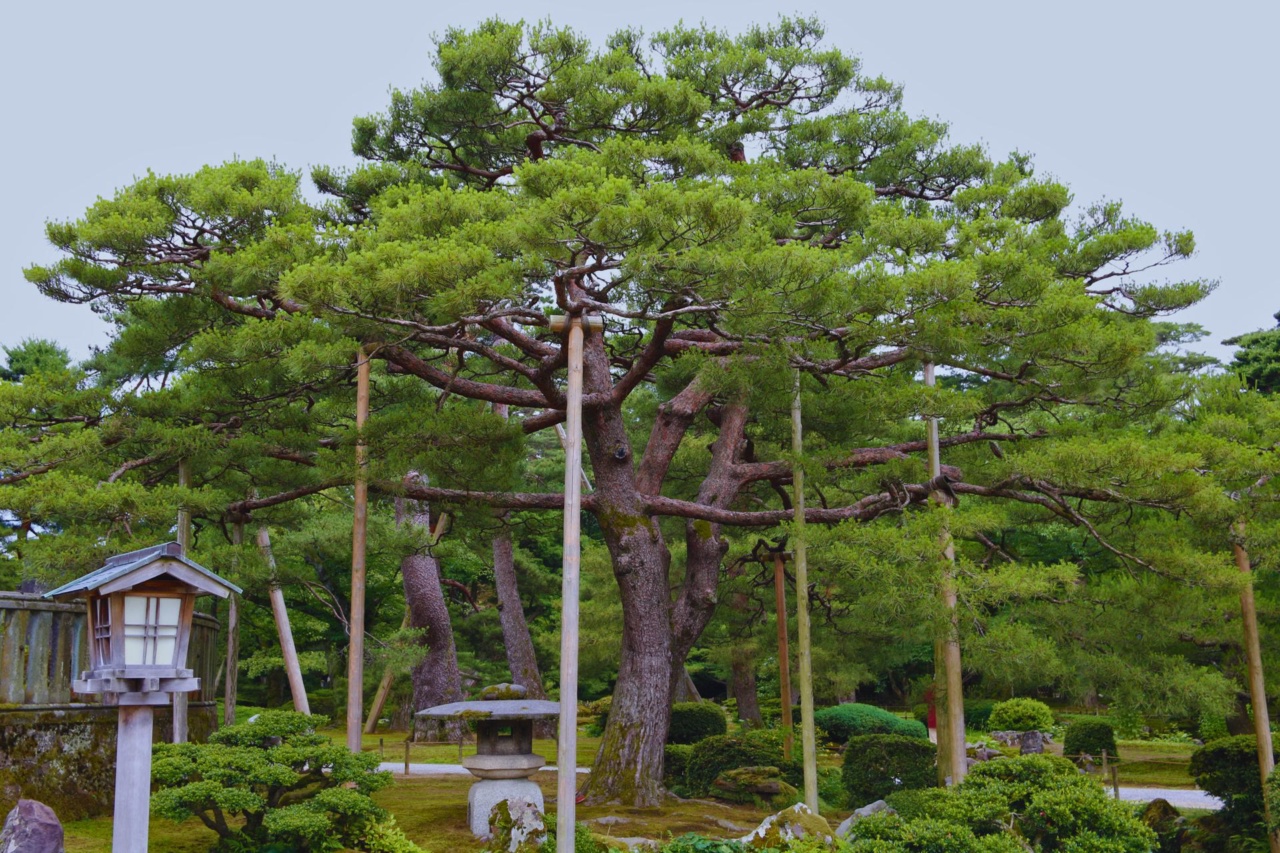
Spread across nearly 25 acres on a hillside next to Kanazawa Castle, Kenroku-en offers something rare: a garden that genuinely transforms with every season. Cherry blossoms in spring, deep green moss and irises in summer, blazing maple leaves in autumn, and the iconic yukitsuri rope structures protecting snow-laden pine trees in winter. No matter when you visit, the garden feels like it was designed for that exact moment.
The Meaning Behind the Name
Kenroku-en translates to "Garden of the Six Sublimities." The name references an ancient Chinese theory of landscape aesthetics that identifies six qualities essential to a perfect garden: spaciousness, seclusion, artificiality, antiquity, abundant water, and broad views. According to this theory, most gardens can achieve three or four of these attributes at best, since some naturally conflict with each other. A spacious garden struggles to feel secluded, and an artfully constructed landscape rarely conveys genuine antiquity. Kenroku-en earned its name because it manages to embody all six qualities at once.
Things to Do
History of the Garden
The Maeda clan, rulers of the wealthy Kaga Domain, began developing the garden in the 1620s as the outer grounds of Kanazawa Castle. Over the following two centuries, successive lords expanded and refined the landscape, adding ponds, streams, tea houses, and carefully placed trees and stones. Each generation left its mark while respecting the vision of those who came before.
The garden survived fires, including one in 1759 that destroyed much of it, prompting a rebuild that added many of the features visitors see today. After the feudal era ended, Kenroku-en opened to the public in 1871. It was designated a National Site of Scenic Beauty in 1922 and elevated to Special Scenic Beauty status in 1985, the highest cultural landscape designation in Japan.
Key Highlights
Kotoji Stone Lantern
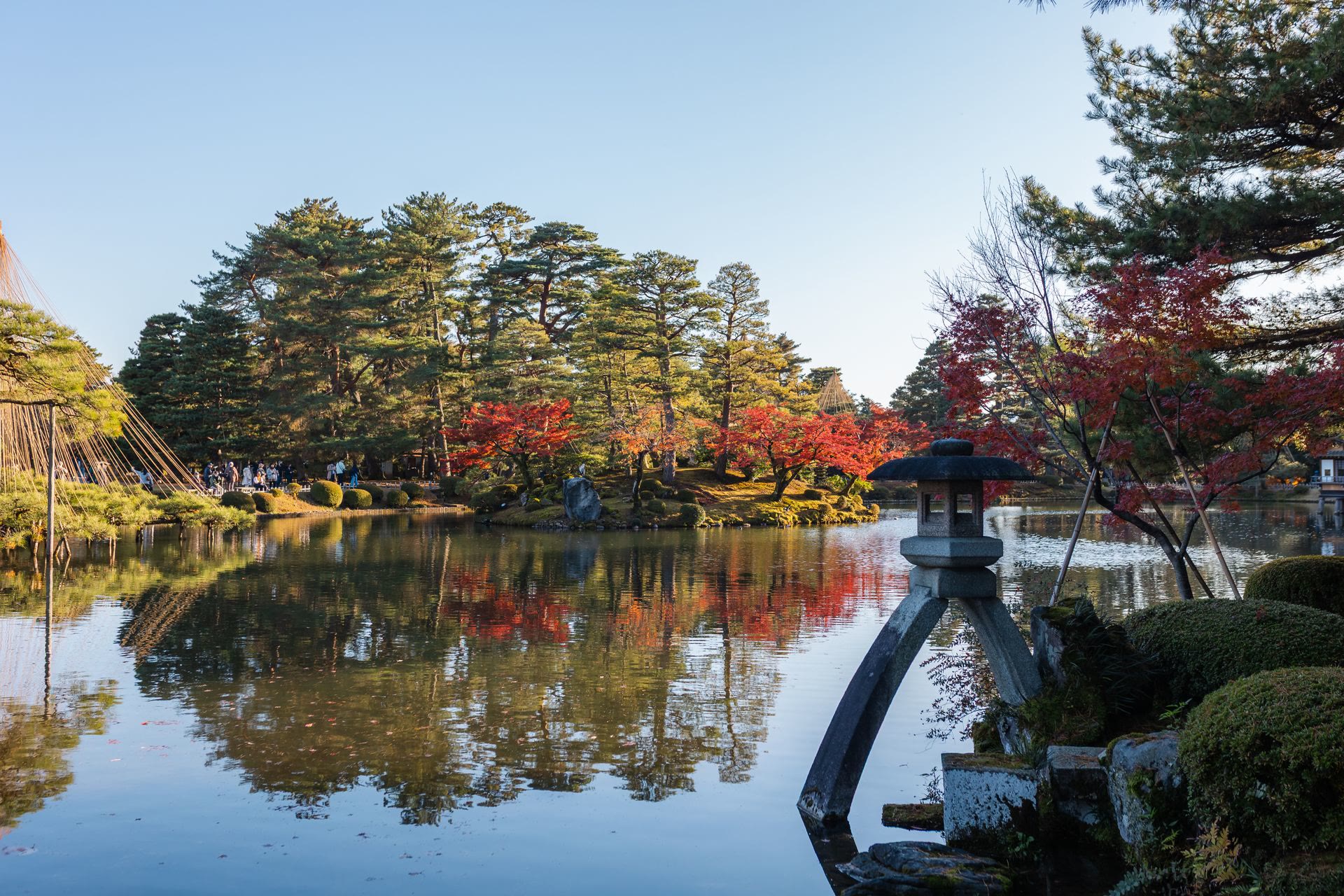
The two-legged stone lantern standing at the edge of Kasumigaike Pond is the unofficial symbol of Kenroku-en and one of the most photographed objects in Kanazawa. Its two legs of different lengths were designed to resemble the bridge of a koto, a traditional Japanese stringed instrument. One leg rests on the shore while the other stands in the water, creating an elegant asymmetry that epitomizes Japanese aesthetic principles.
Kasumigaike Pond
The garden's central pond stretches across a wide area and features a small island with a rock formation representing a tortoise, a symbol of longevity. The pond's surface acts as a mirror, reflecting the surrounding trees and seasonal colors. In winter, when fresh snow covers the banks and the yukitsuri ropes fan out from the pine trees above, the reflections in the still water create some of the garden's most striking scenes.
The Oldest Fountain in Japan
Near the southern section of the garden, a fountain shoots water about 3.5 meters into the air using only natural water pressure. Fed by Kasumigaike Pond, which sits at a higher elevation, the fountain operates without any mechanical pumps. It is considered one of the oldest fountains in Japan and demonstrates the hydraulic engineering skills of the Edo period.
Yugao-tei Tea House
Built in 1774, Yugao-tei is the oldest surviving structure in Kenroku-en. This tea house takes its name from the yugao (moonflower) patterns carved into its walls. While visitors cannot enter, viewing it from the outside offers a glimpse into the refined tea culture that the Maeda lords cultivated.
Shigure-tei and Midori-taki Waterfall
Deeper in the garden, Shigure-tei is another tea house positioned near Midori-taki (Green Waterfall), a 6.6-meter cascade that feeds into Hisago-ike Pond. The combination of flowing water, moss-covered stones, and surrounding trees makes this corner of the garden particularly atmospheric on quiet mornings.
Kenroku-en Through the Seasons
Spring
Around 420 cherry trees bloom across the garden, typically in mid-April. During peak bloom, Kenroku-en offers free admission and extends its hours into the evening with special illuminations. The plum grove in the southern section blooms earlier, from mid-February through March, with around 200 plum trees in shades of white, pink, and red.
Summer
The garden is at its most lush, with deep green moss carpeting the ground beneath towering pine trees. Irises bloom along the water channels, and the dense foliage provides welcome shade. Summer is also the quietest season for visitors, making it an ideal time for a peaceful stroll.
Autumn
From late October through November, the Japanese maples, zelkova trees, and ginkgos turn gold, crimson, and russet. The autumn palette reflected in the garden's ponds creates an unforgettable scene. Evening illumination events during peak foliage add another dimension to the experience.
Winter
Kenroku-en's winter landscape is perhaps its most distinctive. Workers install yukitsuri on the garden's pine trees, attaching ropes from a central pole at the top of each tree to its branches in a conical arrangement. These structures protect the branches from breaking under heavy snow. When snow falls, the combination of white-dusted pines, geometric rope patterns, and frozen ponds creates a scene unique to Kanazawa.
Practical Information
| Detail | Information |
|---|---|
| Admission (adults) | 320 yen |
| Admission (ages 6-17) | 100 yen |
| Admission (65+) | Free with ID |
| Hours (March 1 - October 15) | 7:00 to 18:00 |
| Hours (October 16 - February) | 8:00 to 17:00 |
| Early morning free entry | From 4:00-6:00 depending on season |
| Closed | Open 365 days a year |
| Time needed | 1.5 to 2 hours |
Getting to Kenroku-en
From Kanazawa Station, take the Kenrokuen Shuttle bus or any city loop bus heading to the castle area. The ride takes about 15 minutes and costs 210 yen. JR buses on this route are covered by the Japan Rail Pass. Get off at the Kenrokuen-shita or Hirosaka stop and walk a few minutes to one of the garden's several entrances.
Kanazawa itself is well connected by the Hokuriku Shinkansen, with direct trains from Tokyo taking about two and a half hours. From Kyoto or Osaka, limited express trains via the Thunderbird service reach Kanazawa in roughly two and a half to three hours. The city makes an excellent base for exploring the Hokuriku region, and more travel ideas can be found on GoAsia.cc.
Combining Kenroku-en with Nearby Attractions
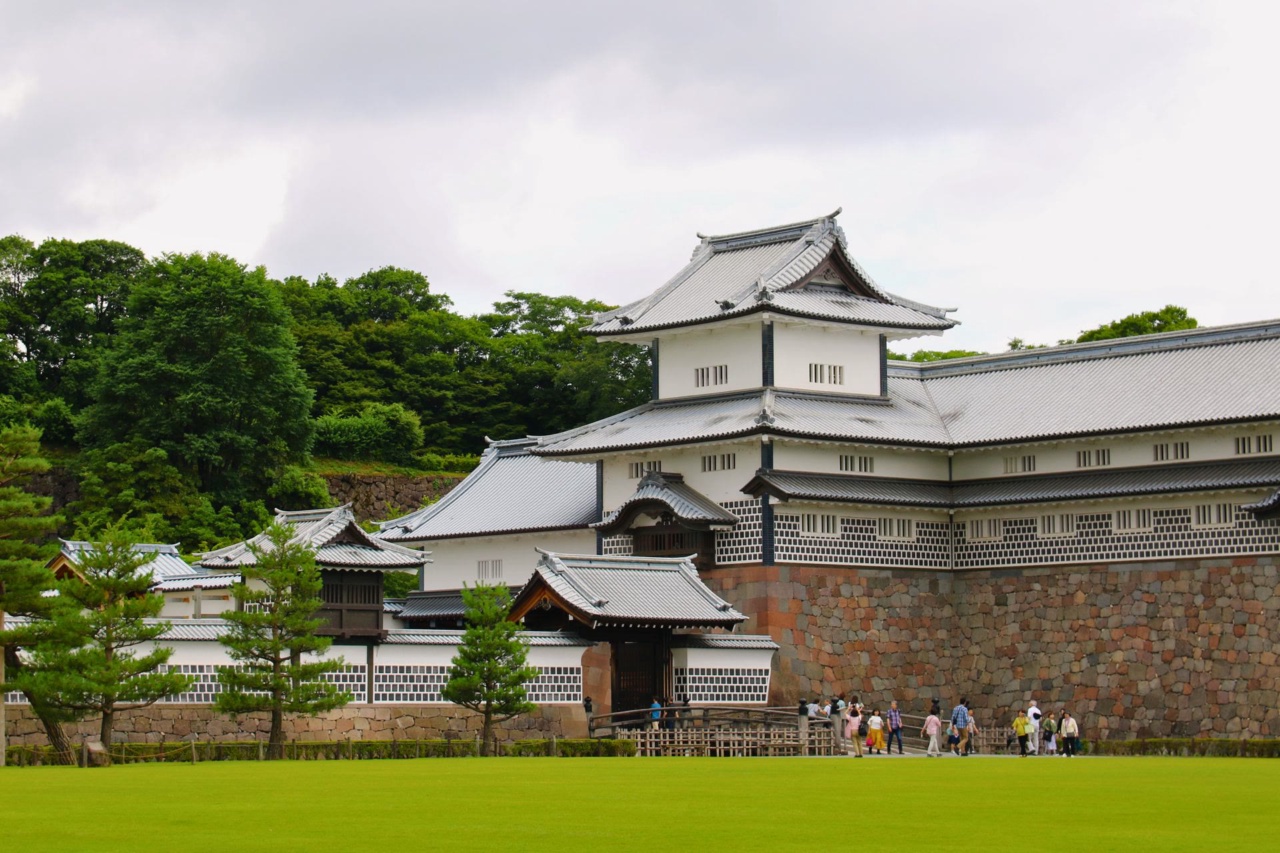
Kenroku-en sits next to Kanazawa Castle Park, which is free to enter and worth exploring for its impressive stone walls and reconstructed gates. The 21st Century Museum of Contemporary Art is a five-minute walk south and features a striking circular building with rotating exhibitions. The Nagamachi Samurai District, with its preserved earthen walls and restored samurai residences, is a short walk west. And the Higashi Chaya District, Kanazawa's beautifully preserved geisha quarter with traditional tea houses and gold leaf shops, lies about 15 minutes northeast on foot.
Tips for Visiting Kenroku-en
- Take advantage of free early morning entry. Before regular hours, you can enter through the Renchimon and Zuishinmon gates at no charge. This is the most peaceful time to experience the garden, often with only a handful of other visitors.
- Allow at least 90 minutes. The garden rewards slow exploration. Rushing through in 30 minutes means missing hidden corners, secondary tea houses, and the quieter southern sections.
- Visit in multiple seasons if possible. If your travels bring you to the Hokuriku region more than once, visiting Kenroku-en in different seasons reveals an entirely different garden each time.
- Combine with Kanazawa Castle Park. The two are connected by a bridge and together take about half a day to explore thoroughly.
- Wear appropriate footwear. Paths can be slippery when wet, and some sections are unpaved gravel. Comfortable walking shoes with grip work best, especially in rain or after snow.
- Check for illumination events. Special nighttime openings during cherry blossom season and autumn foliage peak transform the garden with carefully placed lights. These events are usually free and run for a limited number of evenings.
Frequently Asked Questions
Kenroku-en embodies the six qualities that Chinese landscape theory considers essential for a perfect garden: spaciousness, seclusion, artificiality, antiquity, abundant water, and broad views. Most gardens achieve only three or four of these attributes. The Maeda clan spent nearly two centuries perfecting the landscape to achieve all six.
Admission is 320 yen for adults and 100 yen for children ages 6 to 17. Visitors aged 65 and older enter free with a valid ID. Early morning entry before regular opening hours is free for everyone, and special events like cherry blossom illuminations also offer free admission.
Take any city loop bus or the Kenrokuen Shuttle from Kanazawa Station's east exit. The ride takes about 15 minutes and costs 210 yen. JR buses on this route are covered by the Japan Rail Pass. Get off at Kenrokuen-shita or Hirosaka stop and walk a few minutes to an entrance gate.
Every season offers a distinct experience. Cherry blossoms peak in mid-April, autumn foliage is best from late October through November, and winter brings the iconic yukitsuri rope structures on snow-covered pines. Summer is the least crowded. Many visitors consider winter the most unique season at Kenroku-en.
Plan for at least 90 minutes to explore the garden at a comfortable pace. If you want to appreciate the tea houses, ponds, and quieter southern sections, two hours is ideal. Rushing through in under an hour means missing much of what makes the garden special.
Yes, the garden offers free early morning entry before regular opening hours, starting as early as 4:00 in spring and summer. During cherry blossom season and certain autumn foliage events, the garden also opens for free with extended evening hours and illuminations.
Yukitsuri are rope structures installed on pine trees each November to protect branches from breaking under heavy snowfall. Workers attach ropes from a central pole at the top of each tree to its branches in a conical pattern. The structures have become an iconic winter symbol of both Kenroku-en and Kanazawa.
Kanazawa Castle Park is directly adjacent and free to enter. The 21st Century Museum of Contemporary Art is a five-minute walk south. The Nagamachi Samurai District and Higashi Chaya geisha quarter are both within walking distance. Together these attractions fill a full day in Kanazawa.