Kinkakuji: plan a visit to Kyoto’s Golden Pavilion
Photo: James Butterly / Unsplash
Contents
- 1. Choose a visit that fits your day
- 2. Opening hours, admission and payment
- 3. From Kyoto Station: subway and bus, or a direct bus?
- 4. Compare fares before buying a day pass
- 5. Understand the three floors and the gold
- 6. Follow the garden beyond the pond photograph
- 7. Ashikaga Yoshimitsu, fire and reconstruction
- 8. Weather, mobility and parking
- 9. Should you add Ryoanji?
- 10. Sources and background
- 11. Frequently Asked Questions
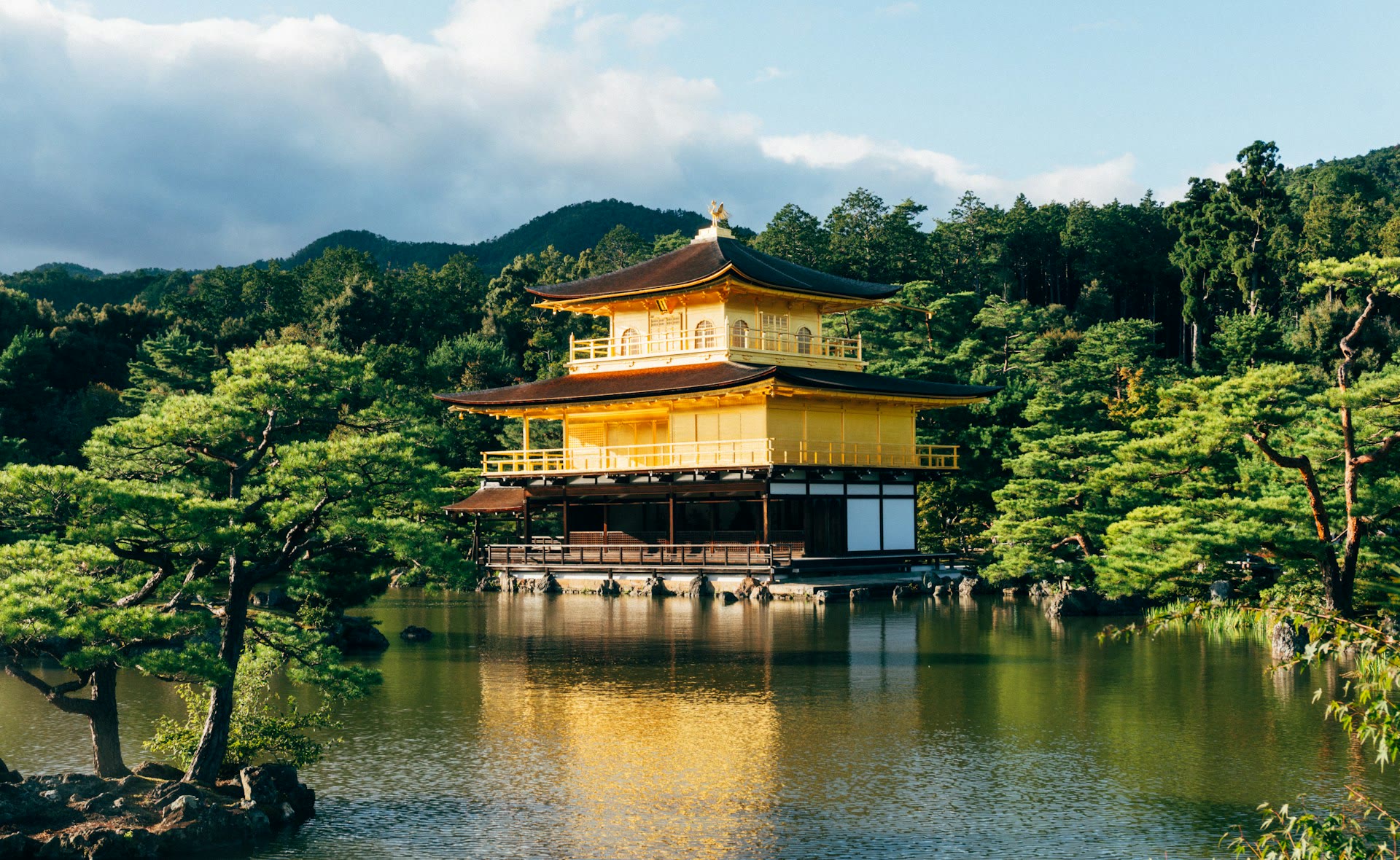
Kinkakuji is where Kyoto shows off: a pavilion covered in gold leaf, mirrored in Kyoko-chi pond, inside a garden of named islands, stones, a waterfall and a tea house. Its formal name is Rokuonji. Give it a focused stop and plan the journey into northwestern Kyoto as carefully as the time at the pond.
Choose a visit that fits your day
| Your priority | A workable plan | What to allow for |
|---|---|---|
| Golden Pavilion and its garden | Make Kinkakuji a focused stop and follow the visitor route | Walking, queues and time to look beyond the first pond view |
| Two contrasting temple gardens | Combine Kinkakuji with a separate Ryoanji visit | Another journey, another ticket and different opening hours |
| Arrival from Kyoto Station | Take the Karasuma subway to Kitaoji and change to a bus | The transfer and the final walk |
| A broader Kyoto day | Pick one more stop, then decide whether a transport pass pays off | Fares and covered routes, not the number of attractions |
One to one and a half hours is a good allowance for the grounds, the garden details and a few photographs. Add travel and waiting time separately, and do not squeeze every nearby temple into one afternoon.
Things to Do
Offers are only loaded from GetYourGuide after you click. GetYourGuide can then process your IP address and set cookies. Privacy Policy
GetYourGuide partner offers. GoAsia may earn a commission if you book through these offers. Check whether tickets or transfers are included, and follow the attraction's official booking and admission rules.
Opening hours, admission and payment
Kinkakuji is open from 09:00 to 17:00 all year round.[1] Hours and the admission fee may change for special exhibitions.[2] Arrive with time to see the garden rather than at 17:00.
Admission is JPY 500 for high-school students and adults, and JPY 300 for elementary and junior-high-school students.[1] Admission can be paid in cash or cashless with O mairi Pay; the cashless option does not cover amulets or goshuin.[1] Keep some cash for those.
From Kyoto Station: subway and bus, or a direct bus?
Kyoto's official access guide recommends the Karasuma subway from Kyoto Station to Kitaoji, then City Bus 204 or 205 from the blue bus stops (E to G) at Kitaoji Bus Terminal to Kinkakuji-michi. The bus takes about 11 minutes, and the temple entrance is about 5 minutes on foot from the stop.[3]
Bus 205 also leaves directly from Kyoto Station, but it takes a long time because of the many stops and the congestion on board.[3] The route 205 timetable lists Kyoto Station and Kinkakuji-michi; board a bus bound for Kinkakuji, not one heading back to the station.[4]
If you are already on the JR Sagano Line, get off at Enmachi and take city bus 204 or 205. In the tourist season you may not be able to board a crowded bus.[3]
Compare fares before buying a day pass
The subway from Kyoto to Kitaoji costs JPY 260 for adults and JPY 130 for children (fares effective from 1 October 2025).[5] A regular flat-fare city bus ride costs JPY 230 for adults and JPY 120 for children; sightseeing limited-express buses cost JPY 500 and JPY 250, and non-flat-fare zones have their own fares.[6]
The Subway and Bus One-Day Pass costs JPY 1,100 for adults and JPY 550 for children. It is valid on the day you activate it, not for 24 hours. It covers all subway lines and all city bus routes plus some Kyoto Bus and Keihan Bus routes, and you can buy it at subway stations, on any city bus, at the information centre and at selected convenience stores; the supply on buses may sell out.[7]
Add up your planned rides before you buy. Two adult flat-fare bus rides cost JPY 460, which does not justify a JPY 1,100 pass; a day with more subway and bus rides might. The old JPY 700 Bus One-Day Pass is gone: sales ended on 30 September 2023 and it was valid until 31 March 2024.[8]
Understand the three floors and the gold
Each floor has its own style. The first, Hossui-in, is built in the shinden-zukuri style of Heian palaces. The second, Cho'on-do, follows the buke-zukuri style of samurai houses. The third, Kukkyo-cho, is in the style of a Chinese Zen temple.[9]
Gold leaf covers the lacquered second and third floors. The roof is shingled with countless thin planks of sawara cypress, and a phoenix, an auspicious symbol in China, shines on top.[9] The lacquer and gilding were renewed in autumn 1987.[9] Look at the roofline and the three different floors as well as the gold.
Follow the garden beyond the pond photograph
Kyoko-chi is the pond facing the pavilion, with islands such as Ashiharajima set into it.[9] Compare how islands, stones and pavilion sit together from the viewpoints along the path.
Further along you pass Gingasen, the Milky Way Spring, and Gankasui, a stream said to be where Yoshimitsu washed his hands. The Ryumon waterfall, 2.3 metres tall, is topped by a carp stone.[9] At Anmintaku pond, surrounded by deep forest, stands the White Snake Mound, and near the end of the garden the Sekkatei tea house is built in the sukiya style.[9]
Ashikaga Yoshimitsu, fire and reconstruction
Ashikaga Yoshimitsu began building his Kitayama residence here in 1397, and after his death it became a Zen temple according to his will. The formal name is Rokuonji, and the temple belongs to the Shokokuji branch of the Rinzai school.[10]
In 1950 a young monk burned the pavilion down, and it was rebuilt in 1955.[11] What you see today is therefore a reconstruction of the original design, not medieval timber.
Kinkakuji is part of the Historic Monuments of Ancient Kyoto, a UNESCO World Heritage property of seventeen component parts in Kyoto, Uji and Otsu.[12]
Weather, mobility and parking
The pond reflection depends on light and wind, and snow, blossom or autumn colour never come with a date. No season or hour guarantees an empty garden. If steps or long standing are a concern, ask the staff about the visitor route.
The temple car parks are open from 08:40 to 17:10. A passenger car pays JPY 400 for the first 60 minutes and JPY 200 for every further 30 minutes.[1]
Should you add Ryoanji?
Ryoanji is a good second temple when you want a contrasting garden instead of another gold pavilion, and Kyoto's destination page lists it among the nearby places.[11] Treat it as a separate visit.
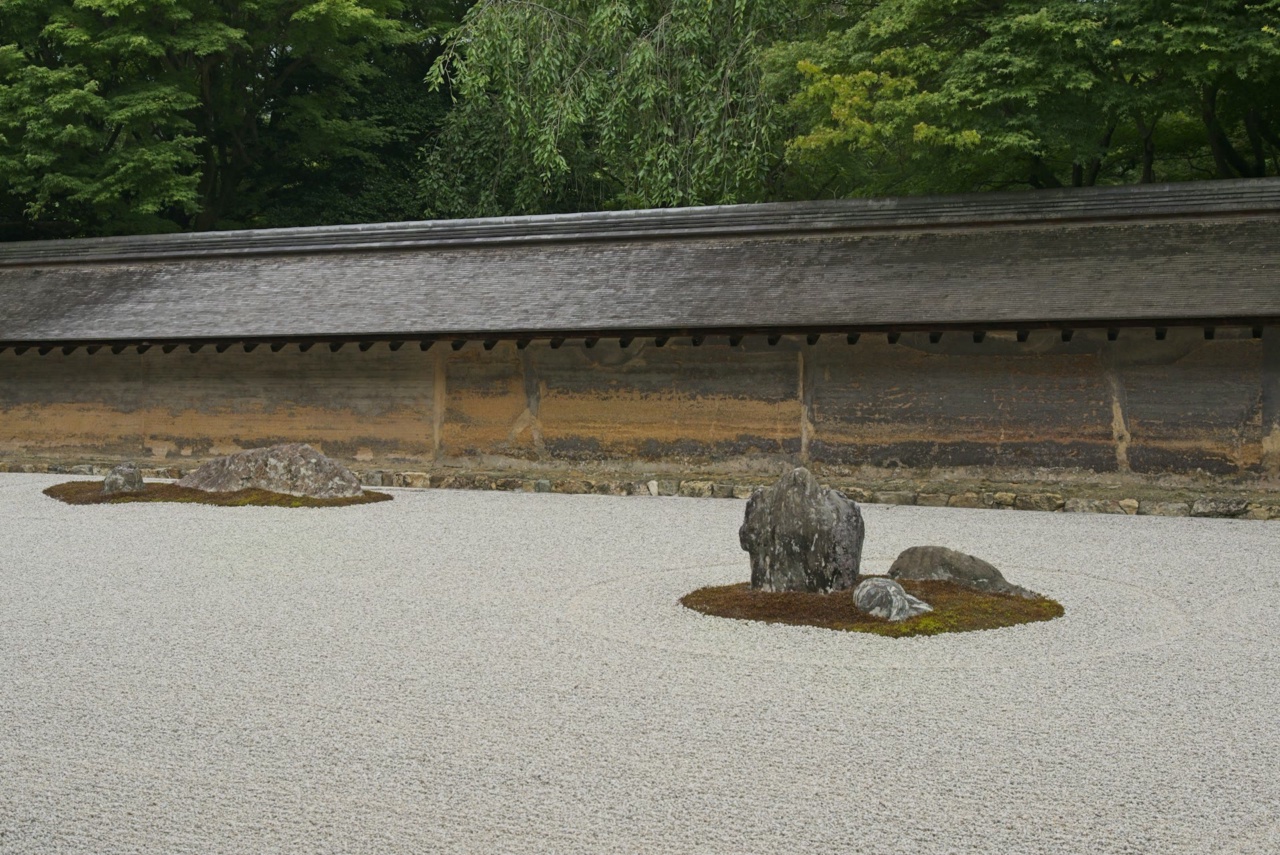
Ryoanji charges JPY 600 for adults, JPY 500 for high-school students and JPY 300 for elementary and junior-high students. It is open from 08:00 to 17:00 from March to November and from 08:30 to 16:30 from December to February.[13] The two adult entries together cost JPY 1,100 before transport. If you prefer a city-centre stop, compare the Nijo Castle visit. For another Kyoto excursion, use the Arashiyama guide. The Japan travel overview helps place Kyoto within a wider trip.
Sources and background
Numbers in the text such as [1] refer to these sources.
- [1] Shokoku-ji Temple: Access: hours, admission, payment, parking (Japanese). Retrieved October 21, 2026.
- [2] Shokoku-ji Temple: Access (English). Retrieved October 21, 2026.
- [3] Kyoto City Tourism Association: Comfortable access to Kinkaku-ji Temple / Kinugasa. Retrieved October 21, 2026.
- [4] Kyoto City Transportation Bureau: City bus route 205 timetable. Retrieved October 21, 2026.
- [5] Kyoto City Transportation Bureau: Subway fare. Retrieved October 21, 2026.
- [6] Kyoto City Transportation Bureau: City bus fare. Retrieved October 21, 2026.
- [7] Kyoto City Transportation Bureau: Subway and Bus One-Day Pass. Retrieved October 21, 2026.
- [8] Kyoto City Transportation Bureau: Bus One-Day Pass: sales ended 30 September 2023. Retrieved October 21, 2026.
- [9] Shokoku-ji Temple: Guide (architecture and garden). Retrieved October 21, 2026.
- [10] Shokoku-ji Temple: About Kinkakuji (history, Japanese). Retrieved October 21, 2026.
- [11] Kyoto City Tourism Association: Kinkaku-ji Temple (The Golden Pavilion). Retrieved October 21, 2026.
- [12] UNESCO World Heritage Centre: Historic Monuments of Ancient Kyoto (Kyoto, Uji and Otsu Cities). Retrieved October 21, 2026.
- [13] Ryoanji Temple: Ryoanji: admission and hours. Retrieved October 21, 2026.
Frequently Asked Questions
Kinkakuji is open from 09:00 to 17:00 all year round. Hours and the admission fee may change for special exhibitions.
JPY 500 for high-school students and adults, JPY 300 for elementary and junior-high-school students. You can pay in cash or cashless with O mairi Pay, except for amulets and goshuin.
Yes, for admission: the temple accepts cash and cashless payment with O mairi Pay. The cashless option does not cover amulets or goshuin, so keep some cash.
Take the Karasuma subway to Kitaoji and change to City Bus 204 or 205 for Kinkakuji-michi. The bus takes about 11 minutes and the temple is about 5 minutes on foot from the stop. Bus 205 also runs directly from Kyoto Station but is slow because of stops and congestion.
No. Sales of the Bus One-Day Pass ended on 30 September 2023, and it was valid until 31 March 2024. The current Subway and Bus One-Day Pass costs JPY 1,100 for adults and JPY 550 for children and is valid on the day you activate it.
One to one and a half hours is a good allowance for the grounds, the garden details and photographs. Add travel and waiting time separately.
No. A monk burned the pavilion down in 1950 and it was rebuilt in 1955. The lacquer and gilding were renewed in autumn 1987.
Yes, as two separate visits with separate tickets and a journey between them. Ryoanji charges JPY 600 for adults and opens 08:00 to 17:00 from March to November and 08:30 to 16:30 from December to February. The two adult entries together cost JPY 1,100.