Sensoji Temple: A Practical Route through Asakusa
Photo: ITO JUNICHI / Pexels
Contents
- 1. Choose the visit that fits your day
- 2. Main-hall hours and a realistic budget
- 3. Arrive at the right Asakusa station
- 4. A route from Kaminarimon to the main hall
- 5. The temple's origin and Kannon
- 6. Prayer, purification and omikuji
- 7. Pagoda and Denboin
- 8. Nakamise snacks
- 9. Finish the visit
- 10. Sources and background
- 11. Frequently Asked Questions
Sensoji is a working Buddhist temple, and the best way to see it is to walk the whole approach: Kaminarimon, the Nakamise shopping street, Hozomon and the main hall. Come for worship, snacks or architecture, and give each its own stop.
Choose the visit that fits your day
| Your priority | A good plan | Keep in mind |
|---|---|---|
| Temple worship and main-hall interior | Visit during main-hall hours and follow the signs | The hall keeps its own hours, separate from the shops |
| Nakamise shops and snacks | Give the shopping street its own stop between the two gates | Each shop sets its own hours, and the popular stalls have queues |
| Architecture and photographs | Compare Kaminarimon, Hozomon, the hall and the pagoda | Most of what you see is a postwar rebuild, not original ancient fabric |
| A visit with mobility needs | Use the elevator to the left of the main hall and the accessible toilets | The temple has no ostomy facility[1] |
Allow one to two hours for the central approach, a visit to the hall and a snack stop. Festivals and queues can stretch that, so keep your onward connection loose.
Things to Do
Offers are only loaded from GetYourGuide after you click. GetYourGuide can then process your IP address and set cookies. Privacy Policy
GetYourGuide partner offers. GoAsia may earn a commission if you book through these offers. Check whether tickets or transfers are included, and follow the attraction's official booking and admission rules.
Main-hall hours and a realistic budget
The main hall opens at 06:00 from April to September and 06:30 from October to March, and closes at 17:00.[2] Nakamise stalls start later: Kimuraya, for example, opens at 09:30.[3] Come early for the hall and the quiet, and later in the day for photographs, but mind the 17:00 hall closing.
Ordinary temple visiting is free.[4] Offerings, special prayers and snacks cost extra, so budget those separately and pay in yen at the stall or counter.
Arrive at the right Asakusa station
Four separate Asakusa stations lie about five minutes' walk from the temple: Tobu Skytree Line, Tokyo Metro Ginza Line, Tsukuba Express and Toei Asakusa Line (exit A4).[5] Check which line you are on before you leave, because the stations are not interchangeable platforms.
The temple has no car park. If you drive, use a nearby car park such as the Taito City Kaminarimon underground car park.[5] If you take a taxi, agree a drop-off point and walk the rest, because cars cannot drive through Nakamise.
A route from Kaminarimon to the main hall
Kaminarimon, the Thunder Gate, is the temple's outer gate, guarded by the wind and thunder gods. The red lantern under the roof is 3.9 metres high, 3.3 metres wide and weighs about 700 kilograms, with a carved dragon on its underside.[6] Step aside to take photographs so the passage stays clear.
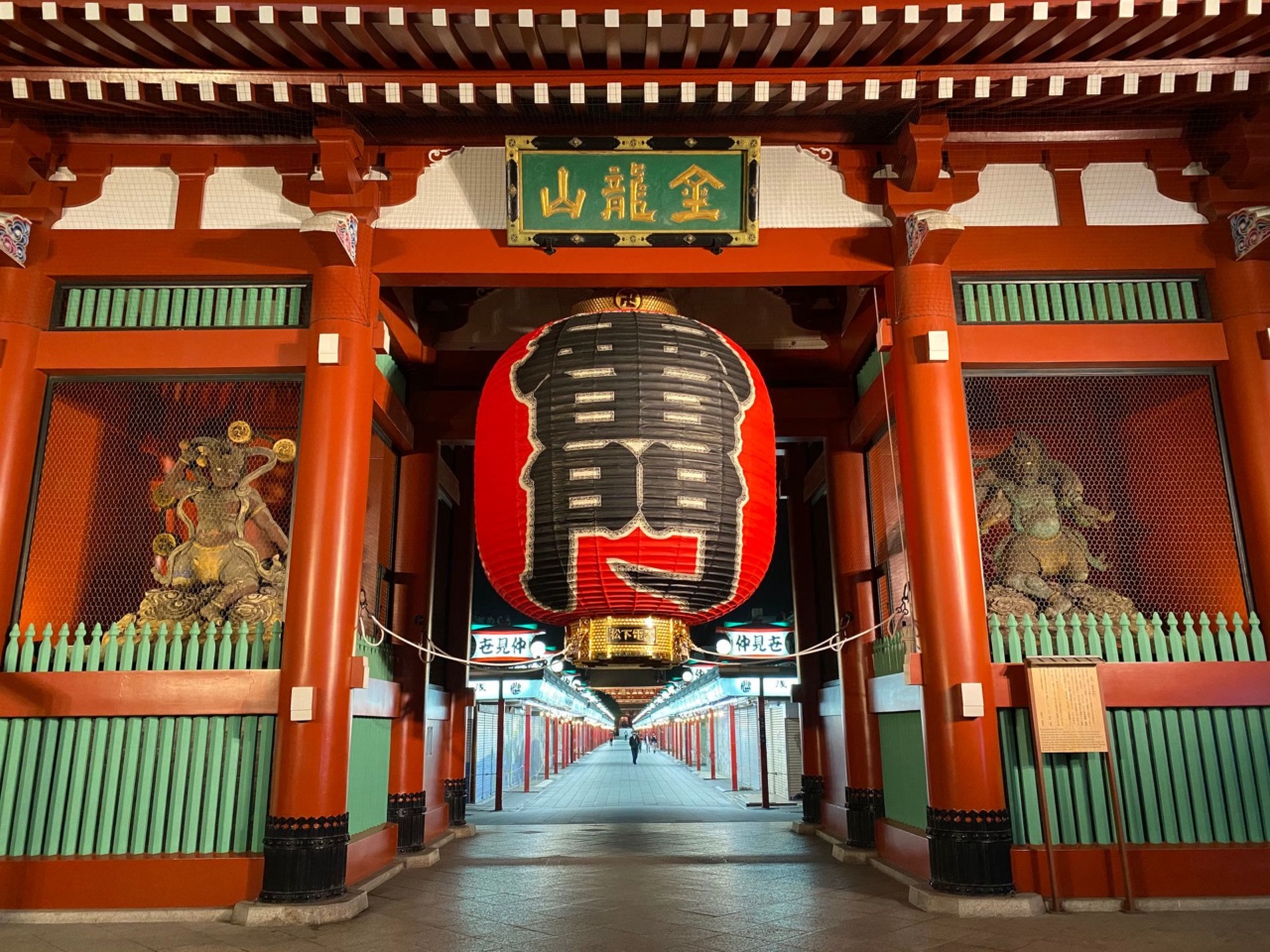
The gate burned down in 1865 and stood empty for 95 years until it was rebuilt in 1960 with a donation from Matsushita Konosuke.[6]
Nakamise runs about 250 metres from Kaminarimon to Hozomon and counts as one of Japan's oldest shopping streets.[7] Stalls first appeared around 1685, when the temple let neighbours who kept the precinct clean set up booths. The street was rebuilt after the 1923 earthquake and repaired after the 1945 air raids.[7]
At Hozomon, look for the Nio guardians and, at the rear, a pair of giant straw sandals about 4.5 metres high.[8] The present gate dates from 1964, after the 1945 air raids destroyed its predecessor.[8]
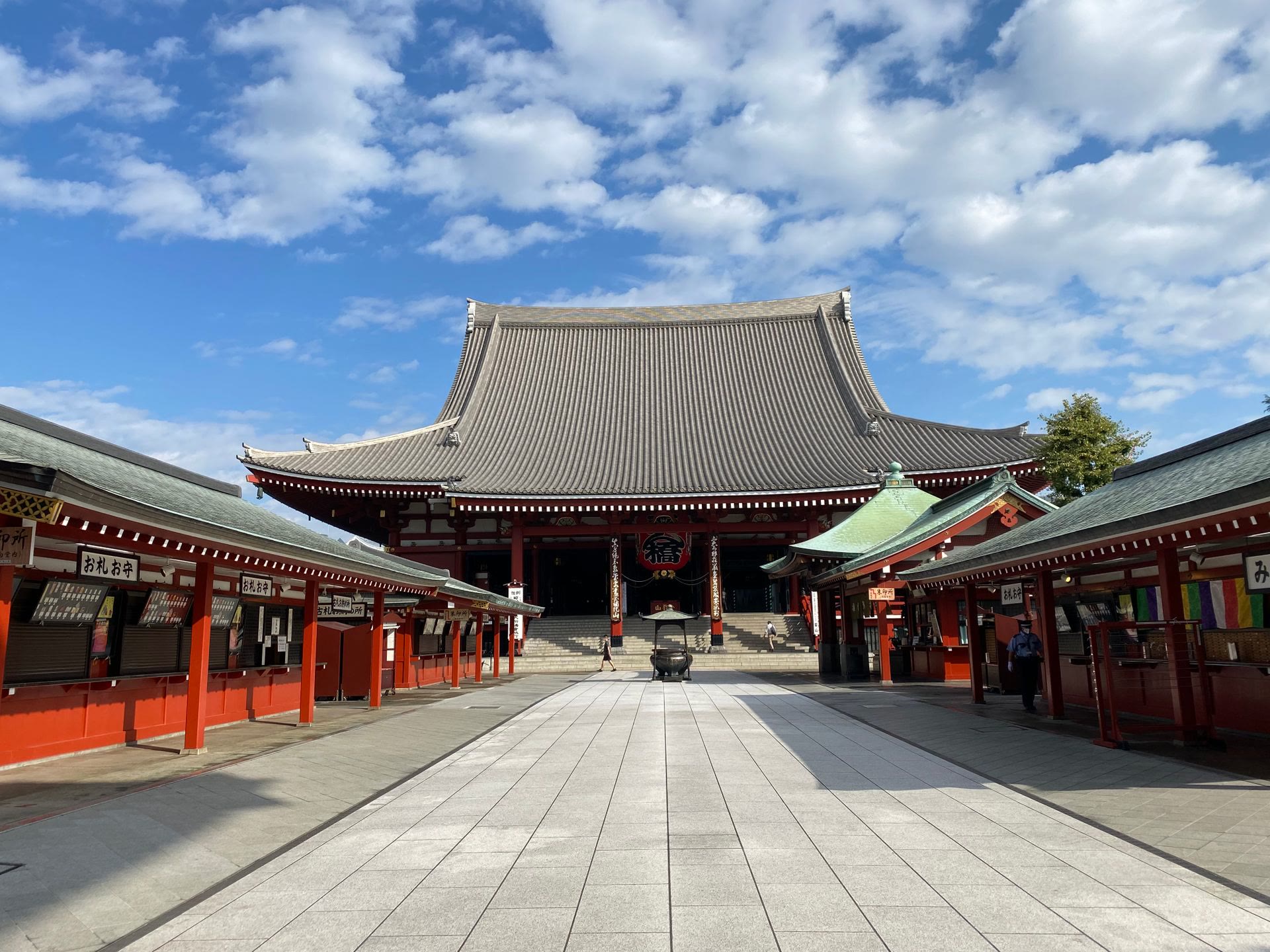
The main hall was rebuilt in 1958 after the 1945 air raids destroyed the old one, and its roof was relaid with titanium tiles in 2010.[9] Take off your shoes to step up onto the tatami of the inner sanctuary. Look up at the outer hall ceiling: a dragon by Kawabata Ryushi fills the centre, flanked by paintings by Domoto Insho.[9]
The temple's origin and Kannon
According to the temple, the brothers Hinokuma Hamanari and Hinokuma Takenari pulled a statue of Kannon from the Sumida River on 18 March 628, and the village headman Haji no Nakatomo turned his home into a temple. The monk Shokai built a hall in 645.[10] Kannon is the bodhisattva of mercy. The original image has been kept hidden since 645.[10] Only the substitute image is shown, once a year on 13 December at 14:00.[1]
Sensoji is Tokyo's oldest temple and draws about 30 million worshippers and visitors a year.[10]
Prayer, purification and omikuji
At the main hall, place your hands together and say "Namu Kanzeon Bosatsu".[10] Do not clap as you would at a Shinto shrine. The temple belongs to the Sho Kannon sect.[1]
At the purification basin, wash your left hand, then your right, then pour water into your left hand to rinse your mouth. Never put the ladle to your lips.[11]
Sensoji's omikuji are the Kannon Hyakusen. Bad fortunes are common here, and the temple says they turn to good with patience and sincerity. Return the numbered stick to its box and tie a bad fortune at the marked place on the grounds.[1] Waft incense smoke over yourself as well: it is said to cure ailments and bring good health.[4]
Pagoda and Denboin
The five-storey pagoda is a steel and reinforced-concrete rebuild from 1973, 53 metres above ground. Its top floor holds a relic received in 1966 from the Isurumuniya temple in Sri Lanka.[12] It is a place of worship, not a viewing tower.
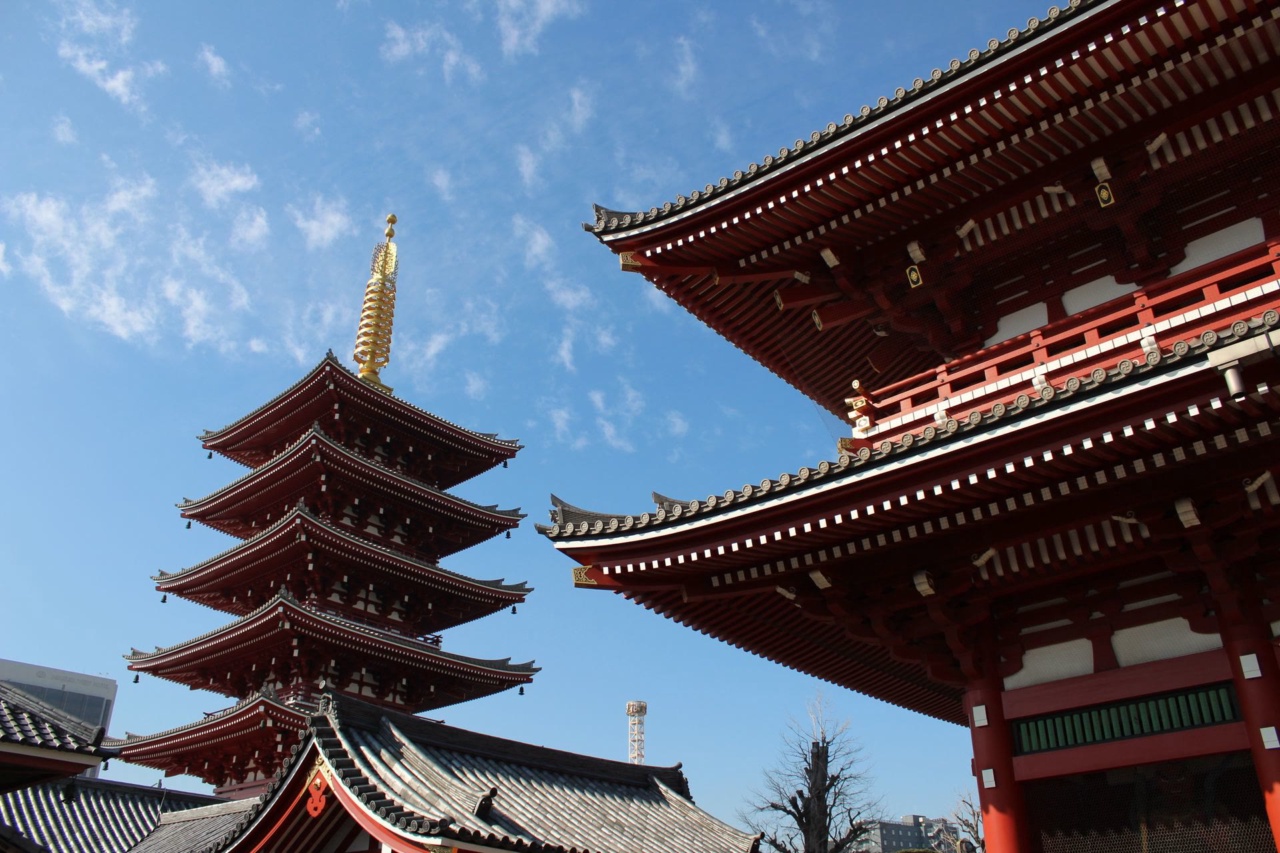
Denboin is the temple's head residence, with a garden designated a national place of scenic beauty. The garden is not open to the public, though special openings take place from time to time.[13] Include it only if an announcement confirms an opening during your trip.
Nakamise snacks
Kimuraya sells ningyo-yaki, small baked cakes filled with Hokkaido Tokachi azuki beans and shaped like a pigeon, pagoda, lantern or thunder god, from 500 yen.[3] At Nakatomi Shop, age-manju are fried in batter in plain, plum, matcha and sesame versions at 120 yen each.[14] Azuma makes kibi-dango in front of you and sells five skewers for 350 yen.[15]
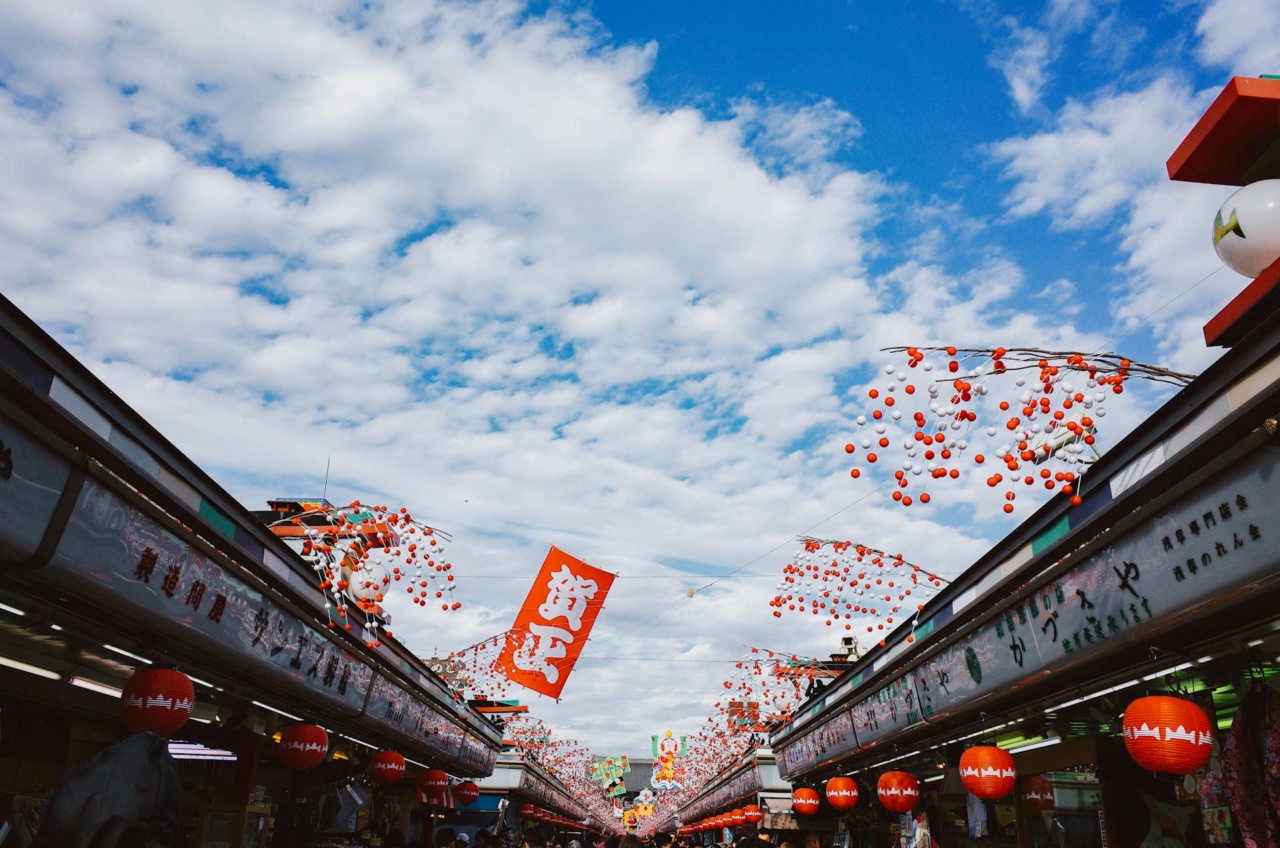
Eat at the stall and keep food and packaging away from the worship spaces. Ask about ingredients if you have allergies.
Finish the visit
An elevator stands on the left as you face the main hall, and accessible toilets are to the right of Hozomon and behind the main hall.[1] The grounds are flat.[1]
If you still have time, take a meal or a walk in the surrounding Asakusa district. For planning beyond Tokyo, use the Japan travel overview.
Sources and background
Numbers in the text such as [1] refer to these sources.
- [1] Senso-ji: Sensoji: worship, omikuji and accessible facilities. Retrieved October 21, 2026.
- [2] Senso-ji: Sensoji main-hall opening and prayer information. Retrieved October 21, 2026.
- [3] Asakusa Nakamise Shopping Street: Nakamise shop directory: Hatomark Kimuraya ningyo-yaki. Retrieved October 21, 2026.
- [4] Tokyo Convention & Visitors Bureau: Sensoji Temple visitor overview. Retrieved October 21, 2026.
- [5] Senso-ji: Sensoji official station approaches. Retrieved October 21, 2026.
- [6] Senso-ji: Kaminarimon: fire, reconstruction and great lantern. Retrieved October 21, 2026.
- [7] Senso-ji: Nakamise: origins and shopping-street history. Retrieved October 21, 2026.
- [8] Senso-ji: Hozomon: guardians and temple treasures. Retrieved October 21, 2026.
- [9] Senso-ji: Main hall: reconstruction and interior. Retrieved October 21, 2026.
- [10] Senso-ji: Asakusa Kannon Sensoji. Retrieved October 21, 2026.
- [11] Senso-ji: Sensoji purification instructions. Retrieved October 21, 2026.
- [12] Senso-ji: Five-storey pagoda: construction and memorial use. Retrieved October 21, 2026.
- [13] Senso-ji: Denboin buildings and normally non-public garden. Retrieved October 21, 2026.
- [14] Asakusa Nakamise Shopping Street: Nakamise shop directory: Nakatomi Shop fried manju. Retrieved October 21, 2026.
- [15] Asakusa Nakamise Shopping Street: Nakamise shop directory: Azuma kibi-dango. Retrieved October 21, 2026.
Frequently Asked Questions
The main hall opens at 06:00 from April to September and 06:30 from October to March, and closes at 17:00. Shops on Nakamise keep their own hours.
No. Ordinary temple visiting is free. Offerings, special prayers and snacks cost extra.
Allow one to two hours for the main approach, the hall and a snack stop. Queues, meals and festivals can extend that.
Four stations called Asakusa lie about five minutes' walk from the temple: Tobu Skytree Line, Tokyo Metro Ginza Line, Tsukuba Express and Toei Asakusa Line (exit A4). Check your line before you leave.
No. At the main hall you place your hands together in prayer, as at any Buddhist temple. Clapping belongs to Shinto shrines.
The garden is not open to the public, though special openings take place from time to time. Check for an announcement before you plan around one.
No. The original image has been kept hidden since 645, and the substitute image is shown only once a year on 13 December. The pagoda is a place of worship, not a viewing tower.
Try ningyo-yaki baked cakes with azuki filling, batter-fried age-manju and freshly made kibi-dango on skewers. Snacks start at about 120 yen.