
Getting Around Sanur - Local Transport Guide for Bali's Relaxed Beach Town
Contents
- 1. Getting Around Sanur on Foot
- 2. Getting Around Sanur by Bicycle
- 3. Getting Around Sanur by Motorbike or Scooter
- 4. Getting Around Sanur by Ride-Hailing Apps (Grab and Gojek)
- 4.1 Motorbike Taxis (Ojek)
- 5. Getting Around Sanur by Taxi
- 6. Getting Around Sanur by Private Driver or Car Rental
- 7. Getting Around Sanur by Boat
- 8. Getting Around Sanur by Shuttle Van or Shared Transport
- 9. Comparing Your Options
- 10. Practical Tips for Getting Around Sanur
- 11. Popular Routes and Destinations
- 12. Frequently Asked Questions
Sanur moves at its own pace. Unlike the frenetic energy of Kuta or the traffic-choked streets of Seminyak, this coastal strip on Bali's southeast shore has a gentle, almost village-like rhythm. The main drag, Jalan Danau Tamblingan, runs parallel to the beach and serves as the town's spine, lined with warungs, boutique hotels, and art galleries. Most of what you need sits within a few kilometers of this road, making Sanur one of the most manageable places in Bali to navigate on foot, by bicycle, or with a short ride.
That said, Sanur is not an island unto itself. You will likely want to reach Ubud, Uluwatu, Seminyak, or the airport at some point, and the town's mellow infrastructure means there is no public bus network or metro to rely on. Instead, you will piece together a mix of ride-hailing apps, rented scooters, local drivers, and your own two feet. The good news is that this patchwork system works remarkably well once you understand how it fits together.
Sanur's flat terrain and relatively quiet roads also make it one of the rare spots in Bali where cycling is genuinely pleasant rather than terrifying. The beachfront path stretches for roughly five kilometers, connecting the northern end near the Inna Grand Bali Beach hotel all the way south past Sindhu Beach and beyond. For a first-time visitor, the simplicity of getting around here is a welcome relief after the chaos of southern Bali.
Getting Around Sanur on Foot
Walking is the most natural way to experience Sanur, and the town rewards it. The beachfront promenade is paved, shaded in parts by frangipani and coconut palms, and connects the main beaches, restaurants, and hotels along the coast. You can stroll from the northern end to the southern tip in about an hour at a leisurely pace. The path is flat and well-maintained, though some sections narrow where tree roots have cracked the concrete.
Inland, Jalan Danau Tamblingan and the parallel Jalan Danau Poso are easy to walk, with sidewalks that are passable if not always smooth. Most restaurants, money changers, minimarkets, and dive shops cluster along these roads, so you rarely need to venture far. The side streets (gangs) that connect the main roads to the beach are short and quiet, usually just a few hundred meters long.
The main limitation of walking is the heat. Midday sun in Sanur can be punishing, especially between 11 a.m. and 3 p.m. Carry water, wear a hat, and time your longer walks for early morning or late afternoon. At night, the main roads are reasonably well-lit, but the smaller gangs can be dark, so a phone flashlight helps.
Getting Around Sanur by Bicycle
Sanur is arguably the best town in Bali for cycling. The flat coastal terrain, relatively low traffic density, and the dedicated beachfront path make it ideal. Many guesthouses and hotels offer free bicycles for guests, and rental shops along Jalan Danau Tamblingan charge around 30,000 to 50,000 IDR (roughly $2 to $3) per day for a basic single-speed bike.
The beachfront path is the highlight. It is wide enough for two-way bicycle traffic in most sections, and you can cruise from Sanur's northern hotels down to Mertasari Beach in the south in about 15 to 20 minutes. Along the way, you pass local fishing boats, small temples, and beachside cafes where you can stop for a fresh coconut.
For road cycling, stick to the quieter side streets and avoid Jalan Bypass Ngurah Rai, the main highway that borders Sanur to the west. This road carries fast-moving traffic and has no bike lane. Within the town grid, however, cars and scooters generally move slowly, and drivers are accustomed to sharing the road with cyclists. Just be cautious at intersections and watch for dogs lounging in the middle of the road.
Getting Around Sanur by Motorbike or Scooter
Renting a scooter opens up not just Sanur but the wider Bali area. Rental shops are everywhere along the main roads, and most hotels can arrange one for you. Expect to pay around 60,000 to 80,000 IDR (roughly $4 to $5) per day for a Honda Vario or similar automatic scooter. Weekly rates bring the daily cost down further.
You will need an international driving permit with a motorcycle endorsement to ride legally in Indonesia. Police checkpoints targeting foreign riders have become increasingly common, and fines typically run around 500,000 IDR ($32) if you are caught without proper documentation. More importantly, Bali's roads can be unpredictable, with potholes, stray dogs, sudden rain, and other riders weaving through traffic. If you have never ridden a motorbike before, Sanur's quiet streets are a forgiving place to learn, but consider whether you are truly comfortable before venturing onto busier roads toward Denpasar or Ubud.
Within Sanur itself, a scooter is convenient for reaching the southern beaches, the morning market near Sindhu, or the Hardy's supermarket on the bypass road. Parking is easy and usually free at shops and restaurants. Fuel stations (Pertamina) are located along the bypass road, and you will also find small roadside stalls selling petrol in recycled Absolut vodka bottles for a slight markup.
Getting Around Sanur by Ride-Hailing Apps (Grab and Gojek)
Grab and Gojek are the two dominant ride-hailing platforms in Bali, and both work well in Sanur. You can order a car (GrabCar or GoCar) or a motorbike taxi (GrabBike or GoRide) through the apps. Payment can be made in cash or through the app's digital wallet (GrabPay or GoPay), which you can top up at convenience stores like Indomaret and Alfamart.
A GrabBike or GoRide trip within Sanur typically costs between 10,000 and 20,000 IDR (around $1). A car ride within town runs roughly 20,000 to 40,000 IDR ($1 to $3). Rides to destinations outside Sanur, such as Ubud or Seminyak, will cost significantly more but are still affordable compared to traditional taxis.
There is one important catch. Some areas in Bali, including parts of Sanur, have informal restrictions on ride-hailing pickups due to pressure from local taxi cooperatives. In practice, this means that a Grab or Gojek driver may ask you to walk to a nearby pickup point rather than collecting you directly from your hotel entrance. This is not universal, and the situation has relaxed in recent years, but it is worth knowing. If a driver cancels on you, try ordering again or walk a short distance to a main road. Drop-offs are generally not a problem anywhere.
Motorbike Taxis (Ojek)
Before the apps, ojek drivers were the go-to option for short hops. You will still see them waiting at intersections and near markets. Prices are negotiable, and you should agree on a fare before hopping on. For short trips within Sanur, expect to pay around 20,000 to 30,000 IDR. The app-based versions are almost always cheaper and more transparent, but a traditional ojek can be useful when your phone battery is dead or you are in an area with poor signal.
Getting Around Sanur by Taxi
Metered taxis are less common in Sanur than in Kuta or Seminyak, but you will see the light blue Bluebird taxis cruising the main roads. Bluebird is the most reputable taxi company in Bali, and their drivers consistently use the meter. The base fare is around 7,000 IDR, with roughly 6,500 IDR per kilometer after that. A trip from one end of Sanur to the other should cost around 30,000 to 50,000 IDR ($2 to $3).
Other taxi companies operate in the area, and some are less reliable about using meters. If a driver refuses to turn on the meter or quotes a flat fare that sounds high, politely decline and find another cab or use Grab instead. The Bluebird app (My Blue Bird) also lets you book their taxis directly, which can be more convenient than flagging one down.
For longer trips, such as a day out to Ubud or the eastern beaches, many travelers negotiate a flat rate with a local driver. Hotels and guesthouses can arrange this, or you can ask around at the transport stands along Jalan Danau Tamblingan. A full day with a private driver typically costs between 500,000 and 700,000 IDR ($32 to $45), including fuel, which is excellent value if you want to explore multiple destinations without the stress of riding a scooter on unfamiliar roads.
Getting Around Sanur by Private Driver or Car Rental
Hiring a private driver for a half-day or full-day excursion is one of the most popular transport choices for visitors based in Sanur. Drivers double as informal guides, suggesting stops and waiting patiently while you explore temples or rice terraces. This is particularly useful for reaching places like Ubud, Kintamani, Tirta Empul, or the eastern coast, where public transport is nonexistent.
Self-drive car rental is available but not recommended for most visitors. Bali's roads require assertive driving, and the rules of the road are more like suggestions. Insurance coverage on rental cars is often limited, and navigating Denpasar's one-way systems and narrow village roads can be stressful. If you do rent, expect to pay around 200,000 to 300,000 IDR ($13 to $19) per day for a basic Toyota Avanza or similar.
Getting Around Sanur by Boat
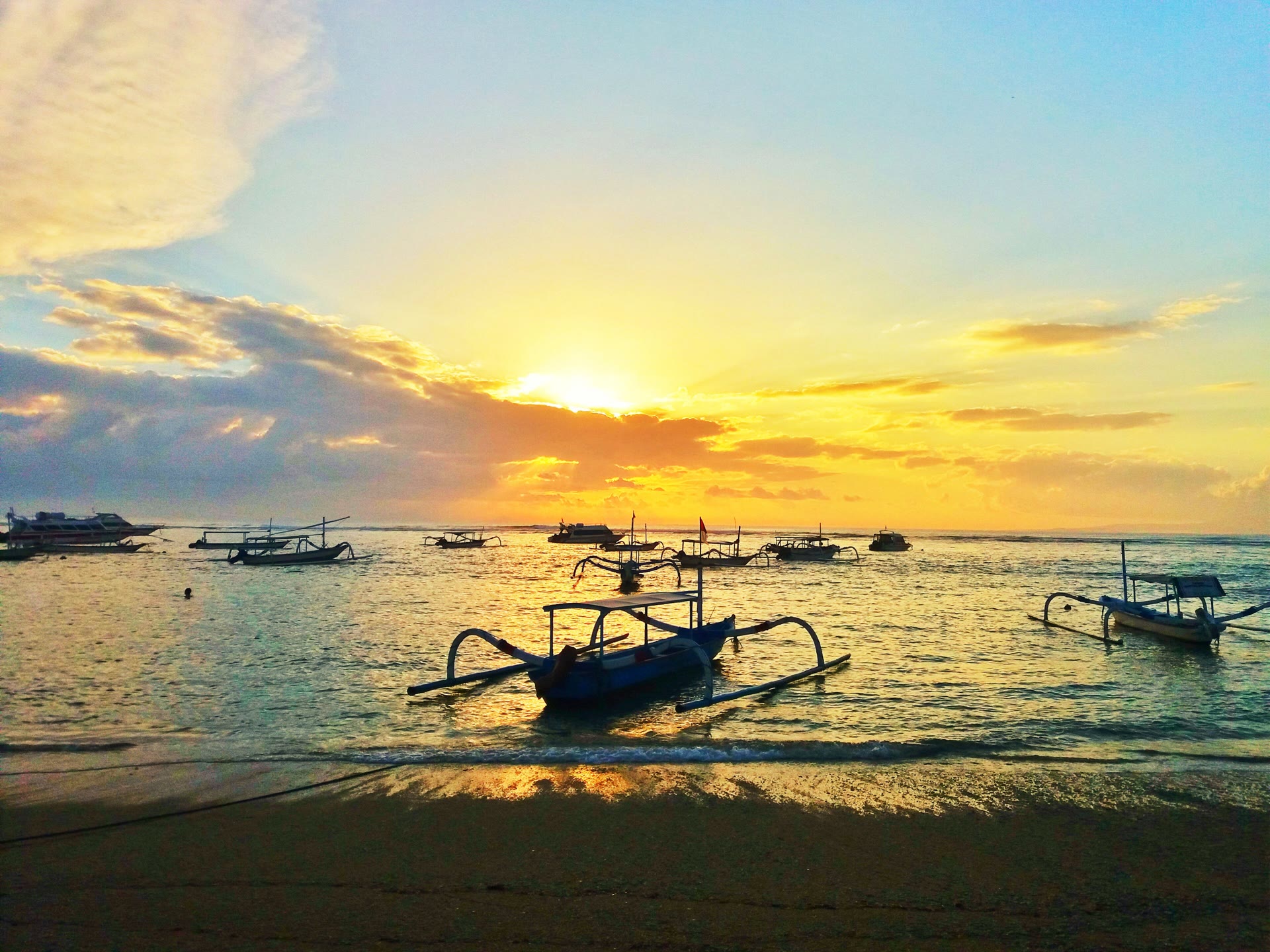
Sanur's beach is the main departure point for fast boats to Nusa Lembongan, Nusa Penida, and Nusa Ceningan. This is less about getting around Sanur itself and more about using Sanur as a gateway, but it is essential information for anyone staying here.
Multiple boat operators run daily services from the beach near Jalan Hang Tuah. The crossing to Nusa Lembongan takes around 30 minutes, and tickets typically cost between 150,000 and 250,000 IDR ($10 to $16) one way, depending on the operator and whether you book online or at the counter. Popular operators include Rocky Fast Cruises, Maruti Express, and D'Camel Fast Ferry. Boats depart throughout the morning, with the earliest around 7:30 a.m. and the last departure usually around 3 to 4 p.m.
Book your tickets a day in advance during peak season (July through August and around Christmas), as boats do sell out. Most operators include hotel pickup within Sanur as part of the ticket price, so check when booking. You can compare boat options and other transport on GoAsia.cc to find the best fit for your schedule.
Getting Around Sanur by Shuttle Van or Shared Transport
Shared shuttle vans, sometimes called tourist shuttles, connect Sanur with other major tourist hubs across Bali. The Kura-Kura Bus previously served this role with fixed routes, though service has been inconsistent. The Perama shuttle service has been a budget traveler staple for years, with scheduled departures to Ubud, Kuta, the airport, Lovina, and Padang Bai (the port for Lombok ferries).
Fares are very reasonable. A shuttle from Sanur to Ubud, for example, typically costs around 60,000 to 80,000 IDR ($4 to $5). Departures are usually once or twice daily, so you need to plan around their schedule rather than traveling on impulse. Book at least a day ahead at the Perama office on Jalan Hang Tuah or through your hotel.
Comparing Your Options
| Mode | Typical Cost | Duration | Best For |
|---|---|---|---|
| Walking | Free | Varies | Beachfront strolls, exploring Jalan Danau Tamblingan, short hops between nearby restaurants |
| Bicycle | $2-$3/day rental | Varies | Cruising the beachfront path, covering Sanur without breaking a sweat (much) |
| Motorbike/Scooter Rental | $4-$5/day | Varies | Freedom to explore Sanur and beyond at your own pace |
| Grab/Gojek (bike) | Around $1 | 5-15 min within Sanur | Quick trips when you do not want to walk or ride in the heat |
| Grab/Gojek (car) | $1-$3 within Sanur | 5-15 min within Sanur | Comfort in rain or with luggage, air-conditioned rides |
| Bluebird Taxi | $2-$3 within Sanur | 5-15 min within Sanur | Reliable metered rides, especially when apps are tricky |
| Private Driver (full day) | $32-$45/day | Full day | Day trips to Ubud, temples, or eastern Bali with zero stress |
| Shuttle Van | $4-$5 to Ubud | 1-1.5 hours | Budget-friendly intercity travel on a fixed schedule |
| Fast Boat | $10-$16 one way | 30 min | Day trips or transfers to Nusa Lembongan and Nusa Penida |
Practical Tips for Getting Around Sanur
Apps to download before you arrive:
- Grab and Gojek - essential for ride-hailing. Set up your account and add a payment method before landing in Bali. Both apps also offer food delivery, which is handy.
- Google Maps - works well for navigation in Sanur and across Bali. Download offline maps in case your data connection drops in rural areas.
- My Blue Bird - for booking Bluebird taxis directly if you prefer metered rides.
Cash is still king. While some Grab and Gojek payments can go through digital wallets, many local drivers, bicycle rental shops, and traditional ojek riders only accept cash. Keep a supply of small bills (10,000 and 20,000 IDR notes) for transport. ATMs are plentiful along Jalan Danau Tamblingan.
Rush hour realities. Sanur itself rarely has serious traffic, but the Jalan Bypass Ngurah Rai road that connects Sanur to the rest of southern Bali can be brutal during morning (7-9 a.m.) and evening (5-7 p.m.) rush hours. If you are heading to the airport or Kuta during these times, add at least 30 minutes to your estimated travel time.
Avoid common tourist mistakes:
- Do not rent a scooter without checking the brakes, lights, and horn first. Take a photo of any existing scratches before you ride off.
- Always wear a helmet. It is legally required, and head injuries are the leading cause of serious accidents among tourists in Bali.
- Do not assume Grab prices are fixed. Surge pricing applies during rain and peak hours.
- Never leave valuables in your scooter basket. Bag snatching, while rare in Sanur, does happen in busier areas of Bali.
Language tips. Most transport providers in Sanur speak basic English, but having your destination written in Bahasa Indonesia or showing it on Google Maps helps enormously. Useful phrases: Berapa harganya? (How much?), Tolong ke... (Please go to...), Kiri (Left), Kanan (Right), Berhenti di sini (Stop here).
Night transport. Sanur is quiet after dark. Most restaurants close by 10 or 11 p.m., and the streets empty out. Grab and Gojek still operate, though wait times may be longer. Walking along the main roads at night is generally safe, but the beachfront path is unlit and best avoided after dark.
Popular Routes and Destinations
Sanur to Ngurah Rai International Airport: The airport is roughly 14 kilometers southwest of Sanur. A shared shuttle van costs around $7 and takes about one hour, accounting for traffic. Grab or Gojek car rides typically cost between 80,000 and 130,000 IDR ($5 to $8) and can be faster outside rush hour, taking 25 to 40 minutes. A Bluebird taxi on the meter will fall in a similar range. If departing from the airport to Sanur, note that ride-hailing pickups at the airport require you to walk to a designated area outside the terminal. The official airport taxi counter charges a fixed fare of around 150,000 to 200,000 IDR.
Sanur to Ubud: About 25 kilometers north. A private driver or Grab car takes 45 minutes to 1.5 hours depending on traffic. Expect to pay around 150,000 to 250,000 IDR ($10 to $16) by app. The Perama shuttle is the budget option at roughly $4 to $5.
Sanur to Nusa Lembongan/Nusa Penida: Fast boats depart from Sanur beach daily. The 30-minute crossing costs $10 to $16 one way. Arrive at the departure point at least 30 minutes before your scheduled departure, as boarding can be chaotic during peak season.
Sanur to Seminyak/Kuta: Around 15 to 20 kilometers depending on your exact destination. A Grab car costs roughly 70,000 to 120,000 IDR ($5 to $8). Allow 30 minutes to over an hour depending on traffic conditions, particularly through Denpasar.
Frequently Asked Questions
Use this guide to compare local transport in Sanur. When bookable tickets are available, the booking tool shows current options and prices.
For short distances within Sanur, walking and cycling are the most enjoyable options thanks to the flat terrain and the five-kilometer beachfront promenade. For slightly longer trips or when the heat is too much, Grab and Gojek ride-hailing apps provide cheap and convenient motorbike or car rides. Renting a scooter gives you the most freedom if you are comfortable riding one.
Transport in Sanur is very affordable. Bicycle rentals cost around $2 to $3 per day, scooter rentals around $4 to $5 per day, and a Grab motorbike ride within town is typically around $1. Bluebird taxi rides across Sanur run about $2 to $3 on the meter. Hiring a private driver for a full day costs roughly $32 to $45.
Sanur does not have a traditional public transport system like buses or trains, but the transport options available are generally safe. Bluebird taxis and Grab or Gojek rides are reliable and well-regulated. Scooter riding carries the highest risk due to road conditions and other traffic. Always wear a helmet, check your scooter before riding, and avoid riding at night on unfamiliar roads.
Yes, both Grab and Gojek work in Sanur for car and motorbike rides. Occasionally, drivers may ask you to meet at a nearby main road rather than picking you up directly at your hotel, due to informal local taxi agreements. Drop-offs are not usually an issue. Download both apps and set them up before arriving for the smoothest experience.
Sanur is one of the most walkable towns in Bali. The beachfront promenade stretches about five kilometers and connects most of the main beaches, hotels, and restaurants. The main commercial streets, Jalan Danau Tamblingan and Jalan Danau Poso, are easy to navigate on foot. The biggest challenge is the midday heat, so plan longer walks for early morning or late afternoon.
Legally, yes. You need an international driving permit with a motorcycle endorsement to ride a scooter in Indonesia. Police checkpoints targeting tourists without proper documentation are common, and fines are typically around 500,000 IDR (about $32). Many rental shops will rent to you regardless, but riding without the correct permit also affects your travel insurance coverage in case of an accident.
The airport is about 14 kilometers from Sanur. A shared shuttle van costs around $7 and takes about one hour. A Grab or Gojek car ride typically costs $5 to $8 and takes 25 to 40 minutes outside of rush hour. Bluebird taxis on the meter fall in a similar price range. During morning and evening rush hours, allow extra time as traffic through the bypass road and Denpasar can be heavy.
Fast boats depart daily from Sanur beach, near Jalan Hang Tuah. The crossing to Nusa Lembongan takes about 30 minutes and costs $10 to $16 one way depending on the operator. Book at least a day in advance during peak season. Most boat operators include a free hotel pickup within Sanur as part of your ticket.
Guide prices and journey times are indicative, not live quotes. A booked package may include transfers and waiting time as well as the main journey. Check the selected offer, pickup point and current conditions before booking.