The first thing you notice about Ipoh is the quiet confidence. This city sits in a valley ringed by jagged limestone cliffs, and it carries itself like a place that knows exactly what it is. There are no theme parks or mega-malls vying for attention. Instead, Ipoh trades on substance: a bowl of silky smooth hor fun noodles, a walk through fading colonial shophouses, a cave temple carved into living rock. It is a city built on tin wealth that peaked a century ago, and that faded grandeur gives it a photogenic, unhurried charm.
Ipoh is a pilgrimage site for food lovers, many of whom travel specifically to eat here, and its hawker food has specialties you will struggle to find elsewhere. Beyond the food, the old town has undergone a gentle revival, with street art, independent cafes, and boutique hotels breathing new life into heritage buildings without erasing their character.
For international travelers, Ipoh works brilliantly as a two-to-three-day stop between Kuala Lumpur and Penang, or as a day-trip base for exploring the Cameron Highlands and the Royal Belum rainforest. It is not a city that will overwhelm you with a checklist of must-dos. Instead, it invites you to slow down, eat extraordinarily well, and appreciate a side of Malaysia that most tourists never see.
Orientation and Neighborhoods
Ipoh is bisected by the Kinta River, creating two distinct halves that locals simply call Old Town (west bank) and New Town (east bank). Understanding this split is the key to navigating the city.
Old Town
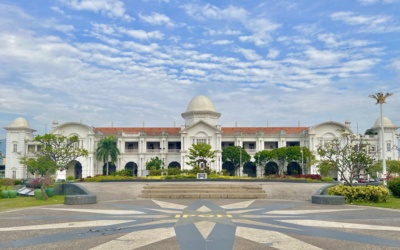
This is the historic heart, anchored by the stunning Ipoh Railway Station (nicknamed the "Taj Mahal of Ipoh") and a grid of colonial-era shophouses along Jalan Sultan Iskandar Shah, Jalan Bandar Timah, and the surrounding streets. Most of the heritage architecture, street art, boutique cafes, and popular hawker spots are concentrated here. If you only have one day, spend it in Old Town. This is also where most boutique hotels and hostels are located.
New Town
Across the river, New Town is more commercial and residential but holds some of Ipoh's most legendary eating spots, particularly along Jalan Yau Tet Shin and the surrounding lanes. The famous bean sprout chicken restaurants and several iconic coffee shops are here. It is a short walk from Old Town, or a short Grab ride.
Outskirts and Limestone Belt
The cave temples, limestone hills, and the Kek Lok Tong and Sam Poh Tong temple complexes lie in the limestone hills of Gunung Rapat just outside the city, where six cave temples sit side by side.[1] The Tambun area, home to hot springs and the Lost World theme park, lies to the northeast. You will need a car or Grab to reach these areas.
For first-time visitors, staying in Old Town is the obvious choice. You can walk to most attractions and food spots, and the neighborhood has the most character. Budget travelers will find affordable guesthouses here, while mid-range visitors can choose from several well-converted heritage hotels.
Best Time to Visit
Ipoh has a tropical climate, warm all year, and rain is possible in any month. Malaysia's Southwest Monsoon from late May to September is relatively drier, and the Northeast Monsoon from November to March is the main rainy season.[2]
Chinese New Year (usually January or February) transforms the city with festive decorations and special foods, but hotels book up fast and some hawker stalls close for the holiday. Weekends year-round see an influx of food tourists from KL and Singapore, so weekday visits mean shorter queues at popular restaurants.
Getting There and Getting Around
Ipoh is well-connected and easy to reach from major Malaysian cities.
By Air
Sultan Azlan Shah Airport is small: AirAsia flies from Johor Bahru to Ipoh daily, in around 1 hour.[3] Flights from Kuala Lumpur are one-stop connections via Johor Bahru, so most travelers arrive overland.[4]
By Train
The ETS (Electric Train Service) is the most comfortable way to arrive. It links KL Sentral and Ipoh in around 2.5 hours, with several trains a day; for example a train leaves KL Sentral at 14:10 and reaches Ipoh at 16:34.[5] Komuter trains from Butterworth (for Penang) reach Ipoh in about 2 hours.[6] The Ipoh Railway Station is right in Old Town, making it the most convenient arrival point. You can check train schedules and book transport options on GoAsia.cc for the latest details.
By Bus
Express buses from KL, Penang and other cities arrive at Terminal Amanjaya, also called Terminal Meru Raya, the main long-distance bus terminal in Meru Raya outside the city center.[7] From the terminal, reach central Ipoh by local bus, taxi or Grab.[8] Buses to Terminal Bersepadu Selatan in Kuala Lumpur start at RM33,[7] and the bus from Penang takes around 2 to 2.5 hours, from RM20.[9]
By Car
The North-South Expressway connects Ipoh to KL and Penang.
Getting Around
Old Town and New Town are compact enough to explore on foot, though the heat may push you toward Grab for anything beyond a short walk. Grab is widely available and affordable in Ipoh. There is no metro or tram system. Local buses exist but are infrequent and confusing for visitors. For cave temples and attractions outside the center, Grab or a rented car is essential.
Top Sights and Experiences
Must-See Attractions
Ipoh Railway Station and Town Hall - These twin Moorish-colonial buildings facing each other across the padang (town green) are Ipoh's most iconic landmarks. The railway station features elegant arches and a white facade that genuinely earns its "Taj Mahal" nickname,[10] and it is still a working station, so you can admire the architecture while waiting for a train or simply walking through.
Concubine Lane (Lorong Panglima) - A narrow alley in Old Town lined with pre-war shophouses, now filled with small shops, cafes, and food vendors. It is touristy but genuinely atmospheric, especially on weekday mornings before the crowds arrive, and the adjacent alleys are equally worth exploring and less crowded.
Kek Lok Tong Cave Temple - A Chinese Buddhist temple set inside a massive limestone cave, with a beautifully landscaped garden at the rear exit that opens onto a stunning view of limestone karsts and a reflective lake. This is one of Ipoh's most photogenic spots. Visit in the morning for the best light.
Sam Poh Tong Temple - Another cave temple, older and more atmospheric than Kek Lok Tong, with a turtle pond and lush gardens. The interior cave is dimly lit and filled with Buddhist statues and incense smoke. Less polished than Kek Lok Tong, which is part of its appeal. It lies in the same limestone hills as Kek Lok Tong.
Ipoh Old Town Street Art - Murals by international and local artists brighten the walls of Old Town, and a mural walk is easy to do on foot.[10] Unlike Penang, you can photograph them without fighting crowds.
Lesser-Known Gems
Gua Tempurung - A cave system south of Ipoh with massive chambers and underground rivers. Guided tours range from easy walks to challenging spelunking adventures through river passages. Bring a change of clothes for the longer tours.
Kellie's Castle - An unfinished colonial mansion built by a Scottish planter, now a romantic ruin surrounded by palm oil plantations south of Ipoh. The Moorish-meets-colonial architecture and the mysterious backstory make it worth the detour.
Ipoh Heritage Trail - A walking route through Old Town past historical buildings, temples and clan houses. Most visitors skip this in favor of just eating, but the trail reveals layers of Chinese, Malay, Indian, and colonial history in a compact area.
Overrated Attractions
Lost World of Tambun - A theme park with hot springs, water slides, and a small zoo. It is fine for families with young children but not worth the trip for adult travelers. The hot springs are the only genuinely appealing element, and even those are better experienced at smaller, less commercialized options nearby.
Qing Xin Ling Leisure and Cultural Village - A recreation of a traditional Chinese village that feels more like a photo studio than a cultural experience. The artificial setup may disappoint travelers seeking authenticity.
Ipoh Parade Mall - Sometimes listed in guides as a rainy-day option. It is a generic Malaysian shopping mall with nothing specific to Ipoh. Your time is better spent eating.
Food and Drink
This is why most people come to Ipoh, and the city delivers spectacularly. Ipoh's food reputation rests on a few signature dishes, and locals credit the water from the surrounding limestone hills for the taste.
Signature Dishes
| Dish | Description | Where to Try |
|---|
| Ipoh Hor Fun | Flat rice noodles with a silky-smooth texture, served in clear broth or stir-fried with prawns and egg | Old Town kopitiam (coffee shops), especially along Jalan Bandar Timah |
| Bean Sprout Chicken | Poached chicken with crunchy, fat bean sprouts (unique to Ipoh's mineral-rich water) and rice | New Town restaurants along Jalan Yau Tet Shin |
| Ipoh White Coffee | Coffee beans roasted with margarine, brewed strong and served with condensed milk - smoother and less bitter than regular kopi | Heritage kopitiam in Old Town |
| Curry Mee | Spicy coconut curry broth with noodles, tofu puffs, cockles, and sambal | Hawker stalls throughout Old Town |
| Dim Sum | Ipoh's Cantonese heritage means excellent, affordable dim sum, often served from early morning | Several legendary dim sum restaurants in both Old and New Town |
| Egg Tarts | Flaky pastry with rich custard filling, a local obsession | Bakeries in Old Town, especially near Concubine Lane |
| Salt Chicken | Whole chicken baked in a salt crust, tender and subtly seasoned | Specialty shops in New Town |
Eating Culture
Ipoh's food scene revolves around kopitiam (traditional coffee shops) and hawker stalls rather than fancy restaurants. The best meals often come from places with plastic chairs, fluorescent lighting, and no English menu. Point at what others are eating or ask the server what the shop is famous for. Most kopitiam open early and many close by mid-afternoon, so plan your eating around lunch rather than dinner. Dinner options exist but are more limited, especially for hawker food.
Old Town has the highest concentration of heritage coffee shops, many of which have been family-run for decades. New Town is where you will find the iconic bean sprout chicken restaurants. The area around Jalan Yau Tet Shin and Jalan Pasir Puteh in New Town is a food crawl in itself.
Upscale dining is rare in Ipoh, and hawker stalls and kopitiam deliver most of the best meals at very low prices.
Drinks
Beyond white coffee, try the local soy milk (often served warm from traditional shops) and cendol (shaved ice with coconut milk, palm sugar, and green rice flour jelly). Ipoh's craft beer scene is minimal, but you can find cold Tiger and Carlsberg at most Chinese restaurants. Fresh pomelo juice is a local specialty worth seeking out.
Where to Stay
Budget
Old Town has several hostels and basic guesthouses housed in converted shophouses. The quality is generally good, with air conditioning and Wi-Fi standard. Staying in Old Town at this price point puts you within walking distance of most food spots and sights.
Mid-Range
This is the sweet spot in Ipoh. Several heritage boutique hotels have opened in beautifully restored shophouses and colonial buildings in Old Town, offering stylish rooms with modern amenities at prices that are hard to match in Penang or KL. Expect clean design, good beds, and helpful staff. A few well-regarded options cluster around Jalan Sultan Iskandar Shah and the surrounding streets.
Upscale
Ipoh has a handful of higher-end boutique properties and one or two international chain hotels. The boutique options in restored heritage buildings offer the most character. At this price range, you get spacious rooms, excellent service, and sometimes a pool.
There are no major resort-style accommodations in the city itself. If you want a resort experience, look at options in the Tambun area or head to the Cameron Highlands.
Practical Tips
Safety: Ipoh is very safe for tourists. Violent crime is rare, and the biggest risks are petty theft (watch your bag in crowded areas) and traffic when crossing streets. Solo female travelers report feeling comfortable here.
Scams: Ipoh has virtually no tourist scam culture. The most you might encounter is a taxi driver quoting an inflated price; use Grab to avoid this entirely.
- Payment: Cash is king at hawker stalls and kopitiam. Most accept only Malaysian ringgit in cash. Mid-range restaurants and hotels accept credit cards. ATMs are plentiful in both Old Town and New Town. Tipping is not expected or customary.
- Internet and SIM cards: Prepaid SIM cards are available at convenience stores. Wi-Fi is available at most hotels and cafes.
- Language: Malay is the national language, and Cantonese and Hokkien are widely spoken among the Chinese community. English proficiency is moderate; most people in the tourism and food industry can communicate in basic English. Having Google Translate handy helps at traditional hawker stalls.
- Dress code: Ipoh is relatively relaxed, but cover your shoulders and knees when visiting mosques or Malay cultural sites. Cave temples are generally fine with casual clothing. Bring comfortable walking shoes and an umbrella or light rain jacket.
- Water: Stick to bottled or filtered water, which is cheap and available everywhere. Ice in restaurants and hawker stalls is commercially produced and generally safe.
- Heat: The midday sun is brutal. Plan outdoor sightseeing for mornings or late afternoons, and use the hottest hours for cave temples (naturally cool inside) or air-conditioned cafes.
Day Trips
Cameron Highlands
A winding mountain road leads east to this hill station, with cool temperatures, tea plantations, strawberry farms and forest hikes up to Gunung Brinchang.[11] Express buses link Tanah Rata with Terminal Amanjaya in Ipoh in around 2 to 2.5 hours.[12] The BOH tea gardens offer factory tours and a cafe.[13] You can visit on a day trip, but an overnight stay lets you enjoy the cool evenings.
Gopeng
A small town south of Ipoh that has become an adventure tourism hub. White-water rafting on the Kampar River, caving and jungle trekking are all available through local operators. A good option for active travelers wanting a break from eating.
Gua Tempurung
Mentioned above, but worth emphasizing as a half-day trip. The cave system is impressive, with massive chambers and underground rivers. The longest tours are a genuine adventure of wading through water and squeezing through narrow passages. Not for the claustrophobic, but unforgettable for everyone else.
Kuala Kangsar
The royal town of Perak, north of Ipoh. Home to the beautiful Ubudiah Mosque (one of Malaysia's most photogenic mosques), the Perak Royal Museum, and a traditional Malay riverside town atmosphere. A pleasant half-day trip that shows a completely different side of Perak's heritage. Dress modestly.
Pangkor Island
A laid-back island on the Straits of Malacca, reached by driving to Lumut and taking the ferry. Quiet beaches, fresh seafood, and a relaxed kampung (village) atmosphere. It is not a party island or a luxury resort destination; think simple beach relaxation. Worth an overnight trip rather than a rushed day trip.
Sample 3-Day Itinerary
Day 1: Old Town Immersion
Morning: Start with dim sum at one of Old Town's legendary dim sum restaurants, arriving early for the best selection. Follow with a walk along the Ipoh Heritage Trail, taking in the colonial architecture, clan houses, and the Railway Station. Stop for white coffee at a traditional kopitiam.
Afternoon: Explore Concubine Lane and the surrounding alleys, checking out the street art and small shops. Have hor fun for a late lunch at a well-regarded noodle shop on Jalan Bandar Timah. If the heat is fierce, duck into one of Old Town's air-conditioned cafes for a break.
Evening: Cross to New Town for bean sprout chicken dinner along Jalan Yau Tet Shin. Walk off dinner along the Kinta River, which is pleasantly lit at night. Pick up egg tarts or local snacks for a hotel room supper.
Day 2: Caves and Karsts
Morning: Grab to Sam Poh Tong Temple early, before the heat builds, and explore the cave and gardens. Continue to Kek Lok Tong Cave Temple and enjoy the stunning rear garden with its limestone karst views.
Afternoon: Head to Gua Tempurung for a cave tour (book the longer tour if you are adventurous). Return to the city for a late lunch of curry mee. If you prefer something less strenuous, visit Kellie's Castle instead.
Evening: Explore the New Town food scene more deeply. Try salt chicken from a specialty shop, soy milk from a traditional vendor, and cendol for dessert. Many of Ipoh's best food stalls are in this area.
Day 3: Day Trip or Deeper Exploration
Option A - Cameron Highlands: Leave early for the Cameron Highlands. Visit a tea plantation, walk through the mossy forest trail, and have a cream tea lunch. Return to Ipoh by late afternoon for a final hawker dinner.
Option B - Gopeng Adventure: Book a morning white-water rafting session in Gopeng. Return to Ipoh for a leisurely lunch, then spend the afternoon visiting any Old Town spots you missed. Have a farewell dim sum dinner or revisit your favorite noodle shop.
Option C - Slow Day: Sleep in. Spend the morning cafe-hopping in Old Town's growing specialty coffee scene. Visit the Ipoh Mural Art Trail areas you missed. Have a long lunch. Pick up local snacks (white coffee powder, biscuits, pomelo) as souvenirs from shops in Old Town. Ipoh rewards those who do not rush.