Plan your Sri Lanka train journey with our guide to routes, ticket booking, Hill Country tips, and onboard experiences across the island's scenic railway network.
Few train journeys in the world can match the sheer drama of winding through Sri Lanka's Hill Country, where tea-carpeted slopes plunge into misty valleys and colonial-era bridges arc over ravines so deep you instinctively grip your seat. Sri Lanka's railway is not just a way to get from A to B - it is, for many visitors, the single most memorable experience of their entire trip. Rail arrived in 1864 to carry coffee from the hill country around Kandy to the port of Colombo, and tea took over after the coffee blight of 1871.[1]
The trains are slow and sometimes crowded. None of that matters. Riding Sri Lanka's railways is about leaning out of an open doorway with the wind in your face, watching paddy fields blur into jungle, and sharing a seat with locals who will almost certainly offer you something to eat before the journey is over.
The Train Network in Sri Lanka
Sri Lanka Railways, a government department, runs the national network, which fans out from Colombo Fort - the main hub - along several distinct lines. The Main Line heads east into the Hill Country through Kandy, Hatton, Nanu Oya (for Nuwara Eliya), Ella and on to Badulla.[2] This is the route that appears on every travel bucket list, particularly the Ella to Kandy (or reverse) segment. The Northern Line runs up through Anuradhapura to Jaffna and Kankesanthurai.[1] The Coastal Line hugs the southwestern and southern shoreline from Colombo through Galle to Matara and Beliatta, offering palm-fringed ocean views.[3] Other lines include the Puttalam Line heading northwest and the Batticaloa Line and Eastern Line toward the east coast, including Trincomalee.[4]
Cyclone Ditwah damaged parts of the network in late 2025, and the railway restored services in stages. Trains to Jaffna and Kankesanthurai resumed from 9 April 2026,[5] and trains between Badulla and Nanu Oya resumed in June 2026.[6] Check the current status with Sri Lanka Railways before you travel.
Coverage is reasonable for the western, southern, and central parts of the island, but large swaths of the east and southeast have no rail access. Places such as Sigiriya and Arugam Bay are not on the rail network and require a bus connection or private transfer.
Classes and Comfort Levels
Sri Lanka Railways sells first, second and third class, though not every class is available on every service.[7]
Class
Seating
Air Conditioning
Best For
First Class
Reserved seats; observation saloon on some Main Line trains
Yes (on select services)
Scenic comfort, guaranteed seat
Second Class
Reserved seats on trains with reservation
No
Best value with a reserved seat
Third Class
Basic seating, the lowest fare
No
Budget travelers, short hops
On the Main Line, the Colombo Fort to Badulla Intercity and Express trains carry an observation saloon, ideal for the Hill Country stretch.[7] Air-conditioned first class is offered on some trains, for example on coastal services,[8] though on scenic routes many travelers prefer the windows-open breeze of second class.
Many travelers consider second class the sweet spot: a reserved seat, decent comfort, and windows that open for photographing the scenery. Third class is perfectly fine for short journeys but can get extremely packed during peak hours. On longer routes, standing in a third-class carriage for five or six hours is an endurance test best avoided.
Booking and Tickets
Booking strategy depends heavily on which route and class you want. For the popular Hill Country line (especially Colombo to Kandy or Kandy to Ella), reserved seats can sell out ahead of time. Reserved seats can be booked up to 30 days ahead, and tickets are collected at stations with reservation counters;[8] Sri Lanka Railways also runs an online seat reservation site.[7] Fares depend on distance and class: Colombo Fort to Kandy costs 950, 500 or 240 rupees in first, second or third class,[9] and Nanu Oya to Ella 600, 300 or 160 rupees.[10] Another convenient option is to compare schedules and book through platforms like GoAsia.cc, which lets you secure reserved seats without queuing at the station.
Third-class tickets can be bought at the station counter. Carry some cash in Sri Lankan rupees for station purchases, and keep your booking confirmation on your phone, with a printed copy as a backup.
One important note: if you cannot get reserved seats on the Hill Country route, do not assume you can simply board and find space. Unreserved carriages on this line are often standing-room only. Plan ahead.
What to Expect on Board
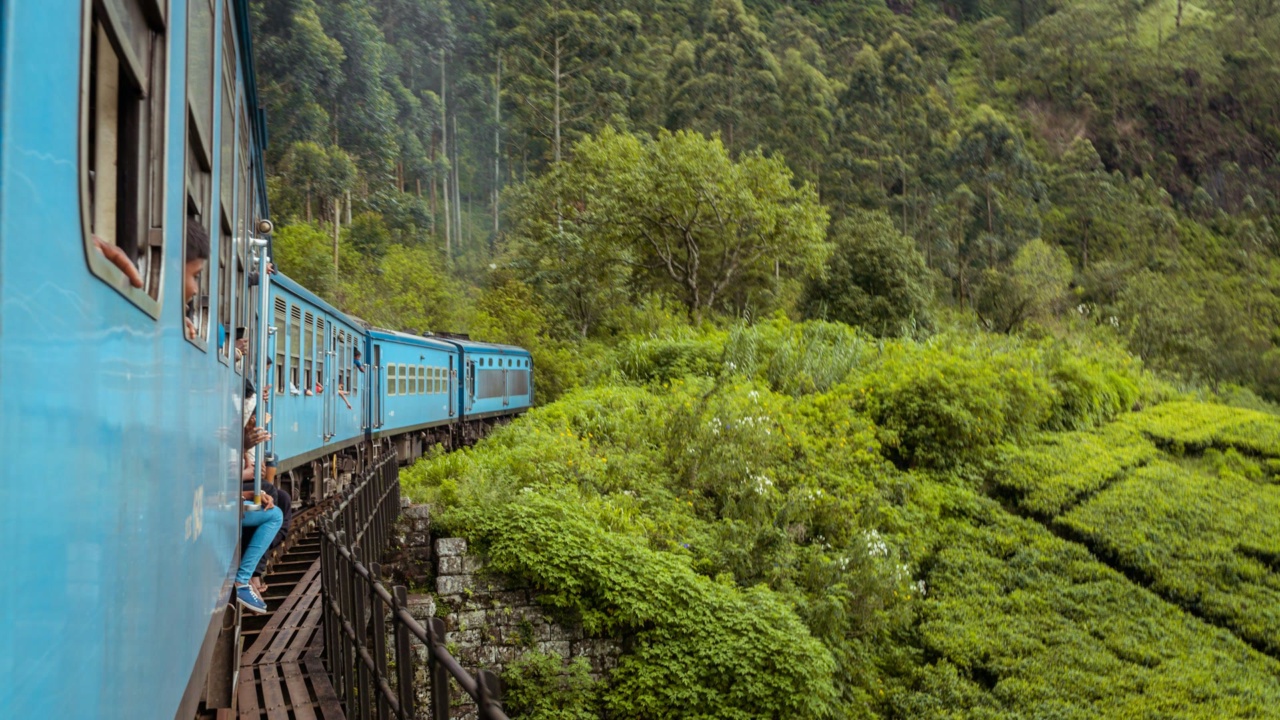
Sri Lankan train journeys are defined by their pace - or lack of it. The famous Kandy to Ella stretch covers about 160 kilometers (98 km from Kandy to Nanu Oya and 65 km from Nanu Oya to Ella),[10] and Sri Lanka Railways itself gives typical speeds of 25 to 40 km/h in the hill country.[1] But the slowness is the point. The train passes the Demodara Nine Arch Bridge, completed in 1921,[11] plunges into tunnels carved through rock, and crawls past waterfalls.
A train on the Kandy to Ella journey through the hills of Sri LankaPhoto: Pradeep Gopal / Unsplash
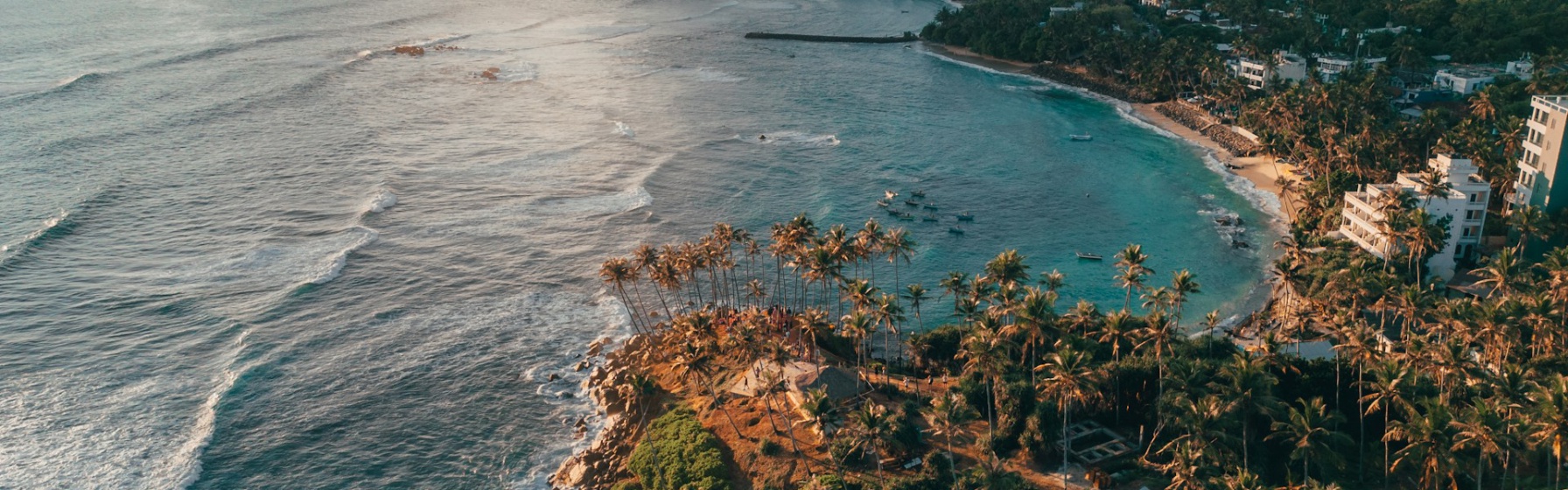
On the Coastal Line, the tracks run close to the ocean between Colombo and Galle. It is a completely different experience from the mountains - flat, tropical, and brilliantly blue.
Food vendors walk through the carriages at regular intervals selling wade (savory lentil fritters), isso wade (topped with a spicy prawn), short eats (pastries stuffed with fish or vegetables), and sweet Sri Lankan tea. Prices are minimal, and the food is freshly made. Larger stations also have platform vendors. There is no formal dining car on standard services.
Luggage is stored on overhead racks or under seats. There is no dedicated luggage compartment for passengers, so keep bags manageable. Backpacks are fine; oversized suitcases will be awkward. Toilets are available on board but range from basic to very basic - bring your own tissue.
Wi-Fi is not available on trains. Phone signal comes and goes, particularly in the Hill Country tunnels. Charging outlets are rare, so bring a power bank. As for etiquette, Sri Lankans are generous and friendly on trains. It is common for families to share food with seatmates. Offering the same in return - a biscuit, some fruit - is always appreciated. Seats near the door are informally reserved for monks, and you should offer your seat to elderly passengers and pregnant women.
Tips for Train Travel in Sri Lanka
Book the Hill Country route early. Reserved seats on the Kandy-Ella segment are in high demand. Book as far in advance as possible, especially if you want first or second class.
Bring layers for the hills. Temperatures drop noticeably as the train climbs into the hills. A light jacket or shawl is essential, especially if windows are open.
Arrive at the station early. Boarding can be chaotic, and finding your reserved carriage is easier before the platform fills up. Carriage numbers are posted on the side of each car.
Hold on if you ride in the doorway. Hanging out of open train doors is iconic but genuinely risky. People do fall. Grip the handrails firmly and stay aware, especially on curves.
Expect delays. Delays happen. Build buffer into your itinerary and never plan a tight connection with a flight or another booking on the same day.
Travel during the week. Weekend and public holiday trains - especially on the Coastal and Hill Country lines - are significantly more crowded. Poya (full moon) days are national holidays and particularly busy.
Learn a few Sinhala or Tamil phrases. English is understood at main stations, but a simple "isthuthi" (thank you in Sinhala) goes a long way with fellow passengers and staff.
Keep valuables secure. Petty theft is uncommon but not unheard of on crowded third-class carriages. A small daypack on your lap is safer than a bag on the overhead rack in a packed train.
Sources and background
Numbers in the text such as [1] refer to these sources.