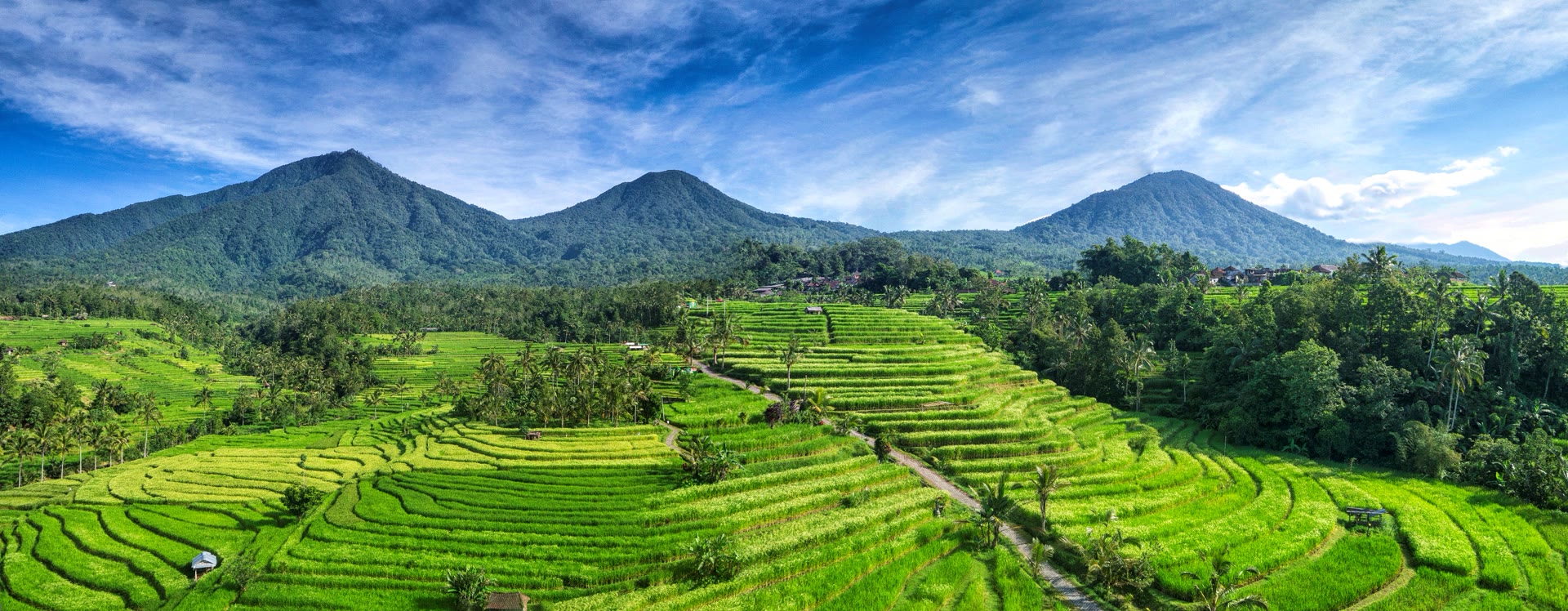
Jatiluwih Rice Terraces: Bali's UNESCO World Heritage Landscape
Most visitors to Bali photograph rice terraces at Tegallalang near Ubud, spend twenty minutes jostling for selfies on the famous palm tree swings, and leave thinking they have seen Balinese rice culture. They have not. Jatiluwih Rice Terraces, located in Tabanan Regency about 90 minutes northwest of Ubud, cover over 600 hectares of sculpted hillside and represent the real heart of Bali's agricultural heritage. UNESCO recognized Jatiluwih as a World Heritage Site in 2012, not just for its beauty, but for the subak irrigation system that has sustained these fields since the 9th century.
The name Jatiluwih translates roughly to "truly marvelous," and the landscape earns it. Unlike Tegallalang's compact, heavily touristed terraces, Jatiluwih stretches across an enormous expanse of rolling hills where the views seem to extend forever. Multiple walking trails wind through the paddies, some taking under an hour and others lasting half a day. You can walk for kilometers without seeing another tourist, accompanied only by the sound of water flowing through ancient irrigation channels and the wind moving through the rice stalks.
Jatiluwih is also a living, working agricultural landscape. Farmers plant, tend, and harvest rice here using methods that have barely changed in a thousand years. Visiting during different seasons means seeing different stages of the rice cycle, from flooded paddies reflecting the sky to bright green shoots to golden fields ready for harvest.
The Subak System and UNESCO Heritage
What sets Jatiluwih apart from ordinary rice terraces is the subak, a cooperative water management system that has governed Balinese rice farming for over a millennium. The subak is not simply an irrigation network. It is a social and spiritual institution rooted in the Balinese Hindu philosophy of Tri Hita Karana, which teaches harmony between humans, nature, and the divine.
Each subak is a democratic community of farmers who collectively manage the distribution of water from mountain springs and rivers through an intricate system of canals, tunnels, and weirs. Water flows downhill through the terraces in a carefully timed sequence, ensuring every farmer receives a fair share. Temples at key points along the water system host regular ceremonies to honor the water goddesses and ensure continued fertility.
UNESCO inscribed Jatiluwih as part of the "Cultural Landscape of Bali Province: the Subak System as a Manifestation of the Tri Hita Karana Philosophy." The designation covers five rice terraces and their water temples, but Jatiluwih is the largest and most accessible of the sites. The recognition has helped protect the terraces from the development pressures that have transformed so much of Bali's landscape.
Things to Do
Walking Trails Through the Terraces
Jatiluwih offers several color-coded walking trails of varying lengths, all starting from the main entrance area. Trail maps are available at the ticket counter, and the paths are reasonably well marked with colored signs, though a downloaded offline map helps on the longer routes.
| Trail | Distance | Duration | Difficulty | Best For |
|---|---|---|---|---|
| Yellow | 1.5 km | 30-45 min | Easy | Families, quick visit, limited mobility |
| Red | 3 km | 1-1.5 hours | Easy-Moderate | Good overview without major effort |
| Blue | 5-6 km | 2-3 hours | Moderate | Immersive experience, fewer crowds |
| Black | 7-8 km | 3-4 hours | Moderate-Hard | Solitude, sweeping panoramas, full experience |
Yellow Trail
The shortest loop stays close to the entrance and parking area. It provides the classic terrace views and photo opportunities without requiring much physical effort. This is the trail most tour groups take, so it tends to be the busiest.
Red Trail
A moderate loop that descends into the terraces with gentle slopes and some shaded stretches along tree lines. The red trail offers a good balance between seeing the landscape and keeping the walk manageable. Most of the Instagram-worthy viewpoints are along this route.
Blue Trail
The blue trail takes you deeper into the working agricultural landscape. You will pass through sections where farmers are actively tending their fields, cross small streams via simple bridges, and walk along narrow ridges between flooded paddies. This is where Jatiluwih starts to feel genuinely remote and peaceful.
Black Trail
The longest route covers the full extent of the terraced landscape and passes through small villages and hamlets. Some sections involve steeper climbs and descents. The reward is near-total solitude, panoramic views of Mount Batukaru rising behind the terraces, and a genuine sense of how vast this agricultural landscape actually is. Bring plenty of water and wear sun protection.
Practical Visitor Information
| Detail | Information |
|---|---|
| Location | Jatiluwih village, Penebel, Tabanan Regency, Bali |
| Opening Hours | Daily, 8:00 AM - 5:00 PM |
| Adult Entrance Fee | IDR 50,000 - 75,000 (approximately $3-5) |
| Child Entrance Fee | IDR 20,000 (children under 12) |
| Children Under 5 | Free |
| Distance from Ubud | About 35 km (1.5-2 hours by car) |
| Distance from Seminyak | About 55 km (2-2.5 hours by car) |
| Elevation | Approximately 700 meters above sea level |
Getting There
Jatiluwih is in Bali's central highlands, accessible only by road. There is no public transport to the terraces, so your options are:
- Private driver: The most common and comfortable option. A full-day driver from Ubud costs around IDR 500,000 to IDR 700,000 and can combine Jatiluwih with stops at Batukaru Temple, Ulun Danu Beratan, or the Bedugul area.
- Scooter: Possible for confident riders, though the route involves steep hills, tight curves, and elevation changes. The roads are paved but narrow in places. Allow extra time and watch for weather changes at higher altitude.
- Organized tour: Many tour operators in Ubud, Seminyak, and Canggu offer half-day or full-day trips that include Jatiluwih. Prices typically range from IDR 400,000 to IDR 800,000 per person including transport, entrance fees, and sometimes lunch.
Best Time to Visit
Jatiluwih is beautiful year-round, but the visual experience changes with the rice cycle. The terraces are most photogenic when the paddies are either freshly flooded (reflecting the sky like mirrors) or when the rice is a vibrant green at mid-growth stage. The harvest creates a golden-brown landscape that has its own appeal.
Rice is planted and harvested at different times across the terraces, so you will almost always see multiple stages of growth in a single visit. The dry season (April through October) offers the best weather with less rain and clearer views of Mount Batukaru. The wet season brings lusher greenery but also afternoon downpours and occasionally foggy conditions at this elevation.
Arrive in the morning, ideally by 9:00 AM. The light is softer, the temperature is cooler for walking, and the terraces are at their quietest before tour buses arrive around 10:00 to 11:00 AM.
Jatiluwih vs. Tegallalang: Which Rice Terraces to Visit
Bali's two most famous rice terraces attract very different types of visitors. Understanding the differences helps you choose the right one, or decide to visit both.
| Feature | Jatiluwih | Tegallalang |
|---|---|---|
| Size | Over 600 hectares | Compact, about 1 km stretch |
| Crowds | Spread out, often quiet | Very crowded, especially midday |
| UNESCO Status | Yes (since 2012) | No |
| Walking Trails | Multiple trails up to 8 km | Short walkways, minimal trails |
| Commercialization | Low, mostly farming village | High, many shops, swings, cafes |
| Distance from Ubud | 1.5-2 hours | 15 minutes |
| Best For | Walkers, photographers, cultural depth | Quick visit, Instagram photos, convenience |
Tegallalang is convenient and photogenic but feels like a tourist attraction. Jatiluwih feels like visiting a real, working agricultural landscape where tourism is secondary to farming. If you have time for only one, Jatiluwih rewards the extra travel time with a far deeper experience. For more comparisons and Bali itinerary ideas, check out GoAsia.cc.
What Else to See Nearby
- Pura Luhur Batukaru: One of Bali's six key directional temples, set in dense mountain forest on the slopes of Mount Batukaru. Located just 10 minutes from Jatiluwih, this moss-covered temple sees few tourists and has a mystical atmosphere that larger temples lack.
- Ulun Danu Beratan Temple: The iconic lake temple at Bedugul, about 45 minutes from Jatiluwih. Beautifully photogenic with its multi-tiered merus reflected in the lake water.
- Bali Botanical Garden: Located in Bedugul near Lake Beratan, this 157-hectare garden contains over 2,000 plant species including giant trees, orchids, and a bamboo forest.
- Yeh Panes Hot Springs: Natural hot springs near Penatahan village, about 20 minutes from Jatiluwih. A relaxing stop after a long walk through the terraces.
Tips for Visiting Jatiluwih Rice Terraces
- Wear proper walking shoes. The trails cross uneven terrain, narrow ridges between paddies, and can be slippery when wet. Sandals are fine for the yellow trail but inadequate for longer routes.
- Bring rain protection. At 700 meters elevation, Jatiluwih gets more rain than coastal Bali. Even in dry season, brief showers can appear with little warning. A lightweight rain jacket fits easily in a daypack.
- Carry water and snacks. There are a few warungs (small restaurants) near the entrance and along the shorter trails, but the longer routes have no facilities. Bring at least a liter of water per person.
- Do not step on the paddy ridges. Stay on the marked trails. The narrow earthen walls between rice paddies are fragile and essential to the irrigation system. Walking on them damages the subak infrastructure that farmers depend on.
- Dress modestly if visiting nearby temples. If combining Jatiluwih with Batukaru Temple, bring a sarong and sash. These are sometimes available at temple entrances but not always.
- Allow at least 2-3 hours. Rushing through Jatiluwih defeats the purpose. The blue or black trail gives you the most rewarding experience, and building in time for a meal at one of the restaurants overlooking the terraces makes the visit complete.
- Download offline maps. Mobile signal is spotty on some of the longer trails. The trail markings are decent but having a GPS backup prevents wrong turns in areas where the paths are less obvious.
Frequently Asked Questions
UNESCO recognized Jatiluwih in 2012 as part of Bali's subak cultural landscape. The designation honors not just the visual beauty but the ancient cooperative irrigation system (subak) that has managed water distribution across these terraces since the 9th century, embodying the Balinese Tri Hita Karana philosophy of harmony between humans, nature, and the divine.
The entrance fee is between IDR 50,000 and IDR 75,000 (roughly $3-5) for international adult visitors. Children under 12 pay IDR 20,000, and children under 5 enter free. Additional costs include transport to get there, typically IDR 500,000 to IDR 700,000 for a full-day private driver from Ubud.
From Ubud, the drive takes 1.5 to 2 hours (about 35 km) through the scenic Bedugul highlands. From Seminyak or Kuta, expect 2 to 2.5 hours. There is no public transport, so you need a private driver, scooter, or organized tour. Most visitors hire a driver for the day and combine Jatiluwih with nearby attractions.
The blue trail (5-6 km, 2-3 hours) offers the best balance of immersive experience and manageable effort. For a quick visit, the red trail (3 km) covers the main viewpoints. The black trail (7-8 km) provides the most solitude and panoramic views but requires 3-4 hours and good fitness. Choose based on your available time and energy.
Jatiluwih covers over 600 hectares with multiple walking trails and UNESCO heritage status, offering a quiet, authentic agricultural experience. Tegallalang is compact, heavily commercialized, and just 15 minutes from Ubud. Jatiluwih rewards the longer drive with far fewer crowds and a deeper cultural connection to Bali's rice farming traditions.
Arrive by 9:00 AM for cooler temperatures, softer light, and fewer tourists. The dry season from April through October offers the best weather and clearest mountain views. The terraces are beautiful year-round since different sections are planted at different times, ensuring you always see various stages of the rice cycle.
Yes, cycling is possible and several operators offer guided cycling tours through the terraces. The routes vary in difficulty with some hilly sections. Cycling covers more ground than walking and is a popular way to experience the landscape. You can arrange tours through operators in Ubud or directly at Jatiluwih.
Bring proper walking shoes with grip, at least a liter of water, sunscreen, a hat, and a lightweight rain jacket regardless of season. For longer trails, pack snacks as there are limited food options. If visiting nearby temples, carry a sarong and sash. Download offline maps since mobile signal can be unreliable on longer trails.