
Contents
- 1. Getting Around Hangzhou by Metro
- 2. Getting Around Hangzhou by Bus
- 3. Getting Around Hangzhou by Shared Bike
- 4. Getting Around Hangzhou by Taxi
- 5. Getting Around Hangzhou by Ride-Hailing (DiDi)
- 6. Getting Around Hangzhou by Boat
- 7. Getting Around Hangzhou on Foot
- 8. Comparing Your Options
- 9. Practical Tips for Getting Around Hangzhou
- 10. Popular Routes and Destinations
- 11. Frequently Asked Questions
- 12. Sources and background
Hangzhou wears its contradictions beautifully. One moment you are gliding along a spotless, air-conditioned metro line beneath a city of glass towers; the next you are pedaling a shared bike past willow-lined canals that have not changed much in centuries. The capital of Zhejiang Province built its reputation on the misty calm of West Lake, yet it is also one of China's most digitally advanced cities, the home of Alibaba, where a paper bus ticket feels almost antique and everything from a noodle bowl to a metro ride is paid by scanning a QR code on your phone.
For a city of this size, Hangzhou is surprisingly easy to read. The lake sits at the heart of the action, ringed by walkable promenades, and the metro fans out in clean radial lines to the suburbs, the high-speed rail stations, and the airport. Traffic on the surface can be sluggish during peak hours, but the city rewards travelers who mix and match: metro for distance, bikes for the lakeside, taxis or ride-hailing for the gaps, and a boat or two for the scenery.
The one real hurdle is practical rather than logistical. Almost everything runs on Chinese mobile payment apps, and the language barrier is genuine outside tourist hubs. Set that up before you arrive and Hangzhou opens up quickly. You can compare transport options for your specific trip on GoAsia.cc, but the broad strokes are simple enough to learn in an afternoon.
Getting Around Hangzhou by Metro
The Hangzhou Metro is the backbone of any visit. The operator lists 12 lines, 516 km of track and 262 stations,[1] connecting downtown, the railway stations, the airport, the major shopping districts, and the fringes of West Lake. Stations are signed in both Chinese and English, with clear network maps and announcements in both languages.
Fares are distance-based: 2 yuan covers the first 4 km, then each further yuan covers 4 km (4 to 12 km), 6 km (12 to 24 km) or 8 km (beyond 24 km), so a trip of roughly 25 km costs about 7 yuan.[2] Fares between two stations can be checked in the official Hangzhou Metro app or in Alipay, and the easiest way to pay is usually to scan into the gates with the Hangzhou Metro QR code inside Alipay.[2]
The metro is the smart choice for crossing the city quickly, reaching the railway stations, and avoiding the surface traffic that clogs the roads at rush hour. The catch is that West Lake itself is not directly served at its core; the closest stations leave you a walk or a short bike ride from the water. Avoid the metro at commuter rush hours if you can, when crowds pack the central interchange stations.
Getting Around Hangzhou by Bus
Hangzhou has a vast public bus network that reaches the corners the metro misses, including many points right around West Lake that no train comes near. Fares depend on the route, and the usual ways to pay are the Alipay transit code or a transit card.
Tourist-oriented routes are genuinely useful here. Look out for the sightseeing buses and the Y-series lines that loop the lake and link the major scenic spots, the tea plantations of Longjing, and the Lingyin Temple area. Bus stop signs list routes in Chinese with some pinyin, and apps like Amap (Gaode) or Baidu Maps will give you live, accurate bus arrival times. The downside is the same everywhere: buses crawl in traffic and get hot and crowded at peak times. For unhurried sightseeing they are excellent value; for getting somewhere on a schedule, the metro wins.
Getting Around Hangzhou by Shared Bike
Cycling is woven into the fabric of Hangzhou, and the city is genuinely one of the most bike-friendly in China. Dedicated cycle lanes run along most major roads, the terrain around the lake is flat, and the lakeside paths are made for two wheels. The classic experience is a loop around West Lake on a bike, dipping down side lanes to teahouses and pagodas at your own pace.
Dockless shared bikes from operators like Hellobike and Meituan are everywhere; you unlock them by scanning a QR code in Alipay or the operator app, and rides are cheap and priced by time. The catch for foreign visitors is that some apps require a Chinese ID or deposit setup, so test this early. The older municipal red-bike docking stations still exist but are fiddly for tourists. Helmets are not provided and the lakeside paths get extremely busy on weekends and holidays, so ride defensively and walk your bike through the densest crowds.
Getting Around Hangzhou by Taxi
Metered taxis are plentiful and reasonably honest by big-city standards. Under the municipal tariff in force since December 2019, flagfall is 13 yuan for the first 3 km, then 2.5 yuan per kilometer, with 50 percent extra on the per-kilometer rate beyond 10 km, 30 percent extra between 23:00 and 05:00, a 10 yuan supplement per trip during the Spring Festival period, and a waiting charge when the car moves slower than 12 km/h. Road tolls are paid by the passenger.[3]
Hail one on the street or at a taxi rank. The main friction is language: few drivers speak English, so have your destination written in Chinese characters or shown as a pin on a map app. Insist on the meter, which drivers almost always use without prompting, and be aware that catching an empty cab near West Lake on a busy weekend or during rain can be near impossible. For most travelers, ride-hailing solves both the language and the availability problem more elegantly.
Getting Around Hangzhou by Ride-Hailing (DiDi)
DiDi is the dominant ride-hailing service and the single most convenient way for a foreign visitor to move door to door. You set your pickup and destination on the map, so there is no need to speak Chinese or explain where you are going, and the fare is calculated in advance. This makes it especially friendly for travelers.
Prices are set by the app and can rise during rain and peak hours. You can choose from economy cars up to premium options. This is the mode to lean on after the metro closes, when carrying luggage, or when you simply do not want to wrestle with directions. Payment is automatic through your linked app, so no cash changes hands.
Getting Around Hangzhou by Boat
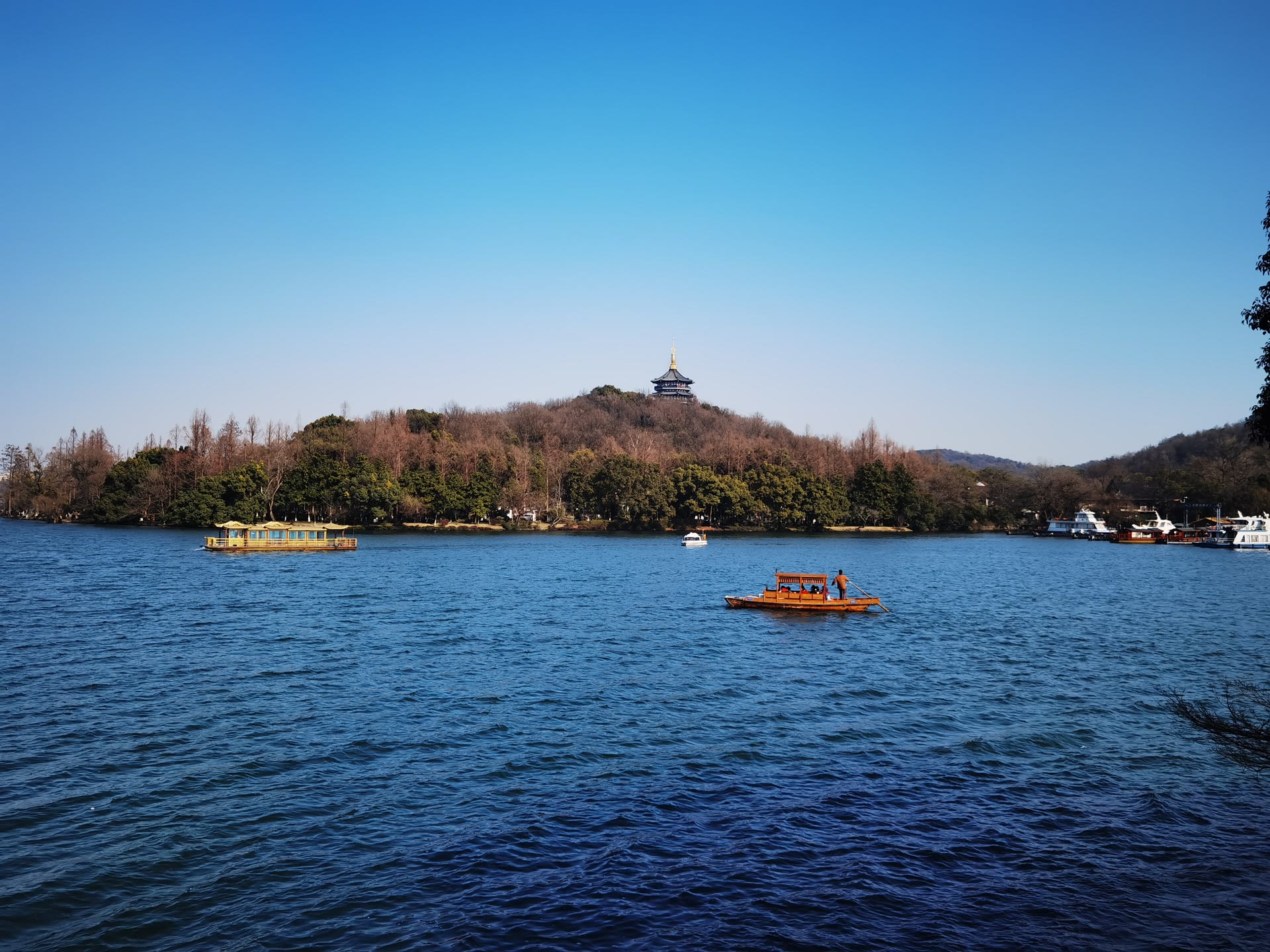
This is the mode that makes Hangzhou special. Pleasure boats crisscross West Lake, ferrying visitors to the island pavilions and offering some of the finest views in the city; they are as much an experience as a way to travel, and tickets depend on the route.
Less touristy but equally charming are the water buses along the Grand Canal, the ancient waterway that once linked Hangzhou to Beijing. These ferry services carry locals and visitors alike past historic bridges and restored canal districts. They are slow, scenic, and a refreshing alternative to the roads if your route happens to follow the water.
Getting Around Hangzhou on Foot
Within the right districts, walking is a pleasure. The entire shoreline of West Lake is a walking landscape of causeways, gardens, and viewpoints, best explored slowly and on foot. The old streets around Hefang Street and the lake-facing neighborhoods are compact and pedestrian-friendly, full of teahouses, snack stalls, and small shops.
Beyond the scenic core, however, Hangzhou is a large, spread-out city, and walking between districts is impractical. Use your feet for the lake and the historic quarters, and switch to the metro or a bike to cover the distances in between. Pavements are generally good, but watch for silent electric scooters that share the cycle lanes and sometimes the footpaths.
Comparing Your Options
| Mode | Typical Cost | Duration | Best For |
|---|---|---|---|
| Metro | From 2 yuan (first 4 km), about 7 yuan for roughly 25 km[2] | Fast, traffic-free | Crossing the city and reaching rail stations |
| Bus | Varies by route | Slow in traffic | Reaching West Lake spots the metro misses |
| Shared bike | Cheap, priced by time | Flexible | Exploring the lakeside and short hops |
| Taxi | 13 yuan for the first 3 km, then 2.5 yuan per km[3] | Door to door | Direct trips when you have an address |
| DiDi ride-hailing | Set by the app, rises at peak times | Door to door | No-fuss travel and late nights |
| Boat / water bus | Varies by route | Slow and scenic | Lake cruises and canal sightseeing |
| Walking | Free | Leisurely | West Lake and historic streets |
Practical Tips for Getting Around Hangzhou
The most important preparation is digital. Hangzhou runs almost entirely on mobile payment, and cash is increasingly awkward. Set up Alipay before you arrive: it now lets foreign visitors link an international credit card, and it handles the metro, buses, bikes, DiDi, and most shops through a single app. WeChat Pay works similarly. With Alipay configured you rarely need to touch yuan at all.
- Download Amap (Gaode Maps) or Baidu Maps for navigation, live bus times, and metro routing; Google Maps is unreliable in China.
- Keep your destination saved in Chinese characters or as a map pin to show drivers, since English is rarely spoken behind the wheel.
- Carry a small amount of cash anyway as a backup for older buses and the occasional vendor.
- A translation app such as Pleco or the built-in translator in Alipay smooths over conversations at ticket windows and information desks.
- Plan around the morning and evening rush hours, when the metro packs out and surface traffic locks up.
Hangzhou is a low-hassle city for scams compared with many tourist hotspots. Metered taxis are generally honest, but always confirm the meter is running and avoid unmarked cars touting for fares near scenic spots, which charge inflated rates. Around West Lake on busy weekends and public holidays, expect serious crowds and book any boat tickets early. Public transport is very safe at all hours, and Hangzhou is a comfortable city to move around in late at night, though DiDi is your most reliable late option once the metro stops running. At the airport, the last metro trains leave between 22:30 and 00:09 depending on line and direction.[4]
One gentle warning: the city becomes overwhelmingly busy during major Chinese holidays, particularly the National Day and Labour Day periods, when West Lake can feel impassable. If your dates fall on a national holiday, travel early in the morning and lean on bikes and the metro rather than the roads.
Popular Routes and Destinations
For reaching West Lake, the practical approach is to take the metro to the nearest central station and then either walk or grab a shared bike for the final stretch, since no line runs right to the water's edge. For the temples and tea hills west of the lake, such as Lingyin Temple and the Longjing tea villages, the tourist bus lines or a short DiDi ride are the easiest options.
If you are arriving or departing by high-speed train, Hangzhou East and Hangzhou City stations sit on the metro network, which makes transfers easy. Hangzhou Xiaoshan International Airport is served by metro Lines 1, 7 and 19, with first trains from about 06:00,[4] and DiDi or a taxi remains a convenient door-to-door alternative if you have luggage or arrive late.
Frequently Asked Questions
Use this guide to compare local transport in Hangzhou. When bookable tickets are available, the booking tool shows current options and prices.
The metro is the best backbone for covering distance quickly and avoiding traffic, while shared bikes are ideal for exploring around West Lake. For door-to-door convenience, especially with luggage or at night, DiDi ride-hailing is the easiest option for foreign visitors. Most travelers mix all three depending on the journey.
Metro fares start at 2 yuan for the first 4 km and rise with distance, for example about 7 yuan for roughly 25 km. Taxis start at 13 yuan for the first 3 km and then charge 2.5 yuan per kilometer. Bus, shared bike, DiDi and boat prices vary by route and time.
Yes, Hangzhou is a very safe city for public transport at all hours, including late at night. The metro and buses are well maintained and orderly, and scams are uncommon. The main things to watch for are inflated fares from unmarked cars near tourist spots and heavy crowding during Chinese public holidays.
Yes, DiDi is widely available and is the most convenient option for many foreign visitors. You set your destination on a map without needing to speak Chinese, and the fare is shown before you confirm the ride and paid automatically through your linked account.
Hangzhou runs largely on mobile payment, so setting up Alipay before you arrive is strongly recommended. It lets foreign visitors link an international card and handles the metro, buses, bikes, and DiDi through one app by scanning QR codes. Carry a little cash as a backup for older buses and vendors.
The area around West Lake and the historic streets like Hefang Street are very walkable and best explored on foot. However, Hangzhou is a large, spread-out city, so walking between districts is impractical. Use your feet for the scenic core and switch to the metro or a bike to cover longer distances.
Hangzhou Xiaoshan International Airport is served by metro Lines 1, 7 and 19, with first trains from about 06:00 and last trains between 22:30 and 00:09 depending on line and direction. If you have luggage or arrive late, a taxi or DiDi ride offers convenient door-to-door service, with the fare depending on traffic and your exact destination.
Sources and background
Numbers in the text such as [1] refer to these sources.
- [1] Hangzhou Metro: Hangzhou Metro official website. Retrieved October 15, 2026.
- [2] Hangzhou Metro staff, quoted by Hangzhou Wang / Dushi Kuaibao: Hangzhou Metro Line 1: why the same five stops can cost different fares. Retrieved October 15, 2026.
- [3] Hangzhou Development and Reform Commission, Transport Bureau and Market Supervision Administration: Notice on the adjustment of cruising taxi fares in urban Hangzhou. Retrieved October 15, 2026.
- [4] Hangzhou Xiaoshan International Airport: Hangzhou Metro Lines 1, 7 and 19 at Hangzhou Xiaoshan International Airport. Retrieved October 15, 2026.
Guide prices and journey times are indicative, not live quotes. A booked package may include transfers and waiting time as well as the main journey. Check the selected offer, pickup point and current conditions before booking.