
Getting Around Denpasar - Local Transport Guide for Bali's Capital
Contents
- 1. Getting Around Denpasar by Ride-Hailing App (Grab and Gojek)
- 2. Getting Around Denpasar by Motorbike Rental
- 2.1 Safety on Denpasar Roads
- 3. Getting Around Denpasar by Trans Sarbagita Bus
- 4. Getting Around Denpasar by Bemo
- 5. Getting Around Denpasar by Metered Taxi
- 6. Getting Around Denpasar by Private Driver
- 7. Getting Around Denpasar on Foot
- 8. Getting Around Denpasar by Bicycle
- 9. Comparing Your Options
- 10. Practical Tips for Getting Around Denpasar
- 11. Popular Routes and Destinations
- 11.1 Denpasar to I Gusti Ngurah Rai International Airport
- 11.2 Denpasar to Sanur
- 11.3 Sanur to the Airport
- 11.4 Airport to Sanur or Central Bali
- 12. Frequently Asked Questions
Denpasar is not the Bali most travelers picture. There are no rice terraces lining the roads and no clifftop infinity pools. Instead, this is a working Indonesian city of nearly a million people, humming with motorbike traffic, street-side warungs, and traditional markets that spill onto sidewalks. It is the administrative capital, the commercial engine, and the cultural heart of Bali, and it moves at a pace that can feel chaotic if you are not prepared for it.
The city sprawls without a single dominant center. Neighborhoods like Renon (the government district), the old market area around Pasar Badung, Sanur to the southeast, and the Tohpati textile corridor each have their own character, separated by congested two-lane roads. There is no metro, no commuter rail, and the public bus system is limited. Most locals ride motorbikes, and that reality shapes everything about how you will get around. Sidewalks are inconsistent, distances between points of interest can be deceptive on a map, and the tropical heat makes long walks impractical outside early morning hours.
The good news: ride-hailing apps have transformed urban mobility here, and a rented scooter gives you the freedom locals enjoy. Understanding your options before you step outside will save you time, money, and the frustration of standing on a roadside wondering how to get to your next destination.
Getting Around Denpasar by Ride-Hailing App (Grab and Gojek)
Grab and Gojek are the two dominant ride-hailing platforms in Denpasar, and for most travelers they will be the primary way of getting around. Both apps work identically to Uber: you set your pickup and destination, get a price estimate upfront, and pay either through the app or in cash. This fixed-price model eliminates the haggling that plagues traditional taxi rides in Bali.
Both apps offer car rides (GrabCar, GoCar) and motorbike rides (GrabBike, GoRide). A motorbike ride across central Denpasar typically costs around 10,000-25,000 IDR (roughly $1-$2), while a car ride for the same distance runs around 25,000-60,000 IDR ($2-$4). Motorbike rides are faster in traffic, which matters enormously during rush hours when cars barely crawl along Jalan Teuku Umar or the roads near Pasar Badung.
A few things to know: drivers are plentiful in central Denpasar but can be harder to find in quieter residential areas, especially late at night. Surge pricing kicks in during rain (which can be torrential and sudden) and during morning and evening rush hours. Both apps accept cash and digital wallet payments (GoPay for Gojek, OVO for Grab). Loading credit onto these e-wallets at a convenience store like Indomaret or Alfamart gives you smoother transactions and sometimes promotional discounts.
One important caveat: some areas near traditional taxi stands or tourist zones have informal restrictions on ride-hailing pickups. Drivers may ask you to walk a short distance from certain hotels or markets to avoid confrontation with local taxi operators. This is less of an issue in Denpasar proper than in Kuta or Ubud, but be aware of it.
Getting Around Denpasar by Motorbike Rental
If you are comfortable on two wheels, renting a motorbike is the most liberating way to explore Denpasar and greater Bali. Rental shops and guesthouses offer automatic scooters (usually Honda Vario, Scoopy, or NMAX models) for around 60,000-80,000 IDR per day ($4-$5), with discounts for weekly or monthly rentals. You will need an international driving permit with a motorcycle endorsement, though enforcement varies. Travel insurance that covers motorbike riding is strongly recommended.
Denpasar traffic is dense but moves at relatively low speeds. The key is to ride like the locals: stay calm, go with the flow, use your horn gently to signal your presence, and avoid sudden lane changes. Left turns are generally easy; right turns across traffic require patience. Fuel is cheap (around 10,000 IDR per liter at Pertamina stations), and a full tank will last you days of city riding.
Parking is rarely a problem. Most shops, restaurants, and markets have designated motorbike parking, often watched by an attendant who will hand you a ticket. Parking fees are typically 2,000 IDR. Always lock your steering column and never leave valuables in the storage compartment.
Safety on Denpasar Roads
Wear a helmet at all times - it is legally required and genuinely important. Roads can be slippery after rain, and potholes appear without warning, especially on smaller gang (alley) roads. Avoid riding after dark if you are not experienced, as street lighting is inconsistent and other vehicles sometimes ride without lights. If you have never ridden a motorbike before, Denpasar's traffic is not the place to learn. Stick to ride-hailing in that case.
Getting Around Denpasar by Trans Sarbagita Bus
Trans Sarbagita is Denpasar's public bus system, modeled loosely on Jakarta's TransJakarta. It operates air-conditioned buses on a handful of fixed corridors connecting Denpasar with surrounding areas like Sanur, Nusa Dua, and the airport area. The fare is extremely cheap - around 3,500 IDR (less than $1) per ride.
The catch is frequency and coverage. Buses run infrequently, sometimes with gaps of 30-45 minutes, and the route network is limited. The most useful corridor for travelers connects the Kereneng terminal in central Denpasar with Sanur and southward toward the Bualu area near Nusa Dua. Another corridor runs from Batubulan terminal (the main intercity hub) through central Denpasar.
If a bus happens to align with your route and timing, it is a bargain. But do not plan your day around it. Schedules are unreliable, stops can be confusing, and the system is primarily used by locals commuting to work or school. It is worth trying once for the experience, but ride-hailing will be more practical for most trips.
Getting Around Denpasar by Bemo
Bemos are the traditional shared minivans that once formed the backbone of Denpasar's public transport. These small, brightly colored vehicles follow semi-fixed routes between the city's main terminals: Kereneng (central), Tegal (west, near Kuta direction), Batubulan (northeast, toward Ubud and Gianyar), and Ubung (north, toward Tabanan and Java ferries). A ride costs around 5,000-10,000 IDR depending on distance.
In practice, bemos have been largely replaced by motorbikes and ride-hailing for most Balinese. Service has declined significantly, and many routes now operate only during morning hours or not at all. You may still see bemos circulating around Pasar Badung and the terminal areas, and they can be a colorful cultural experience. But they are not a reliable transport option for travelers. Routes are not posted, there are no apps tracking them, and drivers may try to charge tourists inflated prices. If you do take one, confirm the price before boarding and have small bills ready.
Getting Around Denpasar by Metered Taxi
Blue Bird is the most reputable metered taxi company in Bali, and their light blue vehicles are easy to spot in Denpasar. The meter starts at around 7,000 IDR with increments of roughly 6,500 IDR per kilometer. A ride across central Denpasar might cost 30,000-50,000 IDR ($2-$3). Blue Bird also has its own app (My Blue Bird) that works similarly to Grab, giving you the option of booking with a fixed estimate.
Other taxi companies operate in Denpasar as well, but quality and honesty vary. Some drivers will claim the meter is broken and quote an inflated flat rate. The safest approach is to insist on the meter or use the Blue Bird app. If a driver refuses to use the meter, simply find another taxi or switch to Grab/Gojek.
Taxis are most useful when you have luggage, are traveling in a group of three or four, or when rain makes motorbike travel unpleasant. During peak traffic hours, however, taxis sit in the same gridlock as every other car, so a GrabBike may actually be faster.
Getting Around Denpasar by Private Driver
Hiring a private driver for a half-day or full day is a distinctly Balinese travel tradition, and it makes sense if you plan to visit multiple spread-out destinations. A full day (roughly 8-10 hours) with a driver and air-conditioned car typically costs around 500,000-700,000 IDR ($32-$45), including fuel. Your hotel or guesthouse can usually arrange one, or you can book through Grab or Gojek's car rental options.
This is especially practical for day trips from Denpasar to temples, beaches, or the central highlands, where distances are long and parking can be tricky. Many drivers double as informal guides and can suggest stops, recommend warungs for lunch, and help with language barriers. Agree on the itinerary, price, and any additional costs (parking fees, toll roads) before departing.
Getting Around Denpasar on Foot
Walking in Denpasar is feasible for short distances within a specific neighborhood but impractical as a primary way to get around. Sidewalks are narrow, often broken, and frequently blocked by parked motorbikes, offerings (canang sari), or construction materials. Crossing major roads requires confidence and timing - there are few pedestrian signals, and traffic does not stop for you.
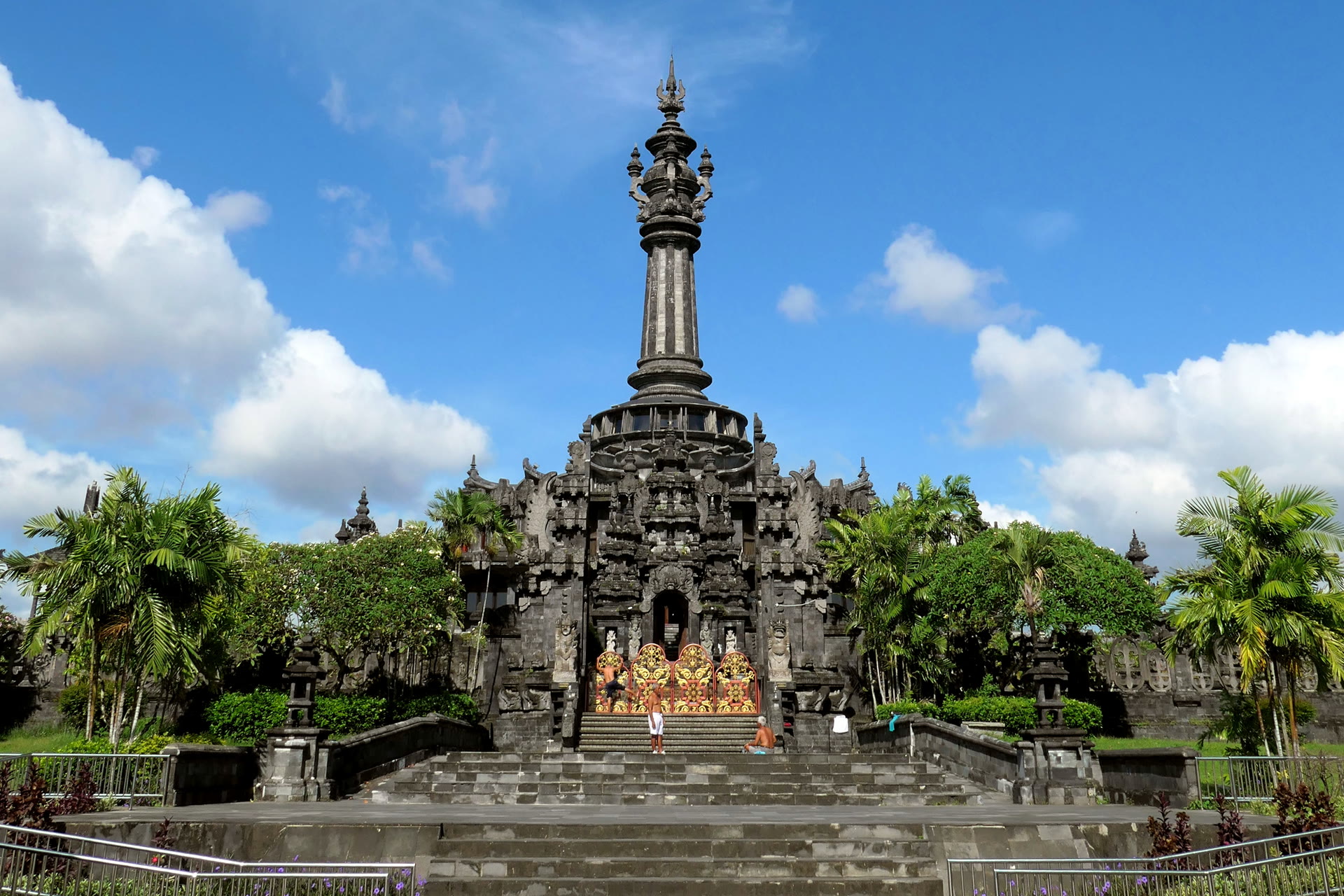
That said, some areas reward walking. The stretch around Pasar Badung and Pasar Kumbasari (the traditional markets) is best explored on foot, as is the Bajra Sandhi monument area in Renon and the streets around Pura Jagatnatha. Sanur's beachfront promenade is one of the most pleasant walks in the greater Denpasar area. Carry water, wear sun protection, and plan your walks for early morning or late afternoon to avoid the worst of the heat.
Getting Around Denpasar by Bicycle
Cycling is not common in Denpasar's chaotic traffic, but it has a niche. Sanur, with its flat terrain and relatively calm streets, is the most bike-friendly area. Some guesthouses and rental shops in Sanur offer bicycles for around 30,000-50,000 IDR per day. Central Denpasar is too congested and lacks cycling infrastructure, making it stressful for all but the most confident urban cyclists.
Comparing Your Options
| Mode | Typical Cost | Duration | Best For |
|---|---|---|---|
| GrabBike / GoRide | $1-$2 per ride | Fastest in traffic | Quick hops, beating rush hour gridlock |
| GrabCar / GoCar | $2-$4 per ride | Moderate | Comfort, rain, luggage, groups of 2-3 |
| Motorbike Rental | $4-$5 per day | Self-paced | Full-day flexibility, exploring freely |
| Blue Bird Taxi | $2-$3 across town | Moderate (traffic dependent) | Airport runs, late night, luggage |
| Trans Sarbagita Bus | Under $1 per ride | Slow, infrequent | Budget travel on fixed corridors |
| Bemo | Under $1 per ride | Unpredictable | Cultural experience, terminal-to-terminal |
| Private Driver | $32-$45 per day | Full day | Day trips, temple tours, multi-stop itineraries |
| Walking | Free | Slow | Markets, Sanur promenade, short neighborhood strolls |
Practical Tips for Getting Around Denpasar
Apps to download before you arrive:
- Grab and Gojek - essential for ride-hailing. Both also offer food delivery, which is useful when you are tired of navigating traffic.
- Google Maps - works well for navigation in Denpasar and is the best tool for finding addresses, which can be confusing even for locals. Offline maps are worth downloading in case of spotty data coverage.
- My Blue Bird - for booking metered taxis directly.
Payment and money tips:
- Carry small bills. Denominations of 10,000, 20,000, and 50,000 IDR are ideal. Drivers and small vendors often cannot break 100,000 IDR notes.
- Top up GoPay or OVO at any Indomaret or Alfamart. These e-wallets often unlock promotional fares on Gojek and Grab.
- ATMs are plentiful in Denpasar. Use those attached to banks (BCA, Mandiri, BNI) for better security.
Rush hours and timing:
- Morning rush runs roughly from 7:00 to 9:00 AM, evening rush from 4:30 to 7:00 PM. The roads around Pasar Badung, Jalan Teuku Umar, and the Sanur-Denpasar corridor become extremely congested.
- Ceremony days (particularly around major temple festivals) can cause unexpected road closures and traffic diversions. Ask your accommodation about any upcoming ceremonies.
- Rain - usually in the afternoon during wet season - brings traffic to a near standstill and triggers ride-hailing surge pricing. If you see dark clouds building, finish your transport before the downpour hits.
Common mistakes to avoid:
- Do not assume Denpasar distances are short because the map looks compact. A 5-kilometer trip can take 30-45 minutes in traffic.
- Do not rely solely on street addresses. Many locations in Bali use informal naming, and even Google Maps pins can be slightly off. Asking your destination to share a live location pin via WhatsApp is the most reliable approach.
- Avoid unlicensed transport touts at terminals and tourist spots. They will quote prices several times higher than a Grab ride.
Language tips: Most ride-hailing drivers speak limited English. Having your destination written in Bahasa Indonesia or showing the Google Maps pin is far more effective than trying to explain verbally. Useful phrases include ke mana? (where to?), berapa? (how much?), kiri (left), kanan (right), and stop di sini (stop here).
Safety at night: Denpasar is generally safe, but poorly lit roads and erratic drivers make nighttime motorbike riding risky. Stick to ride-hailing cars after dark. Solo travelers should share their ride status with a friend using the in-app feature on Grab or Gojek.
Popular Routes and Destinations
For travelers moving between Denpasar, Sanur, and the airport, here are the most practical options based on typical prices and durations. You can compare more routes and transport options on GoAsia.cc.
Denpasar to I Gusti Ngurah Rai International Airport
The airport sits about 13 kilometers south of central Denpasar. A shared van service costs around $4 and takes approximately one hour, factoring in stops and traffic. A private transfer ranges from $9 to $31 depending on vehicle type and booking platform, with a typical duration of 45 minutes to one hour. During off-peak hours, a Grab or taxi can be faster and cheaper than the van.
Denpasar to Sanur
Sanur is Denpasar's laid-back coastal neighbor, about 20-30 minutes east without traffic. A van service runs this route for around $7 and takes roughly one hour with stops. Ride-hailing is usually faster and similarly priced for solo travelers.
Sanur to the Airport
This is one of the most common transfers for travelers catching flights or arriving from the airport. Private transfers range from $9 to $31, taking between 15 minutes and one hour 20 minutes depending on traffic and pickup location. A van option costs around $7 but takes up to two hours with multiple stops. If you are on a tight schedule for a flight, book a private transfer or leave extra time with ride-hailing.
Airport to Sanur or Central Bali
From the airport, private transfers to Sanur cost $9 to $31 with a duration of 30 minutes to one hour 20 minutes. For destinations further into Bali, transfers range from $9 to $59, taking 45 minutes to one hour. A bus option to certain Bali destinations is available for around $6 with a 40-minute ride. Note that ride-hailing pickups at the airport require walking to the designated pickup area outside the terminal grounds, as the airport taxi mafia controls the arrivals area.
Frequently Asked Questions
Use this guide to compare local transport in Denpasar. When bookable tickets are available, the booking tool shows current options and prices.
Ride-hailing apps Grab and Gojek are the most convenient and affordable way to get around Denpasar for most travelers. GrabBike or GoRide (motorbike taxis) are fastest in heavy traffic, while GrabCar or GoCar provide air-conditioned comfort. If you are comfortable riding a scooter, renting a motorbike gives you the most freedom for around $4-$5 per day.
Transport in Denpasar is very affordable. A motorbike ride-hailing trip across town costs roughly $1-$2, while a car ride runs $2-$4. Metered Blue Bird taxis cost around $2-$3 for a cross-town trip. Public buses are under $1 per ride, and renting a motorbike for a full day costs $4-$5. Hiring a private driver for a full day typically costs $32-$45.
Yes, public transport and ride-hailing in Denpasar are generally safe. Grab and Gojek provide tracked rides with driver identification, making them the safest option. Blue Bird taxis are also reputable. Avoid unlicensed transport touts at terminals who may overcharge. At night, stick to ride-hailing cars rather than motorbikes due to poorly lit roads.
Grab and Gojek work well throughout most of Denpasar and surrounding areas. Drivers are plentiful in central areas and Sanur. However, some zones near traditional taxi stands may have informal pickup restrictions, and drivers might ask you to walk a short distance. At the airport, ride-hailing pickups require going to a designated area outside the terminal.
Denpasar is not particularly walkable as a whole due to narrow or broken sidewalks, heavy traffic, and tropical heat. However, specific areas like the Pasar Badung market district, the Renon government area, and Sanur's beachfront promenade are pleasant to explore on foot. Plan walks for early morning or late afternoon to avoid the midday sun.
Private transfers from I Gusti Ngurah Rai Airport to Sanur cost $9 to $31 and take 30 minutes to one hour 20 minutes depending on traffic. To central Denpasar or wider Bali, transfers range from $9 to $59. Ride-hailing is possible but requires walking to the designated pickup zone outside the terminal. A bus option to some destinations costs around $6.
Renting a motorbike is excellent value and gives you maximum flexibility, but only if you have riding experience. Denpasar traffic is dense with narrow lanes and unpredictable road conditions. You technically need an international driving permit with a motorcycle endorsement. If you have never ridden a scooter before, stick to ride-hailing apps instead.
At night, GrabCar or GoCar are the safest and most practical options. Metered Blue Bird taxis are also reliable after dark. Avoid riding motorbikes at night due to poor street lighting and erratic drivers. Most ride-hailing services operate until late, though availability decreases after midnight in quieter areas. Share your ride status with a friend using the in-app safety features.
Guide prices and journey times are indicative, not live quotes. A booked package may include transfers and waiting time as well as the main journey. Check the selected offer, pickup point and current conditions before booking.