
Getting Around Lombok: Local Transport Guide for Travelers
Contents
- 1. Getting Around Lombok by Motorbike Rental
- 2. Getting Around Lombok by Ojek (Motorcycle Taxi)
- 3. Getting Around Lombok by Grab and Ride-Hailing Apps
- 4. Getting Around Lombok by Bemo (Public Minivan)
- 5. Getting Around Lombok by Private Car and Driver
- 6. Getting Around Lombok by Cidomo (Horse Cart)
- 7. Getting Around Lombok by Bicycle
- 8. Getting Around Lombok by Boat
- 9. Comparing Your Options
- 10. Practical Tips for Getting Around Lombok
- 11. Popular Routes and Destinations
- 12. Frequently Asked Questions
- 13. Sources and background
Lombok is not a city you can walk across. It is an entire island, roughly the size of Bali but with a fraction of the tourist infrastructure, and that difference shapes every aspect of how you move around. Roads wind through rice paddies, climb volcanic foothills, and hug rugged coastlines. There is no metro, no rail system, and no reliable island-wide bus network. Getting from point A to point B here requires a bit more planning than most travelers expect, but the reward is an island that still feels genuinely uncrowded.
The main population center is Mataram, the capital city on the western coast, which blends into the neighboring towns of Ampenan and Cakranegara in a loose urban sprawl. Most travelers pass through Mataram briefly before heading to beach areas like Senggigi, the surf breaks around Kuta (south Lombok, not to be confused with Bali's Kuta), or the boat harbors that connect to the Gili Islands. Understanding your transport options before you arrive will save you money, stress, and the awkward experience of standing on a quiet road wondering where all the taxis went.
The rhythm of Lombok's transport is slower and more personal than what you might find on Bali. Deals are struck face to face, prices are negotiated, and your driver might become your guide for the day. Embrace it - this is part of the island's character.
Getting Around Lombok by Motorbike Rental
Renting a motorbike is the single most popular way for travelers to explore Lombok independently. It gives you the freedom to stop at empty beaches, chase waterfalls in the island's interior, and navigate the narrow lanes of southern Lombok's coastal villages at your own pace. Rental shops cluster around Senggigi, Kuta Lombok, and Mataram, and many guesthouses arrange rentals directly.
Always check the brakes, lights, and tires before you ride off, and take photos of any existing scratches so you are not blamed later. You need an Indonesian licence or an International Driving Permit that covers motorbikes, and you should always wear a helmet.[1] Police checkpoints do appear on main roads, particularly around Mataram and the airport road.
Road conditions vary dramatically. The main highway circling the island is generally well-paved, but secondary roads - especially in the south and interior - can deteriorate into potholed tracks without warning. Drive defensively, watch for loose gravel on corners, and avoid riding after dark on unlit rural roads. Fuel stations (Pertamina) are found in every town, and roadside vendors sell petrol from glass bottles in remote areas, though at a markup.
Getting Around Lombok by Ojek (Motorcycle Taxi)
Before ride-hailing apps arrived, the ojek was Lombok's default short-distance taxi. You will still see ojek drivers waiting at intersections, market entrances, and ferry ports. They are easy to spot - a man sitting on a parked motorbike, often waving at passing foreigners. Negotiate the fare before you climb on, and ask your hotel what a fair price is for your trip.
Ojeks are fast, flexible, and can navigate roads too narrow for cars. The downside is obvious: no seatbelt, no air conditioning, and your luggage capacity is limited to what fits between you and the driver. Helmets should be provided - insist on one if the driver does not offer it.
Getting Around Lombok by Grab and Ride-Hailing Apps
Grab operates on Lombok, though coverage is significantly thinner than on Bali or Java. In Mataram and the airport area, you can usually find both GrabCar and GrabBike within a few minutes. In Senggigi, availability is hit or miss. In Kuta Lombok and other southern or eastern areas, do not count on it at all - drivers are scarce and may decline trips to remote locations.
When Grab works, it is a relief. The app shows the estimated fare upfront, so there is no negotiation and no guesswork.
A practical tip: if you are in a tourist area where Grab drivers are few, ask your accommodation to call a local driver instead. Many guesthouses and hotels have trusted drivers on speed dial, and the price difference is often negligible.
Getting Around Lombok by Bemo (Public Minivan)
Bemos are Lombok's version of public transit - small minivans that run fixed routes, primarily connecting Mataram's main terminal (Mandalika Terminal in Bertais) with towns across the island. They are the cheapest way to travel between towns. For budget travelers, bemos offer a genuinely local experience and a window into daily Lombok life.
The catch is that bemos have no published schedule. They depart when full, which can mean a long wait, especially outside the morning hours. Routes radiate outward from Mataram - getting between two points that are not on the same route often requires backtracking through the capital. Service thins out dramatically after early afternoon, and by evening, bemos are essentially nonexistent.
Common routes include Mataram to Praya (near the airport), Mataram to Senggigi, and Mataram to Labuhan Lombok (the eastern port for ferries to Sumbawa). To ride a bemo, stand on the roadside along the route and flag one down. Tell the driver or conductor your destination, and they will let you know if they are going that way. Pay when you get off. Locals pay a set fare, and as a foreigner you may be quoted slightly more - it is usually not worth arguing over a few thousand rupiah.
Getting Around Lombok by Private Car and Driver
Hiring a car with a driver is the most comfortable way to cover long distances on Lombok, and it is more affordable than most travelers expect. A full day with a driver is usually agreed as a flat price, fuel included, so ask your hotel for a fair rate. Your driver will pick you up, take you wherever you want, wait while you explore, and deliver you back at the end of the day. This is ideal for sightseeing trips to places like Mount Rinjani's foothills, the traditional Sasak villages, or the waterfalls near Tetebatu.
Most hotels and guesthouses can arrange a driver. Tipping is not mandatory but appreciated at the end of a long day. Self-drive car rental exists but is less common and comes with challenges: unfamiliar roads, unpredictable traffic patterns, and the occasional cow or chicken in the road. Unless you are very confident driving in Southeast Asia, hiring a driver is the smarter choice.
Getting Around Lombok by Cidomo (Horse Cart)
The cidomo is Lombok's most distinctive transport mode - a small, brightly painted horse-drawn cart that clip-clops along village roads and through market areas. You will encounter cidomos most often on the Gili Islands, where cars and motorbikes are prohibited,[2] and in rural parts of Lombok, particularly around Mataram's older neighborhoods and traditional villages.
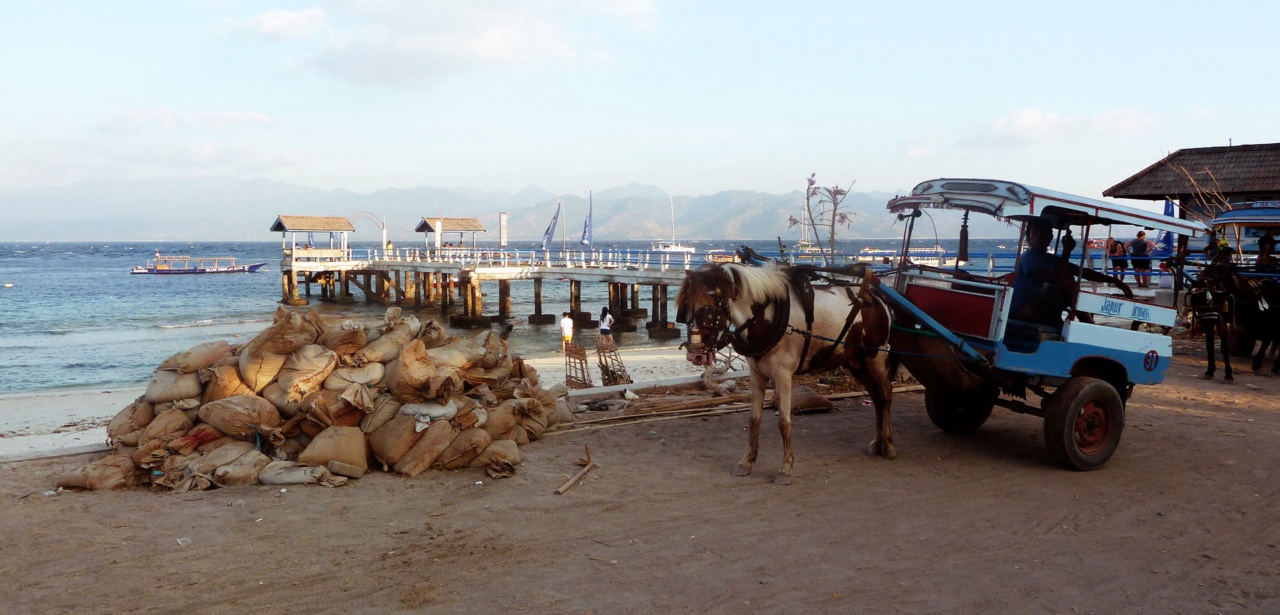
On the Gili Islands, cidomos are the main land transport besides bicycles, and each cart takes up to 3 people.[2] Agree the price before you climb in. On mainland Lombok, cidomos are rarer in tourist contexts but still used by locals for short hauls. They are slow, charming, and worth experiencing once, though animal welfare concerns have led some travelers to opt for walking or cycling instead.
Getting Around Lombok by Bicycle
Cycling works well in flat coastal areas and small towns. Kuta Lombok, Senggigi, and the Gili Islands are all manageable by bicycle, and many accommodations offer free or cheap bike loans. Rental shops in these areas hire out basic bikes by the day. The Gili Islands, in particular, are perfect for cycling and small enough to circle on two wheels.
On mainland Lombok, cycling beyond town limits gets challenging quickly. Hills are steep, the sun is relentless, and main roads have no bike lanes and heavy truck traffic. Carry plenty of water, wear sunscreen, and stick to quieter secondary roads if you plan longer rides.
Getting Around Lombok by Boat
Boats are essential transport on Lombok, not just for reaching the Gili Islands but for hopping between coastal areas. Public boats to the Gilis depart from Bangsal Harbor on Lombok's northwest coast. From Bangsal a public boat costs IDR 20,000 to 30,000 and a speedboat IDR 85,000 to 150,000, and a private speedboat from Teluk Nare, a quieter harbor nearby, starts from IDR 350,000 one way.[3]
Bangsal Harbor has a reputation for aggressive touts and confusing ticketing. Buy your ticket only at the official ticket office and ignore anyone who approaches you in the parking lot. Fast boats from Padang Bai on Bali also reach the Gilis and Bangsal directly.[4]
For travel to Bali, ferries run from Lembar port in southwest Lombok to Padang Bai, a crossing of about 4 hours 30 minutes.[5] Tickets are sold online only, through Ferizy.[6] Heading east, ferries from Kayangan near Labuhan Lombok cross to Poto Tano on Sumbawa in about 2 hours, with services around the clock.[7]
Comparing Your Options
| Mode | Typical Cost | Duration | Best For |
|---|---|---|---|
| Motorbike Rental | Agree a daily rate | Self-paced | Independent exploration, remote beaches, full flexibility |
| Ojek (Motorcycle Taxi) | Agree before you ride | Varies | Short hops without your own wheels |
| Grab (Car/Bike) | Fare shown in the app | Varies | Fair-priced rides in Mataram and airport area |
| Bemo (Public Minivan) | Cheapest option | Slow, irregular | Ultra-budget travel between towns via Mataram |
| Private Car and Driver | Flat day rate | Flexible | Day trips, families, comfort over long distances |
| Cidomo (Horse Cart) | Agree before you ride | Slow | Short rides on the Gili Islands, local color |
| Bicycle | Cheap per day | Self-paced | Gili Islands, flat coastal areas, short distances |
| Boat from Bangsal | IDR 20,000-30,000 public boat, IDR 85,000-150,000 speedboat[3] | Short crossing | Reaching the Gili Islands and island-hopping |
Practical Tips for Getting Around Lombok
Apps to download: Install Grab before you arrive. Google Maps works reasonably well for navigation on Lombok, though some smaller roads may not appear. Maps.me with offline maps downloaded is a useful backup for areas with poor signal. If you are heading to the Gilis, download your maps while still on the mainland - Wi-Fi on the smaller islands can be painfully slow.
Cash is king: Carry plenty of small bills. Most transport on Lombok is cash-only, including bemos, ojeks, cidomos, and many private drivers. ATMs are available in Mataram, Senggigi, Praya (near the airport), and Kuta Lombok, but they are scarce elsewhere. Bring denominations of 10,000, 20,000, and 50,000 IDR - drivers often cannot break 100,000 notes.
- Negotiate before you ride. For ojeks, cidomos, and unofficial taxis, always agree on the fare before getting in or on. Ask your hotel what a fair price should be for your intended trip so you have a benchmark.
- Morning is the best time to travel by bemo. After midday your chances of finding one drop sharply.
- Traffic in Mataram can be congested during the morning and late afternoon rush hours. Plan accordingly if you have a flight to catch.
- Be cautious about transport touts at Bangsal Harbor and Lombok International Airport. At the airport, the official taxi counter is at domestic arrivals - use it rather than accepting offers from drivers outside. At Bangsal, go directly to the official ticket window.
- If you rent a motorbike, carry your passport (or a photocopy) and your driving licence or International Driving Permit at all times. Police stops happen.
- Learn a few phrases in Bahasa Indonesia: Berapa harganya? (How much?), Terlalu mahal (Too expensive), Ke mana? (Where to?). Showing your destination on Google Maps to a driver works wonders when language fails.
- After dark, transport options shrink considerably outside of Senggigi and Mataram. Plan to be at your accommodation by sunset if you are in remote areas, or arrange a pickup in advance.
For comparing different transport options and booking transfers across Lombok and beyond, GoAsia.cc can help you see what is available for your specific route and budget.
Popular Routes and Destinations
Lombok Airport to Mataram or Senggigi: Lombok International Airport sits near Praya in the south-central part of the island. A DAMRI bus runs from the airport to town every day between 07:00 and 17:00; fares are Rp25,000 to Mataram and Rp35,000 to Ampenan or Senggigi, and you buy the ticket at the counter.[8] The official taxi counter at domestic arrivals charges by zone or meter and works the same hours.[8] Outside those hours, ask your hotel to arrange a driver in advance.
Lombok to Gili Air: The most common route involves getting to Bangsal Harbor (or Teluk Nare) and taking a boat; see the prices above.[3] Fast boats from Padang Bai on Bali also reach Gili Air directly in about 2 hours 10 minutes.[4]
Mataram to Lombok Airport: The DAMRI bus runs from Mataram to the airport; use the Mataram fare above as a guide, and take a taxi or Grab if you prefer app-based pricing.[8]
Senggigi to Lombok Airport: This is the longest of the common airport transfers. The DAMRI bus serves Senggigi from the same counter, and a pre-booked car through your hotel is the alternative outside the bus hours.[8]
Frequently Asked Questions
Use this guide to compare local transport in Lombok. When bookable tickets are available, the booking tool shows current options and prices.
For most travelers, renting a motorbike offers the best combination of freedom and affordability. If you are not comfortable on two wheels, hiring a private car with a driver for the day is an excellent alternative that lets you explore without navigating unfamiliar roads yourself.
Transport on Lombok is affordable. Bemos (public minivans) are the cheapest option, while ojek motorcycle taxis, cidomos and private drivers are priced by negotiation, so agree the fare first. The DAMRI airport bus costs Rp25,000 to Mataram and Rp35,000 to Senggigi, and a public boat from Bangsal to the Gilis costs IDR 20,000 to 30,000.
Public transport on Lombok is generally safe, though comfort and reliability vary. Bemos are safe but can be crowded and unpredictable in schedule. The main safety concern for travelers is motorbike riding on poorly maintained roads. Always wear a helmet, drive slowly on unfamiliar roads, and avoid riding after dark in rural areas.
Grab operates on Lombok but coverage is limited. You can usually find GrabCar and GrabBike in Mataram and around the airport. In tourist areas like Senggigi and Kuta Lombok, availability is inconsistent, and in remote areas it is essentially nonexistent. Have a backup plan, such as your hotel calling a local driver.
Small areas like Senggigi's main strip, Kuta Lombok village, and the Gili Islands are walkable. However, Lombok as a whole is a large island with spread-out attractions, so you will need motorized transport to get between destinations. Sidewalks are rare outside of central Mataram, and the tropical heat makes long walks uncomfortable.
Take the DAMRI bus (Rp35,000, daily 07:00 to 17:00, ticket at the counter) or the official taxi counter at domestic arrivals, which charges by zone or meter. Outside those hours, ask your hotel to arrange a car.
Head to Bangsal Harbor or nearby Teluk Nare. A public boat from Bangsal costs IDR 20,000 to 30,000, a speedboat IDR 85,000 to 150,000, and a private speedboat from Teluk Nare starts from IDR 350,000 one way. Buy tickets only at the official counter at Bangsal to avoid touts.
Transport options shrink significantly after dark. In Senggigi and Mataram, you can still find ojeks and occasional Grab drivers. Elsewhere, pre-arrange a pickup through your accommodation. Avoid riding a motorbike on unlit rural roads at night, as potholes, stray animals, and vehicles without headlights are common hazards.
Sources and background
Numbers in the text such as [1] refer to these sources.
- [1] Australian Government / Department of Foreign Affairs and Trade: Indonesia travel advice. Retrieved October 19, 2026.
- [2] Ministry of Tourism of Indonesia (Wonderful Indonesia): Gili Trawangan and The Gilis. Retrieved October 16, 2026.
- [3] Ministry of Tourism of Indonesia (Indonesia Travel): Gili Trawangan: Tours, Snorkeling & How to Get There. Retrieved October 16, 2026.
- [4] Ekajaya Fast Ferry: Ekajaya Fast Ferry: Daily Schedules. Retrieved October 20, 2026.
- [5] Satpel Lembar, BPTD Kelas II Nusa Tenggara Barat (Kementerian Perhubungan): Satpel Lembar: Jadwal & Informasi Pelabuhan Penyeberangan Lembar. Retrieved October 15, 2026.
- [6] ASDP Indonesia Ferry: Libur Panjang Mei-Juni, ASDP Wajibkan Pengguna Jasa Beli Tiket Ferry Secara Online via Ferizy. Retrieved October 19, 2026.
- [7] ASDP Indonesia Ferry: ASDP Perkuat Konektivitas Kayangan–Pototano, Dongkrak Wisata dan Ekonomi NTB. Retrieved October 15, 2026.
- [8] Lombok International Airport (Angkasa Pura Indonesia): Public Transport (DAMRI bus and taxi). Retrieved October 15, 2026.
Guide prices and journey times are indicative, not live quotes. A booked package may include transfers and waiting time as well as the main journey. Check the selected offer, pickup point and current conditions before booking.