
Getting Around Puerto Princesa - Local Transport Guide
Contents
- 1. Getting Around Puerto Princesa by Tricycle
- 1.1 How Tricycles Work
- 1.2 Tips for Tricycle Travel
- 2. Getting Around Puerto Princesa by Multicab and Jeepney
- 3. Getting Around Puerto Princesa by Motorbike Rental
- 4. Getting Around Puerto Princesa by Van and Shuttle
- 5. Getting Around Puerto Princesa by Ride-Hailing Apps
- 6. Getting Around Puerto Princesa on Foot
- 7. Getting Around Puerto Princesa by Boat
- 8. Comparing Your Options
- 9. Practical Tips for Getting Around Puerto Princesa
- 10. Popular Routes and Destinations
- 10.1 Airport to City Center
- 10.2 City Center to Underground River (Sabang)
- 10.3 City Center to Honda Bay
- 10.4 Puerto Princesa to El Nido
- 11. Frequently Asked Questions
- 12. Sources and background
Puerto Princesa is a city that stretches long and thin along the eastern coast of Palawan, and that geography shapes everything about how you move through it. The main artery, Rizal Avenue (also called the National Highway), runs roughly north to south through the city center, and most of the places travelers care about sit along it or branch off from it. Beyond the compact downtown core, distances grow quickly. The Underground River is a long ride to the northwest, Honda Bay's island-hopping wharves are about 20 minutes away by land,[1] and the airport sits right in the middle of town, just a few blocks from the main road.
This is not a city with a metro system or a fleet of air-conditioned buses. Puerto Princesa runs on tricycles, multicabs, and the occasional van. The pace is unhurried, the infrastructure is simple, and the distances between attractions can be deceptively large. Once you understand the handful of transport options available, getting around is straightforward. But step off the plane expecting the ride-hailing convenience of Manila or Cebu, and you will need to adjust your expectations quickly.
Getting Around Puerto Princesa by Tricycle
The tricycle is the backbone of Puerto Princesa transport. These are motorcycles with an attached passenger sidecar, and they are everywhere. You will see them lined up outside the airport, parked along Rizal Avenue, and idling at every corner in the city center. For most short trips within the downtown area, a tricycle is your default choice.
How Tricycles Work
There are 2 ways to ride a tricycle: as a "special trip" (you hire the whole tricycle for yourself or your group) or on a shared basis (the driver picks up multiple passengers heading in the same general direction). Tourists almost always end up on special trips, partly because drivers prefer it and partly because shared routes follow local commuter patterns that visitors rarely match.
For longer trips, the city tourism office lists fares per tricycle rather than per person: about PHP 150 and up from the airport to the Irawan terminal, where transport to Sabang leaves, for up to 3 passengers,[2] and PHP 300 from the airport or the city proper to the Honda Bay wharf, also for up to 3 passengers.[1] Drivers rarely use meters, so always agree on the fare before you get in.
Tricycles can comfortably fit 2 passengers in the sidecar and 1 on the motorcycle behind the driver, though locals routinely squeeze in more. They are open-air, which is pleasant when the breeze hits but less so during sudden tropical downpours. Carry a small bag or daypack on your lap and keep your belongings close.
Tips for Tricycle Travel
- Have small bills ready. Drivers often cannot break large notes.
- If you are heading somewhere outside the city center, ask your hotel for a fair price estimate before flagging a tricycle. This gives you a baseline for negotiation.
- For half-day or full-day tours to multiple stops (like the city tour circuit covering Baker's Hill, the Crocodile Farm, Mitra's Ranch, and the Immaculate Conception Cathedral), you can hire a tricycle for the whole trip and agree the total price at the start.
- At night, tricycles thin out significantly. If you are dining late, ask the restaurant to call one for you.
Getting Around Puerto Princesa by Multicab and Jeepney
Multicabs are small, boxy vehicles (often converted Suzuki trucks) that serve as Puerto Princesa's version of public transit. They run fixed routes along Rizal Avenue and a few other main roads, picking up and dropping off passengers along the way. A few traditional jeepneys also operate, though multicabs dominate here.
The city tourism office lists a jeepney or multicab bound for Sta. Lourdes, the Honda Bay area, along the national highway at PHP 25 per person.[1] You board at any point along the route by waving one down, and you signal the driver to stop by knocking on the roof or calling out. Payment is in cash, handed to the driver or passed forward by other passengers.
Multicabs are best for simple trips along the main road, like getting from the San Jose Terminal area to the city center or Robinson's Place mall. They are not ideal for reaching specific tourist sites off the main highway. Routes are not posted in English (or often at all), so you may need to ask the driver or other passengers if the multicab is heading your direction. The locals are genuinely helpful and will point you to the right vehicle.
During rush hours, multicabs can get packed. They are not air-conditioned, and the seating is basic benches. But for budget travelers who want to experience local life on a straight shot down the main road, they are perfect.
Getting Around Puerto Princesa by Motorbike Rental
Renting a motorbike gives you the most freedom to explore Puerto Princesa and its surroundings at your own pace. Several shops along Rizal Avenue and near the airport rent scooters and small motorcycles by the day. Some hotels and guesthouses can also arrange rentals, so compare quotes before you commit.
You will need a valid driver's license, and the rental shop will tell you what else it requires. A helmet should always be provided with the rental. Check the brakes, tires, and lights before you ride off, and take photos of any existing damage.
Motorbikes are ideal for exploring the areas outside the city center: the mangrove paddle boat area at Sabang, the beaches along the coast, and the road up to Nagtabon Beach. Once you head into more rural areas, expect some unpaved stretches and potholes. Drive defensively. Expect tricycles pulling U-turns without warning, dogs sleeping in the road, and children darting across streets.
Fuel is easy to find. Gas stations dot Rizal Avenue, and in more remote areas, you will see small roadside stalls selling gasoline in recycled bottles. Fill up before heading out of town.
Getting Around Puerto Princesa by Van and Shuttle
For longer trips outside the city, vans and shuttles are the standard option. For the Underground River, the city tourism office tells visitors to take a jeepney or shuttle van from the Irawan terminal to Sabang; the trip takes 1 to 2 hours. Jeepneys run from 6:00 AM to 2:00 PM and shuttle vans from 6:00 AM to 4:00 PM, each at PHP 150 and up per person.[2]
Vans to Port Barton and San Vicente leave daily from the San Jose Terminal or the New Bus Terminal and take about 3 to 4 hours.[3] Booking platforms list vans from Puerto Princesa to El Nido at about $12 to $13 per person and about 5 to 5.5 hours, with departures from the early morning to the late afternoon (October 2026).[4]
Many tour operators and hotels also arrange private van transfers for groups. If you are traveling with 3 or more people, a private van can be affordable when split. Booking platforms list a private 11-seat van from Puerto Princesa to El Nido at about $120 to $130 per van and 4 to 5 hours (October 2026), so it pays to shop around or book through your accommodation.[4]
Getting Around Puerto Princesa by Ride-Hailing Apps
This is where Puerto Princesa differs sharply from Manila or Cebu. Coverage of Grab, the dominant ride-hailing app in the Philippines, has been limited and inconsistent here, so check the app when you arrive and do not count on it. Some local apps and Facebook-based booking services have emerged, but reliability varies.
In practice, most travelers rely on tricycles, hotel-arranged transport, or tour operator vehicles. If you want the convenience of booking ahead, ask your hotel or guesthouse to call a trusted driver. Many accommodations have regular drivers they work with, and this informal network functions as Puerto Princesa's version of ride-hailing. Save the driver's number in your phone for the duration of your stay.
Getting Around Puerto Princesa on Foot
The compact city center is walkable, especially the stretch of Rizal Avenue between the airport and the Baywalk area along the waterfront. You can stroll from Robinson's Place mall to the cathedral, the Baywalk, and several restaurants and shops without needing any transport. The Baywalk itself is a pleasant evening walk with food stalls, sea breezes, and views across the bay.
Beyond the immediate center, walking becomes less practical. Sidewalks are inconsistent, shade is scarce during midday heat, and the distances between attractions grow quickly. If you are walking, carry water and sunscreen. For anything more than a kilometer or two, grab a tricycle.
Getting Around Puerto Princesa by Boat
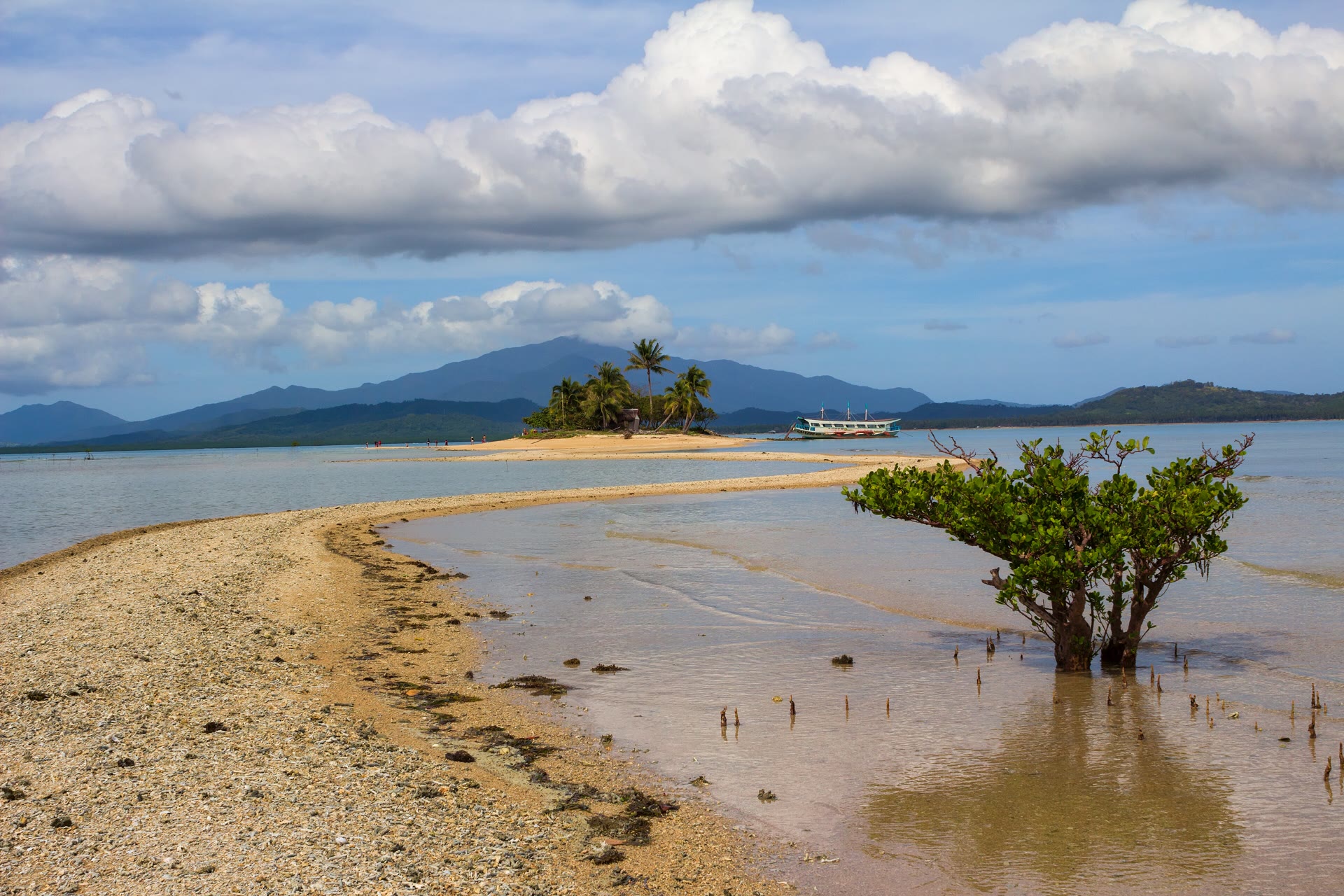
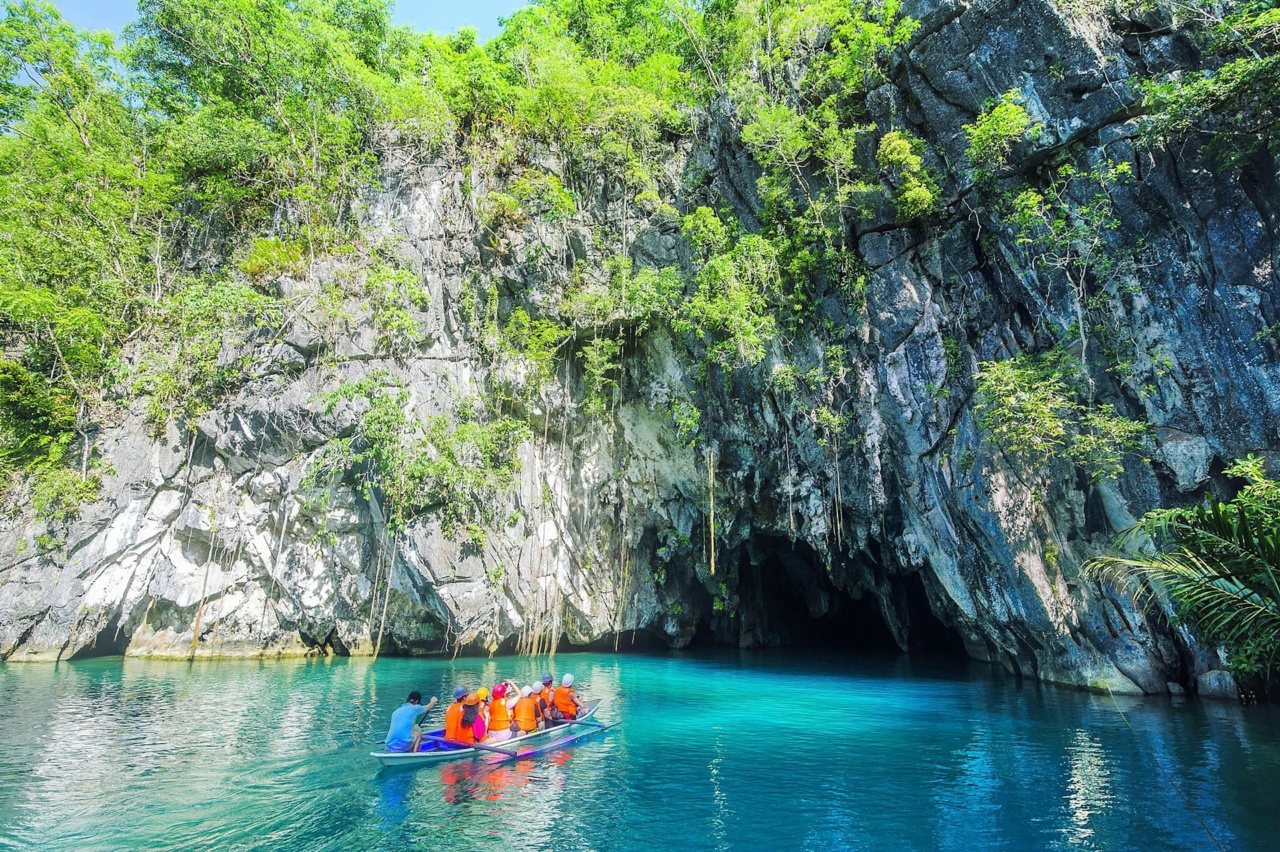
Puerto Princesa is a coastal city, and boats play a role in reaching certain destinations. Honda Bay island-hopping trips depart from wharves in the Sta. Lourdes area, and the Underground River itself is reached by boat from Sabang Wharf. These are typically arranged as part of organized tours rather than independent transport, but it is worth knowing that bangka (outrigger boats) are a key part of getting to Palawan's best natural attractions.
The city tourism office lists the pump boat from Sabang Wharf to the Underground River park at about 20 minutes and PHP 700 and up for a boat of up to 6 people.[2] Island-hopping in Honda Bay is run by the Honda Bay Boat Owners Association, and most travelers book through tour operators or their hotel.[1] Going independently is possible but rarely cheaper once you factor in boat hire and logistics.
Comparing Your Options
| Mode | Typical Cost | Duration | Best For |
|---|---|---|---|
| Tricycle | PHP 150+ airport to Irawan terminal, PHP 300 to Honda Bay (per tricycle, up to 3 people)[2][1] | About 20 min to Honda Bay[1] | Short hops, door-to-door convenience, city tours |
| Multicab / Jeepney | PHP 25 per person to Sta. Lourdes (Honda Bay)[1] | Along the main road | Budget travel along Rizal Avenue and the national highway |
| Motorbike Rental | Varies by shop | Self-paced | Independent exploration, beaches, rural areas |
| Van/Shuttle to Sabang | PHP 150+ per person[2] | 1-2 hours[2] | Underground River |
| Van to El Nido | About $12-$13 per person[4] | About 5-5.5 hours[4] | Long-distance trips north |
| Private Van to El Nido | About $120-$130 per van[4] | 4-5 hours[4] | Groups, comfort, door-to-door |
| Walking | Free | Varies | City center, Baywalk, short distances |
| Boat (Bangka) | PHP 700+ per boat of up to 6 people from Sabang[2] | About 20 min from Sabang[2] | Underground River access, Honda Bay island-hopping |
Practical Tips for Getting Around Puerto Princesa
Puerto Princesa is a small city with a relaxed pace, but a few practical habits will make your experience smoother.
- Cash is king. Almost no tricycle driver, multicab, or small transport operator accepts cards or mobile payment. Bring plenty of small bills. ATMs are available at Robinson's Place and along Rizal Avenue, but they occasionally run out of cash, especially on weekends.
- Download offline maps. Google Maps works reasonably well for navigation in Puerto Princesa, and downloading the Palawan map for offline use is smart. Cell signal can be spotty outside the city center.
- Get your Underground River permit first. Visitors must buy an entry permit, priced at PHP 175 to PHP 250, at the booking office on the ground floor of the City Coliseum before going to the park, and the no permit, no entry policy is strictly enforced.[2] Most hotels and tour operators can arrange this along with transport.
- Negotiate tricycle fares before boarding. Agree on the price, confirm whether it is per person or per trip, and settle it before you sit down.
- Carry rain gear. Palawan weather can shift from blazing sun to torrential rain in minutes. A small foldable poncho or umbrella makes open-air tricycle rides much more bearable.
- Watch the time for long-distance transport. Jeepneys and shuttle vans to Sabang stop running in the afternoon, so an arrival late in the day may mean arranging a private transfer.[2]
- Save your driver's number. If you find a tricycle driver you trust, get their mobile number. Having a reliable driver you can call or text is the closest thing Puerto Princesa has to a ride-hailing app, and it is genuinely useful for airport transfers, night trips, and early morning departures.
- Language is rarely a barrier. English is widely spoken in the Philippines, and drivers, tour operators, and locals can generally communicate with travelers without difficulty. Learning a few Tagalog phrases ("Magkano?" for "How much?" and "Salamat" for "Thank you") goes a long way in building goodwill.
For comparing transport options and planning your routes across Palawan and the rest of Asia, GoAsia.cc can help you sort through the choices before you arrive.
Popular Routes and Destinations
Most travelers passing through Puerto Princesa are headed to a few key destinations. Here is how to handle the most common routes:
Airport to City Center
Puerto Princesa Airport is remarkably central, sitting just a few blocks from Rizal Avenue. A tricycle to most downtown hotels takes only a few minutes; agree the fare before you get in. Private van transfers are available for groups or those with heavy luggage. Walking is even possible if your hotel is nearby and you are traveling light.
City Center to Underground River (Sabang)
The Puerto Princesa Subterranean River National Park is the city's marquee attraction, but it is not close. The journey to Sabang takes 1 to 2 hours by jeepney or shuttle van from the Irawan terminal, followed by a boat ride of about 20 minutes to the park.[2] Most travelers book this as a full-day tour through their hotel, with prices typically including transport, the boat, the permit, and lunch. Doing it independently costs PHP 150 and up per person each way for the jeepney or van, PHP 700 and up for a boat of up to 6, and the permit.[2]
City Center to Honda Bay
Honda Bay's island-hopping wharves are about 20 minutes by land from the city. A tricycle from the airport or the city proper costs PHP 300 for up to 3 people, and a jeepney or multicab bound for Sta. Lourdes costs PHP 25 per person.[1] Most island-hopping tours include land transport in the package, picking you up from your hotel in the morning and returning you by mid-afternoon.
Puerto Princesa to El Nido
While not strictly a city transport route, so many travelers make this journey that it deserves mention. Shared vans cost about $12 to $13 and take about 5 to 5.5 hours, and private vans cost about $120 to $130 per van and take 4 to 5 hours (booking platform listings, October 2026).[4] Vans to El Nido run from the early morning to the late afternoon, so an early start is the easy way to arrive in daylight.
Frequently Asked Questions
Use this guide to compare local transport in Puerto Princesa. When bookable tickets are available, the booking tool shows current options and prices.
Tricycles are the most convenient and widely available way to get around Puerto Princesa. They can take you door-to-door anywhere in the city for a negotiated fare. For longer trips outside the city, jeepneys, shuttle vans and private transfers are the standard options. Renting a motorbike is ideal if you want independent freedom to explore at your own pace.
Fares are low but mostly negotiated. The city tourism office lists PHP 300 per tricycle (up to 3 people) from the airport or the city proper to the Honda Bay wharf, PHP 25 per person on a jeepney or multicab to Sta. Lourdes, and PHP 150 and up per person on a jeepney or shuttle van from the Irawan terminal to Sabang.
Public transport is generally fine for visitors who take normal precautions. Agree on fares in advance, keep your belongings close, and avoid displaying expensive items. Tricycles and multicabs are open-air, so keep your bag on your lap.
Do not count on it. Coverage of Grab in Puerto Princesa has been limited and inconsistent, so check the app when you arrive. Travelers mostly rely on tricycles, hotel-arranged drivers, and tour operators. Saving a trusted tricycle driver's phone number is the best local alternative to app-based transport.
The city center around Rizal Avenue and the Baywalk is walkable for short distances. You can reach restaurants, shops, the cathedral, and the waterfront on foot. However, most tourist attractions like the Crocodile Farm, Baker's Hill, and Honda Bay are well outside walking range, so you will need motorized transport for those.
The airport is centrally located, just a few blocks from Rizal Avenue. A tricycle to most downtown hotels takes only a few minutes, and you should agree the fare before you get in. Private van transfers are useful for groups or heavy luggage.
The Underground River is reached via Sabang. Take a jeepney or shuttle van from the Irawan terminal (1 to 2 hours, from PHP 150 per person), then a boat of about 20 minutes. You must first buy a visitor entry permit at the booking office at the City Coliseum. Most travelers book a full-day tour that includes transport, boat, permit and lunch.
Sources and background
Numbers in the text such as [1] refer to these sources.
- [1] City Tourism of Puerto Princesa: Honda Bay Tour. Retrieved October 15, 2026.
- [2] City Tourism of Puerto Princesa: PPUR. Retrieved October 15, 2026.
- [3] Municipality of San Vicente, Palawan: Travel Guidelines | San Vicente. Retrieved October 15, 2026.
- [4] 12Go: Timetable Puerto Princesa - El Nido. Retrieved October 15, 2026.
Guide prices and journey times are indicative, not live quotes. A booked package may include transfers and waiting time as well as the main journey. Check the selected offer, pickup point and current conditions before booking.