
Chiang Rai
Thailand's northernmost major city sits at the crossroads of Lanna culture, misty mountain landscapes, and the Golden Triangle borderlands.
Last updated: March 12, 2026
When to go
Climate and best time for Chiang RaiBest months: October to February
- January: Great. 30 °C by day, 14 °C at night, 10 mm of rain
- February: Great. 33 °C by day, 15 °C at night, 10 mm of rain
- March: Mixed (very hot and air pollution). 35 °C by day, 18 °C at night, 24 mm of rain
- April: Mixed (very hot and air pollution). 36 °C by day, 22 °C at night, 92 mm of rain
- May: Mixed (a lot of rain and very hot). 35 °C by day, 23 °C at night, 158 mm of rain
- June: Good (a lot of rain). 33 °C by day, 24 °C at night, 135 mm of rain
- July: Mixed (a lot of rain). 32 °C by day, 24 °C at night, 246 mm of rain
- August: Mixed (a lot of rain). 32 °C by day, 24 °C at night, 280 mm of rain
- September: Good (a lot of rain). 32 °C by day, 23 °C at night, 205 mm of rain
- October: Great. 32 °C by day, 22 °C at night, 102 mm of rain
- November: Great. 31 °C by day, 18 °C at night, 36 mm of rain
- December: Great. 29 °C by day, 15 °C at night, 18 mm of rain
- Great
- Good
- Mixed
- Poor
Contents
- 1. Orientation and Neighborhoods
- 1.1 City Center and Clock Tower Area
- 1.2 Jet Yod and Northern Riverside
- 1.3 Robwieng Nai (Old City)
- 1.4 Outskirts and Resort Zone
- 2. Best Time to Visit
- 3. Getting There and Getting Around
- 3.1 Arriving in Chiang Rai
- 3.2 Getting Around the City
- 4. Top Sights and Experiences
- 4.1 Must-See Temples
- 4.2 Beyond Temples
- 4.3 Overrated Attractions
- 5. Food and Drink
- 5.1 Signature Dishes
- 5.2 Where to Eat
- 5.3 Drinking
- 6. Where to Stay
- 6.1 Budget (Under $15 per night)
- 6.2 Mid-Range ($15 to $50 per night)
- 6.3 Upscale ($50 to $150 per night)
- 6.4 Unique Stays
- 7. Practical Tips
- 8. Day Trips
- 8.1 Doi Tung and Mae Fah Luang Garden
- 8.2 Chiang Saen and the Mekong
- 8.3 Doi Mae Salong (Santikhiri)
- 8.4 Phu Chi Fa
- 8.5 Hot Springs and Waterfalls
- 9. Sample 3-Day Itinerary
- 9.1 Day 1: Temples and Night Market
- 9.2 Day 2: Mountains and Culture
- 9.3 Day 3: River, Ruins, and Relaxation
- 10. Budget Overview
- 11. Frequently Asked Questions
The first thing you notice in Chiang Rai is the quiet. Not silence exactly, but a conspicuous absence of the honking, hawking, and hustle that defines most Thai cities. Songthaews rumble past unhurried. Night market vendors chat with neighbors instead of shouting at passersby. The Kok River drifts through town as if it has nowhere particular to be. This is Thailand's far north at its most relaxed, a place where the country's most audacious modern temples coexist with mist-draped mountains and ethnic communities that predate any national border.
Chiang Rai province shares frontiers with both Myanmar and Laos, and that triple-border geography infuses the city with a cultural complexity you will not find further south. Lanna traditions run deep here, from the food to the temple architecture, but so do Akha, Lahu, Hmong, and Yao influences that spill down from the surrounding highlands. The result is a destination where a single day can move from a blindingly white contemporary art temple to a hilltop village where women still wear traditional silver headdresses.
Most visitors treat Chiang Rai as a day trip from Chiang Mai, which is a mistake. Two or three nights let you explore the extraordinary temple circuit at a sane pace, venture into the mountains for trekking or tea plantation visits, and soak up the city's excellent night market scene without rushing. If you have a week, the province opens up further into remote border towns, hot springs, and waterfalls that few foreign travelers ever reach.
Orientation and Neighborhoods
Chiang Rai city is compact and manageable. The old town core sits between the Clock Tower roundabout and Wat Phra Kaew on a slight hill, with most guesthouses, restaurants, and the famous night bazaar clustered within a roughly one-square-kilometer area. The Kok River forms a natural northern boundary, and the bus station sits about two kilometers south of center.
City Center and Clock Tower Area
The golden Clock Tower, designed by national artist Chalermchai Kositpipat, marks the heart of town. Within walking distance you will find the Saturday Walking Street market, numerous cafes, and the bulk of budget accommodation. This is the best base for first-time visitors who want to explore on foot.
Jet Yod and Northern Riverside
North of the center along the Kok River, this quieter area has several mid-range and boutique hotels with river views. It is a short tuk-tuk ride to the night market but offers a more peaceful setting. The Hilltribe Museum and Oub Kham Museum are both nearby.
Robwieng Nai (Old City)
The small area around Wat Phra Kaew and Wat Phra Singh retains some traditional wooden architecture and a village-like atmosphere. A handful of atmospheric guesthouses here cater to travelers who prefer character over convenience.
Outskirts and Resort Zone
The major temples, including Wat Rong Khun (White Temple) and Wat Rong Suea Ten (Blue Temple), are spread around the city's periphery. Several resort-style hotels sit along the road toward Mae Fah Luang University, offering swimming pools and mountain views at mid-range prices. You will need your own transport or a tuk-tuk to reach the center from here.
Things to Do
Offers are only loaded from GetYourGuide after you click. GetYourGuide can then process your IP address and set cookies. Privacy Policy
GetYourGuide partner offers. GoAsia may earn a commission if you book through these offers. Check whether tickets or transfers are included, and follow the attraction's official booking and admission rules.
Best Time to Visit
Chiang Rai's climate divides into three distinct seasons, and choosing the right one makes a significant difference to your experience.
| Season | Months | Weather | Crowds | Notes |
|---|---|---|---|---|
| Cool and Dry | Nov - Feb | Daytime 25-30C, nights 10-18C | Moderate to high | Best overall; bring a jacket for evenings |
| Hot and Smoky | Mar - May | 35-40C, haze from burning | Low | Avoid Mar-Apr if possible; air quality plummets |
| Rainy | Jun - Oct | 25-32C, daily showers | Low | Lush landscapes; rain usually falls in afternoon bursts |
The burning season deserves special emphasis. Every year from roughly late February through April, farmers across northern Thailand and neighboring countries burn crop stubble and forest undergrowth. The resulting haze blankets Chiang Rai in thick smog that can push air quality into hazardous ranges. Visibility drops, mountain views vanish, and anyone with respiratory issues will struggle. This period is genuinely best avoided.
November and December are arguably the sweet spot: cool nights, clear skies, and the tail end of the green season means the landscape is still lush. The Loy Krathong and Yi Peng lantern festivals typically fall in November and are celebrated with less fanfare than in Chiang Mai but with equal beauty. The Chiang Rai Flower Festival in late December through early January fills the public gardens with elaborate floral displays.
Getting There and Getting Around
Arriving in Chiang Rai
Mae Fah Luang International Airport (CEI) sits about eight kilometers north of the city center. Multiple daily flights connect to Bangkok's Don Mueang and Suvarnabhumi airports, with flight time around 90 minutes. A taxi or airport shuttle into town costs roughly $3 to $5. Some hotels offer free pickup if you book directly.
From Chiang Mai, the most popular route is by bus from Arcade Bus Terminal. Green Bus operates frequent departures throughout the day, taking about three hours on the modern highway. Standard air-conditioned buses cost around $5, while VIP coaches with wider seats run about $8. For those exploring the region more broadly, you can check bus and transport options on GoAsia.cc for route details and schedules.
A more scenic alternative from Chiang Mai is the Tha Ton boat trip down the Kok River, though this takes most of a day and is more of an experience than practical transport.
Getting Around the City
Central Chiang Rai is walkable, but the main temples and attractions are spread across a wide area that requires wheels. Your options:
- Songthaews (shared trucks): Blue songthaews circulate the city center for around $0.30 per ride. Flag one down and tell the driver your destination. Routes are not fixed, so confirm direction before boarding.
- Tuk-tuks: Ubiquitous and useful for temple runs. Expect to pay $2 to $4 for short hops within the city, and negotiate before you get in. A half-day tuk-tuk charter to the White Temple and Blue Temple typically runs $15 to $25.
- Motorbike rental: The best way to explore independently. Rental shops near the Clock Tower charge around $6 to $10 per day for a 125cc scooter. You will need a valid license and should wear a helmet. Mountain roads can be steep and winding.
- Grab: Available in Chiang Rai but with fewer drivers than in larger cities. It works for rides within town but do not rely on it for remote destinations.
- Bicycle: Several guesthouses rent bicycles for around $2 to $3 per day. The flat city center is pleasant to cycle, but distances to outlying temples make this impractical for a full sightseeing day.
Top Sights and Experiences
Must-See Temples
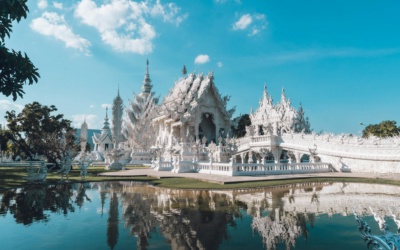
Wat Rong Khun (White Temple): Thirteen kilometers south of the city, this is the attraction that put Chiang Rai on the international map. Artist Chalermchai Kositpipat has been building and expanding this gleaming white temple complex since the late 1990s, and work continues. The main ordination hall is genuinely jaw-dropping, with its mirror-encrusted exterior and a bridge over a sea of sculpted reaching hands symbolizing desire. Inside, the murals mix traditional Buddhist imagery with pop culture references including superheroes and sci-fi characters. Arrive by 8:30 AM to beat tour bus crowds. Admission is around $1.50. Allow 60 to 90 minutes.
Wat Rong Suea Ten (Blue Temple): Located just north of the city center, this newer temple is the chromatic opposite of Wat Rong Khun. Every surface pulses with electric blue, and the interior features a striking white seated Buddha against swirling blue-and-gold murals. It is free to enter and far less crowded than the White Temple. Visit in the morning for the best light. Thirty to forty-five minutes is sufficient.
Wat Phra Kaew: This hilltop temple in the old city once housed the Emerald Buddha now enshrined in Bangkok's Grand Palace. A jade replica sits in the main hall, and the grounds offer a peaceful retreat with city views. The attached museum provides good context on Lanna history. Free entry, and thirty minutes is enough unless you linger.
Wat Huay Pla Kang: About six kilometers north of town, this complex features a towering nine-tiered Chinese-style pagoda and a massive white Guan Yin statue you can climb inside for panoramic views. It is less visited than the White Temple and rewards the trip with dramatic photography opportunities, especially at sunset. Free entry; allow one hour.
Beyond Temples
Baan Dam (Black House): The late artist Thawan Duchanee created this sprawling complex of around 40 dark wooden and concrete structures filled with animal bones, skins, horns, and provocative art. It is the philosophical counterpoint to the White Temple: where Chalermchai explores heaven, Thawan explored death and darkness. Located about 13 kilometers north of town. Admission around $2.50. Allow 60 to 90 minutes and keep an open mind.
Singha Park: This massive tea and fruit plantation owned by the Singha beer family sprawls across rolling hills about eight kilometers from the city. You can cycle the grounds, ride a shuttle tram, visit a zipline course, and photograph fields of cosmos flowers in the cool season. Entry is free; activities cost extra. Good for families and anyone wanting a half-day outdoors.
Chiang Rai Night Bazaar: The city's social hub every evening, this covered market near the bus station features food stalls, handicraft vendors, and a central stage with live Lanna music and hill tribe dance performances. The food court in the center is where locals eat and prices are honest. Go hungry around 6 PM and graze your way through.
Hill Tribe Trekking: Chiang Rai province is home to numerous Akha, Lahu, Hmong, Lisu, and Yao communities in the mountains. Multi-day treks with overnight homestays offer genuine cultural exchange, though quality varies enormously between operators. Choose agencies that are community-run or that clearly describe how villages benefit. Expect to pay around $30 to $50 per person per day for a guided trek including meals.
Overrated Attractions
Golden Triangle viewpoint at Sop Ruak: The famous spot where Thailand, Laos, and Myanmar meet sounds dramatic but amounts to a muddy riverbank, a giant golden Buddha statue, and a strip of aggressive souvenir vendors. The Hall of Opium museum nearby is genuinely interesting, but the viewpoint itself is a letdown. Worth a stop if you are already in the area, but do not make a special trip just for the photo.
Long-neck Karen villages near town: Several roadside "villages" near Chiang Rai are essentially human zoos where Kayan women pose for photos in exchange for a small fee. The ethics are questionable and the experience feels exploitative. If you want to learn about hill tribe culture, invest in a proper multi-day trek with a reputable operator instead.
Chiang Rai Beach: A seasonal sandbar along the Kok River that locals enjoy but holds little appeal for tourists beyond novelty. Skip it unless you happen to be passing by during the dry season.
Food and Drink
Northern Thai cuisine (known as ahaan muang) is distinct from the central Thai food most visitors know. It is less sweet, more herbaceous, and often served with sticky rice rather than steamed jasmine rice. Chiang Rai adds its own border-region twist with Shan, Yunnanese, and Lao influences.
Signature Dishes
| Dish | Description | Where to Try | Typical Price |
|---|---|---|---|
| Khao Soi | Coconut curry broth with egg noodles, topped with crispy noodles and pickled mustard greens | Noodle shops throughout the city center; the best are unassuming storefronts | $1.00 - $1.50 |
| Sai Oua | Grilled pork sausage packed with lemongrass, galangal, kaffir lime, and chili | Night Bazaar food stalls and morning markets | $0.50 - $1.00 per piece |
| Nam Prik Ong | Minced pork and tomato chili relish served with pork rinds and raw vegetables | Local restaurants serving khantoke (northern set meals) | $1.50 - $3.00 as part of a set |
| Laab Muang | Northern-style minced pork salad with dried spices, blood, and offal (milder versions available) | Market food courts and local restaurants | $1.00 - $2.00 |
| Khao Kan Jin | Steamed rice mixed with pork blood and spices, wrapped in banana leaf | Morning markets, especially Baan Du Market | $0.30 per piece |
| Miang Kham | Betel leaf wraps filled with ginger, lime, peanuts, shallots, chili, and sweet sauce | Night market snack stalls | $0.50 - $1.00 |
Where to Eat
The Chiang Rai Night Bazaar food court is the single best place to sample a wide range of dishes cheaply. Locals eat here, which keeps quality high and prices around $1 to $2 per plate. The Saturday Walking Street along Thanalai Road transforms into a food-heavy market on weekend evenings with even more variety.
For breakfast and coffee, Chiang Rai has an unexpectedly strong cafe scene. The province grows its own Arabica coffee in the highlands, and several roasters operate cafes in town. A quality espresso drink costs around $1.50 to $3.00. Look for shops advertising Doi Chang or Doi Tung beans, both grown locally.
Mid-range restaurants serving northern Thai set meals (khantoke style) typically charge $5 to $10 per person for a generous spread. For Western food, a handful of restaurants near the Clock Tower serve pizza, burgers, and pasta at $3 to $6 per dish, though the quality is hit or miss.
Chiang Rai's morning markets deserve special mention. The market near the old bus station is a sensory overload of grilled meats, steaming rice porridge, fresh herbs, and local snacks you will not find elsewhere. Arrive between 6 and 8 AM for the full experience.
Drinking
Chiang Rai is not a party town. A few bars along Jet Yod Road and near the Night Bazaar serve beer and cocktails, and some have live music. A large local beer costs around $2 to $3. The city's real drinking culture revolves around casual open-air restaurants where groups share bottles of whiskey with soda and ice. If you want nightlife, this is not your city, and that is part of its charm.
Where to Stay
Budget (Under $15 per night)
Chiang Rai has excellent budget accommodation. Guesthouses and hostels near the Clock Tower and Night Bazaar offer clean private rooms with air conditioning for $8 to $15. Dorm beds in hostels run $5 to $8. Many budget places include basic breakfast. The density of options means you can walk in without a booking during low season, though reserving ahead is wise from November through February.
Mid-Range ($15 to $50 per night)
This bracket gets you boutique guesthouses with pools, riverside hotels, and well-appointed rooms with proper amenities. Several excellent options line the Kok River north of the center, offering a resort feel at modest prices. Properties near Mae Fah Luang University provide mountain views and quiet surroundings but require transport into town.
Upscale ($50 to $150 per night)
A handful of luxury resorts sit in the countryside surrounding Chiang Rai, set among rice paddies and tea plantations. These typically feature spa facilities, fine dining, and curated cultural experiences. The Le Meridien and a few independent boutique resorts represent the top tier. Even at the luxury end, Chiang Rai is dramatically cheaper than comparable properties in Chiang Mai or Bangkok.
Unique Stays
Several hill tribe homestay programs offer overnight stays in Akha or Lahu villages, sleeping in traditional bamboo houses. These are basic but offer an experience no hotel can match. Arrange through reputable trekking agencies rather than showing up unannounced.
Practical Tips
Safety: Chiang Rai is exceptionally safe. Walking alone at night in the city center is fine. The biggest physical risk is motorbike accidents, especially on mountain roads. Wear a helmet, drive slowly, and avoid riding after dark on unfamiliar routes.
- Scams: Tuk-tuk drivers occasionally inflate prices for tourists. Agree on a fare before getting in. At the Golden Triangle, vendors may pressure you into overpriced boat trips to Laos. These are legal but rarely worth the cost.
- Cash vs card: Chiang Rai is still largely a cash economy. ATMs are plentiful and dispense Thai baht with a roughly $5 to $6 foreign transaction fee per withdrawal. Credit cards work at hotels and larger restaurants but not at markets, street food stalls, or small shops. Carry cash daily.
- Tipping: Not expected in local restaurants or taxis. Rounding up the bill or leaving $0.50 to $1 at sit-down restaurants is appreciated but not required. Tip trekking guides around $5 to $10 per day if service was good.
- SIM cards: Pick up a tourist SIM at the airport or any 7-Eleven. AIS and TrueMove offer data packages with roughly 15 to 30 GB for about $5 to $10, valid for a week or more. Coverage is good in the city but patchy in remote mountain areas.
- Language: English is limited. Hotel staff and tour operators communicate adequately, but market vendors, tuk-tuk drivers, and restaurant staff may speak very little. Learn basic Thai greetings and numbers. Google Translate's camera function is invaluable for menus.
- Temple etiquette: Cover shoulders and knees when entering temple buildings. Remove shoes before stepping inside any hall. Women must not touch monks or hand objects directly to them. Sit with feet tucked away from Buddha images, never pointed toward them.
- Smoking and vaping: Vaping is illegal in Thailand and can result in fines or confiscation. Smoking is prohibited inside temples, public buildings, and many outdoor areas including beaches and parks.
Day Trips
Doi Tung and Mae Fah Luang Garden
About 45 kilometers north of the city, Doi Tung mountain is home to the late Princess Mother's royal villa and a beautifully maintained botanical garden. The drive up is scenic, winding through coffee plantations and Akha villages. The gardens cost around $3 to enter and are worth an hour of wandering. Combine with a visit to the Doi Tung coffee shop for some of Thailand's best highland-grown beans. Reachable by motorbike or hired car in about 90 minutes.
Chiang Saen and the Mekong
This sleepy riverside town 60 kilometers northeast of Chiang Rai sits directly on the Mekong and is dotted with ancient temple ruins dating back centuries. It has a genuine border-town atmosphere with Lao fishing boats drifting past. The Chiang Saen National Museum provides solid historical context. Songthaews run from Chiang Rai's bus station for about $2, taking roughly 90 minutes. Far more rewarding than the touristy Sop Ruak Golden Triangle viewpoint nearby.
Doi Mae Salong (Santikhiri)
This mountain village was founded by Chinese Nationalist soldiers who fled Yunnan after the Communist revolution. The result is a Thai town that feels distinctly Chinese, with tea houses, Yunnanese noodle soup, and terraced oolong tea plantations covering every hillside. The drive up is spectacular. Visit a tea plantation, sample local varieties, and stay for lunch. About 70 kilometers from the city, best reached by motorbike or hired car in roughly two hours. The morning market here is one of the most atmospheric in the region.
Phu Chi Fa
This mountaintop viewpoint near the Lao border is famous for its sunrise over a sea of clouds. It requires an early start (or an overnight stay in a nearby guesthouse) and is about 100 kilometers from Chiang Rai. The payoff on a clear cool-season morning is extraordinary. The road is steep and winding, so confident motorbike riders or a hired driver are recommended. Skip it during the rainy or smoky seasons when visibility is poor.
Hot Springs and Waterfalls
Several natural hot springs dot the province. The ones at Huay Mae Sai, about 25 kilometers south of the city, are less developed and more pleasant than the heavily touristed Chiang Rai Hot Springs near the White Temple. Khun Korn Waterfall, about 30 kilometers south, drops 70 meters through jungle and involves a pleasant 1.5-kilometer hike from the parking area. Both make a good combined half-day trip.
Sample 3-Day Itinerary
Day 1: Temples and Night Market
Morning: Start early at Wat Rong Khun (White Temple) to beat the crowds. Arrive by 8:30 AM and spend 60 to 90 minutes exploring the grounds. On the way back to town, stop at the Blue Temple (Wat Rong Suea Ten) for 30 to 45 minutes.
Afternoon: Visit Baan Dam (Black House) for a thought-provoking contrast to the morning's temples. Allow 60 to 90 minutes. Return to town and explore the Oub Kham Museum, which houses an impressive collection of Lanna artifacts and royal regalia.
Evening: Head to the Night Bazaar by 6 PM. Eat your way through the food court, watch the cultural performance on the central stage, and browse the handicraft stalls. End with a drink at a riverside bar along the Kok.
Day 2: Mountains and Culture
Morning: Rent a motorbike or hire a driver and head to Doi Mae Salong. Browse the morning market, visit a tea plantation, and have Yunnanese noodles for lunch.
Afternoon: On the way back, detour through Doi Tung to visit the Mae Fah Luang Garden and the Princess Mother's villa. Stop at a hilltop viewpoint for photos.
Evening: Return to the city for the Saturday Walking Street market (if timing aligns) or revisit the Night Bazaar. Try khao soi for dinner at a local noodle shop.
Day 3: River, Ruins, and Relaxation
Morning: Take a songthaew or drive to Chiang Saen. Explore the ancient temple ruins and walk along the Mekong riverfront. Visit the National Museum for historical context.
Afternoon: If curious, continue briefly to Sop Ruak for the Golden Triangle photo and the Hall of Opium museum (allow 90 minutes for the museum). Otherwise, return toward Chiang Rai and stop at Khun Korn Waterfall for a hike.
Evening: Treat yourself to a northern Thai khantoke dinner set at a local restaurant. Finish with locally grown coffee at one of the city's specialty cafes.
Budget Overview
| Category | Budget | Mid-Range | Comfort |
|---|---|---|---|
| Accommodation | $5 - $12 | $20 - $40 | $60 - $120 |
| Food | $5 - $8 | $10 - $20 | $25 - $40 |
| Transport | $2 - $5 | $8 - $15 | $15 - $30 |
| Activities | $3 - $5 | $10 - $20 | $20 - $40 |
| Daily Total | $15 - $30 | $48 - $95 | $120 - $230 |
Chiang Rai is remarkably affordable even by Thai standards. Budget travelers who eat at markets, stay in guesthouses, and use local transport can comfortably spend under $30 per day. Mid-range travelers enjoying private rooms with pools, renting motorbikes, and eating at sit-down restaurants will find $50 to $80 covers everything generously. Even at the comfort level, Chiang Rai delivers exceptional value compared to southern Thai islands or Bangkok.
Frequently Asked Questions
Is Chiang Rai worth visiting?
Absolutely. Chiang Rai offers Thailand's most visually striking modern temples, genuine hill tribe culture, and a relaxed atmosphere that even Chiang Mai cannot match. It is especially worthwhile if you enjoy art, nature, and exploring without heavy tourist crowds.
How many days do you need in Chiang Rai?
Two full days let you cover the main temples and the night market comfortably. Three days allow time for a hill tribe trek or a Golden Triangle excursion. If you want to explore tea plantations, hot springs, and remote waterfalls, four to five days is ideal.
Is Chiang Rai safe for tourists?
Chiang Rai is one of the safest cities in Thailand. Violent crime against tourists is extremely rare. The main concerns are motorbike accidents on mountain roads and occasional petty scams at the Golden Triangle tourist zone. Use normal precautions and you will be fine.
What is the best time to visit Chiang Rai?
November through February offers cool, dry weather with temperatures dropping to around 15 degrees Celsius at night. This is peak season but crowds remain manageable. Avoid March and April when agricultural burning creates a thick haze over the region.
What food is Chiang Rai famous for?
Chiang Rai is known for northern Thai dishes like khao soi (curry noodle soup), sai oua (herbal pork sausage), nam prik ong (chili-tomato dip), and laab muang (northern-style minced meat salad). The night market is an excellent place to sample everything in one go.
Is Chiang Rai expensive?
Chiang Rai is one of the most affordable destinations in Thailand. Budget travelers can get by on roughly $25 to $35 per day including accommodation, food, and local transport. Even mid-range travelers rarely spend more than $60 to $80 daily.
Can you drink the tap water in Chiang Rai?
No, tap water is not safe to drink anywhere in Thailand. Bottled water is cheap and available everywhere. Many hotels and guesthouses provide free refill stations, and you can refill at filtered water machines found on most streets for just a few baht.
How do I get from Chiang Mai to Chiang Rai?
The most common route is by bus from Chiang Mai's Arcade Bus Terminal, taking roughly three hours and costing around $5 to $8. VIP buses are comfortable with air conditioning and reclining seats. You can also fly in about 75 minutes, with tickets typically around $30 to $60 one way.
Is English widely spoken in Chiang Rai?
English is limited outside of hotels, major tourist attractions, and the night market. Learning a few basic Thai phrases helps considerably. Guesthouse staff and tour operators generally speak enough English for practical communication, and translation apps fill most gaps.
Is Chiang Rai good for families?
Chiang Rai works well for families thanks to its safe environment, affordable prices, and attractions like the Singha Park farm, elephant sanctuaries, and the quirky Baan Dam (Black House). The relaxed pace means less stress navigating with children compared to Bangkok or Chiang Mai.
Guides & Tips
1/1
Routes
🗺️ Getting Around Chiang Rai - Local Transport Guide
→ Routes from Chiang Rai (13)
Routes to Chiang Rai (8)