Borobudur: Tickets, Opening Hours and Visiting the Temple
Contents
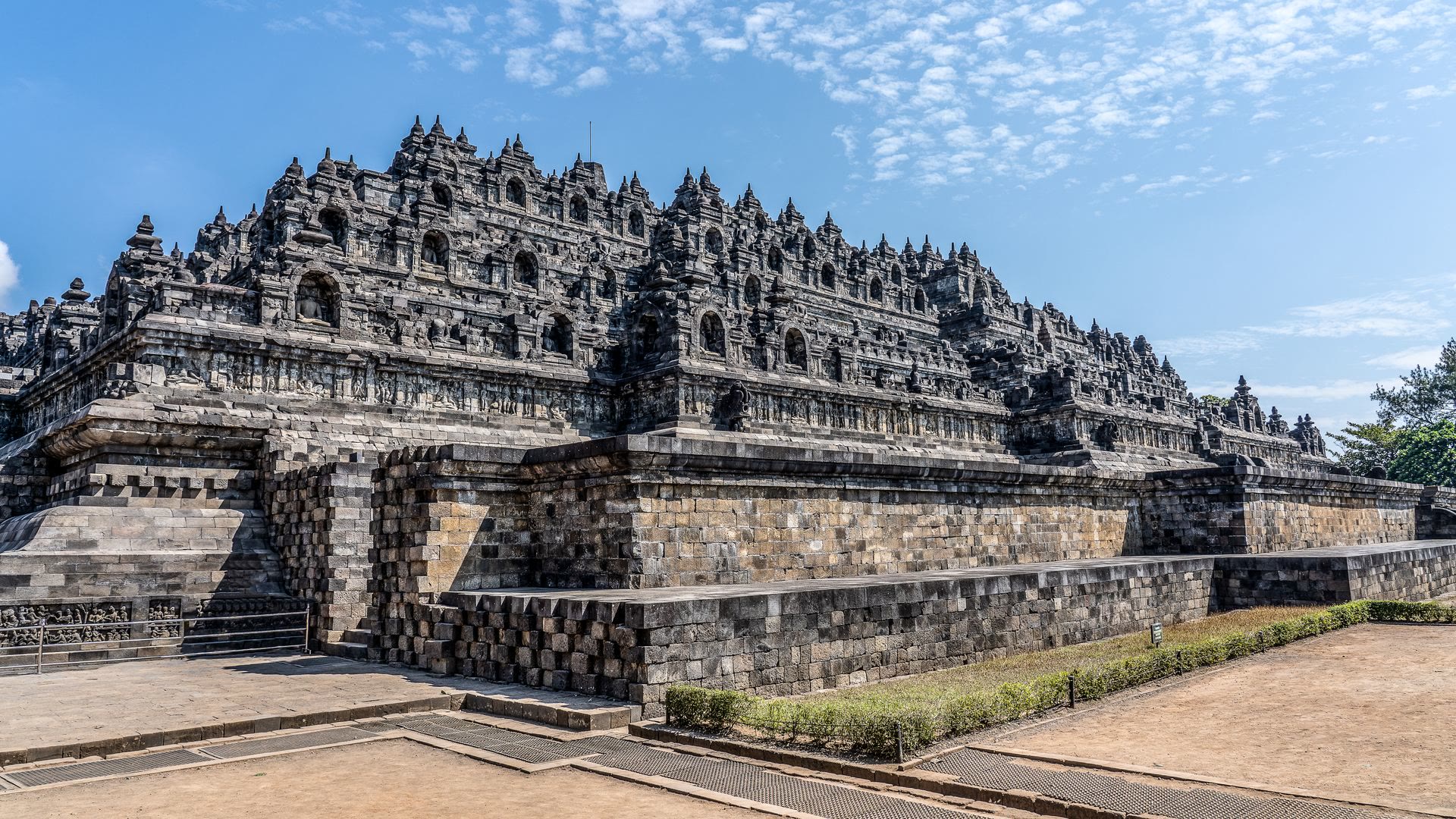
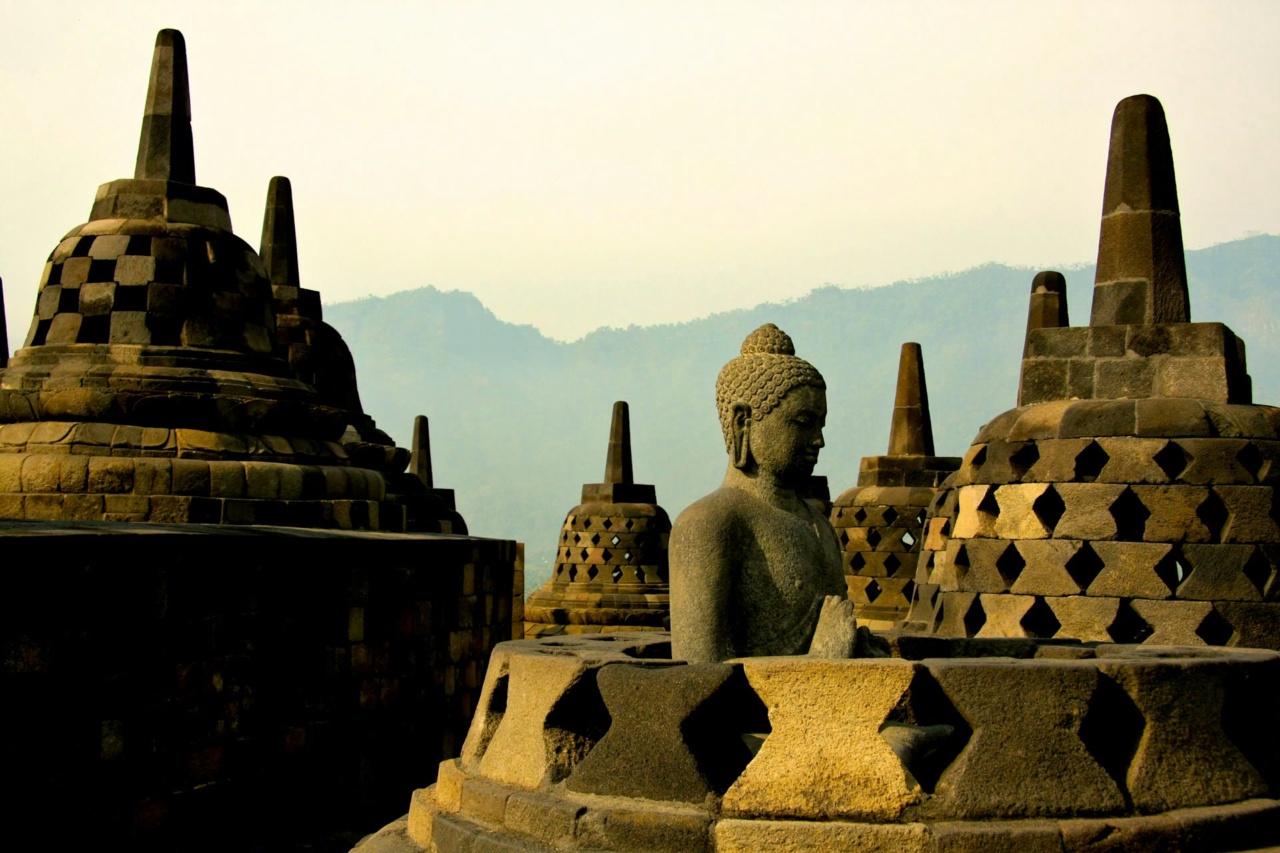
Borobudur in Central Java is a Buddhist temple of carved stone terraces crowned by 72 openwork stupas, each holding a statue of the Buddha.[1] Pick your ticket first, then plan transport. Regular structure access runs from 08:30 to 17:00 WIB, while grounds-only access from 06:30 to 16:30 is for domestic visitors only.[2] The separate sunrise programme starts at 04:00.[3]
History and temple design
Borobudur is one of the greatest Buddhist monuments in the world, built in the 8th and 9th centuries under the Syailendra dynasty. It belongs to a UNESCO World Heritage compound with Mendut and Pawon, two smaller temples to the east on a straight axis. Worship continued until sometime between the 10th and 15th centuries, when the temple was abandoned; it was rediscovered in the 19th century. The major restoration of 1973 to 1983 used mostly original stone, with additions to stabilise the monument and drain it properly.[1]
The temple rises in three tiers around a hill: a pyramidal base with five concentric square terraces, three circular platforms and a monumental stupa at the top. Fine low reliefs cover the walls and balustrades, and 72 openwork stupas ring the circular platforms. The design blends the terraced mountain of ancestor worship with the Buddhist path to nirvana.[1] The plan measures 123 by 123 metres and the monument stands 35 metres high.[4]
Three Buddhist realms
- Kamadhatu, the realm of desire: the base, where people are still bound to their desires.[1] Its 160 Karmawibhangga reliefs show everyday life, good and bad deeds and their consequences.[5] A supporting wall now hides almost all of them.[4]
- Rupadhatu, the realm of form: the five square terraces, where desire is left behind but name and form remain.[1]
- Arupadhatu, the realm of formlessness: the three circular platforms and the great stupa, where there is no longer name or form.[1] Climbing up, you leave the corridors of carved stories for open platforms dotted with stupas, because these upper terraces have no balustrades.[4]
Reliefs worth understanding
The temple carries 2,672 relief panels: 1,460 narrative and 1,212 decorative.[4] They are far more than a backdrop for photographs. Ask your guide to explain a sequence on the route open to your group.
- Lalitavistara: a 120-panel series connected with the Buddha and his teaching.[4]
- Jataka and Avadana: 620 panels on the first level and 100 more on the second, with stories of compassion and helping others, populated by animals, rulers and gods.[4]
- Gandavyuha: 460 panels on the search for wisdom through spiritual friends from every walk of life, from merchants and goldsmiths to tribal leaders and children. The final 72 panels, the Bhadracarya, express the aspiration to live in harmony with all that is good.[4]
Things to Do
Offers are only loaded from GetYourGuide after you click. GetYourGuide can then process your IP address and set cookies. Privacy Policy
GetYourGuide partner offers. GoAsia may earn a commission if you book through these offers. Check whether tickets or transfers are included, and follow the attraction's official booking and admission rules.
Tickets and visiting times
All times are WIB, Western Indonesian Time. Prices for grounds-only and regular structure tickets appear when you book.
The main stupa is being restored from 16 September to 24 October 2026. Regular visits still go up to level 7, but only along the east, southeast, south, southwest and west sides. The courtyard and part of the north side are work zones and closed. Sunrise and sunset programmes run as usual and still reach level 9, with the same side restrictions. Follow signs, barriers and staff directions.[6]
| Ticket | Time and eligibility | Price and inclusions |
|---|---|---|
| Grounds only | 06:30 to 16:30; domestic visitors only[2] | Walk the grounds around the temple. This is not a structure-climb ticket.[2] |
| Regular structure access | 08:30 to 17:00; start time 08:30[2] | Includes structure access, wristband, guide and Upanat sandals, which you keep as a souvenir.[2] |
| Sunrise programme | Starts 04:00; 100 visitors per day[3] | IDR 1,000,000 per international visitor; IDR 750,000 per domestic visitor. Includes wristband, guide, Upanat, flashlight and breakfast at Manohara Restaurant.[3] |
Book through the official temple ticket page. Arrive 30 to 45 minutes before your start time for ticket validation; late arrivals may get limited access.[2] Follow your guide and the route open to your session, and allow time for check-in and onward travel.
Choose the official sunrise programme if you want to stand on the monument before it opens to the public, with mist drifting over the hills and the first light on the stupas.[3] Clouds can still hide the sun. Check the meeting point on your voucher. A sunset programme with dinner is also limited to 100 people a day.[3]
Getting to Borobudur
Borobudur is in Magelang Regency.[6] Plan from the exact hotel, airport terminal or railway station where you start, not from Yogyakarta as a whole. Work backwards from your booked session and the early-arrival advice.
- Private transport: ask for a quote that covers pickup, waiting, the return trip and any parking charges, and check whether the temple ticket is separate.
- Public transport: DAMRI, the state bus company, sells intercity, airport and city bus tickets online. Search your actual origin and date on the DAMRI booking page, then check the boarding point, any transfers and the last return service.[7]
- Organised tour: compare the ticket category, entry session, meeting point and transfer. A sunrise transfer or an outside viewpoint is not the official temple sunrise programme.
Combining Borobudur with Prambanan
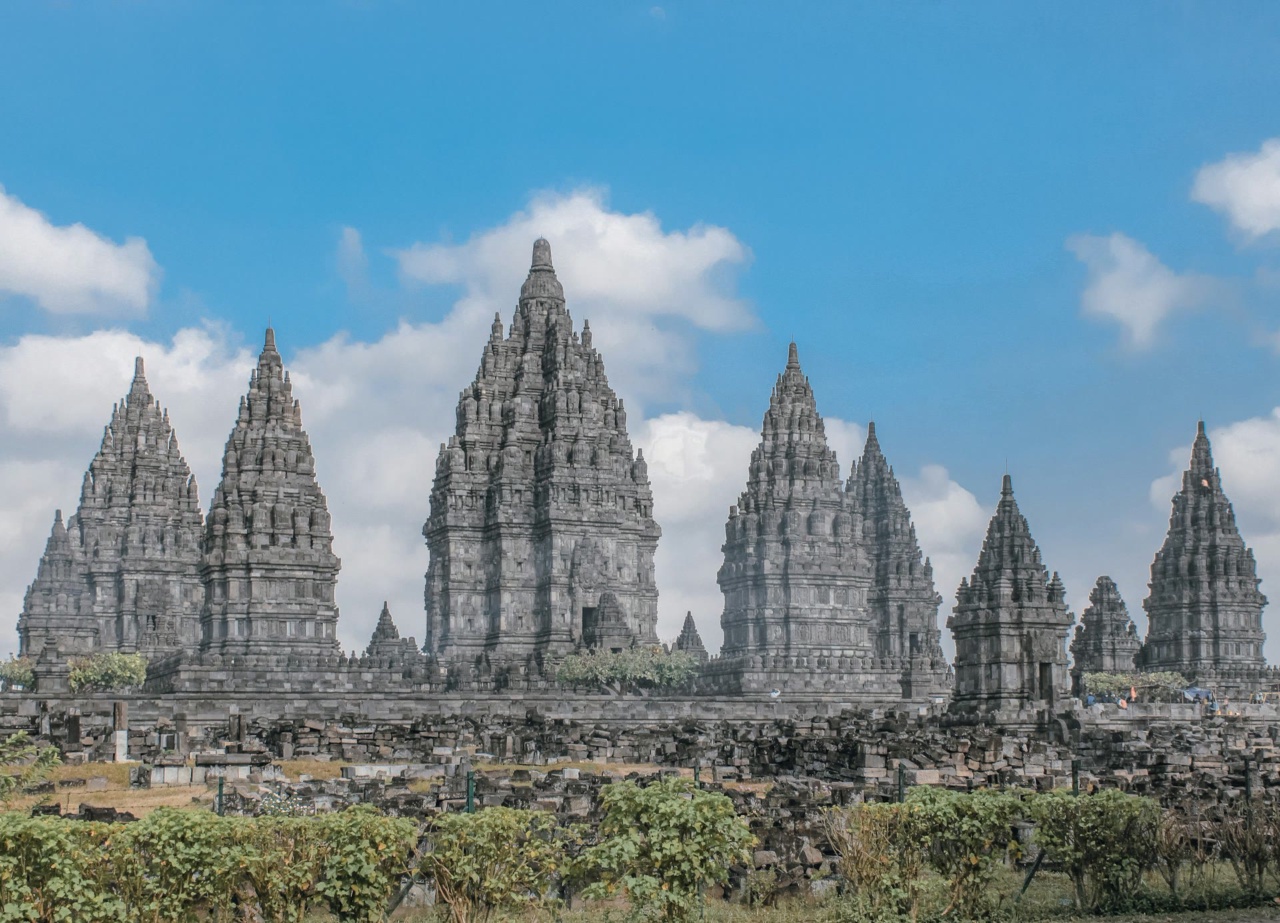
Prambanan is a Hindu temple complex and a natural second stop. Its official ticket page lists a 06:30 WIB start and covers Prambanan, Lumbung, Bubrah, Sewu and the Prambanan Museum.[8] Book compatible sessions and leave room for the transfer and a meal.
Practical preparation
- Stay on the guided route: barriers and staff instructions decide where you can walk today.
- Protect the stone: do not touch carvings, reach into stupas or sit on them.
- Prepare for the weather: bring water and sun or rain protection, and check the forecast for your date.
Plan in this order: choose the ticket and session, confirm the meeting point, then arrange transport and any second temple. That keeps your visit on the monument instead of on entry details at the gate.
Sources and background
Numbers in the text such as [1] refer to these sources.
- [1] UNESCO World Heritage Centre: Borobudur Temple Compounds (UNESCO World Heritage). Retrieved October 22, 2026.
- [2] InJourney Destination Management: Borobudur Temple official tickets 2026. Retrieved October 22, 2026.
- [3] InJourney Destination Management: Borobudur Sunrise and Sunset official tickets 2026. Retrieved October 22, 2026.
- [4] Directorate General of Buddhist Community Guidance, Indonesian Ministry of Religious Affairs: About Borobudur: reliefs and architecture. Retrieved October 22, 2026.
- [5] InJourney Destination Management: Karmawibhangga: Buddhist teachings in the reliefs of the covered base. Retrieved October 22, 2026.
- [6] InJourney Destination Management: Borobudur Mahastupa restoration 2026 and visitor access. Retrieved October 22, 2026.
- [7] DAMRI: DAMRI intercity, airport and city bus booking. Retrieved October 22, 2026.
- [8] InJourney Destination Management: Prambanan Temple official ticket and included sites. Retrieved October 22, 2026.
Frequently Asked Questions
Its 8th- and 9th-century Buddhist design combines square terraces, three circular platforms, 72 openwork stupas and thousands of carved relief panels. Mendut and Pawon are part of the same UNESCO compound.
The sunrise programme costs IDR 1,000,000 per international visitor and IDR 750,000 per domestic visitor. Regular structure and grounds prices appear on the official booking page for your category and date.
No. Grounds-only access from 06:30 to 16:30 is for domestic visitors only. International visitors book regular structure access (08:30 to 17:00 WIB) or the sunrise programme.
It suits you if you want the 04:00 guided programme with Upanat sandals, flashlight and breakfast at Manohara Restaurant. It is limited to 100 visitors a day, and clouds can still hide the sun.
Follow the route and timing of your booked guided session. The 08:30 to 17:00 window is the opening time of the structure, not an all-day permit. Allow time before and after for check-in and transport.
Yes. From 16 September to 24 October 2026 the main stupa is being restored. Visits go up to level 7 on the east, southeast, south, southwest and west sides, while the courtyard and part of the north side are closed.
Start from your exact hotel, airport terminal or station. For a private driver, confirm pickup, waiting time, the return trip and whether the temple ticket is included. For buses, search your origin and date on the DAMRI booking page.
Pick a session that fits your transport and check the forecast. Regular structure visits start at 08:30 WIB, and sunrise is a separate 04:00 programme.
Yes, if your booked sessions and transfers fit. The Prambanan ticket starts at 06:30 WIB and covers Prambanan, Lumbung, Bubrah, Sewu and the Prambanan Museum.