
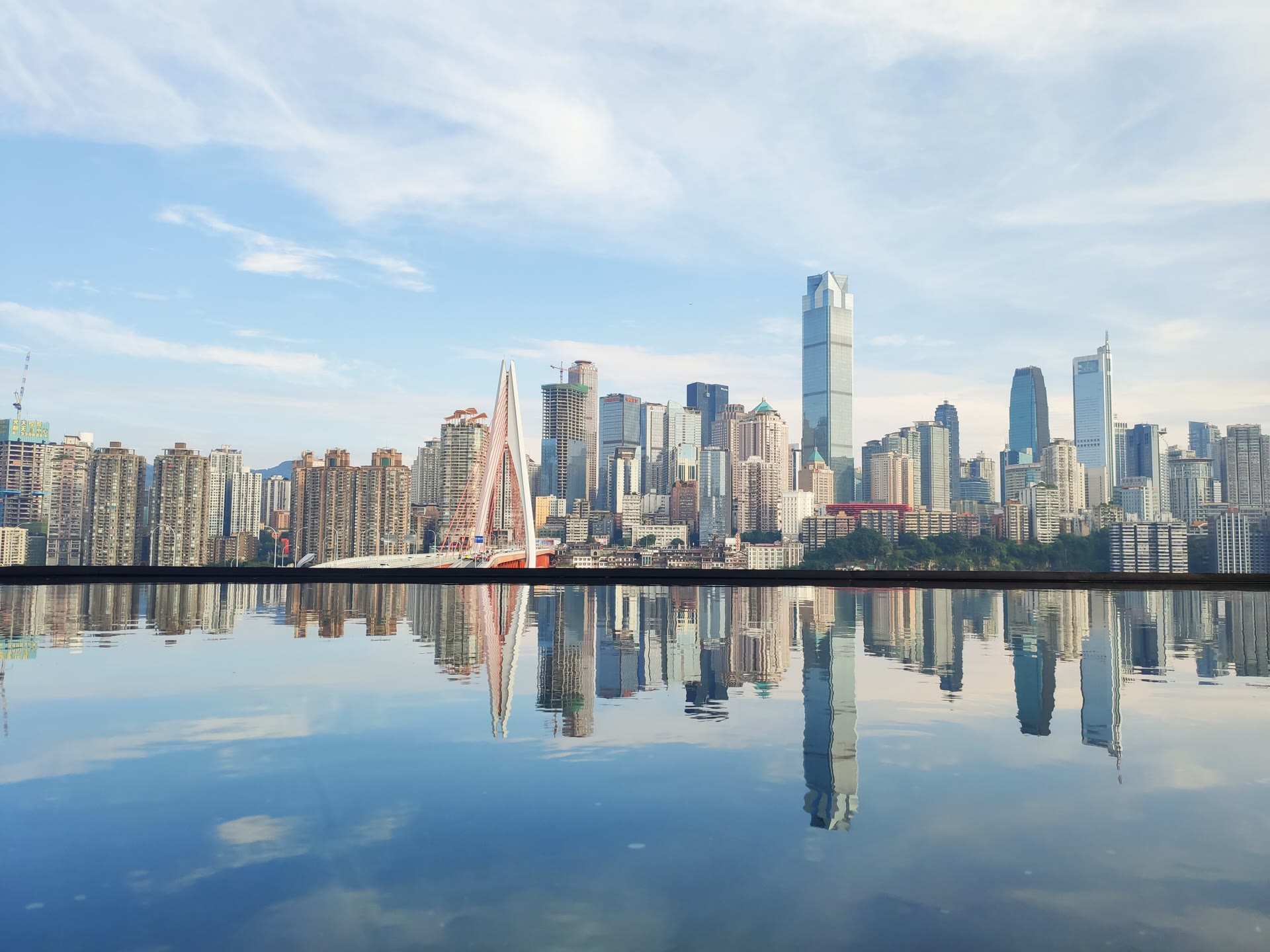
Photo: 夏枫水月 / Wikimedia Commons, CC BY-SA 4.0
Contents
- 1. Getting Around Chongqing by Metro and Monorail
- 1.1 How to pay
- 2. Getting Around Chongqing by Bus
- 3. Getting Around Chongqing by Taxi
- 4. Getting Around Chongqing by Ride-Hailing (Didi)
- 5. Getting Around Chongqing by Yangtze River Cableway
- 6. Getting Around Chongqing by Ferry and River Boat
- 7. Getting Around Chongqing on Foot
- 8. Comparing Your Options
- 9. Practical Tips for Getting Around Chongqing
- 10. Popular Routes and Destinations
- 11. Frequently Asked Questions
- 12. Sources and background
Chongqing does not move like other Chinese cities. Built on steep hills where the Yangtze and Jialing rivers meet, this is a place where the metro punches straight through apartment blocks, where roads stack on top of one another like ramps in a parking garage, and where the building you think is on the ground floor turns out to be on the twentieth. Locals call it the 8D Magic City for good reason - your phone's GPS will lie to you, and the straight line between two points almost never exists.
The good news is that Chongqing has invested heavily in public transit, and the rail network is one of the cleanest, cheapest and most reliable ways to beat the mountainous chaos above ground. The catch is the verticality: a station entrance might require a long escalator ride or an elevator just to reach street level, and walking between two seemingly close points can mean climbing several flights of stairs. Pace yourself, wear comfortable shoes, and accept that you will get lost at least once.
For travelers, the rhythm here is a mix of futuristic rail, swarming buses, abundant taxis and the ever-present ride-hailing apps. Cash is fading fast, replaced by QR codes glowing on every counter. Below is how to make sense of it all.
Getting Around Chongqing by Metro and Monorail
The Chongqing Rail Transit (CRT) system is the backbone of the city and the single most useful tool a traveler has. It blends conventional subway lines with elevated monorail lines, and the network sprawls across the city with multiple lines and many stations. The famous monorail Line 2 and Line 3 glide above the streets on a single rail, offering some of the best free city views you will find anywhere, including the celebrated stretch where the train passes directly through a residential tower at Liziba station.
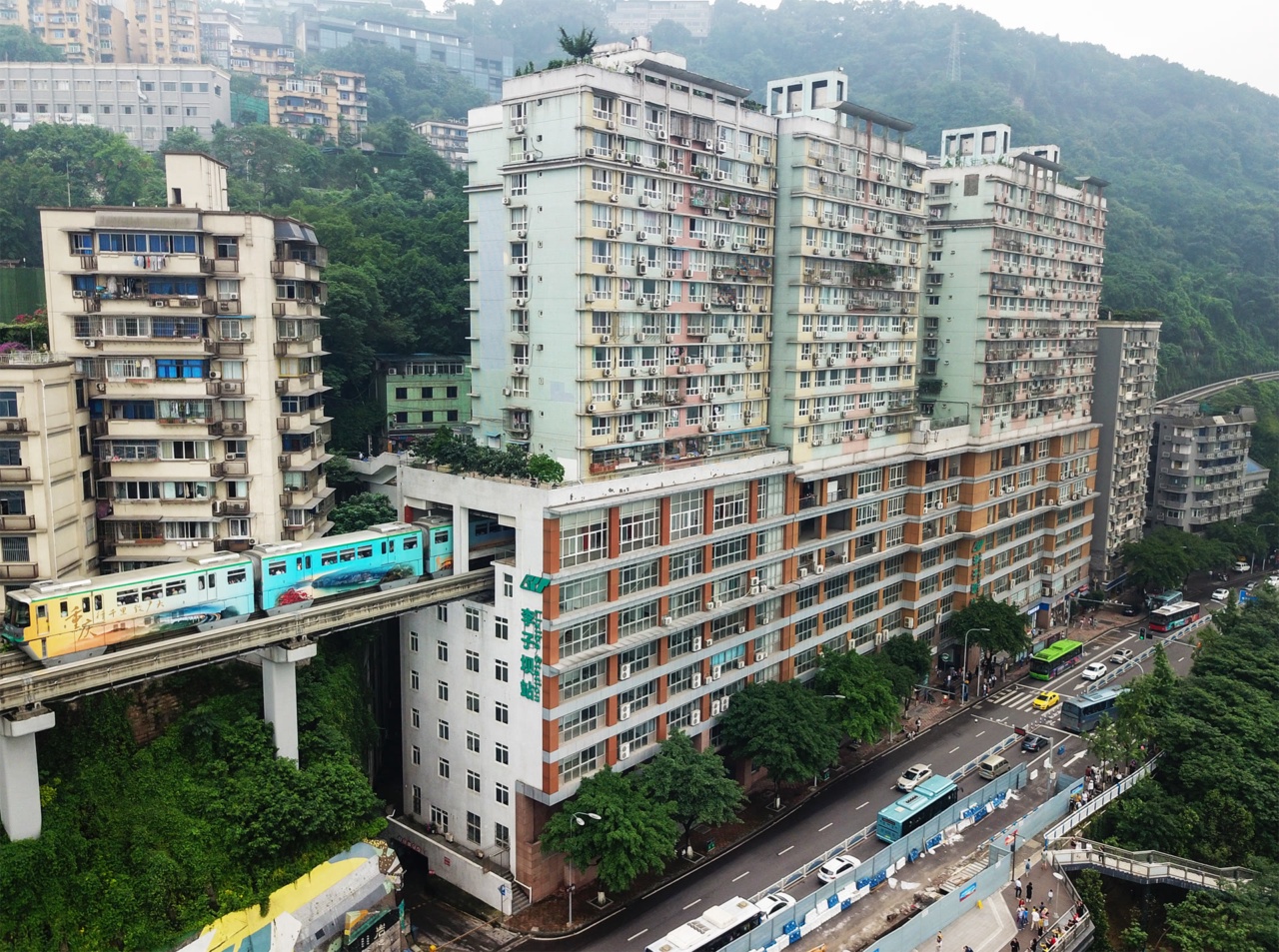
Fares are distance-based and low by international standards, and trains are frequent during the day. The lines serving Chongqing Jiangbei Airport, Line 3 and Line 10, run from 06:30 to 22:30,[1] so check the last train before a late evening out.
How to pay
You can buy single-ride tokens from machines at every station, most of which have an English option. Far easier is to use a mobile payment QR code through Alipay or WeChat, or to set up a transit card in your phone's wallet. A physical stored-value Chongqing transit card is also available if you prefer plastic, and it works across metro, monorail and buses. Tap in and tap out for the distance-based fare.
Stations are clean, signage is bilingual, and trains are air-conditioned. Central interchange stations like Jiaochangkou and Niujiaotuo get genuinely packed in the morning and evening rush hours. If you can travel outside those windows, do.
Getting Around Chongqing by Bus
Buses cover everywhere the rail does not reach, climbing hills and threading through neighborhoods that the metro skips. Fares are cheap and paid by QR code or transit card as you board, so have your payment ready.
The challenge for foreigners is that bus stop names and route information are almost entirely in Chinese, and drivers rarely speak English. Use a mapping app to confirm your stop, and watch your position on the map as the bus moves so you know when to get off. Buses can be crowded and the hilly routes lurch and brake hard, so hold on. For most visitors, buses are a backup when no rail line serves the destination rather than a first choice, but they are reliable and frequent on major corridors.
Getting Around Chongqing by Taxi
Chongqing's taxis are easy to spot, usually painted in a distinctive color scheme, and there are plenty of them. They are metered, so a ride across the central districts costs far less than in most Western cities.
Drivers here are notoriously fast and confident on the city's twisting flyovers, which is part of the local color. The main obstacles for travelers are language and the terrain: explaining your destination in English rarely works, so show the address in Chinese characters on your phone. Because of the layered roads, even getting picked up can be tricky - make sure you and the driver agree on which level of the road you are standing on. Insist on the meter; nearly all drivers use it without prompting, but confirm it is running. Cash works, but most travelers now pay by QR code.
Getting Around Chongqing by Ride-Hailing (Didi)
Didi is the dominant ride-hailing app and a lifesaver in a city this confusing. You set your pickup and destination on the map, which sidesteps the language barrier entirely, and the app handles payment through a linked card or your Alipay or WeChat balance. Didi offers everything from budget shared rides to standard cars and premium options.
Didi can be more convenient than flagging a taxi, especially late at night or when carrying luggage. The app has an English interface, which makes it far smoother than flagging a cab. The only friction is the same vertical puzzle that plagues everything else: pinning your exact pickup point on a multi-level road can confuse both you and the driver, so add a note or call through the app's translation feature if needed. You can compare ride-hailing and other transport options for the city on GoAsia.cc before you set out.
Getting Around Chongqing by Yangtze River Cableway
The Yangtze River Cableway is part tourist attraction, part genuine transport. These cable cars glide across the Yangtze between the city peninsula and the south bank, offering sweeping views of the skyline and the water far below. A ride costs more than a metro fare but is worth it for the experience. Expect queues during peak tourist hours and on weekends; visiting earlier in the day means a shorter wait. It will not replace your daily commuting, but it is one of the most memorable ways to cross the river.
Getting Around Chongqing by Ferry and River Boat
Given that two great rivers carve through the city, boats remain part of daily life. Public ferries and sightseeing cruises ply the Yangtze and Jialing, with evening cruises being especially popular for the dazzling neon skyline reflected on the water. Practical river ferries are cheaper, while tourist cruises cost considerably more and run mostly after dark. For pure transport you will rarely need a boat, but a night cruise is one of the city's signature experiences and worth budgeting an evening for.
Getting Around Chongqing on Foot
Walking in Chongqing is an adventure rather than a chore. The hills mean constant stairs, slopes and pedestrian bridges, and some of the most atmospheric spots, like the stilted old houses of Hongya Cave or the lanes of Ciqikou Ancient Town, are best explored on foot. That said, the city is not flat-walkable in the way that, say, Hangzhou is. Distances that look short on a map can involve serious elevation changes. Treat walking as a way to soak in neighborhoods rather than a means of covering ground quickly, and let the metro do the long-haul work.
Comparing Your Options
| Mode | Typical Cost | Duration | Best For |
|---|---|---|---|
| Metro and Monorail | Low, distance-based | Fast across the city | Crossing the city quickly and cheaply |
| Bus | Low, paid by QR code or card | Slower in traffic | Reaching hilly areas the metro misses |
| Taxi | Metered | Door to door | Direct trips with luggage |
| Didi (ride-hailing) | Shown in the app before you ride | Door to door | Avoiding the language barrier, late nights |
| River Cableway | Higher than a metro fare | A few minutes across | Scenic river crossing and views |
| Ferry and cruise | Varies widely | Leisurely | Evening sightseeing on the rivers |
| Walking | Free | Slow on hills | Exploring old towns and riverside lanes |
Practical Tips for Getting Around Chongqing
The single most important preparation is your phone. Set up Alipay or WeChat Pay with a foreign card linked, because cash is increasingly awkward and QR payment runs everything from the metro turnstile to the noodle stall.
- Download Didi for ride-hailing and a good offline-capable map. Local navigation apps like Amap (Gaode) and Baidu Maps are far more accurate for Chongqing's layered streets than international map apps, though they are mostly in Chinese. A translation app such as the one built into your phone helps decode signs and talk to drivers.
- Remember the vertical reality. Your GPS dot may show you above or below where you actually are because of stacked roads. When meeting a Didi or taxi, note which road level you are on and tell the driver.
- Keep destination names saved in Chinese characters. Showing the screen to a driver or passerby works far better than pronouncing it.
- Avoid the rush hour crush on the metro in the morning and early evening, when interchange stations are shoulder-to-shoulder.
- Carry a small amount of cash as backup, in small notes and coins, for the rare vendor or bus that needs it.
- Always confirm the taxi meter is running, and prefer app-based payment so the fare is clear.
- Summers are brutally hot and humid, and the constant stairs make it worse. Plan rail and air-conditioned travel for the hottest hours and save walking for mornings and evenings.
Chongqing is generally safe for travelers, and late-night metro and Didi rides are widely used. The bigger risk is simply getting disoriented in the maze of levels, so build in extra time and do not panic when the map makes no sense.
Popular Routes and Destinations
For most visitors, the metro and monorail handle the highlights. Reaching Jiefangbei, the central shopping and skyline district, is easy by rail, and from there the cableway and the Hongya Cave riverside complex are within reach. The monorail Line 2 doubles as sightseeing, passing through the Liziba building and along the Jialing River. Ciqikou Ancient Town sits at the end of a metro line and rewards a half-day of wandering. For evening plans, head to the riverside and take a night cruise to see the illuminated skyline, which many travelers rate as the city's defining sight. Crossing to the south bank for skyline photography is quickest by the river cableway, combining transport and a view in one short trip.
Frequently Asked Questions
Use this guide to compare local transport in Chongqing. When bookable tickets are available, the booking tool shows current options and prices.
The metro and monorail system is the best all-round option, being fast, cheap and frequent while cutting through the city's punishing hills. For door-to-door trips, the Didi ride-hailing app is the easiest because you avoid the language barrier entirely. Combine rail for long distances with Didi or taxis for the last leg.
Public transport is very affordable. Metro and monorail fares are distance-based and low, buses are cheap, and taxis are metered. Didi can cost a little more than a taxi, but you see the price in the app before you ride.
Chongqing is generally safe for travelers, and late-night metro and Didi rides are widely used. The main challenge is navigation in the maze of stacked roads rather than any safety concern.
Yes, Didi is the dominant ride-hailing app and works extremely well here. It has an English interface, lets you set pickup and destination on a map to bypass the language barrier, and accepts payment through Alipay, WeChat or a linked card. It is especially handy late at night or with luggage.
You do not strictly need one. Most travelers pay using a QR code through Alipay or WeChat Pay, which works on the metro, monorail and buses. A physical Chongqing transit card is available if you prefer plastic, but mobile payment is simpler for short visits.
Chongqing is fun to explore on foot in areas like Hongya Cave and Ciqikou, but it is extremely hilly, so distances that look short can involve many stairs and steep slopes. Treat walking as a way to enjoy neighborhoods rather than to cover long distances, and rely on the metro for getting across the city.
Save destination names in Chinese characters on your phone to show drivers, and use a translation app for conversations. Local map apps like Amap and Baidu Maps are the most accurate for navigation. Using Didi removes most of the difficulty since you set everything on the map rather than speaking.
Sources and background
Numbers in the text such as [1] refer to these sources.
- [1] China Southern Airlines: Chongqing airport: rail services. Retrieved October 15, 2026.
Guide prices and journey times are indicative, not live quotes. A booked package may include transfers and waiting time as well as the main journey. Check the selected offer, pickup point and current conditions before booking.