
Getting Around Bandung - Local Transport Guide for Travelers
Contents
- 1. Getting Around Bandung by Angkot
- 1.1 DAMRI City Buses
- 2. Getting Around Bandung by Ride-Hailing (Grab and Gojek)
- 3. Getting Around Bandung by Taxi
- 4. Getting Around Bandung on Foot
- 5. Getting Around Bandung by Becak and Ojek
- 6. Getting Around Bandung by Train
- 7. Getting Around Bandung by Rental Car or Motorcycle
- 8. Comparing Your Options
- 9. Practical Tips for Getting Around Bandung
- 10. Popular Routes and Destinations
- 10.1 Husein Sastranegara Airport to City Center
- 10.2 Getting to Dago and Northern Bandung
- 10.3 Factory Outlet Strip on Jalan Riau
- 10.4 Day Trips to Lembang and Tangkuban Perahu
- 11. Frequently Asked Questions
- 12. Sources and background
Bandung sits in a highland basin surrounded by volcanic peaks, and the city's geography shapes everything about how you move through it. The streets climb and dip, colonial-era boulevards intersect with narrow gang (alleyways), and traffic can turn a five-kilometer trip into a 45-minute crawl. This is a city of roughly three million people that was never designed for the number of vehicles now crammed onto its roads, and that tension between old infrastructure and modern demand defines the daily commute.
Yet Bandung rewards those who figure out its rhythms. The core around Jalan Braga and Jalan Asia Afrika is surprisingly walkable, with shaded sidewalks and cafes spilling onto the pavement. Beyond the center, the city sprawls north toward Lembang and south toward Soreang, and you will need motorized transport to cover any real distance. The good news: options are plentiful and cheap. The less good news: none of them are fast during rush hour. Understanding when and how to use each mode is the real skill here.
Unlike Jakarta with its MRT and commuter rail network, Bandung has no mass rapid transit system. Instead, you will rely on a patchwork of minibuses, ride-hailing apps, the occasional taxi, and your own two feet. This makes Bandung feel more intimate and unpredictable than Indonesia's capital, and that is part of its charm.
Getting Around Bandung by Angkot
The angkot (short for angkutan kota, or city transport) is Bandung's most iconic mode of public transit. These brightly colored minivans follow fixed routes throughout the city, identifiable by a route code displayed on the windshield or painted on the side. There are dozens of routes, and collectively they cover most neighborhoods from Cicaheum in the east to Cibeureum in the west, and from Ledeng in the north down to Leuwipanjang in the south.
Riding an angkot is straightforward once you know the system. Flag one down from the side of the road, hop in through the sliding side door, and pay when you get off. To signal your stop, knock on the roof or shout "kiri" (meaning "left," telling the driver to pull over). Fares are extremely low, typically around Rp 5,000 to Rp 7,000 (roughly $0.30 to $0.45) for most trips within the city. You pay in cash directly to the driver or his assistant, so keep small bills handy.
The experience is raw and local. Angkots have no air conditioning, seats are narrow metal benches facing each other, and the vehicles stop constantly to pick up and drop off passengers. During rush hours (roughly 7:00 to 9:00 AM and 4:00 to 7:00 PM), they can get packed. Routes are not always intuitive for newcomers, and there is no official route map app that works reliably. Your best bet is to ask locals or your hotel staff which angkot code goes where. Key routes to know: the St. Hall-Dago route runs along Jalan Ir. H. Juanda (Dago), one of the main tourist corridors, and the Cicaheum-Ciroyom route crosses the city center.
DAMRI City Buses
DAMRI operates larger buses on select routes, including connections to the airport and intercity terminals. Within the city, DAMRI buses run on a few corridors and are more comfortable than angkots, with actual seats and sometimes air conditioning. Fares are slightly higher but still very affordable. They are less frequent than angkots, so expect longer waits, but they are a decent option if your destination falls along one of their routes.
Getting Around Bandung by Ride-Hailing (Grab and Gojek)
For most travelers, Grab and Gojek will become your default transport. These apps transformed urban mobility across Indonesia, and in Bandung they are ubiquitous. Both offer car rides (GrabCar, GoCar) and motorcycle rides (GrabBike, GoRide), and both work on a metered, app-calculated fare system that eliminates haggling entirely.
Motorcycle rides are the fastest way to cut through Bandung's traffic. A typical GoRide or GrabBike trip of 5 to 8 kilometers costs around Rp 10,000 to Rp 20,000 (roughly $0.65 to $1.30), and drivers weave through gridlock that would trap a car for ages. Car rides cost more, typically Rp 20,000 to Rp 50,000 for similar distances, but offer air conditioning and luggage space. During rain or peak hours, surge pricing can push fares up by 50% or more.
Payment is easy. Both apps accept cash, but linking a local e-wallet (GoPay for Gojek, OVO for Grab) often unlocks discounts and makes the experience cashless. You can top up these wallets at convenience stores like Indomaret and Alfamart, which are on virtually every block. Drivers are generally friendly, and the apps show your route and fare upfront, so there is little room for overcharging. One tip: always confirm the pickup pin location, as Bandung's narrow one-way streets and confusing alley networks can make finding your driver tricky.
Beyond transport, both apps also offer food delivery (GoFood, GrabFood) and package courier services, making them essential tools for daily life in Bandung.
Getting Around Bandung by Taxi
Metered taxis exist in Bandung but are far less common than in Jakarta or Bali. Blue Bird, Indonesia's most trusted taxi brand, operates here, and their vehicles use meters reliably. The fare is shown on the meter, so it depends on the distance and the traffic.
The challenge is finding one. You will rarely see empty taxis cruising the streets looking for fares. Your best bet is to call one through the Blue Bird app or ask your hotel to arrange a pickup. Honestly, most travelers find Grab and Gojek more convenient and often cheaper, but taxis remain a good option if you prefer a traditional ride with a meter, especially late at night when ride-hailing availability can dip slightly.
Avoid unmarked taxis or drivers who approach you at tourist spots offering "special rates." These are almost always more expensive than a metered ride or app-based fare.
Getting Around Bandung on Foot
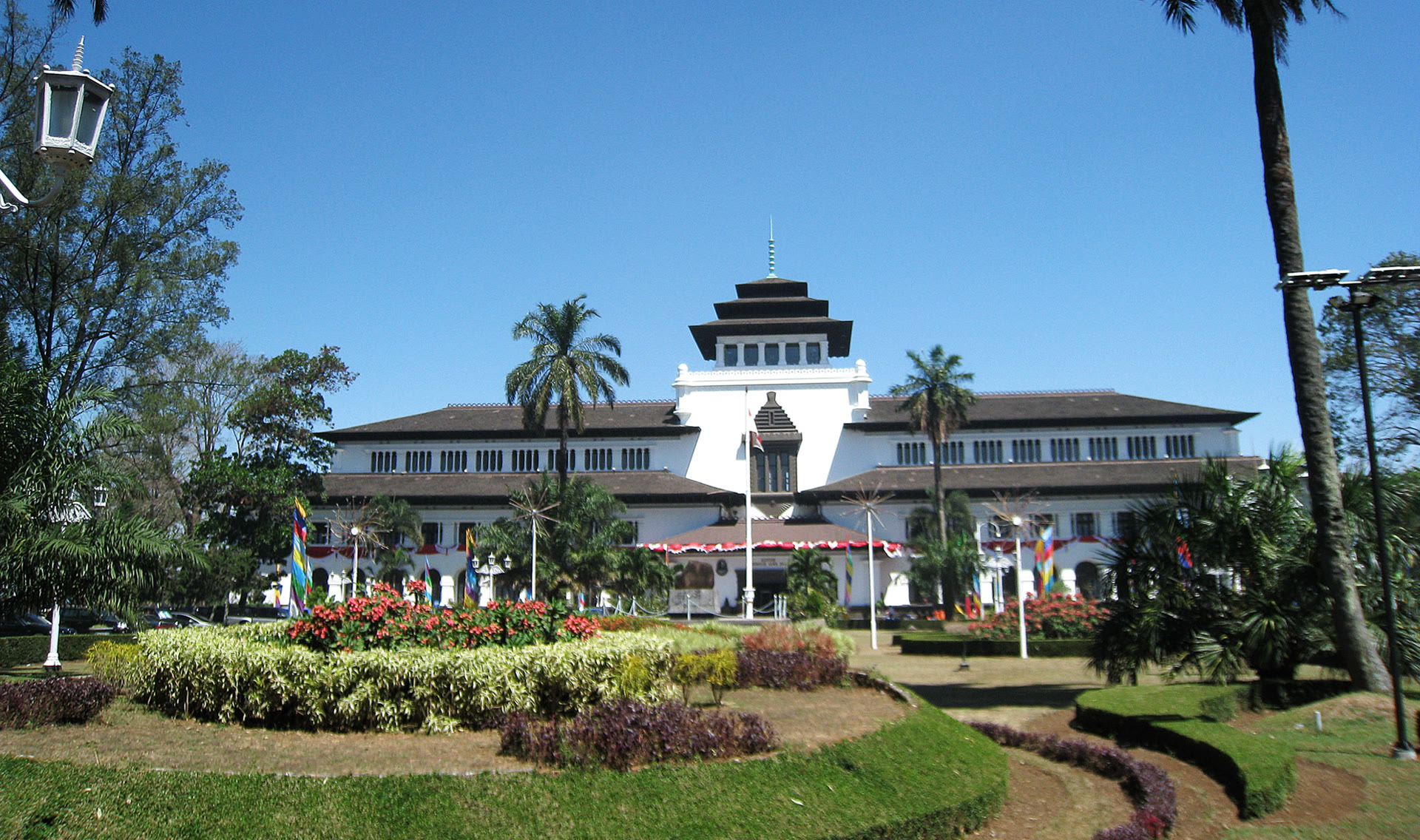
Bandung's city center is more walkable than most Indonesian cities, which admittedly is a low bar. The stretch along Jalan Braga, with its art deco buildings and coffee shops, is pleasant for strolling. Jalan Asia Afrika, home to the famous Gedung Merdeka (where the Asian-African Conference was held), connects to several key landmarks within a compact area. The Alun-Alun (city square) and the Great Mosque are also within walking distance of this zone.
Beyond the center, walking becomes less practical. Sidewalks are inconsistent, sometimes disappearing entirely or blocked by parked motorcycles and street vendors. Traffic does not naturally yield to pedestrians, and crossing busy roads requires confidence and timing. The hilly terrain in northern Bandung (toward Dago and Setiabudi) adds a physical challenge, though the cooler highland climate makes it more bearable than walking in lowland Indonesian cities.
For exploring specific neighborhoods like Dago, Riau (the factory outlet strip), or the Chinatown area around Jalan Kelenteng, walking combined with short ride-hailing hops is the most enjoyable approach.
Getting Around Bandung by Becak and Ojek
Traditional transport still has a place in Bandung, though its role is shrinking. Becak (cycle rickshaws) can be found in some older neighborhoods and around markets. They are slow, suitable only for very short distances (a kilometer or two), and fares must be negotiated in advance. Expect to pay around Rp 10,000 to Rp 20,000 for a short hop. They offer a charming, open-air way to see the streets but are impractical for anything beyond local errands.
Ojek (motorcycle taxis) existed long before Grab and Gojek, and traditional ojek drivers still wait at certain intersections and market entrances. Unlike app-based rides, you negotiate the fare before getting on. Prices are comparable to or slightly higher than GrabBike, and you lose the safety net of GPS tracking and digital receipts. Most travelers stick with the apps, but traditional ojek can be useful in areas with poor phone signal or when you need a ride from a spot where app drivers are scarce.
Getting Around Bandung by Train
Bandung's train station, Stasiun Bandung, is centrally located on Jalan Kebon Kawung, making it a useful landmark and transit point. While trains are primarily used for intercity travel (the scenic route to Jakarta via Padalarang is a highlight), the Commuter Line Bandung Raya connects Bandung with towns along the Padalarang to Cicalengka line, calling at Kiaracondong. Fares are low: Rp 4,000 from Padalarang to Kiaracondong or from Kiaracondong to Cicalengka, and Rp 5,000 for the full 42 km from Padalarang to Cicalengka (about $0.25 to $0.30).[1]
For getting around within the city itself, trains have limited utility since there is only one main line running east-west. But if your destination happens to fall near a station along this corridor, the train is a comfortable, traffic-free alternative. Tickets can be bought through the Access by KAI app.[1]
Getting Around Bandung by Rental Car or Motorcycle
Renting a car with a driver is a popular option for day trips to attractions outside the city center, such as Tangkuban Perahu volcano, the Ciwidey tea plantations, or the hot springs in Lembang. A full-day car rental with driver typically costs Rp 400,000 to Rp 600,000 (around $25 to $38), including fuel for local trips. This is excellent value if you are traveling in a small group and want flexibility.
Self-drive car rental is available but not recommended for most visitors. Bandung's traffic is aggressive, road signage is minimal, and one-way systems in the center are confusing. Motorcycle rental is cheaper (around Rp 75,000 to Rp 100,000 per day) and gives you freedom, but only consider this if you are an experienced rider comfortable with Indonesian traffic patterns. An international driving permit is technically required.
Comparing Your Options
| Mode | Typical Cost | Duration | Best For |
|---|---|---|---|
| Angkot | Rp 5,000-7,000 (around $0.35) | Varies, often slow | Budget travelers wanting a local experience |
| DAMRI Bus | Low, depends on the route | Varies by route | Airport transfers and intercity terminal connections |
| GrabBike / GoRide | Rp 10,000-20,000 (around $0.65-$1.30) | Fast, cuts through traffic | Short to medium trips when speed matters |
| GrabCar / GoCar | Rp 20,000-50,000 (around $1.30-$3) | Moderate, traffic-dependent | Comfortable rides with luggage or in groups |
| Metered Taxi | Metered, depends on distance | Moderate, traffic-dependent | Late-night rides or when you prefer a meter |
| Becak | Rp 10,000-20,000 (around $0.65-$1.30) | Slow | Very short hops around markets and old neighborhoods |
| Local Train | Rp 4,000-5,000 (around $0.25-$0.30)[1] | Depends on the stretch of line | Reaching suburbs along the east-west rail corridor |
| Rental Car with Driver | Rp 400,000-600,000/day (around $25-$38) | Full-day flexibility | Day trips to volcanoes, tea plantations, and hot springs |
| Walking | Free | Depends on fitness | Exploring Braga, Asia Afrika, and the city center |
Practical Tips for Getting Around Bandung
A few pieces of local knowledge will make your time in Bandung significantly smoother:
- Download Grab and Gojek before you arrive. Both apps work with international phone numbers. Having both installed lets you compare prices and availability, especially during peak hours when one app might surge while the other does not.
- Carry cash in small denominations. Angkot drivers and becak riders rarely have change for large bills. Keep a stash of Rp 2,000, Rp 5,000, and Rp 10,000 notes. For ride-hailing, topping up GoPay or OVO at an Indomaret takes two minutes and saves hassle.
- Avoid driving during Friday prayer time. Traffic around mosques (and there are many) becomes extremely congested on Fridays between roughly 11:30 AM and 1:30 PM. Plan your travel around this.
- Rush hours are brutal. Bandung's worst traffic hits from 7:00 to 9:00 AM and 4:00 to 7:00 PM, particularly along Jalan Pasteur, Jalan Setiabudi, and the Dago corridor. If you have flexibility, travel mid-morning or early afternoon.
- Use Google Maps for real-time traffic. It is surprisingly accurate in Bandung and will help you choose between routes. Waze is also popular among local drivers.
- Learn a few key phrases. "Kiri" (pull over to the left) is essential for angkots. "Berapa?" (how much?) helps when negotiating with becak or traditional ojek. Showing your destination on Google Maps to a driver transcends any language barrier.
- Save your hotel address in Bahasa Indonesia. Many angkot and ojek drivers do not read English. Having your destination written in Indonesian or displayed on a map app prevents confusion.
- Watch out for one-way streets. The city center has a complex one-way system that confuses even locals. Your ride-hailing driver may need to take a circuitous route that looks wrong on the map but is actually correct.
- Weekend traffic to Lembang is notorious. If you are heading north to the popular highland area of Lembang on a Saturday or Sunday, leave very early in the morning or expect to sit in traffic for hours on Jalan Setiabudi. Weekdays are dramatically better.
For comparing transport options and planning specific routes in Bandung and across Indonesia, GoAsia.cc can help you see what is available at a glance.
Popular Routes and Destinations
Here are some common trips travelers make in Bandung, with practical transport advice:
Husein Sastranegara Airport to City Center
Bandung's airport is only about 4 kilometers northwest of the city center, making transfers quick and cheap. A GrabCar or GoCar typically costs Rp 20,000 to Rp 40,000 and takes 15 to 30 minutes depending on traffic. DAMRI buses also serve the airport, though they follow fixed schedules and are less convenient for most travelers. Metered taxis are available at the arrivals hall.
Getting to Dago and Northern Bandung
The Dago area (Jalan Ir. H. Juanda) is Bandung's main dining, nightlife, and cafe strip, climbing uphill toward the ITB campus and beyond. From the city center, a GrabBike takes around 10 to 15 minutes outside rush hour. Angkots running the St. Hall-Dago route also cover this corridor cheaply, though they crawl in evening traffic.
Factory Outlet Strip on Jalan Riau
Jalan L.L.R.E. Martadinata (known locally as Jalan Riau) is lined with factory outlets selling discounted clothing. It is about 2 kilometers from Jalan Braga and easily walkable if the weather cooperates. Otherwise, a short GrabBike ride costs under Rp 10,000.
Day Trips to Lembang and Tangkuban Perahu
For trips outside the city to Lembang, Tangkuban Perahu volcano, or Kawah Putih crater, renting a car with a driver is the most practical option. Public transport options exist (angkots to Lembang, DAMRI buses toward Ciwidey), but they are slow and do not reach the final destinations directly. Journey times depend heavily on the destination and on traffic conditions.
Frequently Asked Questions
Use this guide to compare local transport in Bandung. When bookable tickets are available, the booking tool shows current options and prices.
For most travelers, ride-hailing apps like Grab and Gojek offer the best combination of convenience, affordability, and speed. GrabBike and GoRide motorcycle taxis are especially useful for cutting through Bandung's heavy traffic. For budget travelers, angkot minibuses cover most of the city at very low cost, though they require some local knowledge to navigate.
Bandung is very affordable for getting around. Angkot rides cost around Rp 5,000 to Rp 7,000 (about $0.35). GrabBike and GoRide trips typically run Rp 10,000 to Rp 20,000 ($0.65 to $1.30), while GrabCar and GoCar rides cost Rp 20,000 to Rp 50,000 ($1.30 to $3) for most in-city trips.
Public transport in Bandung is generally safe, though you should take normal precautions like keeping valuables secure on crowded angkots. Ride-hailing apps add a layer of safety through GPS tracking and driver identification. Avoid unmarked taxis, and be cautious with traditional ojek drivers you do not know. The city is relatively safe overall, even at night in well-traveled areas.
Yes, both Grab and Gojek are widely available throughout Bandung and are the most popular way for both locals and visitors to get around. Both apps work with international phone numbers. You can pay with cash or link an e-wallet (GoPay for Gojek, OVO for Grab) for cashless transactions and occasional discounts.
The city center around Jalan Braga, Jalan Asia Afrika, and the Alun-Alun is reasonably walkable with shaded sidewalks and many landmarks close together. Beyond this core, walking becomes less practical due to inconsistent sidewalks, heavy traffic, and hilly terrain in northern areas like Dago. A combination of walking and short ride-hailing trips works best for exploring.
Husein Sastranegara Airport is only about 4 kilometers from central Bandung. A GrabCar or GoCar costs around Rp 20,000 to Rp 40,000 and takes 15 to 30 minutes depending on traffic. DAMRI airport buses are also available. Metered taxis can be found at the arrivals hall. The airport's proximity to the city makes transfers quick and inexpensive.
Bandung's traffic is worst during morning rush (7:00 to 9:00 AM), evening rush (4:00 to 7:00 PM), and weekends heading toward Lembang. Use motorcycle ride-hailing (GrabBike or GoRide) to cut through gridlock, or plan your travel for mid-morning and early afternoon. Google Maps provides accurate real-time traffic data that helps you choose the best routes and timing.
Sources and background
Numbers in the text such as [1] refer to these sources.
- [1] KAI Commuter: Tingkatkan Layanan, Layanan Commuter Line Bandung Raya Diperpanjang Hingga Cicalengka Per 1 Februari 2026. Retrieved October 17, 2026.
Guide prices and journey times are indicative, not live quotes. A booked package may include transfers and waiting time as well as the main journey. Check the selected offer, pickup point and current conditions before booking.