Contents
- 1. Getting Around Seoul by Subway (Metro)
- 1.1 How It Works
- 1.2 Fares and Payment
- 1.3 Tips for Riding
- 2. Getting Around Seoul by Bus
- 3. Getting Around Seoul by Taxi
- 3.1 Regular and Deluxe Taxis
- 3.2 Ride-Hailing Apps
- 4. Getting Around Seoul by Walking
- 5. Getting Around Seoul by Bicycle and Kickboard
- 6. Getting Around Seoul by KTX and Commuter Rail
- 7. Getting Around Seoul by Airport Railroad (AREX)
- 8. Comparing Your Options
- 9. Practical Tips for Getting Around Seoul
- 10. Popular Routes and Destinations
- 11. Frequently Asked Questions
- 12. Sources and background
Seoul moves fast. The city pulses with a restless, hypermodern energy, and its transport network matches that pace. Beneath the neon glow of Gangnam and the ancient palace walls of Jongno, one of the world's most efficient metro systems quietly ferries millions of people every day. Step off a plane at Incheon, tap a transit card at a turnstile, and you can soon be eating tteokbokki at a Myeongdong street stall. Few cities on Earth make public transit this seamless.
What strikes most first-time visitors is how integrated everything is. A single stored-value card works on the subway, buses, and even taxis. Signage is consistently bilingual (Korean and English). Seoul is a sprawling megacity, yet navigating it rarely feels overwhelming. The learning curve is gentle, the infrastructure is spotless, and the cost is remarkably low.
That said, Seoul has its quirks. Rush hour on Line 2 can feel like a competitive sport. Taxi drivers may decline your ride if the destination does not suit them. And the sheer size of the city means that walking between neighborhoods is rarely practical. Understanding which transport mode fits which situation is the key to a smooth trip.
Getting Around Seoul by Subway (Metro)
The Seoul Metropolitan Subway is the backbone of the city and the single best way to get around. The network covers Seoul and its satellite cities, so there is almost nowhere the metro cannot take you. The system is clean and air-conditioned, and trains run from approximately 5:30 AM to midnight.[1]
How It Works
Lines are color-coded and numbered, making navigation intuitive even without reading Korean. The most useful lines for travelers are Line 1 (north-south through the old city center), Line 2 (the green loop connecting Hongdae, Gangnam, and Jamsil), Line 3 (Gyeongbokgung to southern Seoul), Line 4 (Myeongdong and Itaewon-adjacent stations), and the Gyeongui-Jungang Line for areas along the Han River. The newer lines, like Line 9 (express service to Gimpo Airport), are modern and less crowded.
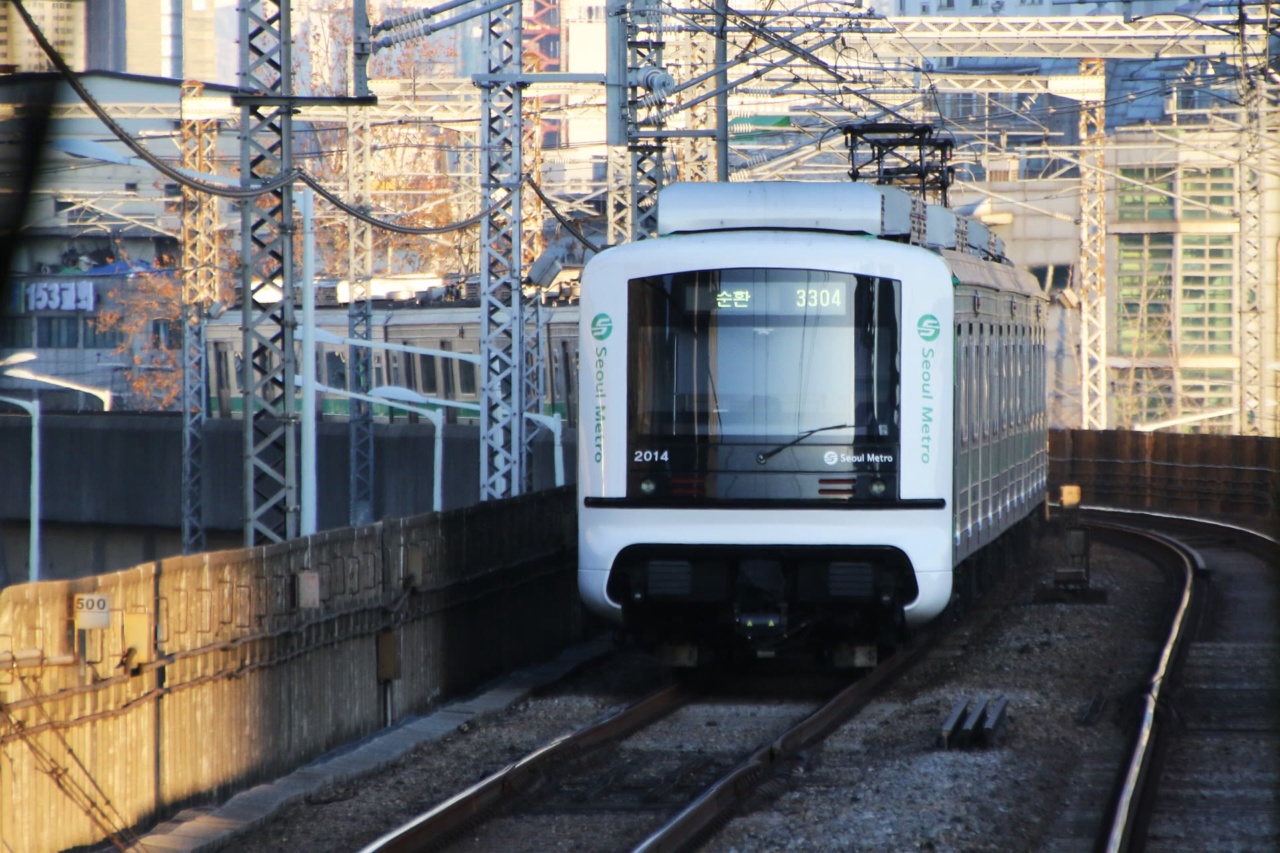
Transfers between lines are free, and transfers between subway and bus are free within 30 minutes for T-money users.[1]
Fares and Payment
The base adult fare is 1,550 KRW (around $1) with a transit card and 1,650 KRW for a single-use ticket, in effect since 28 June 2025.[2] Fares increase slightly for longer distances, by 100 KRW for every 5 km beyond 10 km.[2] You can pay with a T-money card, which you can buy at most convenience stores, subway stations and tourist information centers for 3,000 KRW and load with any amount.[1]
Tips for Riding
- Avoid Line 2 during the morning and evening rush hours. It is the busiest line and the crowds can be intense.
- Download the Naver Map or KakaoMap app. Google Maps works poorly in South Korea for transit directions. Naver Map gives real-time subway arrival info and optimal transfer routes.
- Priority seats at the ends of each car are strictly reserved for elderly, pregnant, and disabled passengers. Do not sit there even if they are empty, or expect disapproving looks.
- Each station has restrooms, coin lockers, and often underground shopping arcades. Stations like Express Bus Terminal and COEX Mall are destinations in themselves.
Getting Around Seoul by Bus
Seoul's bus network fills the gaps the subway cannot reach and is especially useful for reaching hillside neighborhoods, university areas, and destinations between metro stations. The system is color-coded: blue buses run long trunk routes across the city, green buses serve shorter feeder routes connecting to subway stations, red buses are express routes to the suburbs, and yellow buses loop through the downtown core.
Late-night owl buses run key routes after the subway has stopped and cost 2,500 KRW with a transit card.[2][1] The owl buses are a lifesaver if you miss the last subway.
A blue or green bus costs 1,500 KRW with a transit card, red express buses 3,000 KRW and yellow circulation buses 1,400 KRW.[1] You tap your T-money card when boarding and again when exiting. Free transfers between buses and between bus and subway apply within 30 minutes.[1]
The biggest challenge for visitors is that bus route information at stops is primarily in Korean, and announcements on board can be hard to follow. Using Naver Map to identify the correct bus number and stop is essential. Once you get the hang of it, buses are fast, frequent, and cover routes that would require multiple subway transfers.
Getting Around Seoul by Taxi
Taxis in Seoul are plentiful, metered, and relatively affordable compared to most major world cities. They are an excellent option for late-night travel, trips with luggage, or reaching destinations awkwardly placed between subway lines.
Regular and Deluxe Taxis
Orange and silver taxis are standard. The base fare is 4,800 KRW (around $4) for the first 1.6 km, with incremental charges based on distance and time.[2] Longer rides cost more as distance and waiting time are metered. Black deluxe taxis (mobeom taeksi) have a higher base fare of 7,000 KRW for the first 3 km and larger, more comfortable vehicles.[2]
Regular taxis add a late-night surcharge of 20% from 22:00 to 23:00 and from 02:00 to 04:00, and 40% from 23:00 to 02:00; deluxe taxis charge 20% from 22:00 to 04:00.[2] Most taxis accept cash, credit cards and T-money.[1] Tipping is not expected or customary.
Ride-Hailing Apps
Kakao T is the dominant ride-hailing app in Seoul and works much like Uber or Grab. It connects you to regular metered taxis, deluxe taxis, and premium vehicles. The app is available in English, shows estimated fares upfront, and lets you pay by card through the app. This eliminates the language barrier and the occasional refusal-to-drive issue you might encounter hailing on the street.
Uber also operates in Seoul but functions differently than in most countries. It primarily connects to licensed taxis and premium black cars rather than private drivers. Kakao T has far more supply and is the local standard.
One frustration: during peak hours, rain, or late at night, getting a taxi through Kakao T can take longer because drivers may decline requests.
Getting Around Seoul by Walking
Seoul is not a city you can walk across, but many of its individual neighborhoods are wonderfully walkable. Insadong's narrow alleyways, Bukchon Hanok Village's hilly lanes, the Cheonggyecheon Stream promenade, and the bustling streets of Hongdae and Itaewon all reward exploration on foot. The palaces of Gyeongbokgung and Changdeokgung sit close enough to each other that walking between them is pleasant and scenic.
Sidewalks are generally well-maintained and pedestrian crossings are clearly marked. However, Seoul's topography is hillier than it appears on a map, especially in the northern neighborhoods near Bukhansan. Summer heat and humidity (June through August) and winter cold (December through February) can make long walks uncomfortable, so plan accordingly.
Getting Around Seoul by Bicycle and Kickboard
Seoul's public bike-sharing system, Ddareungi (also called Seoul Bike or Ttareungyi), offers a cheap and enjoyable way to explore flat areas, especially along the Han River cycling paths. Stations are scattered throughout the city and you can rent a bike through the Ddareungi app. The riverside paths are dedicated cycling lanes, smooth and scenic, stretching for dozens of kilometers.
Electric kickboards (scooters) from companies like Beam, Kickgoing, and Lime are parked on sidewalks throughout the city. You unlock them via each company's app and pay per minute. They are fun for short hops, but check the operator's licence and riding rules in its app before you ride.
Neither bikes nor kickboards are practical for navigating major roads during rush hour. Stick to parks, riverside paths, and quieter neighborhood streets.
Getting Around Seoul by KTX and Commuter Rail
While primarily intercity transport, Seoul's rail connections are worth mentioning because the city's boundaries blur into the greater metropolitan area. The Gyeongui-Jungang Line, Shinbundang Line, and various commuter rail services connect Seoul to satellite cities like Incheon, Suwon, and Bundang seamlessly using the same T-money card. If you are visiting the DMZ, Suwon's Hwaseong Fortress, or Everland, these suburban rail lines are your best option.
KTX high-speed trains depart from Seoul Station, Yongsan Station and Cheongnyangni Station and reach Busan in about 3 hours.[3][4] Book through the Korail app or at station counters.
Getting Around Seoul by Airport Railroad (AREX)
The Airport Railroad Express (AREX) connects Incheon International Airport to Seoul Station, with stops at Gimpo Airport along the way. The express train runs nonstop from Incheon Airport to Seoul Station in about 40 minutes and costs 9,500 KRW (around $7).[5] The all-stop train takes just under 60 minutes and costs 4,150 to 4,750 KRW.[5] Both are far cheaper and often faster than road transport, especially during rush hour when highway traffic can be brutal.
From Seoul Station, you can transfer directly to the subway network or take a taxi to your accommodation.
Comparing Your Options
| Mode | Typical Cost | Duration | Best For |
|---|---|---|---|
| Subway | Around $1-$2 per ride[2] | Varies by distance | Almost everything: fast, reliable, city-wide coverage |
| Bus | Around $1-$2 per ride[2] | Varies by route | Reaching areas between subway stations, hillside neighborhoods |
| Taxi (metered) | From about $4, metered by distance and time[2] | Depends on traffic | Late nights, luggage, door-to-door convenience |
| Kakao T (ride-hailing) | Same as taxi meter | Depends on traffic | Avoiding language barriers, guaranteed payment by card |
| Walking | Free | Neighborhood-dependent | Exploring Insadong, Bukchon, Hongdae, palace districts |
| Ddareungi (bike share) | Pay per ride in the app | Varies | Han River paths, flat scenic rides |
| AREX (Airport Railroad) | Around $3-$7[5] | About 40-60 min[5] | Incheon Airport to Seoul Station |
| Owl Bus (night bus) | Around $2[1] | Varies | Getting home after the last subway |
Practical Tips for Getting Around Seoul
Get a T-money card immediately. Buy one at any convenience store near the airport or your hotel. Load a modest amount to start and top it up as needed. It works on subways, buses, taxis, convenience store purchases, and even vending machines. The small per-ride discount adds up, and the free transfer benefit between subway and bus saves real money.
Download these apps before you arrive:
- Naver Map or KakaoMap - Essential for transit directions. Google Maps is unreliable for Korean public transport routing due to local data restrictions.
- Kakao T - For hailing taxis without language issues.
- Papago (by Naver) - The best Korean-English translation app, far more accurate than Google Translate for Korean.
- Ddareungi - For bike rentals along the Han River.
Rush hour strategy: The subway is packed in the morning and evening rush but still moves. Road traffic, however, grinds to a halt, making buses and taxis significantly slower. Schedule major cross-city taxi rides outside these windows.
Language barrier: Seoul's transit system is one of the most foreigner-friendly in Asia. Subway stations display signs in Korean, English and Chinese.[1] Bus stops have English route names but in-bus announcements may be harder to catch. Having your destination written in Korean (Hangul) on your phone is helpful when communicating with taxi drivers. Kakao T sidesteps this entirely by sending the destination digitally.
Common mistakes to avoid:
- Do not rely on Google Maps. This is the number one mistake foreign visitors make. Use Naver Map.
- Do not assume taxis will always stop. Late at night, during taxi shift changes and in bad weather, street hails can be difficult. Use Kakao T.
- Do not forget to tap out on buses. If you forget to tap your T-money card when exiting, you lose your transfer discount.[2]
- Do not walk on the left side of subway corridors. Koreans walk on the right. Going against the flow in a busy station is a recipe for frustration.
Safety: Seoul's public transport is generally safe at all hours. Taxis are metered and regulated, and late-night travel is routine for locals. The biggest physical risk is honestly the steep stairs in older subway stations if you are carrying heavy luggage.
For comparing transport options across different Asian cities and planning multi-destination trips, GoAsia.cc can help you see what is available at a glance.
Popular Routes and Destinations
Incheon Airport to Central Seoul: The AREX express train to Seoul Station takes about 40 minutes for around $7, with departures every 20 to 40 minutes.[5] Airport buses to all major areas of Seoul cost 5,000 to 15,000 KRW and take roughly 60 to 80 minutes depending on traffic and destination.[5] During morning or evening rush, road-based options can be slow, so AREX is often the smarter choice unless you have a large group splitting a transfer cost.
Hongdae to Gangnam: Line 2 runs directly between Hongik University Station and Gangnam Station. No transfers are needed on the green loop line.
Frequently Asked Questions
Use this guide to compare local transport in Seoul. When bookable tickets are available, the booking tool shows current options and prices.
The subway is the best way to get around Seoul for most trips. It covers virtually the entire city, runs frequently, costs around $1 per ride, and has English signage throughout. For late nights or door-to-door trips, use the Kakao T app to hail a taxi.
Seoul's public transport is very affordable. A subway ride costs 1,550 KRW (around $1) and a standard city bus 1,500 KRW with a T-money card, and free transfers between modes apply within 30 minutes. Taxis start at 4,800 KRW for the first 1.6 km and are metered by distance and time. A T-money card loaded with a modest amount will last most travelers several days.
Seoul's public transport is generally safe, even late at night. Taxis are metered and regulated, and locals routinely use public transport at all hours.
Yes. Kakao T is the dominant ride-hailing app and works like Uber or Grab. It is available in English, shows estimated fares, and lets you pay by card through the app. Uber also operates but has limited supply compared to Kakao T. Download Kakao T before you arrive.
A T-money card is highly recommended. It gives you a small discount on every subway and bus ride, enables free transfers between modes, and works on taxis and in convenience stores. Buy one at a convenience store for 3,000 KRW and load it with any amount.
Due to South Korean government data restrictions, Google Maps cannot provide accurate transit routing or detailed map data in Seoul. Download Naver Map or KakaoMap instead. Both offer excellent English-language interfaces with real-time transit directions, bus arrival times, and walking navigation.
The AREX express train takes about 40 minutes to Seoul Station and costs 9,500 KRW (around $7), with departures every 20 to 40 minutes. The all-stop AREX train takes just under 60 minutes for 4,150 to 4,750 KRW. Airport buses to major areas of Seoul cost 5,000 to 15,000 KRW and take roughly 60 to 80 minutes depending on traffic.
The subway stops running around midnight. After that, use the Kakao T app to hail a taxi, or take one of Seoul's owl night buses, which run key corridors through the early morning hours. Taxis are plentiful at night, though regular taxis add a late-night surcharge of 20% to 40% between 22:00 and 04:00.
Sources and background
Numbers in the text such as [1] refer to these sources.
- [1] Seoul Tourism Organization (Visit Seoul): Transportation. Retrieved October 15, 2026.
- [2] Seoul Metropolitan Government: Modes of Transport. Retrieved October 15, 2026.
- [3] Korea Tourism Organization: Train. Retrieved October 15, 2026.
- [4] Korea Tourism Organization: Feel the Sea, Enjoy the City: Come and Discover Busan. Retrieved October 15, 2026.
- [5] Seoul Tourism Organization (Visit Seoul): Getting to Seoul. Retrieved October 15, 2026.
Guide prices and journey times are indicative, not live quotes. A booked package may include transfers and waiting time as well as the main journey. Check the selected offer, pickup point and current conditions before booking.