The Ferry Network in Vietnam
Vietnam's ferry network is concentrated around several key regions rather than forming a single unified system. The busiest hub is in the north, where boats serve Ha Long Bay and the neighboring Lan Ha Bay area and connect the mainland to Cat Ba Island. From Hai Phong, many travelers go by road to the Dong Bai terminal on Cat Hai island and cross to Cat Ba by ferry (about 30 minutes, every 30 minutes from 05:00 to 18:00, 14,000 VND per person) or by speedboat (about 8 to 10 minutes, around 80,000 VND). A speedboat from Binh Port in Hai Phong takes around 60 to 70 minutes and costs from 250,000 VND, but it does not run from September to April.[1]
In central Vietnam, ferry services are more limited. The southern region is where the network picks up again significantly. The Mekong Delta relies on a web of river ferries and boats to cross its maze of waterways. Con Dao is reached by high-speed boat from Saigon (990,000 VND, about 6 hours) and from Vung Tau (660,000 VND, about 4 hours), according to Greenlines DP.[2] The most popular southern route links Rach Gia on the mainland to Phu Quoc Island, Vietnam's largest island and a major beach destination. Phu Quoc Express lists a crossing time of 2 hours 30 minutes from Rach Gia to Bai Vong.[3]
Multiple private operators run these routes, for example Phu Quoc Express between Rach Gia and Phu Quoc, Greenlines DP from Saigon and Vung Tau, and several companies on the Cat Ba routes. The network is not centralized under one national carrier, so each region effectively has its own operators and ticketing systems.
Classes and Comfort Levels
Most Vietnamese high-speed ferries have a fairly simple class system: a standard class, and on some routes and operators a higher class.
Standard class on most high-speed ferries means airline-style seating with air conditioning. Crossings range from a few minutes on the short Cat Ba hops to a few hours on the Phu Quoc and Con Dao routes. Legroom can feel tight when boats are fully loaded in peak season.
Higher classes, where an operator offers them, typically add wider seats and more legroom. The price difference varies by operator and route, so compare before upgrading on longer crossings like Rach Gia to Phu Quoc.
For the slower, traditional ferries still operating in the Mekong Delta and on some shorter crossings, there is often no class distinction at all. These are open-deck vessels where passengers sit on benches or plastic chairs alongside motorbikes and cargo - a far more atmospheric experience, if less polished.
Booking and Tickets
Advance booking is strongly recommended for popular routes, particularly the mainland-to-Phu Quoc ferries and Cat Ba services during weekends and Vietnamese holidays. Boats can sell out days in advance during Tet (Lunar New Year), summer holidays, and long weekends.
Tickets can be purchased directly at port ticket offices, but this requires arriving early and sometimes navigating a language barrier. A more convenient option is booking online through travel platforms - GoAsia.cc lets you compare ferry schedules and operators across different Vietnamese routes, which is especially helpful when multiple companies serve the same destination at varying times.
Most online bookings generate an e-ticket or booking confirmation that you exchange for a boarding pass at the port counter. Bring your passport or ID, as operators may ask for it at check-in.
For Mekong Delta river ferries and short local crossings, no booking is needed. You simply show up, pay a small fare, and board.
What to Expect on Board
High-speed ferry journeys in Vietnam are efficient but not always smooth. The South China Sea (known locally as the East Sea) can be choppy, particularly during the monsoon months. Open-sea crossings such as Rach Gia to Phu Quoc and Vung Tau to Con Dao can be rough in bad weather, so be prepared for seasickness. If you are prone to motion sickness, take medication before boarding - the crew will not slow down for rough water.
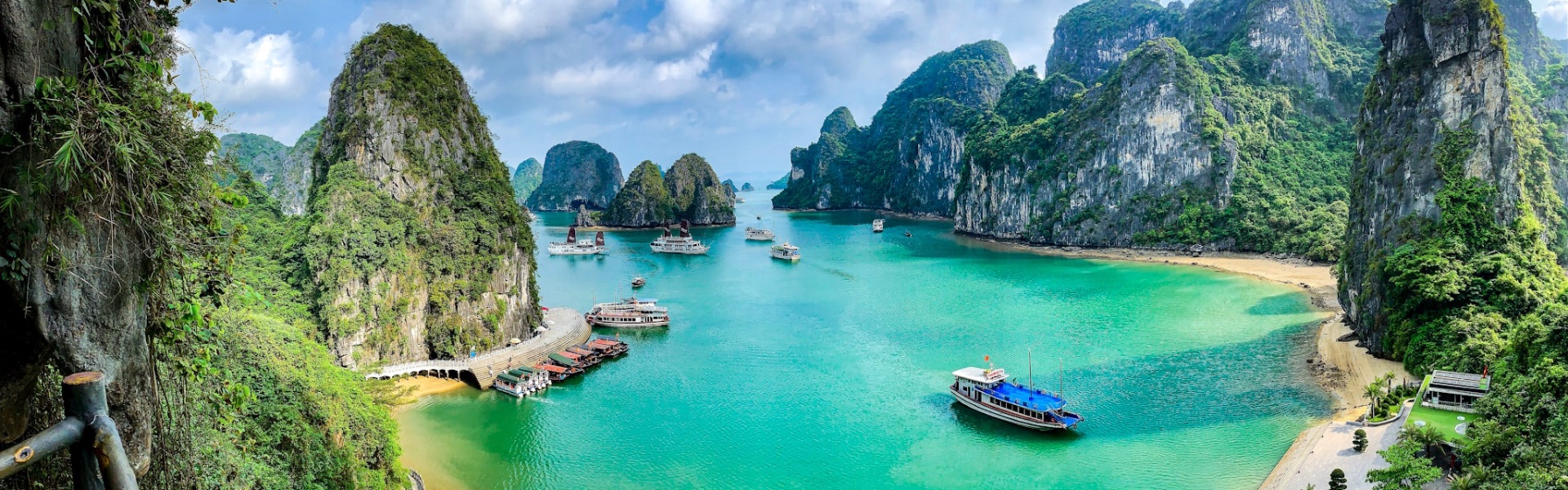
Scenery varies dramatically by route. The crossings to Cat Ba in the north offer views of limestone islands rising from emerald water. Southern routes offer open ocean views, while Mekong Delta ferries glide through a lush, flat world of coconut palms, floating markets, and riverbank villages.
Food and drink options on board are minimal. Some high-speed ferries have a small snack counter selling instant noodles, drinks, and packaged snacks, but selection is limited and quality is basic. Bring your own water and food for longer crossings. Restrooms are available on all major ferries, though they range from acceptable to rudimentary.
Luggage is typically stored in a designated area at the front or rear of the cabin. Large backpacks and suitcases are handled by crew members who will stow them for you. Keep valuables and essentials in a small bag at your seat. There is generally no Wi-Fi on board, and phone signal drops out on longer open-water crossings.
One cultural note: Vietnamese passengers tend to board and disembark in an enthusiastic rush. Do not expect orderly queuing. Position yourself near the exit a few minutes before arrival if you want to get off quickly, especially if you need to catch onward transport at the port.
Tips for Ferry Travel in Vietnam
- Watch the weather and seasons. Storms and the monsoon seasons can bring rough seas, particularly on open-sea routes such as Con Dao and Phu Quoc, and ferry cancellations are common during storms. The Binh Port speedboat to Cat Ba does not run from September to April.[1] Check conditions before booking and build flexibility into your schedule.
- Arrive at the port early. Phu Quoc Express asks passengers to arrive at the port 45 minutes in advance.[3] Busy ports like Rach Gia can be chaotic, and finding the right counter takes time, so allow a little extra.
- Bring motion sickness remedies. Even experienced sailors can struggle on Vietnamese high-speed ferries. The vessels move fast and hit waves hard. Ginger candies, acupressure bands, or medication like dimenhydrinate are wise precautions.
- Dress in layers. Air conditioning on Vietnamese ferries is often set to arctic levels. A light jacket or long-sleeved shirt will keep you comfortable, even if it is sweltering outside.
- Consider the Cat Ba route via Hai Phong. The Dong Bai ferry is the cheapest crossing at 14,000 VND per person and also takes motorbikes (44,000 VND) and cars, while the speedboat from Binh Port is the quickest direct option at around 60 to 70 minutes.[1]
- Keep your ticket and passport accessible. You may need to show both at check-in, boarding, and sometimes upon arrival. Staff occasionally check tickets mid-journey as well.
- For the Mekong Delta, embrace the slow ferry. While bridges have replaced many crossings, a few car-and-motorbike ferries still operate. Riding one across a wide branch of the Mekong, surrounded by local life, is one of Vietnam's most authentic and underrated travel experiences.
- Book return tickets in advance from islands. Return ferries to the mainland can fill up, especially after weekends and holidays. Secure your return trip as soon as you know your dates.